How to Calculate Package Locker ROI for Apartments
Learn how to calculate package locker ROI for apartments, ensuring smarter investments and maximizing savings of up to $40,000 annually.
Published
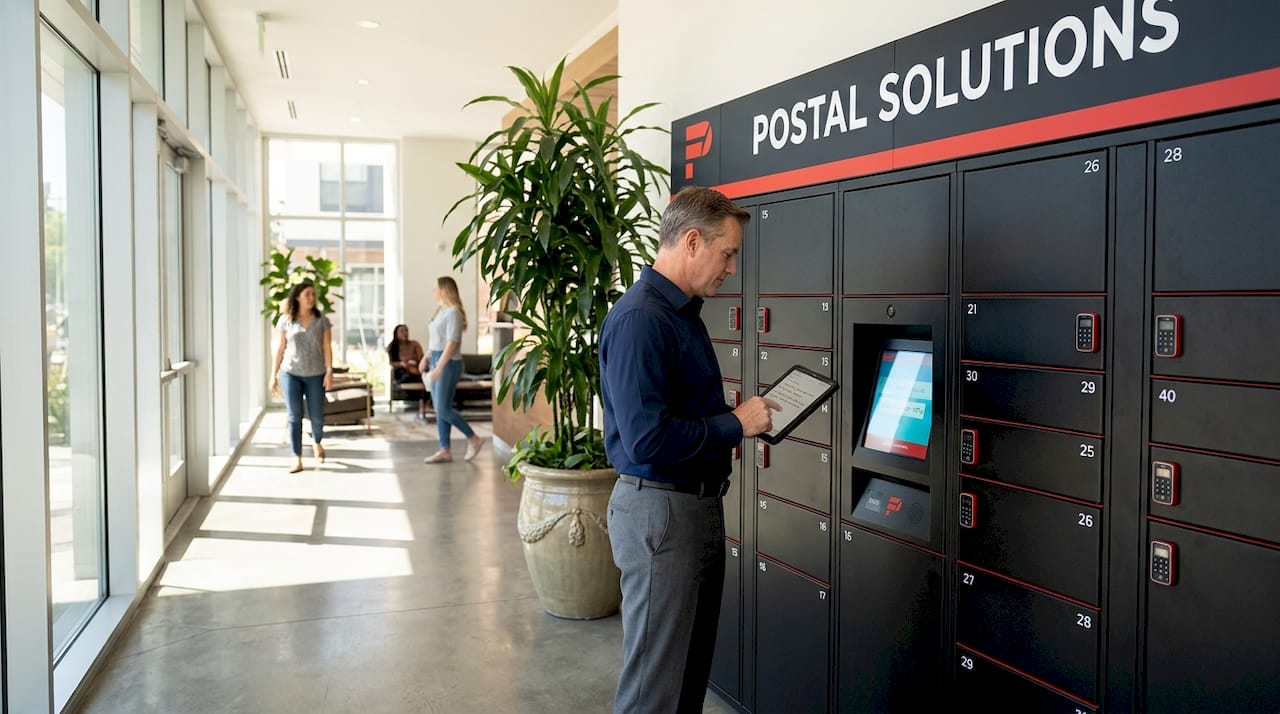
Calculating package locker ROI for apartments means quantifying labor savings, theft reduction, and resident retention gains against total system costs to determine whether the investment pays off. For a 200-unit community, full ROI is typically achieved within 12 to 18 months, with annual net savings of $20,000 to $40,000 after payback. The inputs span direct costs like hardware and software fees, and indirect benefits like fewer lease cancellations and reduced liability. Property managers who approach this as a structured financial model rather than a gut-feel decision consistently make better vendor choices and avoid expensive sizing mistakes.
What key factors influence the ROI of package lockers in multifamily apartments?
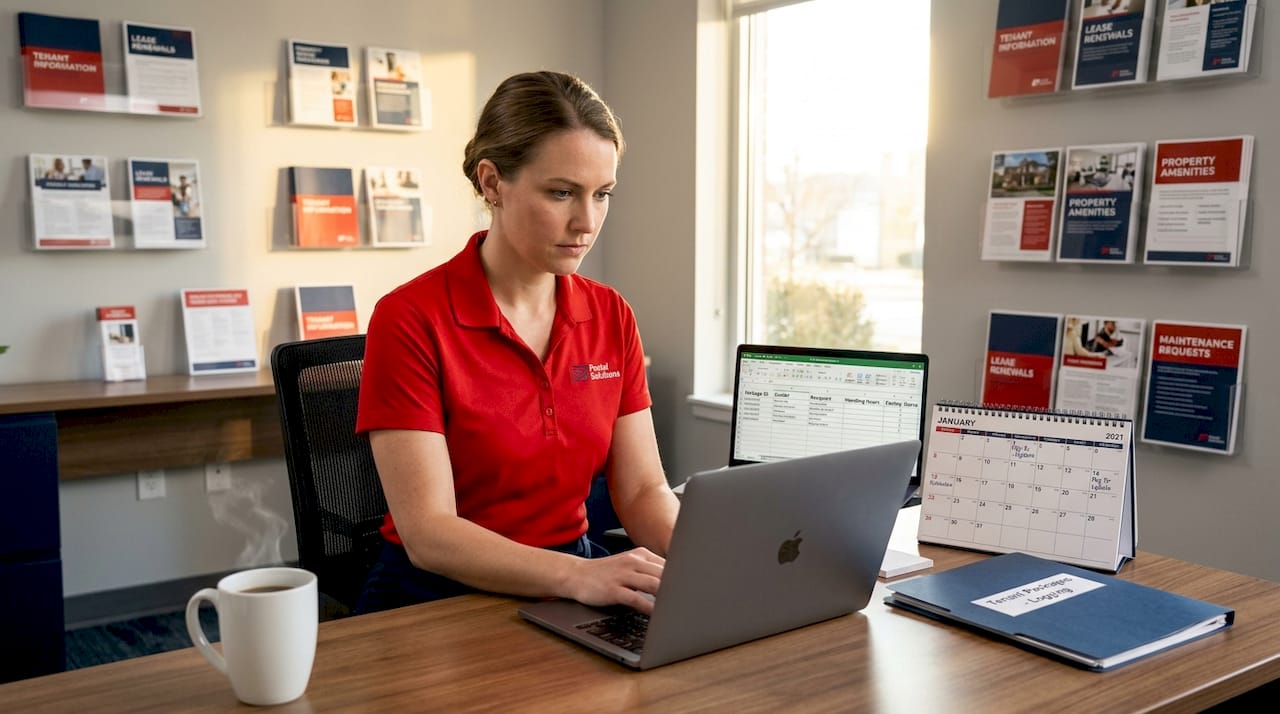
The single largest driver of apartment package locker profit is labor savings. A 300-unit property handling packages manually dedicates roughly 37 staff hours weekly to intake, notification, and retrieval, costing over $39,000 annually at standard labor rates. Automating that workflow through smart lockers redirects staff to higher-value tasks and eliminates a recurring operational drain.
Beyond direct labor, five categories of variables shape your final return:
- Package volume and delivery frequency. The industry benchmark is approximately 30 packages per 100 units daily, with each package requiring roughly 5 minutes of manual handling at $20 per hour. Higher-density properties or those near major distribution hubs will see faster payback periods.
- Hardware and software costs. Upfront locker hardware, installation, and ongoing software licensing fees all factor into total cost of ownership. Skipping a five-year cost projection is one of the most common mistakes managers make.
- Resident satisfaction and churn. Resident satisfaction improves 15 to 25% after locker installation. Even a one-percentage-point improvement in lease renewal rates translates directly to reduced vacancy costs and higher net operating income.
- Theft and loss reduction. Mid-sized communities average 15 to 30 package theft incidents per year, with average resolution costs of $500 each. Lockers eliminate most of that exposure.
- Security and liability improvements. Documented chain-of-custody records reduce disputes and protect the property from liability claims tied to lost or damaged deliveries.
Pro Tip: Track your current weekly staff hours spent on package-related tasks for at least four weeks before requesting vendor quotes. That baseline number is the foundation of every ROI calculation you will run.
How to measure and calculate package locker ROI step by step
A structured approach to measuring package locker ROI produces numbers you can defend to ownership groups and asset managers. Follow these steps in sequence.
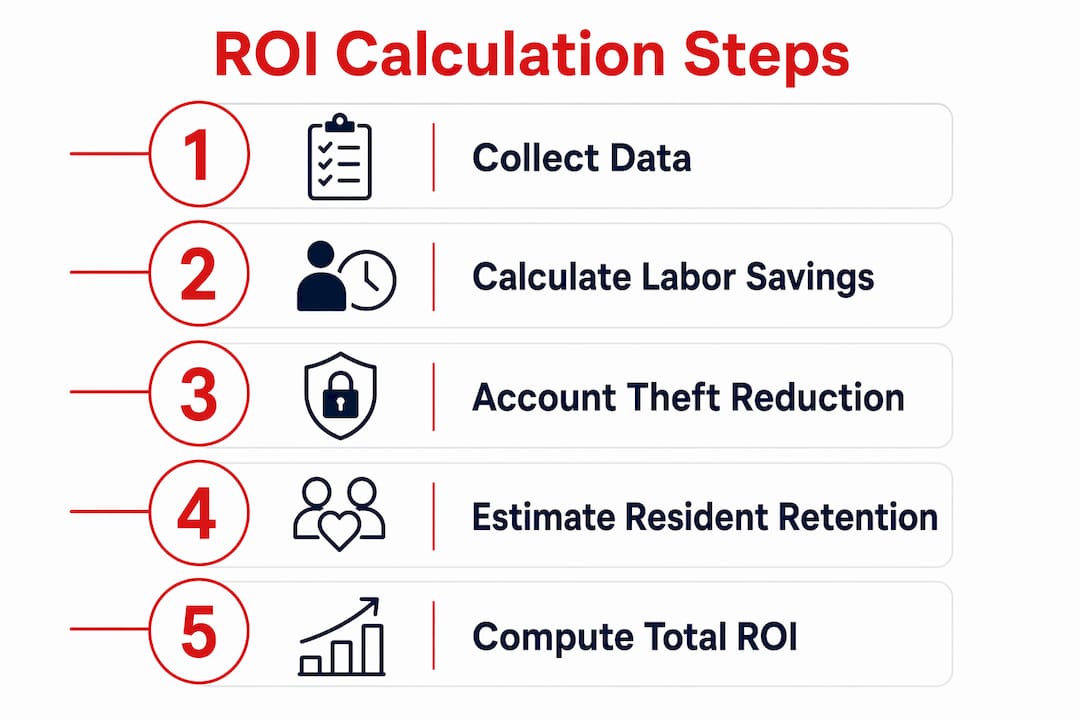
- Collect baseline data. Document weekly package volume, staff hours spent on intake and retrieval, labor cost per hour, and the number of theft or loss incidents in the past 12 months. Pull this from your property management software or front-desk logs.
- Calculate your current annual manual management cost. Multiply weekly staff hours by 52, then by your fully loaded labor rate (wages plus benefits). For a 300-unit property at 37 hours per week and $20 per hour, that figure exceeds $39,000 before factoring in overtime or turnover costs.
- Estimate post-automation labor savings. Smart lockers typically reduce package-related staff time by 70 to 80 percent. Apply that reduction to your baseline cost to project annual savings.
- Build your total cost of ownership model. Include hardware purchase or lease cost, installation fees, annual software licensing, and projected maintenance. A five-year total cost analysis is the minimum window for an accurate ROI forecast, since software fees compound over time and can outweigh initial hardware costs if left unexamined.
- Add indirect savings. Multiply your average annual theft incidents by $500 per incident to get a theft avoidance figure. Assign a conservative dollar value to improved lease renewal rates based on your current cost to turn a unit.
- Apply the ROI formula. ROI = ((Total Annual Benefits minus Annual Total Cost) divided by Total Investment) multiplied by 100. Run this for years one through five to see when the investment crosses into positive territory.
Here is a simplified model for a 300-unit property:
| Cost or Benefit Category | Annual Value |
|---|---|
| Labor savings (post-automation) | $27,000 to $31,000 |
| Theft and loss avoidance | $7,500 to $15,000 |
| Resident satisfaction lift (retention value) | $5,000 to $12,000 |
| Software and maintenance fees | ($4,000 to $8,000) |
| Estimated net annual benefit | $35,500 to $50,000 |
These figures align with published benchmarks, but your actual numbers depend on labor rates, package volume, and vendor pricing in your market.
Pro Tip: Do not limit your labor calculation to intake hours alone. Hidden labor costs from managing resident inquiries, lost package disputes, and security escalations are often as time-consuming as the intake itself. Document those hours separately and add them to your baseline.
How to properly size and select package lockers to maximize ROI
Sizing is where many ROI projections fall apart in practice. Undersizing a locker system by even 10 to 20 percent of utilization capacity causes overflow, forces staff back into manual handling, and negates the labor savings you projected. The right sizing methodology uses actual delivery data, not unit count alone.
Key considerations when sizing and selecting your system:
- Analyze peak daily delivery volumes, not averages. Holiday seasons and major retail events like Amazon Prime Day can double or triple your normal daily volume. Size for the 90th percentile delivery day, not the median.
- Account for package dimensions. A mix of small, medium, and oversized compartments reflects real-world delivery patterns. Carriers like UPS, FedEx, and Amazon deliver a wide range of parcel sizes, and a locker bank stocked only with small compartments will overflow quickly.
- Plan for scalability. Select a system that supports modular expansion. A property adding 50 units in two years needs a locker infrastructure that grows with it.
- Verify property management software integration. Poor integration with existing platforms creates management overhead and reduces the automation benefits that drive your ROI. Confirm API compatibility with your current system before signing any contract.
The table below compares two common configuration approaches:
| Configuration approach | Best for | Risk |
|---|---|---|
| Unit-count-based sizing | Quick estimates only | Overflow during peak periods |
| Volume and dimension-based sizing | Accurate capacity planning | Requires 4 to 6 weeks of delivery data |
Properties that invest time in volume-based sizing consistently report faster payback periods because their systems handle real-world demand without staff intervention. Treating package lockers as critical infrastructure rather than a convenience amenity changes how you approach both sizing and vendor selection.
Common pitfalls when calculating package locker ROI
Even experienced property managers make predictable errors when building their ROI models. Recognizing these pitfalls before you finalize your analysis saves time and prevents costly vendor decisions.
- Ignoring indirect labor costs. Package-related resident inquiries, dispute resolution, and security escalations add significant hours to your team’s workload. These latent labor costs are frequently excluded from ROI models, causing managers to underestimate their true baseline and undervalue the savings from automation.
- Underestimating software and maintenance fees. A system priced attractively at hardware cost may carry annual licensing fees that erode returns over time. Low-cost systems with high management overhead can be more expensive than premium solutions when evaluated over five years.
- Omitting resident satisfaction from the model. Satisfaction improvements are measurable through lease renewal rates and resident survey scores. Leaving them out produces a conservative ROI estimate that undersells the investment to ownership.
- Failing to plan for volume growth. E-commerce delivery volumes continue to rise year over year. A system sized for today’s volume without a scalability plan will require costly replacement sooner than expected.
- Choosing vendors with poor integration support. A locker system that does not connect cleanly with your property management platform creates new workflows instead of eliminating old ones.
“Soft ROI factors like improved staff morale, reduced liability, and better resident retention contribute significantly to the total return, though they are harder to quantify. Build them into your model with conservative estimates rather than leaving them out entirely.”
Key takeaways
Accurate package locker ROI for apartments requires a five-year cost model that captures labor savings, theft avoidance, resident retention value, and total software costs together.
| Point | Details |
|---|---|
| Payback timeline | Most 200-unit communities recover their investment within 12 to 18 months through labor savings alone. |
| Labor baseline | Document all package-related staff hours, including inquiries and disputes, before building your ROI model. |
| Sizing methodology | Use peak daily delivery volume and package dimensions, not unit count, to avoid overflow and lost savings. |
| Five-year cost model | Include hardware, software licensing, and maintenance to get an accurate total cost of ownership picture. |
| Indirect ROI factors | Theft avoidance, resident satisfaction gains, and reduced liability add $12,500 to $27,000 in annual value for mid-sized properties. |
Why I think most managers undervalue package locker ROI
Most property managers I speak with build their ROI case around labor savings and stop there. That approach produces a defensible number, but it leaves the most compelling part of the story on the table. The real value of a well-integrated locker system shows up in lease renewal rates, in the conversations that do not happen at the front desk, and in the liability exposure that never materializes.
The managers who get the most out of their investment treat package handling as a resident experience metric, not just an operational cost. They track satisfaction scores before and after installation, they monitor renewal rates by building section, and they adjust their systems as delivery volumes grow. That ongoing attention is what separates a locker system that pays for itself in 14 months from one that stalls at break-even.
My honest advice: do not let perfect be the enemy of good in your ROI model. Assign conservative dollar values to satisfaction and retention, include them in your analysis, and present the full picture to your ownership group. A model that only counts labor savings will always look marginal. A model that counts everything will almost always make the case.
— Craig
How Postalsolutions helps you maximize package locker ROI
Postalsolutions brings over two decades of multifamily package management experience to every property it serves. Rather than simply installing hardware, Postalsolutions provides daily operational management, real-time resident support, and custom system configurations designed around your actual delivery data. That approach is why more than 120,000 residents have experienced zero lost packages under their care. If you are ready to move from estimates to a real ROI model, explore smart locker solutions built specifically for multifamily communities, or review apartment package management services that turn package handling into a measurable leasing advantage. Contact Postalsolutions for a tailored ROI consultation and system demo.
FAQ
What is a realistic ROI timeline for apartment package lockers?
Most multifamily properties achieve full ROI within 12 to 18 months, primarily through labor savings. A 200-unit community typically nets $20,000 to $40,000 annually after the payback period.
How do I calculate the labor savings from package lockers?
Multiply your weekly package-related staff hours by 52 and by your fully loaded labor rate. Then apply a 70 to 80 percent reduction factor to estimate post-automation savings.
What indirect costs should I include in my package locker ROI model?
Include theft and loss avoidance, resident inquiry resolution time, and the dollar value of improved lease renewal rates. These indirect factors can add $12,500 to $27,000 in annual value for a mid-sized property.
How does locker sizing affect ROI?
Undersizing by even 10 to 20 percent of utilization capacity causes overflow and forces staff back into manual handling, directly reducing your projected labor savings. Always size based on peak daily delivery volume and package dimensions.
Do software fees significantly affect long-term package locker ROI?
Yes. Annual licensing and maintenance fees compound over time and can outweigh initial hardware costs if not modeled across a five-year window. Always request a full five-year cost breakdown from vendors before committing.