Luxer One Package Room Limitations: What Property Managers Must Know
Discover key insights on luxer one package room limitations. Learn how to optimize delivery spaces and enhance resident satisfaction effectively.
Published

Luxer One package rooms are defined as technology-enabled, access-controlled storage spaces designed to receive and hold resident deliveries in multifamily communities. They offer flexibility for high-volume properties, but Luxer One package room limitations, including space constraints, oversized parcel handling, operational staffing demands, and property-level policy restrictions, directly affect how well these systems perform. Understanding each limitation is not optional for property managers. It determines whether your package room reduces resident friction or creates it. This article breaks down every major constraint and pairs each one with a practical path forward.
1. Physical space requirements restrict where package rooms work
Package rooms require sufficient interior space to function effectively, making them best suited for properties with abundant square footage and high parcel volume. This is the first constraint that eliminates the option for many communities before any technology decision is made.
Garden-style apartment communities and older buildings frequently lack a dedicated room that can be converted without disrupting other operations. The minimum usable footprint must accommodate shelving, clear walking paths, ADA-compliant access routes, and enough floor space for couriers to drop multiple deliveries simultaneously. Installation guidance from Luxer One emphasizes upfront compliance planning to prevent access limitations after the system is live, which means retrofitting a tight space often creates more problems than it solves.
Layout planning is not a one-time task. As delivery volumes grow, shelving configurations must adapt to the actual mix of package sizes arriving each week. A room that worked well at 200 packages per month may feel disorganized and difficult to navigate at 600.
- Properties with less than 150 square feet of dedicated space typically cannot support a standalone package room
- Shelving must be modular and adjustable to handle shifting size distributions
- Clear aisle width of at least 36 inches is required for ADA compliance
- Rooms must be positioned near a building entrance to reduce courier friction
Pro Tip: Before committing to a package room, map your peak delivery window. Count the number of packages arriving on your three busiest days in a month, then calculate the cubic footage required to hold them simultaneously. That number tells you whether your available space is actually sufficient.
2. Oversized and irregular packages create workflow bottlenecks
Oversized or irregular packages often cannot fit into fixed locker compartments, which is why package rooms are frequently used as overflow or combined with lockers in hybrid configurations. The package room solves the locker’s size problem, but it introduces its own set of handling challenges.
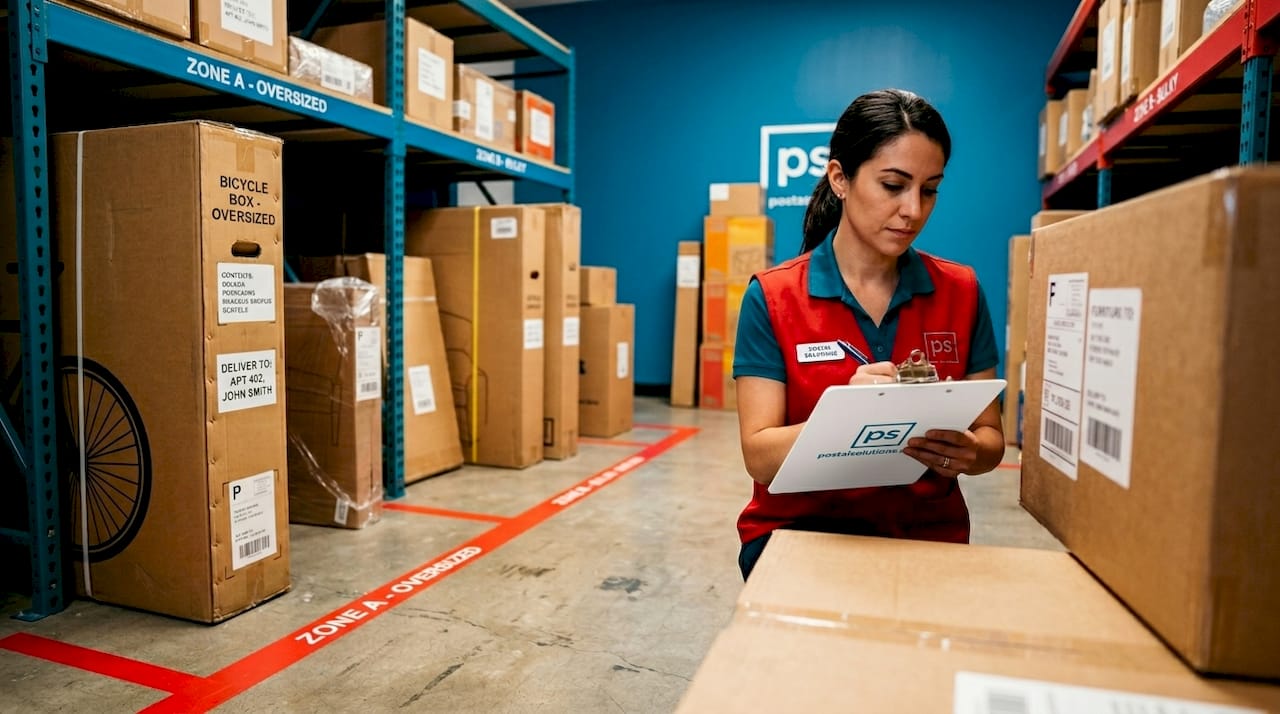
The core issue is that not all oversized packages are equal. A flat-screen television, a bicycle, a set of golf clubs, and a large appliance box each require different placement strategies. Without a defined protocol for where these items go and how residents are notified, the room fills unevenly and retrieval becomes slow. Resident satisfaction drops when someone cannot locate a large package because it was placed in an unmarked corner.
The following package types most commonly cause capacity and workflow problems in package rooms:
- Freight and LTL shipments that exceed standard parcel dimensions
- Multi-box orders that arrive as a set but are logged as separate items
- Irregularly shaped items such as furniture, sports equipment, and rolled materials
- Packages requiring refrigeration or special handling that the room cannot provide
Pro Tip: Assign a dedicated zone within the package room specifically for oversized items and mark it clearly with floor tape or a wall sign. Train couriers to use that zone consistently. This single step reduces misplaced package complaints significantly.
3. Operational capacity challenges grow with delivery volume
High delivery volumes overwhelm package room operations without adequate staffing and process support. This is the limitation most property managers underestimate when they first install a package room.
A 10x10 package room handling over 5,500 packages monthly required on-site liaison staff to maintain organization and labeling. That volume is not unusual for a 300-unit student housing property during peak move-in periods or the holiday season. Without someone physically present to sort, label, and organize deliveries, the room degrades quickly.
The operational challenges compound in a predictable sequence:
- Packages arrive faster than they are labeled or sorted
- Residents cannot locate their items and contact the leasing office
- Leasing staff spend time in the package room instead of on core responsibilities
- Unclaimed packages accumulate and block space for new deliveries
- Resident complaints increase and staff morale drops
Luxer Liaison on-site support addresses this directly. Liaison staffing typically operates a few days per week to maintain package room organization, handle labeling, and manage resident communication. This is not a luxury for large properties. It is a necessary operational layer.
Regular audits tracking locker and package usage help identify bottlenecks before they become resident-facing problems. Luxer One’s audit checklist includes frequency of full lockers and underused compartments as signals to adjust operations. Properties that audit monthly catch problems that properties relying on reactive complaints never see coming.
Pro Tip: Schedule a standing weekly audit every Monday morning to capture the weekend delivery surge. Review which package sizes are accumulating and adjust shelving or routing protocols before the next peak hits.
4. Property and landlord policies impose independent restrictions
Property and landlord policies can limit how long packages are stored, impose retention fees, and affect package access. Luxer One’s Terms of Service make clear that the company is not responsible for these policies. The property sets the rules, and the system enforces them.
This distinction matters operationally. A property might configure a 72-hour pickup window before a fee applies, but if the package room is disorganized and residents cannot find their items within that window, the fee creates a resident relations problem rather than a behavioral incentive. Policy design must align with the operational reality of the room.
Common policy-driven limitations that affect package room performance include:
- Short retention windows that create pressure on residents and staff during busy periods
- Fees that generate disputes when packages are not clearly labeled or easy to locate
- USPS parcel handling rules that require separate workflows from carrier deliveries
- Access hour restrictions that prevent residents from retrieving packages outside business hours
Clear communication between property teams and residents is the primary tool for reducing policy-related friction. Residents who understand the retention window at move-in are far less likely to dispute a fee at month six. Coordinated policy and operational alignment between landlords and property teams reduces resident-facing issues before they escalate.
5. Hybrid solutions and alternatives that overcome these limitations
Hybrid systems combining package rooms and lockers optimize space usage by assigning standard parcels to lockers and oversized parcels to rooms. This is the most widely adopted approach for properties that face multiple limitations simultaneously.
The logic is straightforward. Lockers handle the high-frequency, standard-size deliveries automatically, with no staff involvement required. The package room absorbs the overflow and the irregular items that lockers cannot accommodate. Together, the two systems cover a wider distribution of package sizes and volumes than either can manage alone.
The table below summarizes the trade-offs between the three primary approaches:
| Approach | Best for | Key limitation |
|---|---|---|
| Package room only | High volume, large parcels, ample space | Requires staffing and active management |
| Lockers only | Standard parcels, low staffing capacity | Cannot handle oversized items |
| Hybrid room and lockers | Mixed parcel sizes, varied volume | Higher upfront cost, more complex setup |
Beyond hardware, apartment package management services that include daily organizing visits address the operational layer that technology alone cannot cover. A managed visit model means a trained package manager arrives on a set schedule, marks unit numbers on boxes, organizes shelving, and completes a weekly audit. This reduces the time leasing staff spend in the package room and eliminates the disorganization that drives resident complaints.
Properties that treat package management as a staffed function rather than a self-service technology deployment consistently report better resident satisfaction scores and fewer package-related support tickets.
Key takeaways
Luxer One package room limitations are manageable when properties address space, size handling, operational staffing, and policy alignment as a coordinated system rather than isolated problems.
| Point | Details |
|---|---|
| Space drives feasibility | Properties without 150+ square feet of dedicated space should consider lockers or a hybrid model instead. |
| Oversized packages need a defined protocol | Assign a fixed zone for large items and train couriers to use it consistently to prevent retrieval failures. |
| Volume requires staffing | Rooms handling thousands of packages monthly need on-site support like Luxer Liaison to stay organized. |
| Policy must match operations | Retention windows and fees only work when the room is organized enough for residents to find packages on time. |
| Hybrid models solve the most limitations | Combining lockers and a package room covers the widest range of parcel sizes and volume scenarios. |
What nine years of package room installations taught us
After selling and installing over 1,200 Luxer One systems across more than 40% of U.S. states, the pattern Postal Solutions sees most often is not a technology failure. It is a planning gap. Properties invest in a package room, go live, and then discover that the room works well for the first 60 days and then gradually deteriorates. Packages pile up. Residents call the office. Staff spend 20 minutes a day helping people find boxes. The system gets blamed, but the system is not the problem.
The real issue is that no package room operates without human oversight at scale. Human support is vital for scaled, efficient package room operations. The properties that get this right treat the package room as a managed function from day one. They schedule audits, they assign responsibility, and they communicate policies to residents before problems arise.
The other pattern worth naming is the oversized package blind spot. Most properties plan for standard parcel volume and forget that 15 to 20 percent of deliveries in a typical multifamily community will not fit in a standard locker compartment. If the package room layout does not account for that, the room fills unevenly and the retrieval experience suffers.
The fix is not complicated. It requires a layout plan that reflects actual delivery data, a staffing model that matches volume, and a policy framework that residents understand before they move in. When those three elements are in place, the limitations of a Luxer One package room become manageable constraints rather than operational failures.
— Postal Solutions
How Postal Solutions supports your package room operations
Postal Solutions is the largest Luxer One sales agency in the United States, with over 1,200 installations across conventional multifamily, student housing, senior housing, universities, and municipalities. Beyond selling and installing Luxer One systems, Postal Solutions manages daily package room organizing for apartment communities of all sizes. That includes a trained package manager visiting the property on a set schedule to mark unit numbers on boxes, organize shelving, and complete weekly audits. For properties that want a full-service solution, Postal Solutions can sell and install a Luxer One package room or locker system and layer in six-day-per-week managed visits. Visit Postal Solutions to discuss a configuration that fits your property’s volume, space, and resident expectations.
FAQ
What are the main Luxer One package room limitations?
The primary limitations are physical space requirements, difficulty handling oversized parcels, operational capacity demands at high volume, and property-level policy restrictions on retention and access. Each limitation requires a specific operational or hardware response to manage effectively.
How much space does a Luxer One package room require?
Luxer One notes that some communities cannot convert a dedicated room due to space limitations and often resort to lockers or hybrid systems instead. A functional package room generally requires at least 150 square feet with ADA-compliant access routes and adjustable shelving.
Can a Luxer One package room handle oversized packages?
Package rooms are specifically used to handle oversized items that do not fit in locker compartments, but they require a defined placement protocol and clear labeling to prevent retrieval problems. Without a designated oversized zone, large parcels disrupt the room’s organization and slow resident pickup.
What is Luxer Liaison and how does it help with package room restrictions?
Luxer Liaison is an on-site staffing service that manages package room organization, labeling, and resident communication on a scheduled basis. It directly addresses the operational capacity limitations that automated systems cannot resolve at high delivery volumes.
How do property policies affect Luxer One package room performance?
Landlord-set policies on retention windows, fees, and access hours operate independently of the Luxer One system, and Luxer One’s Terms of Service confirm the company is not responsible for these rules. When policies are misaligned with the room’s operational capacity, resident disputes and staff workload both increase.