Package Concierge Locker System: What Property Managers Need to Know
Discover what a package concierge locker system is and how it streamlines delivery for property managers. Enhance efficiency and security now!
Published
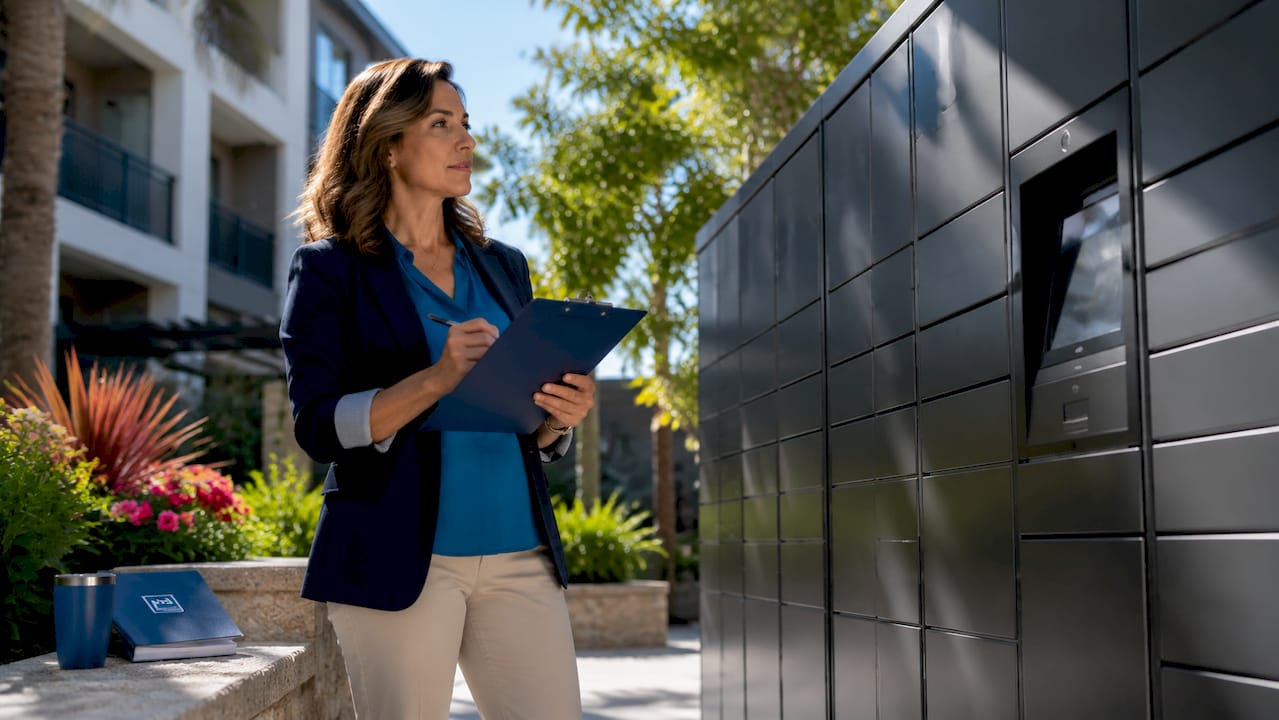
A package concierge locker system is an automated, electronic locker solution that manages package delivery and resident pickup without requiring leasing staff involvement. Built on three core components, hardware, cloud-based software, and a resident-facing user interface, these systems give multifamily properties a secure, self-service answer to the daily package volume problem. Brands like Luxer One, Package Concierge, and Parcel Pending have made this technology standard in conventional multifamily, student housing, and senior communities. The smart locker market is projected to reach $6.7 billion by 2030, a figure that reflects just how fast manual mailroom processes are being replaced across the industry.
What is a package concierge locker system and how does it work?
A package concierge locker system operates through a defined three-step workflow: carrier delivery, automated notification, and resident retrieval. Each step is logged in cloud-based software, creating a complete chain of custody from drop-off to pickup. The three-component structure of hardware, software, and user interface provides 24/7 access with detailed transaction logging and identity verification at every stage.
Here is how the process works from start to finish:
- Carrier arrives and logs in. Delivery carriers from UPS, FedEx, USPS, and Amazon access the locker kiosk using a dedicated carrier code. Carrier kiosk login enables unattended package deliveries without leasing staff assistance, which eliminates the need for a staff member to be present during every delivery window.
- The system assigns a locker. The software automatically selects an available compartment sized for the package and logs the delivery with a timestamp and carrier identity.
- The resident receives a notification. Mobile app and email notifications with unique access codes are sent instantly when a package is deposited. Residents can receive alerts via the Package Concierge app, email, or text message depending on their preferences.
- The resident retrieves the package. Access methods include PIN entry, QR code scanning, or RFID credentials. The locker opens, the transaction closes, and the software logs the pickup with a timestamp.
- The system resets for the next delivery. The compartment becomes available again, and the full transaction record is stored in the cloud for audit purposes.
Pro Tip: Set your carrier access codes to expire and rotate on a scheduled basis. This one configuration step significantly reduces unauthorized access attempts and keeps your transaction log clean for audits.
This workflow removes the leasing office from the package equation entirely during normal operations. Staff no longer need to sign for deliveries, sort packages by unit, or field calls from residents asking whether their order has arrived.
Key features and technologies that define these systems
Package concierge locker systems are not interchangeable commodity products. The technology and physical design choices you make at installation determine how well the system performs over its lifespan.
Hardware and physical design:
- Modular locker units for multifamily housing range from 7 to 13 feet wide and can be configured into L or U shapes to fit existing mailroom footprints. This flexibility matters because a poorly planned layout creates foot traffic bottlenecks that frustrate residents and defeat the purpose of the system.
- Compartments come in multiple sizes, typically small, medium, large, and oversized, to accommodate packages from a standard envelope to a large appliance box.
- Durable powder-coated steel construction and integrated security cameras are standard on commercial-grade systems like Luxer One.
Software and cloud connectivity:
- Cloud-based management dashboards give property managers real-time visibility into locker occupancy, delivery history, and resident pickup rates.
- Identity verification at the kiosk prevents unauthorized retrieval and creates a defensible audit trail if a package dispute arises.
- Most platforms integrate directly with property management software, including Yardi, RealPage, and Entrata, reducing manual data entry.
Resident-facing interface:
- Mobile apps allow residents to receive notifications, view delivery details, and generate access codes from their phones.
- Touchscreen kiosks at the locker unit provide a backup access method for residents without smartphones.
Pro Tip: Before purchasing, ask the vendor for a live demonstration of the resident notification flow on a real device. The notification speed and clarity of the access code delivery are the two features residents interact with most. A slow or confusing notification system drives support calls back to your leasing office.
Modular layouts also improve mailroom traffic flow and reduce congestion during peak delivery hours, which is a detail that gets overlooked during the purchasing process but becomes obvious within the first month of operation.
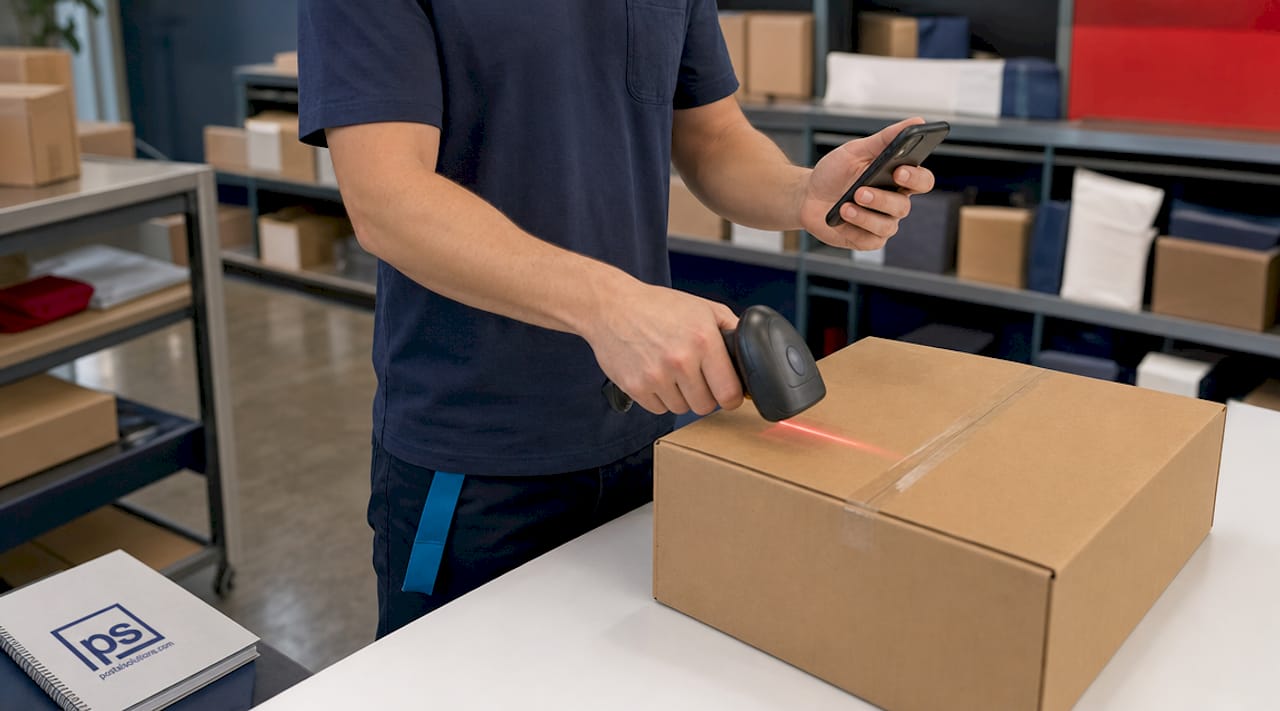
What benefits do package locker systems offer property managers and residents?
Parcel lockers solve the fundamental mismatch between delivery schedules and office hours by enabling 24/7 resident access. This single feature drives most of the resident satisfaction gains that property managers report after installation.
The operational benefits for your property are direct and measurable:
- Staff time recovery. Leasing teams no longer sort, log, or hand off packages. That time returns to leasing, maintenance coordination, and resident relations.
- Reduced package theft. Every compartment is locked, logged, and camera-monitored. Porch piracy and mailroom theft drop sharply because there is no unattended pile of boxes for anyone to walk off with.
- Elimination of package pileups. Without a locker system, packages stack up in hallways or leasing offices, creating liability and a poor first impression for prospective residents.
- 24/7 pickup convenience. Residents who work night shifts, travel frequently, or simply prefer to pick up packages at midnight can do so without any staff involvement.
- Competitive differentiation. In markets where residents compare amenities across properties, a well-managed locker system is a visible, tangible benefit that supports lease renewals and new leases.
The market data reinforces the direction the industry is moving. The global smart locker market reaching $6.7 billion by 2030 signals that automated package management is becoming a baseline expectation in multifamily housing, not a premium amenity. Properties that delay adoption are increasingly at a disadvantage in resident recruitment.
Parcel lockers should be treated as operational tools to eliminate package pileups and staff stress, not simply as storage units. The distinction matters because it changes how you plan the space, manage the system, and measure its success.
What should property managers consider when selecting a locker system?
Selecting the right package delivery locker system requires evaluating more than the upfront hardware cost. The decisions you make before installation determine whether the system runs itself or creates new management problems.
Total cost of ownership. Hardware purchase or lease price is only one line item. Software subscription fees, carrier integration costs, and any required hardware maintenance contracts add up over a five-year period. Total cost of ownership, including integration and software reliability, is more important than initial hardware price when choosing a system. A cheaper unit with unreliable software generates more resident complaints and more staff involvement than a well-supported platform.
Space planning and modularity. Measure your mailroom before you request a quote. Know your peak daily package volume, your available square footage, and your primary traffic entry and exit points. A system configured for your actual space performs better than a standard unit dropped into a room it does not fit.
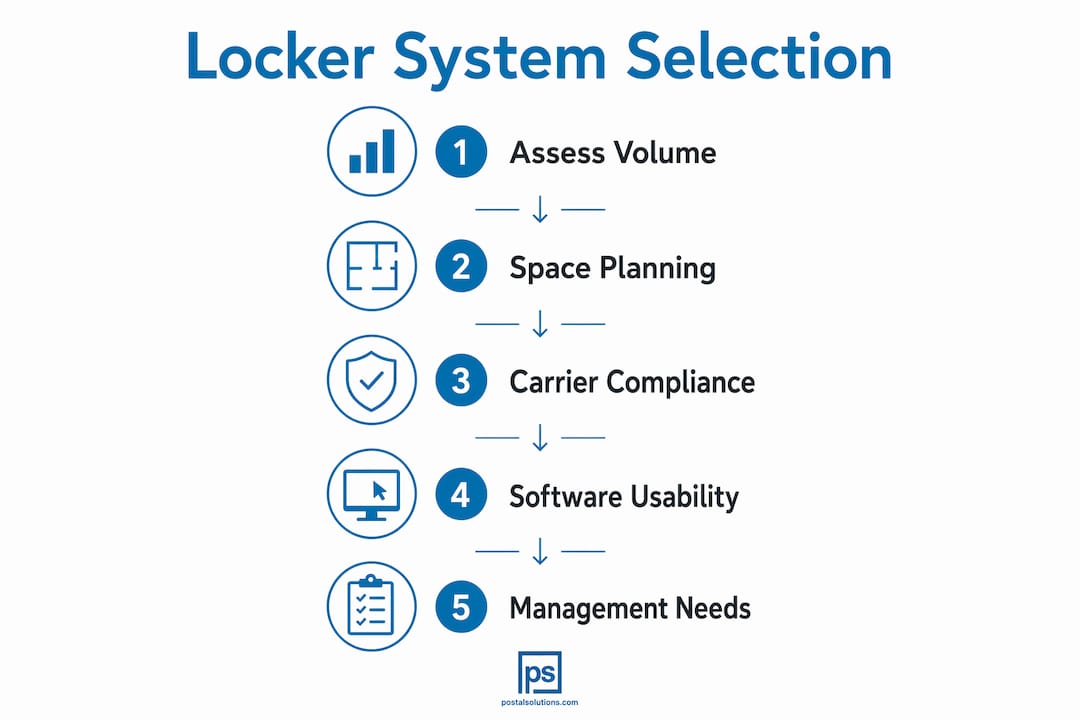
Carrier compliance. Confirm that the system you select is approved for USPS, UPS, FedEx, and Amazon deliveries. Some locker platforms have carrier-specific restrictions that limit which services can deposit packages, which creates gaps in coverage and resident frustration.
Software reliability and resident usability. Request references from properties with a similar resident profile to yours. Student housing residents interact with technology differently than senior housing residents. The notification system, app interface, and kiosk design should match your community’s demographics.
Ongoing management requirements. This is the factor most property managers underestimate. Locker systems without professional management risk becoming disorganized storage areas, causing resident dissatisfaction and generating more staff work than the system was meant to eliminate. Weekly audits, compartment resets, and package organization are not optional tasks. They are what keep the system functioning as designed.
Pro Tip: If your team does not have capacity to manage the locker system daily, price out a managed service alongside the hardware. The cost of a managed visit program is almost always lower than the hidden cost of staff time spent fixing a neglected system.
Key takeaways
A package concierge locker system delivers measurable operational value only when the hardware, software, and ongoing management work together as a complete solution.
| Point | Details |
|---|---|
| Three-component structure | Hardware, cloud software, and a user interface are all required for the system to function correctly. |
| 24/7 access drives satisfaction | Residents can retrieve packages at any hour without staff involvement, directly improving retention. |
| Modular design matters | Configure lockers in L or U shapes to match your space and manage foot traffic flow effectively. |
| Management is not optional | Without regular audits and organization, locker systems degrade and create more staff work, not less. |
| Total cost of ownership | Evaluate software fees, integration costs, and support contracts alongside hardware price before purchasing. |
Why the hardware alone will not solve your package problem
After working with properties across more than 40 U.S. states and completing over 1,200 Luxer One installations, Postal Solutions has seen the same pattern repeat itself. A property invests in a quality locker system, installs it correctly, and then assumes the work is done. Within six months, the system is full of unclaimed packages, residents are filing complaints, and leasing staff are spending more time managing the locker room than they did managing the old package pile.
The technology is not the failure point. The management discipline is.
A Luxer One system configured correctly and maintained with daily organization visits performs exactly as advertised. Compartments turn over, residents get their packages quickly, and leasing staff stay focused on their actual jobs. Without that daily discipline, the same hardware becomes a liability. Properties are essentially paying twice when they skip managed operations: once in the hardware investment and once in the staff productivity lost to fixing a system that was supposed to run itself.
The other insight worth sharing is that community demographics should drive your technology selection, not the other way around. A student housing property with 600 beds and residents who live on their phones needs a different configuration and notification approach than a 200-unit senior community where residents may prefer a simpler kiosk interface. Postal Solutions has sold Luxer One to on-campus universities, Public Private Partnerships, conventional multifamily, and municipalities. The hardware is the same. The configuration, management approach, and resident communication strategy are never the same twice.
— Postal Solutions
How Postal Solutions supports your package management operations
Postal Solutions sells and installs Luxer One locker systems for multifamily communities, student housing, senior housing, and commercial properties nationwide. As the largest Luxer One sales agency in the country, Postal Solutions brings direct experience from over 1,200 installations across more than 40 states. Beyond hardware, Postal Solutions offers daily package room management outsourcing, sending a package manager to your property up to six days per week to organize deliveries, complete weekly audits, and keep the system current. This managed approach removes the burden from your leasing team and protects the investment you made in the locker system itself. Contact Postal Solutions to discuss the right configuration for your community.
FAQ
What is a package concierge locker system?
A package concierge locker system is an automated, electronic locker solution that manages package delivery and resident pickup using hardware, cloud software, and a resident interface. It eliminates the need for leasing staff to handle packages by giving carriers direct access and residents 24/7 retrieval capability.
How does a package concierge locker work for residents?
When a carrier deposits a package, the system sends the resident an instant notification via the Package Concierge app, email, or text with a unique access code. The resident enters the code at the kiosk or uses a QR code to open the assigned compartment and retrieve their package at any time.
What are the main benefits of package lockers for property managers?
Package locker systems reduce staff time spent sorting and handing off packages, eliminate package theft, and remove liability from hallway or office package piles. They also give properties a competitive amenity that supports leasing and resident retention.
How much do package concierge locker systems cost?
Total cost of ownership includes hardware purchase or lease, software subscription fees, carrier integration, and ongoing maintenance. Evaluating all of these costs together, rather than hardware price alone, is the correct way to compare systems across vendors.
Do package locker systems require ongoing management?
Yes. Without regular audits and daily organization, locker systems can fill with unclaimed packages and become disorganized, which increases resident complaints and staff workload. Professional managed service programs, like those offered by Postal Solutions, address this by providing scheduled visits to keep the system organized and current.
Recommended
- Package Lockers for Apartments | Multifamily Smart Lockers | Postal Solutions
- Smart Package Lockers for Apartments & Student Housing | Luxer One® Premier Partner | Postal Solutions
- Blog & Insights | Postal Solutions
- Package Room Management | Daily Services for Apartments & Student Housing | Postal Solutions