What to Know Before Buying Luxer One in 2026
Discover what to know before buying Luxer One in 2026. This guide reveals essential insights for confident, hassle-free purchasing decisions.
Published

Luxer One is a smart package locker system built specifically for multifamily housing, combining durable hardware and software automation with dedicated support teams to eliminate package management chaos for property managers and residents alike. Knowing what to know before buying Luxer One means evaluating more than just the locker cabinet. You need to assess hardware certifications, software reliability, installation complexity, and the long-term vendor relationship. This guide covers every dimension of that decision so you can buy with confidence, not guesswork.
What to know before buying Luxer One: system overview
Luxer One is the industry term for a modular, automated package locker and room system designed for apartment communities, student housing, senior living, and mixed-use properties. The system integrates physical locker hardware with a cloud-based software platform, a resident-facing mobile app, carrier workflow tools, and an admin dashboard. That combination is what separates a smart locker from a simple metal cabinet.
The core value proposition is straightforward. Carriers deposit packages without staff involvement, residents receive automated pickup notifications, and property teams gain real-time visibility into package activity. The result is fewer front-desk interruptions, fewer lost packages, and measurably higher resident satisfaction scores. For properties processing dozens to hundreds of parcels daily, this operational shift is significant.
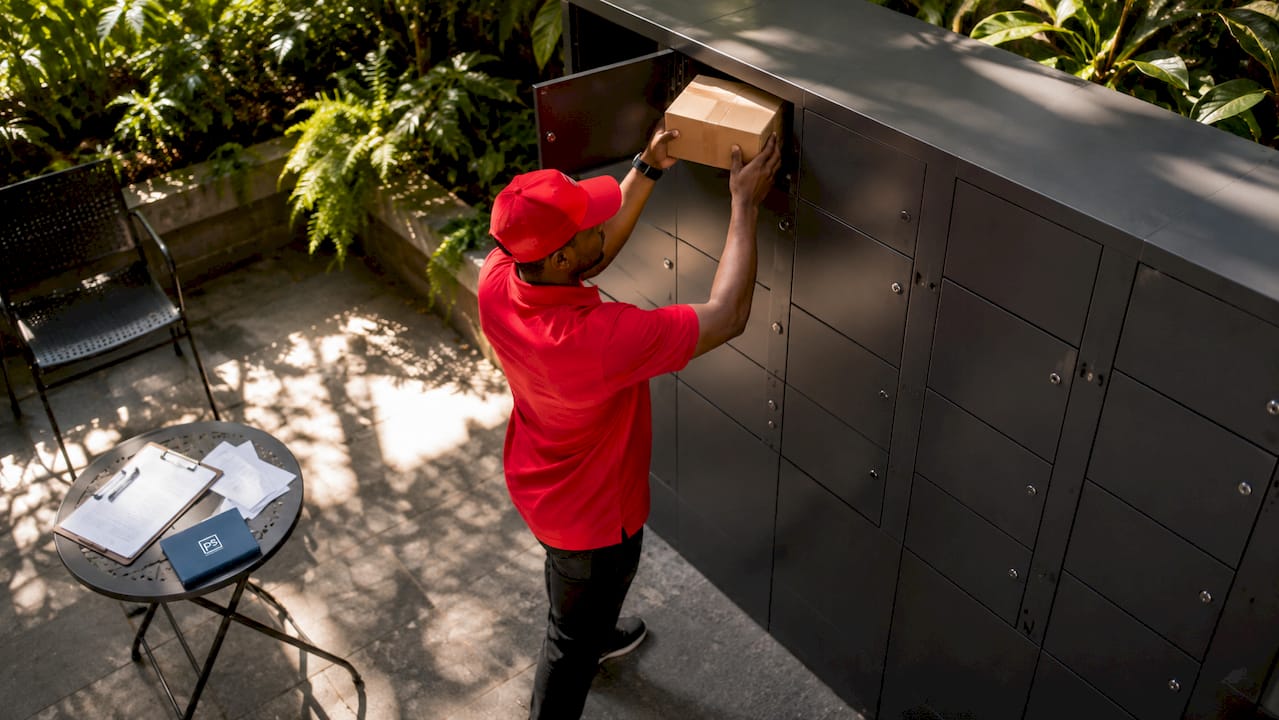
Postal Solutions has sold and installed over 1,200 Luxer One systems across more than 40% of U.S. states, working with conventional multifamily communities, student housing operators, universities, and Public Private Partnerships. That volume of real-world deployments informs every recommendation in this guide.
What hardware features and certifications come with Luxer One lockers
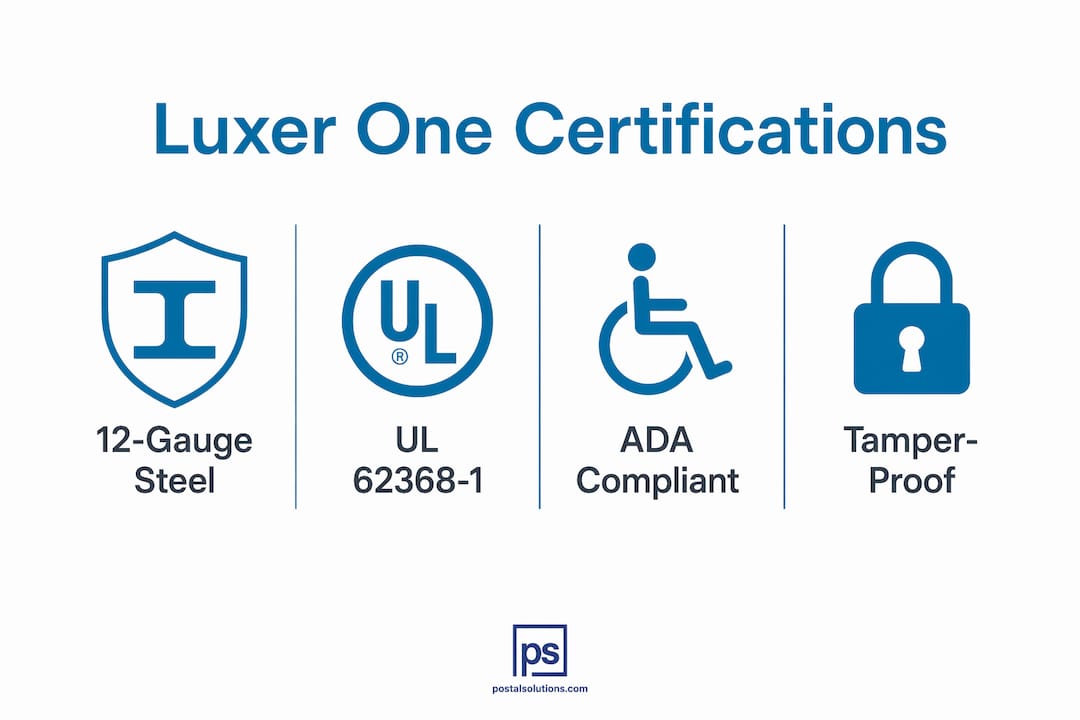
Luxer One lockers are built from 12-gauge steel compartments with tamper-proof internal hinges and modular door configurations. That construction standard matters because cheaper locker systems use thinner-gauge steel that dents, warps, and compromises security over time. The modular design means door sizes are customizable, so a property can configure compartments to accept everything from small envelopes to oversized freight boxes.
Certification is a non-negotiable factor in your Luxer One buying guide checklist. Luxer One lockers carry UL 62368-1 certification, which is the current international safety standard for audio, video, and IT equipment. This certification replaced older UL standards and confirms that the electronic components inside the locker meet modern safety requirements. For property managers, this reduces liability exposure and satisfies many insurance and building code requirements without additional documentation.
Key hardware features to verify before purchase:
- 12-gauge steel construction with tamper-proof hinges for physical security
- UL 62368-1 certification confirming electronics safety compliance
- ADA-accessible configurations with locker heights and touchscreen placement meeting federal accessibility standards
- Audit trail logging that records every access event for security review
- Modular door sizing to accommodate packages of varying dimensions
- Controlled access via unique pickup codes, preventing unauthorized retrieval
Pro Tip: Ask your vendor to confirm ADA compliance documentation before installation. Properties that skip this step sometimes face costly retrofits after go-live, particularly in communities serving senior residents or those with mobility needs.
The access controls and audit trails built into Luxer One are not just security features. They are risk management tools. When a resident claims a package was stolen or never delivered, the audit log provides timestamped evidence of every locker interaction, protecting the property from false liability claims.
How Luxer One’s software and integrations improve mailroom efficiency
The software layer is where Luxer One separates itself from basic locker hardware. The platform manages carrier workflows, resident notifications, admin reporting, and property management system (PMS) integrations in a single environment. Understanding these components before you buy prevents surprises after installation.
Here is how the software workflow operates in practice:
- Carrier deposits a package. The carrier scans the package at the locker kiosk, selects the resident unit, and places the parcel in an assigned compartment. The system logs the deposit automatically.
- Resident receives a notification. The platform sends an automated alert via email, SMS, or the Luxer One resident app with a unique pickup code. No staff involvement is required at this stage.
- Resident retrieves the package. The resident enters the code at the kiosk or uses the app to unlock the compartment. The system logs the retrieval and closes the transaction.
- Admin reviews activity. Property managers access the dashboard to monitor package volume, identify unclaimed parcels, and generate reports for operational review.
- PMS integration syncs resident data. When a resident moves in or out, the PMS integration updates the locker system automatically, reducing manual data entry errors.
The resident app is a critical touchpoint, and due diligence here is warranted. The Luxer One resident app carries a 3.0 rating on Google Play, with users reporting occasional notification mismatches and the need for manual code entry when the app fails. That rating signals a real-world limitation. Properties should confirm that SMS and email fallback notifications are active so residents always receive pickup instructions even when the app underperforms.
PMS integrations with platforms like Yardi, RealPage, and Entrata reduce the administrative burden of managing resident rosters manually. This is one of the most underappreciated efficiency gains in the system. When leasing turnover happens, the locker system updates automatically rather than requiring staff to manually add or remove resident profiles.
What to expect from Luxer One’s installation and onboarding process
Luxer One’s installation process is a multi-phase engagement, not a one-day drop-and-go. Understanding the full timeline before you sign a contract prevents scheduling conflicts and sets realistic expectations for your team and your residents.
The phases break down as follows:
- Pre-install coordination: Site review, layout planning, electrical assessment, and ADA compliance mapping. This phase determines locker placement, power requirements, and whether any structural modifications are needed.
- Hardware installation: Physical mounting of locker units, electrical connections, and network configuration. Professional installation is standard and typically completed in one to two days depending on system size.
- Software setup and testing: Platform configuration, PMS integration testing, carrier workflow setup, and admin account creation. This phase requires active participation from your property management team.
- Staff training: Leasing agents, maintenance staff, and property managers receive hands-on training on the admin dashboard, troubleshooting procedures, and resident communication protocols.
- Resident education: Onboarding materials, app download instructions, and pickup code tutorials distributed to residents before go-live.
- Go-live support: Vendor representatives are available during the first days of operation to resolve any carrier or resident issues in real time.
Pro Tip: Schedule resident education at least two weeks before go-live. Properties that communicate the new system early see faster adoption and fewer support calls during the first month of operation.
Ongoing vendor engagement after installation is where many property teams drop the ball. The locker system is not a set-and-forget investment. Software updates, carrier workflow adjustments, and resident roster changes require periodic attention. Confirm with your vendor what post-launch support looks like before you commit.
How to evaluate Luxer One’s vendor support and long-term reliability
Vendor support quality is the biggest long-term differentiator beyond hardware when choosing package lockers in multifamily settings. A locker system that goes offline during peak delivery hours creates more resident friction than no locker at all. That is why uptime guarantees and support response times deserve the same scrutiny as hardware specs.
Key factors to evaluate:
- System uptime: Luxer One claims 99.9% system uptime with 24/7 access. Confirm this guarantee is documented in your service agreement and understand the remediation process if uptime falls below that threshold.
- Dedicated support teams: Verify that your property has a named support contact, not just a general help desk queue. Response time SLAs should be in writing.
- Transparent pricing: Hidden fees for software updates, additional user licenses, or PMS integration maintenance are red flags. Demand a fully itemized cost breakdown before signing.
- Scalability: Confirm the system can accommodate growing package volume without requiring a full hardware replacement. Modular systems like Luxer One are designed for expansion, but verify the specifics for your property size.
- Resident reviews and industry reputation: Cross-reference Luxer One reviews from property management forums, Google reviews, and industry conference feedback to validate vendor claims.
“Choosing the right partner matters as much as choosing the right product.” This principle from Luxer One’s own guidance on multifamily package management reflects what Postal Solutions has observed across over 1,200 installations. The properties with the smoothest operations are those with active vendor relationships, not just installed hardware.
Properties that treat the locker purchase as a one-time transaction rather than an ongoing partnership consistently underperform on resident satisfaction metrics. Budget for ongoing management, not just the initial capital expense.
How does Luxer One compare to other package management options?
| Feature | Luxer One | Basic package room | Manual staff management |
|---|---|---|---|
| Hardware quality | 12-gauge steel, UL certified | Varies, often unrated | No hardware |
| Automated notifications | Yes, app, SMS, email | Limited or none | Manual or none |
| PMS integration | Yardi, RealPage, Entrata | Rarely available | Not applicable |
| ADA compliance | Documented, configurable | Often not addressed | Not applicable |
| Audit trail | Full access logging | Rarely available | None |
| Installation support | Multi-phase, professional | Minimal | None |
| Vendor support | Dedicated teams, 24/7 | Limited | None |
| Scalability | Modular, expandable | Fixed capacity | Dependent on staffing |
The comparison makes clear that Luxer One’s value is not just in the locker cabinet. The software integration, compliance documentation, and professional support model are what justify the investment over lower-cost alternatives. A basic package room without automation shifts the operational burden back to your staff, which means you are paying twice: once in capital costs and again in staff time.
Key takeaways
Buying Luxer One requires evaluating hardware certifications, software reliability, installation planning, and vendor support quality together, not in isolation.
| Point | Details |
|---|---|
| Hardware certification matters | UL 62368-1 certification and 12-gauge steel construction reduce liability and ensure long-term durability. |
| Software has real limitations | The resident app carries a 3.0 Google Play rating; confirm SMS and email fallbacks are active before go-live. |
| Installation is multi-phase | Pre-install coordination, staff training, and resident education each require dedicated time and planning. |
| Vendor support is the long-term differentiator | Documented uptime guarantees, transparent pricing, and named support contacts separate strong vendors from weak ones. |
| Scalability protects your investment | Modular systems allow expansion without full hardware replacement as package volume grows. |
What Postal Solutions has learned from 1,200 Luxer One installations
After more than a decade selling and installing Luxer One systems across conventional multifamily, student housing, senior communities, and university campuses, the pattern is consistent. Properties that succeed with Luxer One treat it as an operational system, not a piece of furniture.
The hardware is excellent. The 12-gauge steel, the UL certification, the modular design. Those are not marketing claims. They hold up in the field. What separates a high-performing installation from a frustrating one is almost always the human layer: how well staff were trained, how clearly residents were communicated with, and how actively the property team engages with the vendor after go-live.
The resident app limitation is real and worth addressing directly. A 3.0 Google Play rating is not a dealbreaker, but it is a signal. Properties that configure SMS and email notifications as primary delivery channels and treat the app as a secondary option consistently report fewer resident complaints. Do not assume the app will carry the load.
The most underutilized feature across properties we work with is the admin dashboard. The reporting tools show package dwell times, peak delivery windows, and unclaimed parcel trends. That data is genuinely useful for staffing decisions and resident communication strategies. Most property teams never look at it after the first month.
For properties that want a full-service approach, Postal Solutions manages daily package room visits up to six days per week, completing weekly audits and keeping the locker system organized and current. This reduces resident friction at pickup and saves property management staff from fielding package-related calls. Without that layer of management, many properties end up paying twice: once for the system and again in lost staff productivity.
— Postal Solutions
Work with Postal Solutions on your Luxer One purchase
Postal Solutions is the largest Luxer One sales agency in the United States, with over 1,200 Luxer One installations completed across more than 40% of U.S. states. From site assessment and system configuration to installation and ongoing package room management, Postal Solutions manages the full process so your team does not have to figure it out alone. Properties that want a complete solution can combine a Luxer One locker or package room system with six-day-per-week managed package room visits, weekly audits, and real-time organization. To get a proposal tailored to your property’s package volume and layout, contact Postal Solutions directly for a consultation.
FAQ
What is Luxer One and how does it work for apartments?
Luxer One is a smart package locker system that automates package receipt, storage, and resident pickup through hardware and software integration. Carriers deposit packages directly into lockers, and residents receive automated notifications with unique pickup codes.
How long does Luxer One installation take?
Luxer One installation is a multi-phase process covering site review, hardware setup, software configuration, and staff training, typically completed over several days to two weeks depending on property size. Pre-install coordination and ADA planning are required before hardware arrives on site.
Does Luxer One integrate with property management software?
Yes. Luxer One integrates with major PMS platforms including Yardi, RealPage, and Entrata to sync resident data automatically and reduce manual roster management for property teams.
What is the Luxer One system uptime guarantee?
Luxer One claims 99.9% system uptime with 24/7 access. Buyers should confirm this guarantee is documented in the service agreement and understand the remediation process if uptime falls below that level.
Is the Luxer One resident app reliable?
The Luxer One resident app has a 3.0 rating on Google Play, with reported issues including notification mismatches. Properties should activate SMS and email fallback notifications to maintain reliable resident communication when the app underperforms.