Mailroom Management Best Practices for Property Managers
Discover essential mailroom management best practices for property managers. Streamline operations, enhance resident satisfaction, and ensure efficiency.
Published

Mailroom management best practices are defined as the standardized processes, technology systems, and security policies that ensure every piece of mail and every package moves from receipt to resident pickup without error, delay, or dispute. For property managers and facility directors overseeing multifamily housing, student housing, or senior communities, the mailroom is not a back-office function. It is a direct touchpoint for resident satisfaction. When packages go missing or sit unclaimed for days, residents notice. The practices covered here address workflow, technology, security, and organization so your operations hold up under real volume and real staffing conditions.
1. Mailroom management best practices start with a defined workflow
A mailroom without a documented workflow is a mailroom that depends on whoever showed up that day. Standardized, documented workflows that avoid reliance on memory create full audit trails and reduce errors at every stage. The workflow is not complicated, but it must be consistent.
The standard chain of custody follows six steps:
- Receive every item at the point of entry and log it immediately.
- Scan each package using a barcode scanner or mobile device to create a digital record.
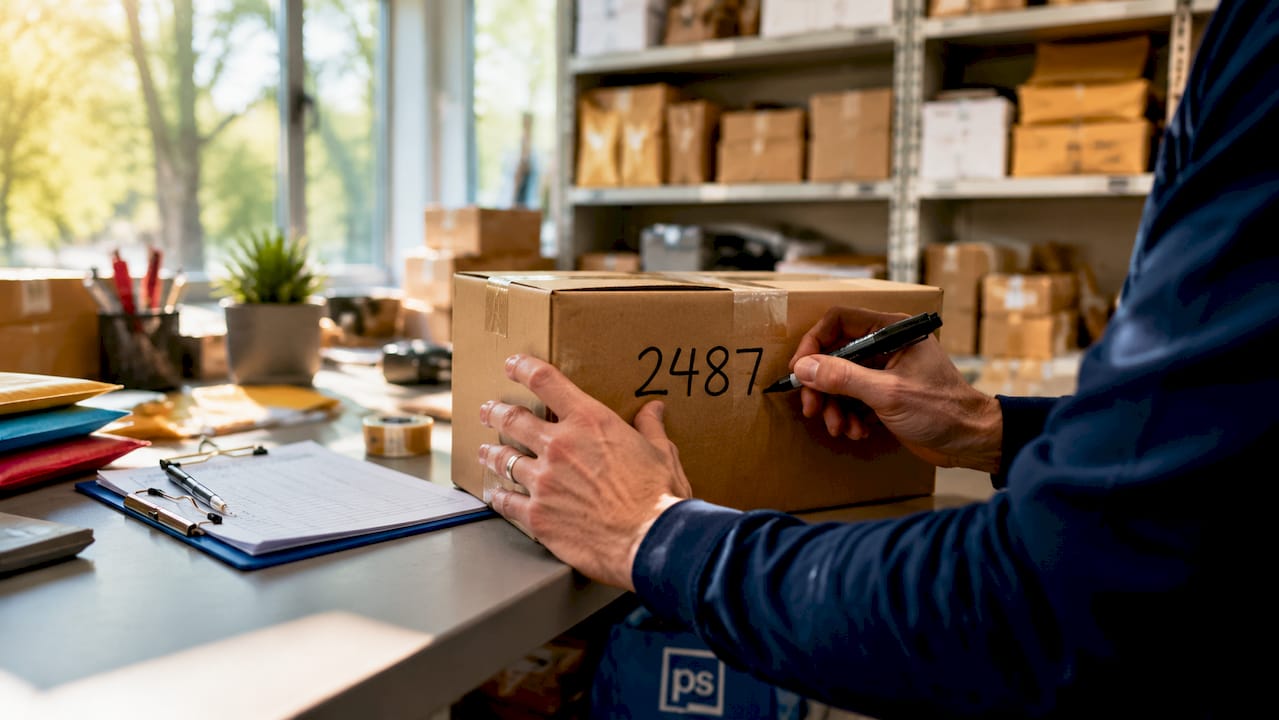
- Link the item to a specific resident unit by confirming the address label or writing the unit number directly on the box.
- Place the package in a designated, system-logged location so any staff member can locate it.
- Notify the resident automatically via text, email, or app alert.
- Record the pickup when the resident retrieves the item to close the chain of custody.
Treating mailroom intake as a chain of custody process stabilizes operations and prevents the failure modes that come from informal practices. A property that skips step three or step six will spend staff time fielding “Where is my package?” calls every week.
Pro Tip: Write the unit number on every box in large, clear digits before placing it in the package room. This single step cuts retrieval time and reduces misplacement by making the correct unit visible at a glance, even when packages are stacked.
2. How to modernize mailroom operations with technology
Digital tracking replaces paper logs and spreadsheets with real-time visibility. Real-time digital tracking enables immediate logging, automated notification, and shared operational views that reduce congestion and delays. That visibility matters most in high-volume environments like student housing, where dozens of packages may arrive on a single afternoon.
The technology stack for a modern residential mailroom typically includes:
- Barcode or QR scanning software that logs each item on arrival and links it to a resident record
- Automated notification systems that send residents a text or email the moment their package is logged
- Smart locker systems like Luxer One that allow contactless, 24/7 resident pickup without staff involvement
- Package room management software that tracks inventory, flags unclaimed items, and generates weekly audit reports
- Integration with property management platforms so leasing staff can view package status without entering the package room
Automation and visibility reduce the side tasks that burden facilities teams and pull leasing staff away from their primary responsibilities. A leasing agent who spends 30 minutes per day answering package questions is a leasing agent not doing leasing work. Technology closes that gap.
Automated notifications reduce resident inquiries and increase satisfaction by delivering updates through familiar messaging platforms. Residents who receive an immediate alert are far less likely to call the front desk.
3. What security measures protect mail and packages in residential mailrooms
Security in a residential mailroom means controlled access, written policies, and coordination with the right authorities. Federal guidance from the GSA mandates both agency-level policy and facility-specific mail security plans, with coordination to security authorities. While that standard applies to federal facilities, it sets a clear benchmark that property managers can adapt directly.
A sound mailroom security framework includes:
- Written access control policies that define who may enter the package room and under what conditions
- Controlled entry systems such as key fobs, PIN codes, or smart locker access that log every entry
- Coordination with USPS and postal inspection services for issues involving mail theft or suspicious items
- Staff training on security protocols, including how to handle damaged packages, suspicious deliveries, and unauthorized access attempts
- Documented emergency procedures that staff can follow without relying on a single person’s knowledge
“Modern mailrooms include documented, repeatable processes and controlled access as baseline operations, built to withstand staff absences and volume fluctuations.” — The MCS Group
Best practices include documented security policies and integration with postal inspection services to ensure safe mail handling. A property that has never written down its mailroom security policy is one incident away from a serious liability exposure.
4. How mailroom organization improves efficiency and resident satisfaction
Physical organization is the foundation that makes every other practice work. A cluttered package room with no clear zones forces staff to search for items and forces residents to wait. Clear labeling, defined storage zones, and accessible pathways are not optional upgrades. They are the baseline.
| Disorganized mailroom | Organized mailroom |
|---|---|
| Packages stacked by arrival order | Packages sorted by unit number or alphabetical zone |
| No floor markings or zone labels | Clear floor zones with labeled shelving sections |
| Staff rely on memory for package locations | Every item logged in software with a known location |
| Residents search independently, causing congestion | Residents retrieve quickly with minimal staff assistance |
| Unclaimed packages accumulate without tracking | Weekly audits flag unclaimed items for follow-up |
Mounted mail units, clearly marked sorting bins, and open floor pathways reduce the time any staff member spends locating a specific item. Standardizing every parcel’s path through a mailroom reduces confusion and speeds issue resolution. The layout should allow a substitute staff member to operate the room on day one without a walkthrough.
Pro Tip: Assign a specific shelf section or bin to each floor or building wing, not just alphabetically by last name. Residents move, names change, and unit numbers stay constant. Organizing by unit number is the most stable system long-term.
5. Why documented SOPs and coverage planning prevent service failures
A mailroom that runs well only when one specific person is present is not a managed mailroom. It is a dependency. Mailroom service continuity depends on documented procedures that include cross-training and flexible scheduling to handle volume surges and absences without service drop-off.
A standard operating procedure (SOP) for a residential mailroom should cover:
- Daily intake and scanning procedures
- Notification triggers and escalation steps for unclaimed packages
- Weekly audit process and reporting format
- Access control procedures for residents and vendors
- Steps for handling damaged, refused, or undeliverable items
IFMA advocates for SOP training to reduce fragmentation and move mailroom tasks away from reception staff who are already managing other responsibilities. When the SOP is written and staff are cross-trained, a volume spike during move-in week or a staff absence does not create a backlog that takes days to clear.
6. What performance metrics define mailroom management success
Measuring mailroom performance turns a reactive operation into a managed one. GSA recommends defining goals and metrics at both the agency and facility level to enhance resource allocation and effective process management. Property managers can apply the same logic directly.
The most useful mailroom KPIs for residential properties include:
- Average package dwell time: how long packages sit unclaimed before pickup
- Resident notification response rate: the percentage of residents who pick up within 24–48 hours of notification
- Weekly audit discrepancy rate: the number of items in the room that do not match the system log
- Staff time per package: the total staff minutes spent per item from intake to pickup
- Resident complaint volume: the number of package-related service requests or complaints per month
Tracking these metrics monthly gives property managers a clear picture of where the operation is working and where it is not. A rising dwell time, for example, signals that the notification system is not reaching residents effectively. A high discrepancy rate signals a scanning or logging failure.
Key takeaways
Effective mailroom management in residential properties requires a documented chain of custody, digital tracking, and written security policies applied consistently across every shift and every volume level.
| Point | Details |
|---|---|
| Document every step | A six-step chain of custody from receipt to pickup eliminates reliance on staff memory. |
| Use technology for notifications | Automated alerts via text or email reduce resident inquiries and speed up package retrieval. |
| Write security policies down | Written access control and emergency procedures protect residents and reduce liability. |
| Organize by unit number | Sorting packages by unit number is more stable than alphabetical sorting as residents change. |
| Measure performance monthly | Tracking dwell time, audit discrepancies, and complaint volume turns reactive management into proactive oversight. |
The real cost of treating the mailroom as an afterthought
After working with multifamily and student housing communities across the country, one pattern stands out clearly. Properties that treat the mailroom as a low-priority task end up paying for that decision twice. They pay once in staff payroll, as leasing agents and maintenance teams field package questions that should never reach them. They pay again in lost productivity, because every minute spent searching for a misplaced box is a minute not spent on leasing, maintenance, or resident retention.
The properties that get this right share one trait. They treat the package room as a managed service, not a storage closet. That means daily organization, weekly audits, and a system that any staff member can operate without a handoff meeting. It also means investing in the right technology. A Luxer One locker system or a well-managed package room does not just save time. It removes an entire category of resident friction that compounds quietly until it shows up in lease renewal rates.
The hardest part is not the technology or the layout. The hardest part is consistency. A great SOP that nobody follows is just a document. The properties that see real results are the ones that build accountability into the process, whether through software audits, third-party management, or both. If your package room management depends on whoever is working that day, the system is not working.
— Postal Solutions
How Postal Solutions supports mailroom management in multifamily housing
Postal Solutions manages daily package room operations for conventional multifamily, student housing, and senior housing communities across the United States. The service includes daily visits to organize the package room, marking unit numbers on packages, and completing weekly audits using the property’s existing software or a new system. For properties that need a full hardware solution, Postal Solutions is the largest Luxer One sales agency in the country, with over 1,200 installations in more than 40% of U.S. states. Properties that want both hardware and ongoing management can get a Luxer One locker system paired with six-day-per-week managed visits. To learn more about outsourced mailroom services tailored to your property type, visit Postal Solutions.
FAQ
What is the most important mailroom management best practice?
The single most important practice is creating a documented chain of custody that logs every item from receipt to resident pickup. Without this, packages go missing and staff spend significant time resolving disputes.
How do automated notifications improve mailroom efficiency?
Automated notifications via text or email alert residents the moment their package is logged, which reduces front-desk inquiries and speeds up pickup. Properties using automated alerts see fewer unclaimed packages and shorter average dwell times.
What should a mailroom security policy include?
A mailroom security policy should cover access control, staff training on suspicious items, coordination with postal inspection services, and documented emergency procedures. The GSA recommends both a facility-level plan and broader organizational guidelines as the baseline standard.
How often should a package room audit be completed?
Weekly audits are the standard for residential package rooms. Audits should reconcile the physical inventory against the software log and flag any items that have been unclaimed beyond the property’s stated pickup window.
When does it make sense to outsource mailroom management?
Outsourcing makes sense when package volume exceeds what leasing or maintenance staff can manage without pulling them from primary responsibilities. It also makes sense when staff turnover creates repeated gaps in service continuity.