Apartment Package Acceptance Policy Checklist for Managers
Enhance resident satisfaction with our apartment package acceptance policy checklist. Streamline package management and reduce complaints effectively.
Published

An apartment package acceptance policy checklist is a formal framework that defines exactly how your property receives, logs, secures, and releases packages to residents. Without one, package rooms become disorganized, liability disputes increase, and resident satisfaction drops. Property managers who treat this checklist as a living operational document, not a one-time form, consistently see fewer lost packages and fewer staff hours spent resolving delivery complaints. Postal Solutions works with multifamily communities across the country and has seen firsthand how a clear, enforced policy separates well-run properties from chaotic ones.
1. What are the essential components of a package acceptance policy checklist?
A complete package acceptance policy covers six core areas. Miss any one of them and you create a gap that will eventually cost you time, money, or a frustrated resident.
Receiving area requirements The package room or designated receiving area must be secure, clearly labeled, and accessible only to authorized personnel. Define who is authorized to accept packages on behalf of the property. That list should be written, not assumed.
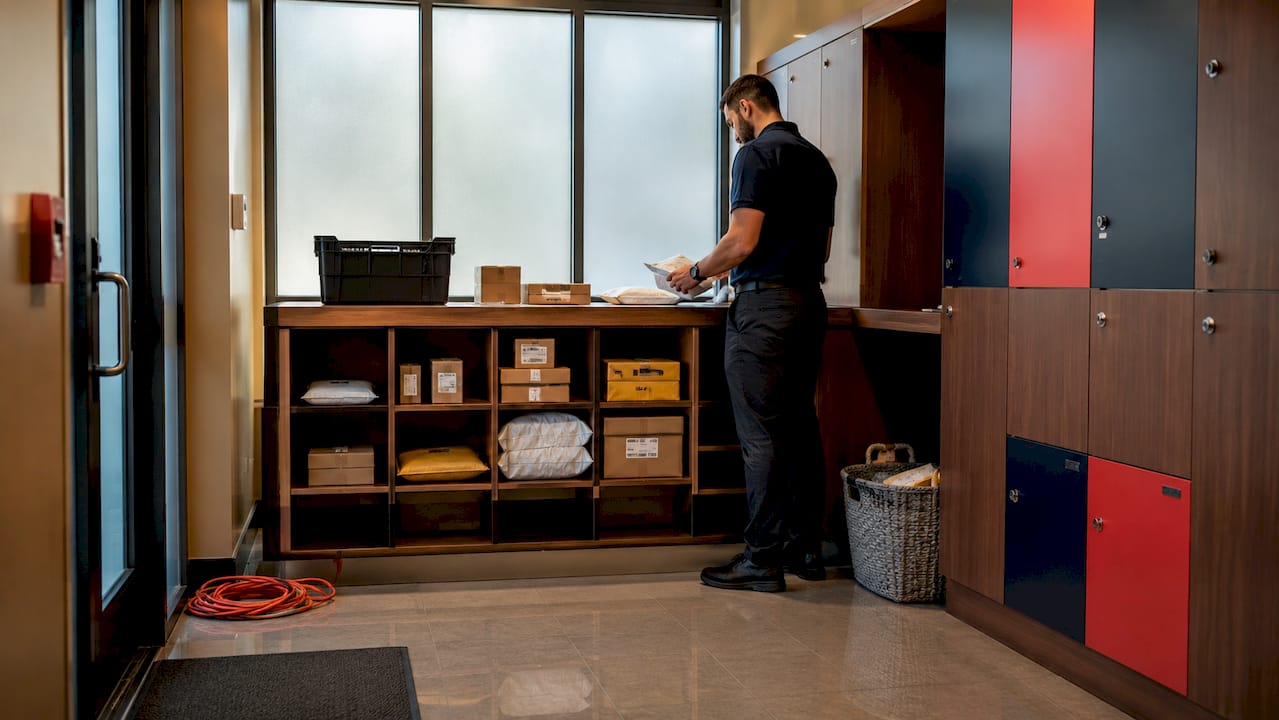
Package logging and acceptance procedures Every incoming package needs a log entry at the moment of receipt. Record the carrier, tracking number, resident name, unit number, date, and time. This log is your first line of defense in any dispute.
Resident notification protocols Automated notifications via text or email are the standard best practice for timely pickup and reducing lost packages. Manual phone calls do not scale and create inconsistency. Choose a notification system and apply it to every package without exception.
Liability and damage disclaimers Your policy must state clearly that the property accepts packages as a courtesy, not as a legal obligation. Include this language in the lease and in your move-in packet.
Size restrictions and special item handling Define maximum package dimensions your facility can accommodate. Packages that exceed those dimensions require a separate process, which you should document before the situation arises.
Acceptance hours Post your acceptance hours at the receiving area and in your resident portal. Carriers need to know when staff is available, and residents need to know when to expect deliveries.
- Secure, authorized receiving area
- Standardized log at time of receipt
- Automated resident notification system
- Written liability disclaimer in the lease
- Size and weight restrictions documented
- Posted acceptance hours for carriers and residents
Pro Tip: Include your package policy as a standalone addendum in the lease, not buried in general community rules. Residents who sign a dedicated addendum are far less likely to dispute liability later.
2. How do USPS addressing guidelines affect your incoming package checklist?
Correct addressing is the single most preventable cause of misdelivered packages in apartment communities. USPS requires residents to use a secondary address line with standard abbreviations such as APT, STE, or UNIT for their apartment number. Combining the street address and unit number on one line causes sorting failures inside USPS automated systems.
Your incoming package checklist should include an addressing education step at move-in. Give every new resident a printed card or digital guide showing the correct format:
- Resident full name
- Street address on line one
- APT [unit number] on line two
- City, state, and ZIP code on line three
Residents should also submit a change of address exactly 14 days before their move-in date. USPS processes these requests with a 14-day lead time to update routing. Missing that window means mail and packages route to the previous address for weeks.
Correct addressing reduces the volume of packages that arrive with incomplete or ambiguous unit information. That directly reduces the time your team spends tracking down which resident owns an unlabeled box.
3. What security and operational procedures prevent package theft and loss?
Package theft is a real operational risk, and your policy needs specific procedures to address it. Physical security and controlled access for package rooms reduce theft significantly. Requiring photo ID at pickup is a best practice that many properties now combine with package scans to create a complete chain of custody.
Your checklist should include:
- Controlled access entry to the package room, using a key fob, PIN, or smart lock
- Identity verification at pickup, either photo ID or a unique pickup code
- A package scan or log update at the moment of resident pickup
- A written abandonment policy with a defined retention period
- Clear signage stating the property’s liability position
Properties that install USPS key keeper boxes must obtain official USPS authorization. Proper lobby placement and direct coordination with USPS are required for the system to function correctly. The logical lobby layout enables easy key retrieval, building access, mailroom entry, and key return by postal carriers.
Liability transfer is a point most residents misunderstand. Once a carrier marks a package as delivered, responsibility typically shifts to the resident unless your policy explicitly states otherwise. Communicate this during move-in, not after a dispute.
Pro Tip: Post a one-page summary of your package security procedures inside the package room itself. Residents who see the rules at the point of pickup comply more consistently than those who only read them once in a lease.
4. How should your policy handle special situations and peak delivery periods?
Standard procedures work well for average volume. Peak periods and unusual deliveries require a separate section in your policy. Oversized or unusual packages may require prior resident notification and separate handling due to space and security concerns. Your policy should define what qualifies as oversized and what the process is when one arrives.
The table below shows how standard procedures compare to peak period adjustments:
| Situation | Standard Procedure | Peak Period Adjustment |
|---|---|---|
| Package retention period | 5 days after notification | Reduce to 3 days during holidays |
| Oversized items | Resident notified, separate area | Pre-schedule delivery window |
| Storage capacity | Package room at normal capacity | Overflow area designated in advance |
| Notification method | Automated text or email | Add a second reminder at 48 hours |
| Unclaimed packages | Return to carrier after retention period | Expedite return to avoid overflow |
Communities that enforce a 5-day abandonment policy after notification prevent storage overflow effectively. During holiday volume spikes, that window often needs to shrink to 3 days. Build both timelines into your policy so staff does not have to make judgment calls during the busiest weeks of the year.
Package lockers are the most reliable solution for peak period overflow. Postal Solutions sells and installs Luxer One locker systems that give residents 24-hour access and eliminate the bottleneck of staffed pickup windows entirely.
5. How to communicate your package delivery policy to residents
A policy that residents do not understand is a policy that does not work. Clear, upfront communication of package policies reduces conflicts and improves resident compliance. Property management experts consistently identify communication gaps as the root cause of most package disputes.
Deliver the policy in three formats: a signed lease addendum, a printed move-in guide, and a digital version in your resident portal. Each format reaches a different type of resident. The signed addendum creates a legal record. The printed guide gets read at move-in when residents are paying attention. The digital version is where residents go when they have a question six months later.
Schedule a brief policy review during the move-in walkthrough. Cover the package room location, pickup hours, notification process, and liability position in under five minutes. That five-minute conversation prevents the majority of disputes your team would otherwise handle by phone or email.
6. When should you review and update your package handling procedures?
Package handling procedures should be reviewed at least once a year and after any significant operational change. Carrier behaviors shift, resident volume grows, and technology options expand. A policy written in 2022 may not reflect how UPS, FedEx, Amazon Logistics, or USPS currently operate at your property.
Trigger a policy review after any of these events: a package theft incident, a carrier complaint about access, a storage overflow during peak season, or the installation of new package room technology. Each event reveals a gap in the current policy.
Collaboration with USPS officials to optimize mail delivery infrastructure inside apartment complexes is a recognized best practice. Schedule an annual meeting with your local USPS postmaster to confirm that your addressing standards, key keeper setup, and delivery hours still align with current carrier requirements. That one meeting can prevent months of misdeliveries.
Key takeaways
A complete apartment package acceptance policy checklist covers security, addressing standards, liability communication, and peak period procedures to protect both the property and its residents.
| Point | Details |
|---|---|
| Use a formal checklist | Document receiving, logging, notification, liability, and acceptance hours in one policy. |
| Enforce USPS addressing standards | Require residents to use a secondary address line with APT or UNIT at move-in. |
| State liability clearly | Include a written disclaimer in the lease so residents understand when responsibility transfers. |
| Plan for peak periods | Shorten retention windows and designate overflow areas before holiday volume arrives. |
| Review procedures annually | Update the policy after any theft, overflow, or carrier access issue to close operational gaps. |
What we have learned from managing package rooms across the country
After working with multifamily communities since 2016, the pattern is consistent: properties that struggle with packages are not struggling because of volume. They are struggling because the policy was never written down, or it was written once and never enforced.
The most common mistake is treating the package room as a storage room. It is not. It is an operational area with a defined workflow, and every person who touches it, from the carrier to the leasing agent to the resident, needs to know the rules. When the rules are clear and posted visibly, compliance follows without constant staff intervention.
The second mistake is waiting until a theft or overflow incident to formalize the policy. By then, you are reacting instead of managing. The properties that run the cleanest package operations are the ones that built the policy before the problem arrived.
Resident education at move-in is worth more than any technology investment alone. A resident who understands your policy on day one is a resident who picks up packages on time, addresses their mail correctly, and does not call the leasing office demanding answers you cannot give. Pair that education with the right infrastructure, and the package room runs itself.
— Postal Solutions
How Postal Solutions supports your package acceptance operations
Postal Solutions manages daily package room operations for conventional multifamily, student housing, and senior housing communities across the country. The service includes daily visits to organize the package room, marking unit numbers on incoming boxes, and completing weekly audits using your existing package room software. For communities that need a full infrastructure upgrade, Postal Solutions is the largest Luxer One sales agency in the United States, with over 1,200 installations across more than 40% of U.S. states. Whether you need managed daily operations, a new locker system, or both, Postal Solutions offers a complete package management solution built specifically for multifamily properties.
FAQ
What should an apartment package acceptance policy include?
A complete policy covers a secure receiving area, a package log, resident notification procedures, liability disclaimers, size restrictions, and posted acceptance hours. Each element should be documented in writing and included in the resident lease.
How does USPS addressing affect apartment package delivery?
Residents must use a secondary address line with abbreviations like APT or UNIT for their apartment number. Combining the street address and unit number on one line causes USPS sorting failures and misdeliveries.
When does liability transfer from the property to the resident?
Liability typically transfers to the resident once a carrier marks a package as delivered. Properties should state this clearly in the lease addendum and review it with residents during move-in.
How long should apartments hold unclaimed packages?
Many communities enforce a 5-day retention period after resident notification, then return or dispose of unclaimed packages. During peak delivery periods like holidays, a shorter 3-day window prevents storage overflow.
What is the best way to handle package overflow during the holidays?
Designate an overflow area in advance, shorten the retention period, add a second automated reminder at 48 hours, and consider installing a Luxer One locker system to give residents 24-hour self-service pickup access.
Recommended
- Apartment Package Management Services | Multifamily Package Room Operations | Postal Solutions
- Meet Package Demand for Metro Apartment Renters | Postal Solutions
- Package Lockers for Apartments | Multifamily Smart Lockers | Postal Solutions
- Cost Per Package Delivered: Apartment Manager’s 2026 Guide | Postal Solutions