Avoid Install Delays: Luxer One Refrigerated Lockers for Property Teams
Avoid Install Delays: Luxer One Refrigerated Lockers for Property Teams Luxer One refrigerated lockers give properties a secure, temperature-controlled compartment tied directly into the Luxer One package platform, so perishable deliveries
Published
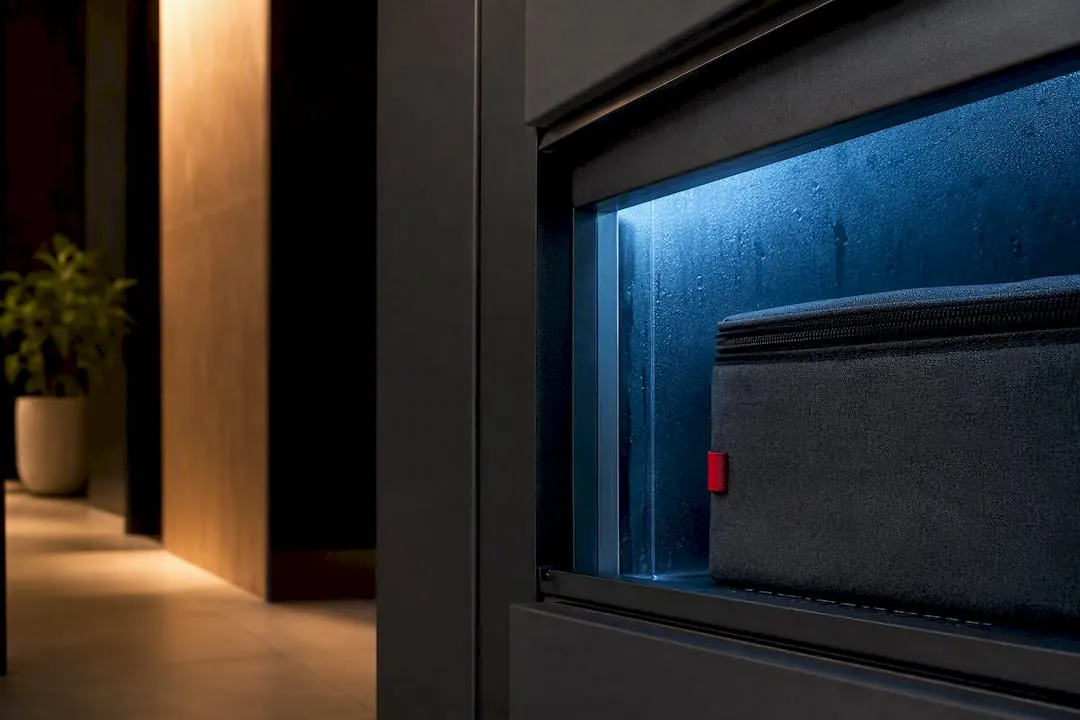
Luxer One refrigerated lockers give properties a secure, temperature-controlled compartment tied directly into the Luxer One package platform, so perishable deliveries stop sitting on a leasing office counter or in a staff member’s personal fridge. Residents unlock their own compartment with a unique code, staff handling drops to nearly zero, and the hardware integrates with the same reporting system already tracking your standard packages. For any property receiving regular grocery, meal-kit, or medication deliveries, that combination is worth a serious look.
TL;DR:
- Proper site planning, including exact measurements and power sources, is critical to avoid delays during refrigerated locker installation.
- The lockers are suitable for properties with high-volume delivery needs, offering configurations up to three doors with adjustable shelving.
- The system logs deliveries automatically, providing timestamped records that reduce staff intervention and spoilage disputes.
- Indoor placement typically speeds up installation, meaning properties should prepare for sheltered sites with nearby power and network connections.
- Successful deployment depends more on operational planning and resident communication than on choosing specific hardware features.
Table of Contents
- What Are Luxer One Refrigerated Lockers?
- What Specs Should You Check Before Requesting a Quote?
- How Do Refrigerated Lockers Connect to the Luxer One System?
- What Operational Benefits Do Refrigerated Lockers Deliver?
- What Do You Need Before a Site Survey?
- How Does a Delivery and Pickup Actually Work?
- Ready to Move Forward? Here’s the Procurement Path
- Why Property Teams Work With Postal Solutions on Luxer One Installs
- What Property Managers Get Wrong About Refrigerated Lockers
- Get a Quote or Site Survey for Refrigerated Lockers
- Sources
- FAQ
What Are Luxer One Refrigerated Lockers?
Luxer One markets its refrigerated locker line, sometimes called the Luxer Fridge, as a purpose-built alternative to staff refrigerators and unmonitored countertops. The compartments run on True Refrigeration technology, a commercial refrigeration brand chosen for reliability under constant cycling rather than the intermittent use a household appliance is designed for. That distinction matters more than it sounds: a package room refrigerator opens dozens of times a day, and consumer-grade units are not built for that duty cycle.
Security comes from Luxer One’s proprietary locking hardware built into 12-gauge steel cabinets, the same construction standard used across the company’s refrigerator locker line. Adjustable shelving lets a property reconfigure interior space for anything from a single grocery bag to a stack of meal-kit boxes. Notable features include:
- 1-door and 3-door configurations for different delivery volumes
- Adjustable shelving that adapts to grocery bags, meal-kit boxes, or flower arrangements
- Indoor and outdoor placement options depending on site layout
- A natural refrigerant approach that aligns with current environmental standards
- Battery backup and networked connectivity to keep units operational during short outages
A household refrigerator lacks the delivery logging and restricted access that a purpose-built locker provides, which is the core reason properties move away from the shared-fridge model in the first place.
What Specs Should You Check Before Requesting a Quote?
Specifications drive placement decisions long before a unit ever ships. Weight and footprint determine whether a location needs reinforced flooring or a different spot altogether, and getting this wrong after a purchase order is signed creates expensive change orders.
Here’s what to confirm early:
- Weight and footprint: varies by 1-door versus 3-door configuration, so confirm exact dimensions against your intended location’s floor loading capacity
- Temperature range: refrigerated compartments hold food-safe cold temperatures suitable for groceries, meal kits, and similar perishables
- Power: 120VAC service is the standard recommendation
- Connectivity: a wired Ethernet or CAT6 network jack near the unit keeps the system reliably online
- Capacity trade-off: a 1-door unit fits smaller sites with lighter delivery volume, while a 3-door configuration handles higher throughput properties like larger student housing communities
None of this substitutes for exact numbers. Download the official spec guide for precise measurements, weight figures, and mounting notes before you finalize a site plan.
How Do Refrigerated Lockers Connect to the Luxer One System?
Refrigerated compartments run on the same software backbone as Luxer One’s standard package lockers. When a carrier places an item inside, the system issues a unique access code and pushes a notification to the resident, exactly like a dry-goods locker delivery, just with a cold interior. Every drop and every pickup gets logged automatically, which gives your team a timestamped record without anyone manually tracking it.
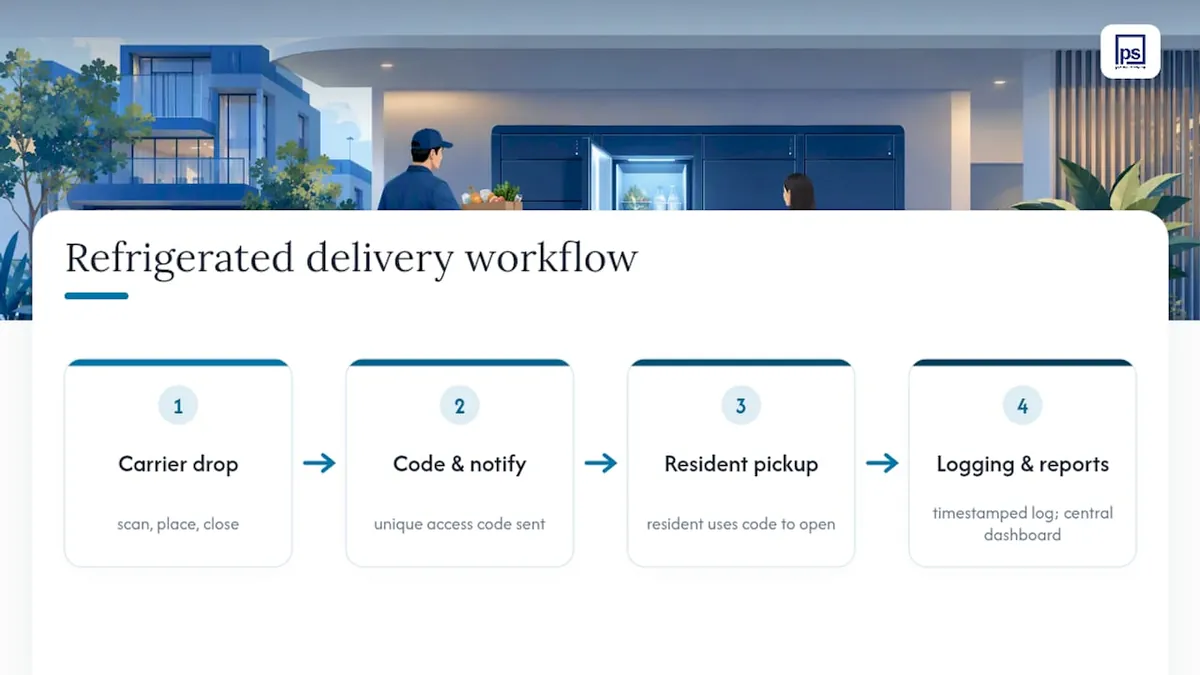
On the property management side, refrigerated lockers report through the same centralized dashboard as the rest of a Luxer One deployment, with integrations available for platforms including Yardi, Entrata, RealPage, ConciergePlus, and secure FTP feeds for custom reporting setups. Multi-site operators can pull activity across an entire portfolio from one screen instead of checking each property separately.
Carrier workflow stays simple: a driver scans or selects the appropriate locker, places the item, and closes the door, with the system handling notification and access from there.
Pro Tip: Post short, clear handoff instructions near the delivery point and train your front desk to know the drop procedure. Drivers who understand the process on the first visit are far less likely to leave perishables at the front desk instead.
What Operational Benefits Do Refrigerated Lockers Deliver?
The liability argument alone justifies a hard look at this hardware. When a resident retrieves their own groceries or meal kit with a unique code, the chain of custody runs from carrier to resident with no staff member touching the item in between, which reduces the operational burden tied to spoilage complaints and misplaced deliveries.
Day-to-day operations shift too:
- Front desk and maintenance staff stop fielding interruptions to hunt down a resident’s cold delivery
- Spoilage disputes drop sharply because packages move straight from carrier to secure compartment
- Refrigerated lockers function as an amenity differentiator as grocery delivery and meal-kit subscriptions keep growing among renters
For a leasing team building an amenity package, that last point often carries as much weight as the operational savings.
What Do You Need Before a Site Survey?
Power and network placement decide install-day success more than any other variable. A unit sited without a nearby 120VAC outlet or a CAT6 jack within reach turns a routine install into a multi-week delay while electricians and cabling contractors get scheduled.
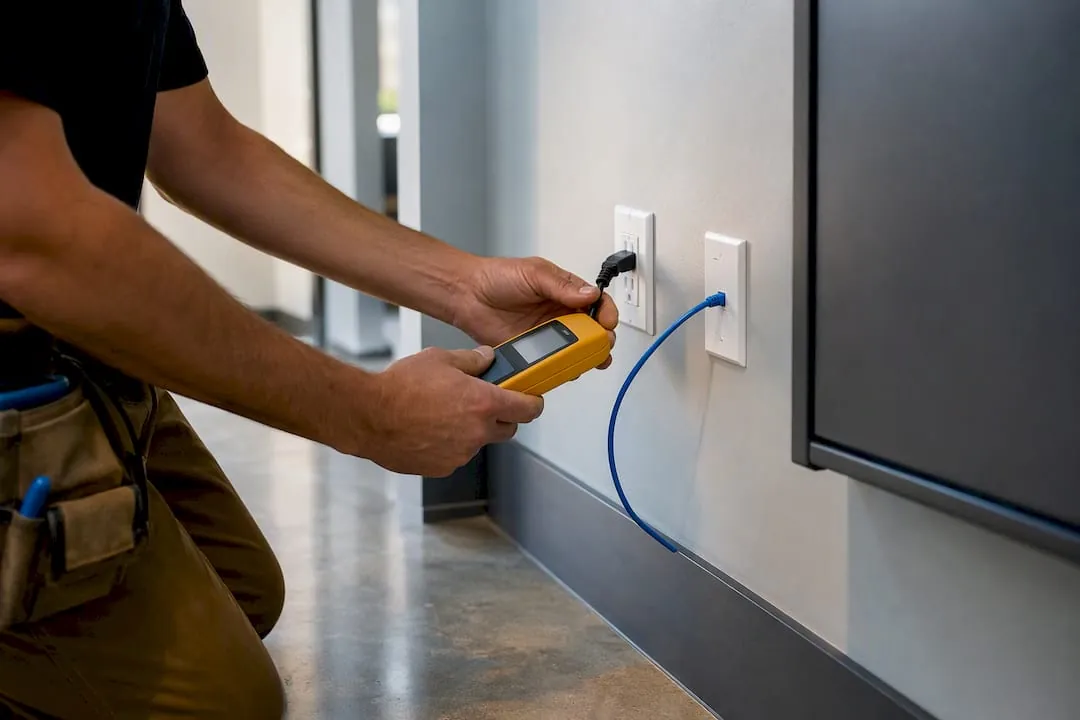
Indoor placement typically means faster installation and less exposure, while outdoor siting needs a covered or sheltered spot with clear driver access and adequate clearance for servicing down the line.
Before scheduling a site survey, gather:
- Rough measurements of the intended installation area
- Photos of the space, including nearby walls, doors, and obstructions
- Locations of the nearest power outlet and network jack
- Notes on carrier access, including loading zones and delivery paths
- A preference for indoor or outdoor placement, if you already have one
Skipping this step is the single most common cause of install delays.
How Does a Delivery and Pickup Actually Work?
The workflow is short by design, which is exactly the point for both carriers and residents.
- A driver places the perishable item in an available refrigerated compartment
- The Luxer One system generates a unique access code tied to that delivery
- The resident receives a notification with pickup instructions
- The resident enters their code and retrieves the item from the secure compartment
Properties should set their own written policy on recommended pickup windows rather than relying on a one-size-fits-all rule, since perishable sensitivity varies by item. For anything involving medication or highly perishable goods, direct residents to manufacturer or vendor guidance rather than making a medical storage claim on the property’s behalf. Clear signage near the locker bank, paired with short carrier instructions at the point of drop-off, cuts down on failed or misdirected deliveries.
Ready to Move Forward? Here’s the Procurement Path
Before requesting a quote, pull together clearances, power and data jack locations, and an indoor versus outdoor preference for your site. That data lets a vendor scope the project accurately on the first pass.
- Download the spec guide for exact cut sheets and measurements
- Collect site clearances, power/data locations, and placement preference
- Request a quote based on that information
- Schedule a formal site survey
- Move to installation
Why Property Teams Work With Postal Solutions on Luxer One Installs
That reach spans conventional multifamily housing, student housing, large public private partnership developments, and university campuses, including deployments like the one at UC San Diego.
What that experience means for a property considering refrigerated lockers:
- Site surveys and installation handled by a team that has scoped hundreds of comparable properties
- Sales and install service for refrigerated locker units alongside standard package rooms
- An optional six-day-per-week managed visit service provides organization of the package room, labeling or hand-writing unit numbers on boxes, and weekly audits
- Coordinated hardware and process planning that keeps residents from arriving to a disorganized locker bank
Properties running dry lockers through Postal Solutions, like the deployment at UC Davis, often view refrigerated compartments as the logical next addition rather than a separate project.
What Property Managers Get Wrong About Refrigerated Lockers
Most properties treat refrigerated lockers as a hardware decision. That’s the smaller half of the problem. The specs matter, but the operational shift matters more: staff who used to intercept every perishable delivery now need to trust a system to handle it, and residents need clear expectations about pickup windows and access codes before the first meal kit ever arrives.
The conventional advice leans hard on temperature ranges and door counts, and while those specifics belong on your checklist, they rarely determine whether a deployment succeeds. Installs stall over missing power outlets, undersized network runs, and unclear carrier instructions, not over which refrigeration brand sits inside the cabinet.
If there’s one place to spend extra planning time, it’s the site survey prep, not the spec sheet comparison. A property that gathers accurate measurements, power locations, and carrier access notes before requesting a quote avoids the change orders that turn a two-week install into a two-month one. Hardware selection is close to solved once you land on a reputable, integrated system. Site readiness is where most timelines actually break down.
Get a Quote or Site Survey for Refrigerated Lockers
The company sells and installs Luxer One refrigerated lockers and standard package systems, and can also manage the package room day to day once hardware is in place. That means a property doesn’t have to choose between buying the right equipment and keeping it organized. If your site is fielding grocery, meal-kit, or flower deliveries that currently pile up on a counter or in a staff refrigerator, a refrigerated locker paired with managed daily organization solves both the storage problem and the labor drain in one move. Request a quote or schedule a site survey to get exact specs matched to your property’s power, network, and placement needs.
FAQ
How Do Luxer One Refrigerated Lockers Work?
A carrier places a perishable item inside an available refrigerated compartment, and the Luxer One system generates a unique access code and sends the resident a pickup notification. The resident enters that code to retrieve their delivery from the secure, temperature-controlled unit.
How Long Can a Package Stay in a Luxer One Refrigerated Locker?
Recommended hold times vary by item and property policy rather than a single universal rule. Properties should set clear written pickup windows and point residents to manufacturer guidance for medication or highly sensitive perishables.
How Do I Get My Luxer Locker Access Code?
The access code arrives automatically through the notification the Luxer One system sends once a carrier places a delivery in your assigned compartment. Check your email or text notifications tied to the property’s Luxer One system for the specific code and pickup instructions.
How Do I Reopen a Luxer Locker If It Closes Before I Retrieve My Item?
Use the same access code from your original notification to reopen the compartment, since most Luxer One systems allow reentry within the standard pickup window. If the code no longer works, contact your property’s front desk or management team for assistance.
Can Postal Solutions Install Refrigerated Lockers at an Existing Property?
Yes. Postal Solutions sells and installs Luxer One refrigerated lockers at properties already running standard package systems, and can add ongoing managed package-room organization on top of the hardware install.