Secure Package Delivery: An Operator's Buying Guide
Secure Package Delivery: An Operator’s Buying Guide For properties with significant after-hours pickup demand or 24/7 access expectations, the strongest approach is a managed package-room service paired with Luxer One locker hardware. Prope
Published
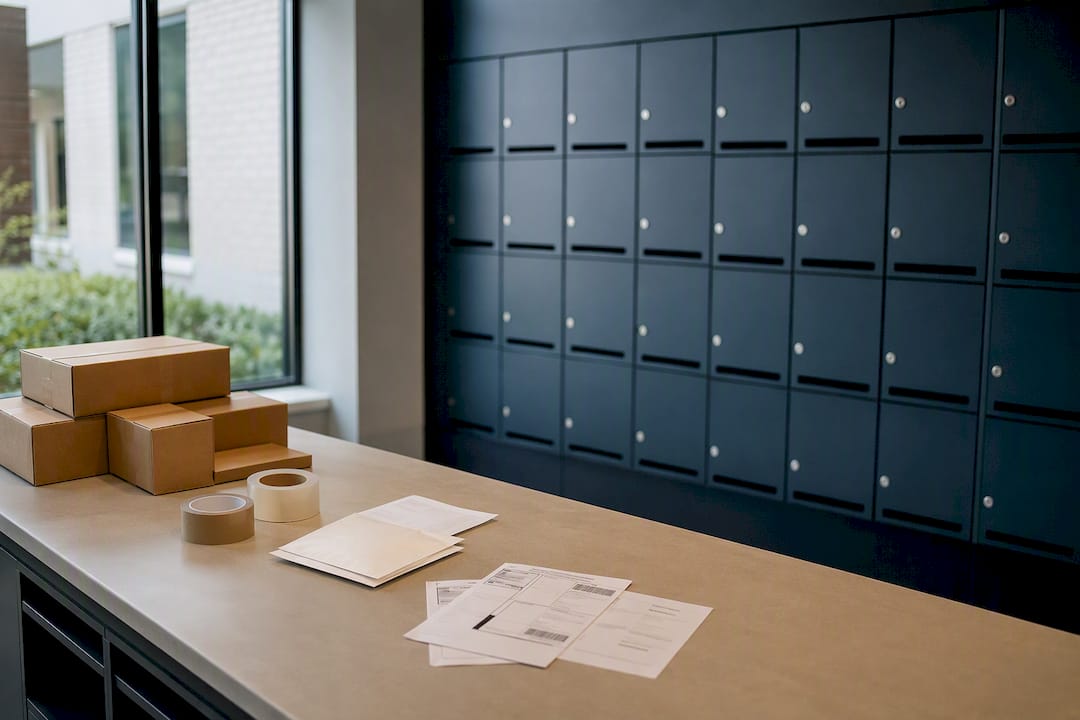
For properties with significant after-hours pickup demand or 24/7 access expectations, the strongest approach is a managed package-room service paired with Luxer One locker hardware. Properties with lower volume or tighter budgets often do fine with a managed package-room-only setup, or a hybrid of the two. The right call depends on your numbers.
- Run a fast on-site audit: current weekly package counts, seasonal peaks, staffing coverage, and available square footage.
- Match that audit against the three models below before requesting vendor quotes.
Pro Tip: Pull your last two Decembers of package logs before you call any vendor. Peak-week data tells you more about the right solution than any sales deck.
Key Takeaways
Secure package delivery works best as a managed service and Luxer One locker combination, sized to a property’s actual peak volume and staffing constraints, not to vendor defaults.
| Point | Details |
|---|---|
| Peak volume drives design | Communities average 150 packages weekly, rising about 81% to roughly 270 during holidays. |
| Match model to constraints | Managed-only, locker-only, and hybrid setups each trade off access, space, and staff time differently. |
| Carrier compliance is decisive | A documented carrier protocol reduces intake errors more than any single hardware feature. |
| Budget across five cost buckets | Hardware, installation, software, managed-service fees, and maintenance all factor into ROI. |
| Postal Solutions bundles both | Over 1,200 Luxer One installs across 40% of U.S. states, paired with daily organizing visits and weekly audits. |
Table of Contents
- Why Secure Package Delivery Matters for Multifamily, Student, and Senior Housing
- What Are the Practical Models for Secure Package Delivery?
- How Do You Choose the Right Secure Package Solution?
- What Does a Typical Implementation Timeline Look Like?
- What Does Secure Package Delivery Cost, and What’s the ROI?
- Why Postal Solutions Pairs Luxer One With Managed Package-Room Service
- An Operator’s View on What Actually Changes
- Get a Site Assessment for Your Property
- Sources
- FAQ
Why Secure Package Delivery Matters for Multifamily, Student, and Senior Housing
The average multifamily community receives roughly 150 packages per week, and that number climbs about 81% during the holiday season to nearly 270 packages weekly. Per-resident demand backs this up. Data from 2022 put average package receipt at 9.41 packages per resident per month, a baseline that has only trended upward as e-commerce becomes the default way people shop. Communities that handle this well see fewer complaints, stronger renewals, and a genuine leasing edge from resident retention.
The volume itself isn’t the hard part. It’s what breaks when volume spikes on top of existing constraints:
- Package rooms sized for yesterday’s e-commerce levels, not today’s
- Tracking gaps that turn “where’s my package” into a leasing office fire drill
- Liability exposure when packages go missing or get misdelivered
- Pickup bottlenecks during evening rush hours
- Staff hours lost to sorting, labeling, and playing detective
More than a third of property managers report that their current storage setup isn’t adequate for peak-season volume, which means most operators are one holiday season away from a visible problem.
What Are the Practical Models for Secure Package Delivery?
Three models dominate the market, each with real trade-offs. There’s no universally correct choice, only the correct choice for your property’s constraints.
Managed package-room service puts a trained visitor on-site to organize, label, and audit packages without any hardware investment. It’s fast to launch and flexible on space, but pickup is limited to staffed hours unless paired with lockers.
Luxer One locker systems give residents 24/7 self-service pickup with a digital audit trail for every parcel. The trade-off is dimensional rigidity. Fixed compartment sizes mean overflow risk during seasonal peaks unless the system is sized with headroom or backed by a managed overflow process.
Hybrid setups combine a smaller locker bank for after-hours convenience with a managed package room absorbing overflow and oversized items. This is often the sweet spot for properties that want 24/7 pickup without over-provisioning locker capacity.
Off-site consolidation, where a third party warehouses packages before final delivery, removes on-site space and staffing needs entirely but shifts liability to the provider and adds a coordination step residents have to learn.
| Model | 24/7 access | Peak scalability | Staff time | Space needs | Install lead time |
|---|---|---|---|---|---|
| Managed package room | No (staffed hours) | Moderate | Low (outsourced) | Existing room | Days |
| Luxer One lockers | Yes | Limited by fixed compartments | Very low | Compact footprint | 1–3 days on-site |
| Hybrid (room + lockers) | Yes | High | Low | Room + locker footprint | 1–2 weeks |
How Do You Choose the Right Secure Package Solution?
Start with numbers, not preferences. Vendors will pitch whatever they sell; your job is to match the pitch against your property’s actual constraints.
- Audit current volume and history. Pull weekly package counts for the past 12 months, flag your highest peak week, and note current staff coverage windows and available square footage.
- Define resident access expectations. Ask leasing and resident services how often after-hours pickup requests or complaints come up. Student housing near exam weeks and senior housing with mobility constraints often need different access windows.
- Score vendors on operational criteria, not just hardware specs.
When you get vendors on the phone, ask specifically about:
- Carrier compliance handling: do they have a documented protocol for FedEx, UPS, Amazon, and regional couriers, including QR/PIN access for frequent drivers?
- Intake workflow: how do oversized or perishable packages get handled outside a locker’s fixed compartments?
- Software integration: does the system talk to your existing property-management platform, or does it require a parallel workflow?
- Daily management level: is there an actual human organizing the room daily, or is it drop-and-hope?
- SLA specifics: what’s the guaranteed response time for a jammed locker or a missed pickup window?
- Escalation process: what happens when a carrier ignores the property’s intake protocol?
Watch for red flags in vendor answers. A vendor with no carrier-compliance plan is telling you they haven’t solved the problem that causes most on-site failures. Vague SLA language (“we’ll get to it promptly”) instead of specific response windows is a sign the contract won’t protect you later. Fixed compartment sizing with no stated overflow strategy means you’ll be improvising every December. And unclear answers about who owns delivery and audit data should be a dealbreaker. A documented carrier communication protocol materially cuts intake errors during high-volume weeks, so this alone is worth pressing on hard.
What Does a Typical Implementation Timeline Look Like?
Rollouts follow a predictable sequence, whether you’re installing lockers, launching a managed room, or both.
- Discovery and scope (1–2 weeks): site walk-through, volume audit, and system sizing.
- Site prep and permitting (2–6 weeks, depending on construction needs): electrical work, network drops, and any structural changes for locker placement.
- Hardware delivery and installation (1–3 days on-site): locker banks are typically installed and tested within a few days once materials arrive.
- Software integration and carrier onboarding (1–3 weeks): connecting to your property-management platform and briefing regular carriers on intake procedures.
- Staff training and resident rollout (1–3 weeks): resident communications, signage, and app onboarding run in parallel with staff training.
- Transition to steady-state operations: daily managed visits begin immediately, with weekly audits phased in once volume stabilizes.
The longest variable is usually site prep, not the hardware itself. Properties with existing package rooms and adequate electrical capacity often compress the full timeline to under six weeks.
What Does Secure Package Delivery Cost, and What’s the ROI?
Budget for five buckets: locker hardware (a capital cost tied to compartment count and configuration), site installation and any electrical or network work, ongoing software subscription fees, recurring managed-service fees for daily organizing and audits, and occasional maintenance.
The ROI case rests on staff-hours saved and reduced friction, not just hardware specs. A property absorbing a jump from 150 to 270 packages a week during the holidays without a managed system typically pulls leasing staff off their actual jobs to sort mail. A simple framing:
| Scenario | Weekly packages | Estimated staff hours/week on packages |
|---|---|---|
| No managed system, peak week | ~270 | High, ad hoc coverage by leasing staff |
| Managed system, peak week | ~270 | Low, handled by dedicated daily visits |
Industry commentary also points to package amenities supporting rent premiums in the $25 to $75 per month range, though this figure should be read as market insight rather than a guaranteed outcome for any specific property. The more defensible case is retention: well-executed package management reduces resident complaints and supports renewal rates, which is where most of the real dollar value shows up over a lease cycle.
Why Postal Solutions Pairs Luxer One With Managed Package-Room Service
Bundling hardware and management solves the problem lockers alone can’t: someone still has to handle overflow, oversized items, and the daily mess that accumulates around any automated system. Postal Solutions sells and installs Luxer One package room and locker systems and layers daily package-room organizing, weekly audits, and carrier communication on top.
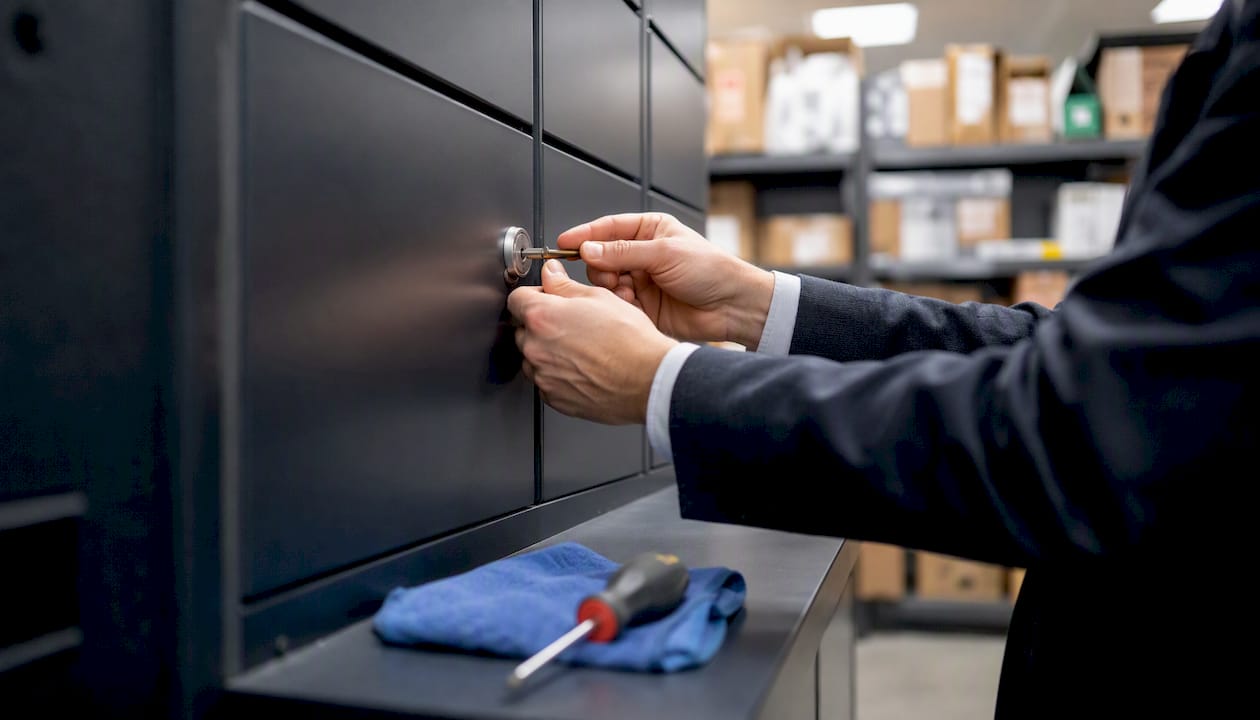
The scale here isn’t small. Postal Solutions has completed more than 1,200 Luxer One sales and installations across roughly 40% of U.S. states, spanning conventional multifamily, student housing, senior housing, and university partnerships. Founded in 2016, the company is now in its 11th year focused specifically on this niche.
What the managed layer covers day-to-day:
- Daily visits to organize the package room and label or highlight unit numbers on parcels
- Weekly audits run through the community’s existing package-room software or a Postal Solutions-installed system
- Carrier compliance handling and communication to reduce misdelivered or unscanned packages
- Overflow support during seasonal surges, including oversized items that don’t fit locker compartments
- Integration with most major property-management and package-room software platforms
Without daily management, a property effectively pays twice: once in staff payroll, and again in the lost productivity of leasing agents doing package detective work instead of leasing apartments.
An Operator’s View on What Actually Changes
Before we moved to a managed room with lockers, package season meant every front-desk shift turned into triage. Residents lined up asking about parcels nobody could locate fast enough, and staff who should have been touring prospects were sorting boxes instead. After the switch, complaints dropped and staff got their actual jobs back.
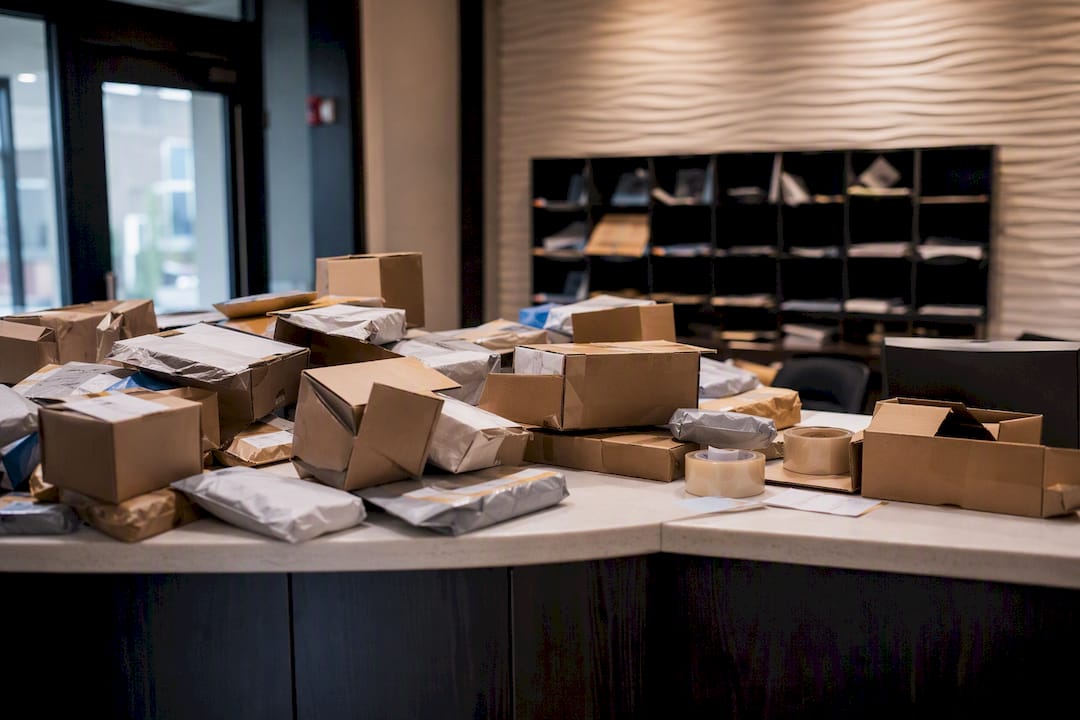
The biggest lesson wasn’t about the lockers themselves. It was carrier communication. Getting FedEx and Amazon drivers to actually follow the intake protocol mattered more than any feature on the hardware spec sheet.
Get a Site Assessment for Your Property
If you’ve compared managed-only, locker-only, and off-site consolidation and landed on wanting both convenience and daily oversight, Postal Solutions is built for exactly that combination. Unlike a locker-only vendor that leaves overflow and carrier problems for your staff to solve, or a management-only service capped at staffed hours, Postal Solutions bundles Luxer One hardware installation with six-day-per-week managed visits, so residents get 24/7 access and someone is still physically organizing the room and running audits every week. With installs completed across 40% of U.S. states and more than 1,200 Luxer One systems sold, the operational playbook for carrier compliance and peak-season overflow is already built, not improvised on your property. Request a site assessment for your community to get volume-specific sizing and a realistic installation timeline.
Sources
- How Package Management Impacts Community Performance - Multi-Housing News
- A Framework for Solving Multifamily’s Package Management Problem | Insights by Blueprint
- Multifamily data research: package delivery pain points
- Multifamily Package Management Solutions Impact Resident Retention
FAQ
What Is the Best Secure Package Delivery Setup for Apartments?
A managed package-room service combined with Luxer One lockers gives residents 24/7 pickup while keeping a trained visitor on-site to organize, audit, and handle overflow.
How Much Do Packages Increase During the Holidays?
Communities that average 150 packages weekly can see roughly an 81% increase, pushing volume to around 270 packages per week.
Do Locker Systems Handle Oversized Packages?
Not on their own. Fixed compartment sizing means oversized or overflow items usually need a managed package room or overflow process running alongside the lockers.
How Long Does Installation Take?
Locker hardware installation typically takes one to three days on-site, though full rollout including site prep, software integration, and resident onboarding can span several weeks.
Does Postal Solutions Install Luxer One Systems?
Yes. Postal Solutions has completed more than 1,200 Luxer One installations across roughly 40% of U.S. states and pairs installations with daily package-room management.