Managed Package Program Guide for Property Managers
Managed Package Program Guide for Property Managers A managed package program outsources daily package room operations, including intake, labeling, resident notifications, audits, and optional locker hardware, so your team stops losing hour
Published

A managed package program outsources daily package room operations, including intake, labeling, resident notifications, audits, and optional locker hardware, so your team stops losing hours to parcel handling. The recommended first step: run a quick site segmentation (unit count, average daily packages, available space) and ask every vendor for a written carrier-compliance plan before signing anything.
TL;DR:
- Reduces staff time spent on package handling, often by several hours per day at typical properties (such as those averaging ~75 daily packages and ~370 units)
- Improves resident satisfaction by cutting pickup wait times and missed-package complaints
- Reduces liability through documented audit trails and controlled access
- Next step: segment your property by unit count and daily volume, then request a carrier-compliance plan from any vendor you evaluate
Postal Solutions manages package room outsourcing for conventional multifamily, student housing, and senior housing communities across the U.S., and is the country’s largest Luxer One sales agency, with over 1,200 installations.
Table of Contents
- What is a managed package program and why do properties need one?
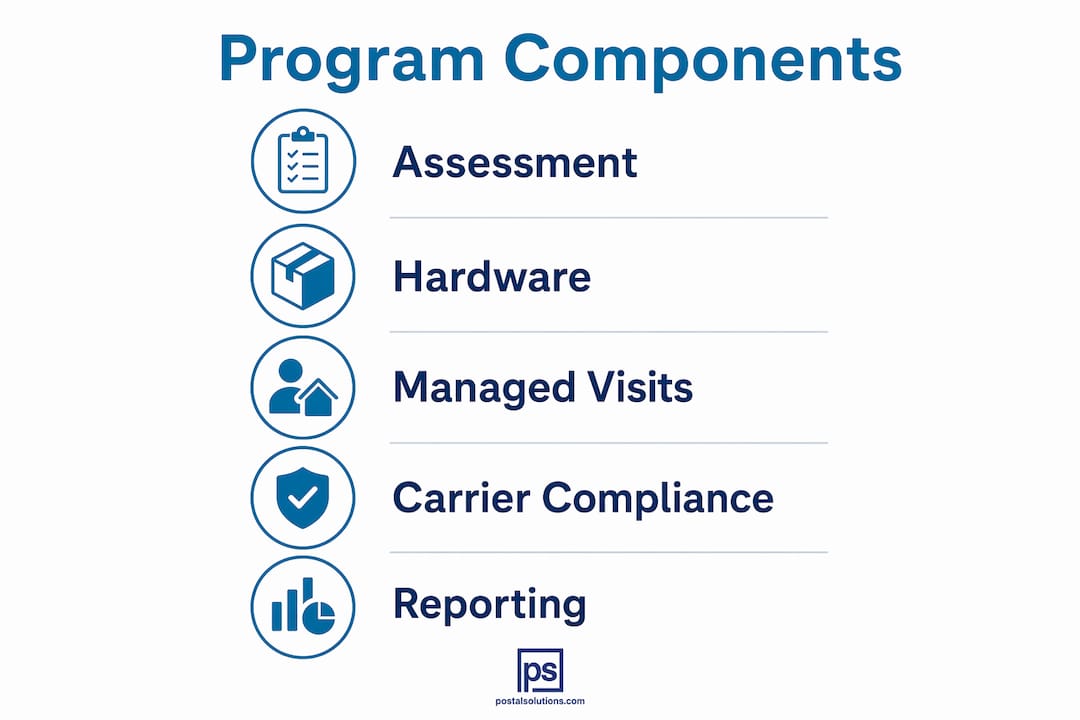
- What does a managed package program actually include?
- How do you choose the right managed package program vendor?
- What does implementation look like and what drives the cost?
- Which KPIs should you track after deployment?
- When do you need lockers vs. managed visits alone?
- Why trust Postal Solutions for this guidance?
- Key Takeaways
- What property managers get wrong about package program rollouts
- Postal Solutions manages the full package room operation for you
- Useful sources
- FAQ
What is a managed package program and why do properties need one?
A managed package program is an outsourced service that covers the full daily lifecycle of parcel handling at a residential property: intake logging, labeling with unit numbers, shelving, resident notification, pickup support, weekly audits, and reporting. Some programs also include hardware, such as electronic lockers or smart package rooms with computer vision.
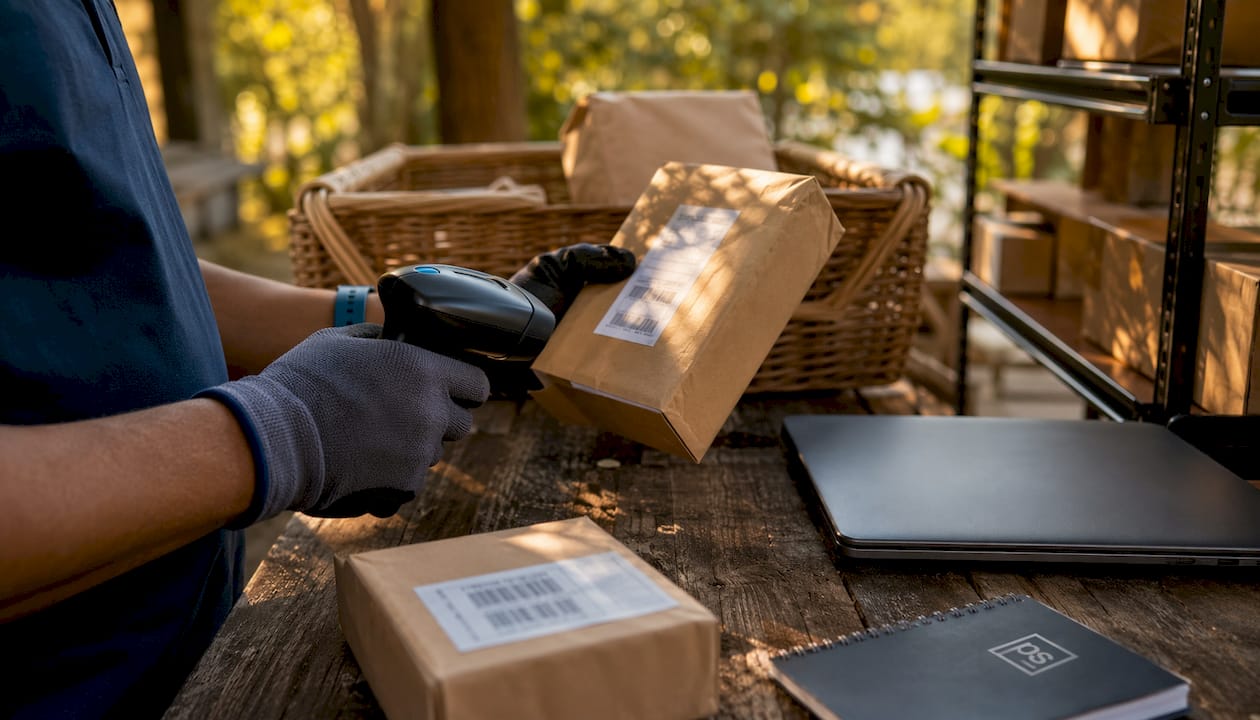
Properties adopt these programs because parcel volume has outpaced what leasing teams can reasonably absorb. Staff hours lost to package handling translate directly into payroll cost and reduced productivity on leasing and maintenance tasks. Resident expectations have also shifted: delayed notifications or missing packages now drive negative reviews and lease non-renewals.
Solution models vary by property type and budget. A portfolio-level framework from Blueprint recommends matching the model to property segmentation: smart package rooms for communities above 300 units, locker systems for mid-size properties, and off-site third-party delivery for premium communities where removing volume from the building entirely is the priority. Managed visits, where a package manager organizes the room daily, work well across all property sizes and can layer on top of any hardware.
Pro Tip: Require a carrier-compliance plan from day one. Poor carrier adoption is the most common reason package systems fail, regardless of how good the hardware is.
What does a managed package program actually include?
The scope varies by vendor, but a well-structured program covers three layers: daily operations, technology, and governance.
Daily operational tasks:
- Scheduled property visits (daily or up to six days per week)
- Package intake logging and labeling, including handwriting unit numbers on boxes when labels are unclear
- Shelving and organization by unit number or locker assignment
- Oversized and refrigerated item handling with designated protocols
- Resident pickup support and package retrieval assistance
Technology and integrations:
- Package-room software compatible with the community’s existing platform
- PMS integrations with systems such as Yardi or Entrata for resident data sync
- Resident notifications via SMS, email, app push, or QR code
- Carrier handheld and scanner compatibility for intake logging
Governance and QA:
- Weekly audits to reconcile logged packages against physical inventory
- SLA metrics tracked and reported (intake-to-notify time, incident rate, pickup rate)
- Carrier compliance enforcement and incident escalation
- Insurance and liability documentation
Optional hardware scope includes Luxer One electronic lockers, refrigerated locker units for grocery and meal-kit deliveries, and open-shelf smart package rooms using computer vision. Open-shelf smart rooms can triple storage efficiency in the same footprint compared to fixed lockers, though they increase dependency on driver scanning accuracy. For resident safety, controlled access and digital audit trails reduce lobby congestion and theft risk.
How do you choose the right managed package program vendor?
Evaluate vendors across six axes before signing a contract.
- Scope of services: Does the vendor cover daily visits, labeling, notifications, audits, and reporting, or only a subset?
- Service frequency and SLAs: How many visits per week? What is the guaranteed intake-to-notify time? What happens during peak periods?
- Technology and integration: Does the vendor work with your existing package-room software and PMS? Ask for a specific integration list.
- Pricing model: Is hardware purchased separately or bundled? Is the managed fee fixed monthly or per-visit?
- Contract terms: What is the minimum term? What are the termination conditions and liability clauses?
- Geographic coverage and property fit: Does the vendor serve your market and have references from similar property types (student housing, senior housing, conventional multifamily)?
Questions to ask vendors:
- How do you detect and remediate carrier non-compliance? What is your escalation process for bypassed deliveries?
- What is your average response time for a reported missing package?
- How are weekly audits conducted and reported to the property team?
- Which PMS platforms do you integrate with natively?
Red flags to watch for:
- Vague answers on carrier compliance or no documented SOP for carriers
- No audit cadence or reporting process
- Hidden fees for peak-period visits or hardware maintenance
- Unclear insurance language or no liability documentation
- No references from properties with similar unit counts or resident profiles
Operators who require vendor accountability for carrier compliance get consistent results across portfolios rather than site-by-site firefighting, supported by tools from the A-du manager marketplace.
Pro Tip: Request a 30- to 60-day pilot with KPIs defined in the contract before committing to a full-term agreement. Define success metrics in writing: daily packages processed, staff hours saved, and incident rate.
What does implementation look like and what drives the cost?
Typical rollout steps:
- Site audit: unit count, daily package volume, available space, electrical/IT readiness
- Solution selection: managed visits only, lockers, smart room, or a hybrid
- Carrier onboarding: distribute one-page pictorial SOPs and set up QR/PIN access for audited driver entry
- Hardware installation (if applicable): electrical prep, unit mounting, software configuration
- Staff training: property team walkthrough of audit process and escalation procedures
- Go-live: first managed visit and resident notification rollout
- 30/60-day optimization: review KPIs, adjust visit frequency, address overflow protocols
A managed-visits-only program can start within days to a few weeks. Locker or smart-room installs typically take 2–8 weeks depending on site prep, electrical work, and software configuration.
Primary cost drivers:
- Visit frequency (daily vs. fewer visits per week)
- Hardware purchase or lease (lockers, refrigerated units, smart-room cameras and software)
- Software and PMS integration fees
- Carrier training and onboarding costs
- Local labor market rates
Billing models include fixed monthly managed fees, per-visit pricing, hardware capital purchase, and lease arrangements. Ask vendors to separate hardware and service costs in their proposals so you can compare them accurately.
Which KPIs should you track after deployment?
Require these metrics in your SLA and review them monthly:
| KPI | What to Measure |
|---|---|
| Daily packages processed | Total intake logged per visit |
| Intake-to-notify time | Minutes from scan to resident notification |
| Staff hours saved | Hours per day/week no longer spent on package handling |
| Incident rate | Lost or stolen packages |
| Locker utilization rate | Percentage of locker capacity used on peak days |
| Audit compliance rate | Percentage of weekly audits completed on schedule |
| Resident pickup time | Average time from notification to pickup |
A managed program typically saves several staff hours daily that would otherwise go to intake, sorting, and resident inquiries, translating into meaningful recovered productivity at typical labor rates. At Stuyvesant Town, a smart package room reduced resident wait times from 30 minutes to seconds and allowed staff reduction from 12 to 2 for package-dedicated roles, illustrating the impact of automation alongside managed visits. Controlled access and digital tracking also reduce resident complaints that drive non-renewals, a direct retention benefit operators frequently cite.
When do you need lockers vs. managed visits alone?
| Criteria | Managed Visits Only | Lockers + Overflow Room | Smart Package Room |
|---|---|---|---|
| Unit count | Under 150 | 150–300 | 300+ |
| Daily package volume | Low to moderate | Moderate to high | High |
| Budget shape | Opex preferred | Capex + opex | Capex + opex |
| Space footprint | Minimal | Moderate | Moderate to large |
| Scalability during peaks | Flexible via visit frequency | Limited by locker count | High with overflow shelf |
| Resident self-service | No | Yes | Yes |
For properties under 150 units, managed visits alone often cover the need. From 150–300 units, Luxer One lockers paired with an organized overflow room handle most volume. Above 300 units or in dense urban buildings, a smart package room with open shelving is the most space-efficient option, though it depends heavily on driver scanning compliance.
When planning locker footprints, model peak-day volume rather than average daily volume, and build in 20–30% surge capacity with a defined overflow protocol tied to weekly audits. For student housing, combining managed visits during move-in weeks with temporary pop-up lockers handles sudden surges without permanent space loss.
Postal Solutions sells and installs Luxer One locker systems, including refrigerated units for grocery and meal-kit deliveries, and can pair hardware with daily managed visits for a full-service solution.
Why trust Postal Solutions for this guidance?
Postal Solutions has managed package room outsourcing since 2016, now in its 11th year of service. The company has completed over 1,200 Luxer One installations across more than 40% of U.S. states, making it the largest Luxer One sales agency in the country. Clients include on-campus universities, Public Private Partnerships (P3), conventional multifamily communities, student housing operators, senior housing properties, municipalities, and businesses of all sizes.
Core service offerings:
- Daily package room management outsourcing for all apartment classes
- Weekly audits using the community’s existing package-room software or Postal Solutions-supplied software
- Luxer One locker and smart package room sales and installation, including refrigerated units
- Carrier onboarding and SOP development
- Six-day-per-week managed visits for full-service clients
Without a managed program, properties pay twice: once in payroll for staff handling packages, and again in lost productivity on leasing and maintenance work.
Key Takeaways
A managed package program is the most direct way to recover staff hours, reduce resident complaints, and enforce carrier compliance at multifamily and student housing properties.
| Point | Details |
|---|---|
| Segment your property first | Match the program tier to unit count and daily volume (typical benchmarks: ~370 units, ~75 daily packages), before evaluating vendors. |
| Require carrier-compliance documentation | Ask vendors for a written SOP and escalation process for bypassed deliveries. |
| Track 5 core KPIs | Measure intake-to-notify time, staff hours saved, incident rate, audit compliance, and pickup time. |
| Plan for peak-day surges | Size locker capacity for peak volume with 20–30% surge buffer, not average daily count. |
| Postal Solutions as your partner | Postal Solutions manages daily package room outsourcing and installs Luxer One systems across 40%+ of U.S. states. |
What property managers get wrong about package program rollouts
The most common mistake is treating carrier onboarding as an afterthought. A property can install the best locker system available and still see daily failures if carriers bypass the designated drop point or skip scanning. A small upfront investment in pictorial carrier SOPs and QR/PIN access codes prevents the majority of operational failures, especially during peak volume periods like move-in weeks and the holiday season.
The second pitfall is underestimating seasonal surges. Student housing properties, in particular, see package volume spike dramatically during move-in and move-out periods. A hybrid approach, managed visits plus temporary pop-up lockers during peak weeks, avoids permanent space loss while meeting demand. Postal Solutions addresses this with flexible visit scheduling and overflow protocols built into weekly audit cycles.
The third is vague SLA language. If the contract does not specify audit cadence, incident response time, and what happens when a carrier bypasses the system, the property has no recourse. Require vendors to document their carrier non-compliance detection process in the statement of work before signing.
Postal Solutions manages the full package room operation for you
Properties that want to stop managing package chaos internally have a direct path with Postal Solutions. The team manages daily package room operations for conventional multifamily, student housing, and senior housing communities, and sells and installs Luxer One locker and smart package room systems nationwide.
Services available:
- Daily package room management outsourcing, up to six days per week
- Weekly audits via your existing software or Postal Solutions-supplied tools
- Luxer One locker, refrigerated locker, and smart package room sales and installation
- Carrier onboarding and SOP development
- PMS integration support for Yardi, Entrata, and other platforms
To get started, request a property segmentation audit or an estimate at postalsolutions.com/services. The team will assess your unit count, daily volume, and available space, then recommend the right program tier and provide a sample SLA for review.
Useful sources
- A Framework for Solving Multifamily’s Package Management Problem — Blueprint’s portfolio-level model-matching framework; supports carrier-compliance criteria and property segmentation guidance throughout this guide.
- What Package Wrangling Is Really Costing Your Team — Source for average community size (~370 units), average daily package count (~75), and staff-hour cost benchmarks.
- The Ultimate Guide to Smart Package Rooms — Luxer One’s implementation guide; supports the 2–8 week install timeline and peak-day capacity planning guidance.
- How Package Management Improves Resident Safety — Supports controlled-access and retention benefit claims in the outcomes section.
- Postal Solutions — Primary source for brand proof points: founded 2016, 11 years of service, 1,200+ Luxer One installations, 40%+ U.S. state coverage.
FAQ
What does a managed package program cost?
Pricing depends on visit frequency, property size, and whether hardware is included. Managed-visits-only programs are typically priced as a fixed monthly fee or per-visit rate; locker and smart-room hardware is purchased or leased separately.
How long does it take to launch a managed package program?
A managed-visits-only program can launch within days to a few weeks. Locker or smart-room installations typically take 2–8 weeks depending on site prep and electrical work.
Does Postal Solutions work with existing package-room software?
Yes. Postal Solutions manages weekly audits using the community’s existing package-room software, or can supply a monitored electronic package room system as part of a full-service solution.
When should a property add Luxer One lockers instead of managed visits alone?
Properties with 150 or more units and moderate-to-high daily package volume generally benefit from adding lockers. Postal Solutions can assess your property and recommend the right configuration, including refrigerated units for grocery deliveries.
What KPIs should be in a managed package program SLA?
Require intake-to-notify time, daily packages processed, staff hours saved, incident rate (lost or stolen packages), and weekly audit compliance rate as baseline SLA metrics.
Recommended
- Managed Package Room Visits: Top Strategies for Property Managers | Postal Solutions
- Meet Package Demand for Metro Apartment Renters | Postal Solutions
- Apartment Package Management Services | Multifamily Package Room Operations | Postal Solutions
- Resident Package Complaints: A 2026 Guide for Property Managers | Postal Solutions