Managed Package Room Visits: Top Strategies for Property Managers
Discover top strategies for managed package room visits. Streamline parcel management, save time, and enhance resident satisfaction today!
Published
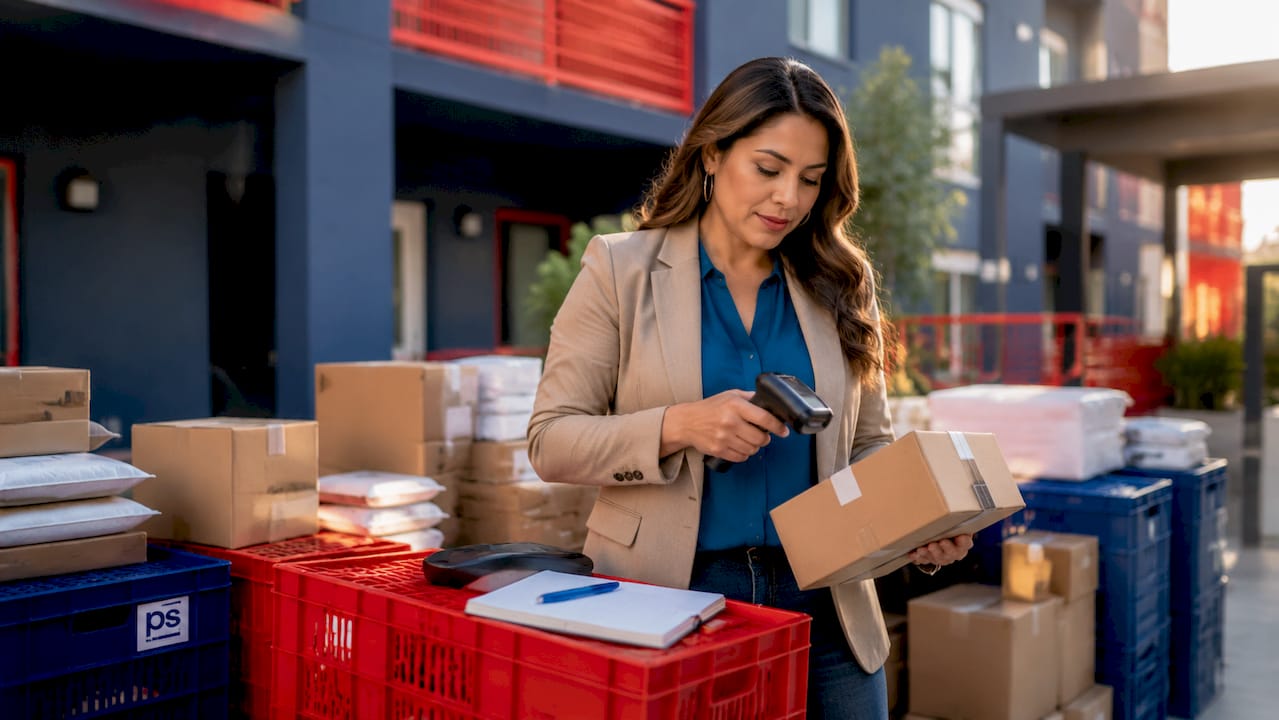
Managed package room visits are coordinated, technology-enabled processes that ensure secure, organized, and efficient parcel management in residential properties. The industry standard term for this practice is package room visit management, which covers everything from daily room organization to resident pickup workflows. Manual package handling consumes over 6 hours of staff time daily for just 75 packages, averaging 5 minutes per parcel across 4–5 staff touches. That number tells you exactly why property managers are rethinking how they run package operations. This guide covers the top strategies, technologies, and practical solutions to help you build a package room program that saves time and keeps residents satisfied.
1. Establish a structured schedule for managed package room visits
Room visit scheduling is the foundation of any effective package management program. Without a fixed daily schedule, package rooms become disorganized fast, and staff end up spending reactive time fixing problems instead of preventing them.
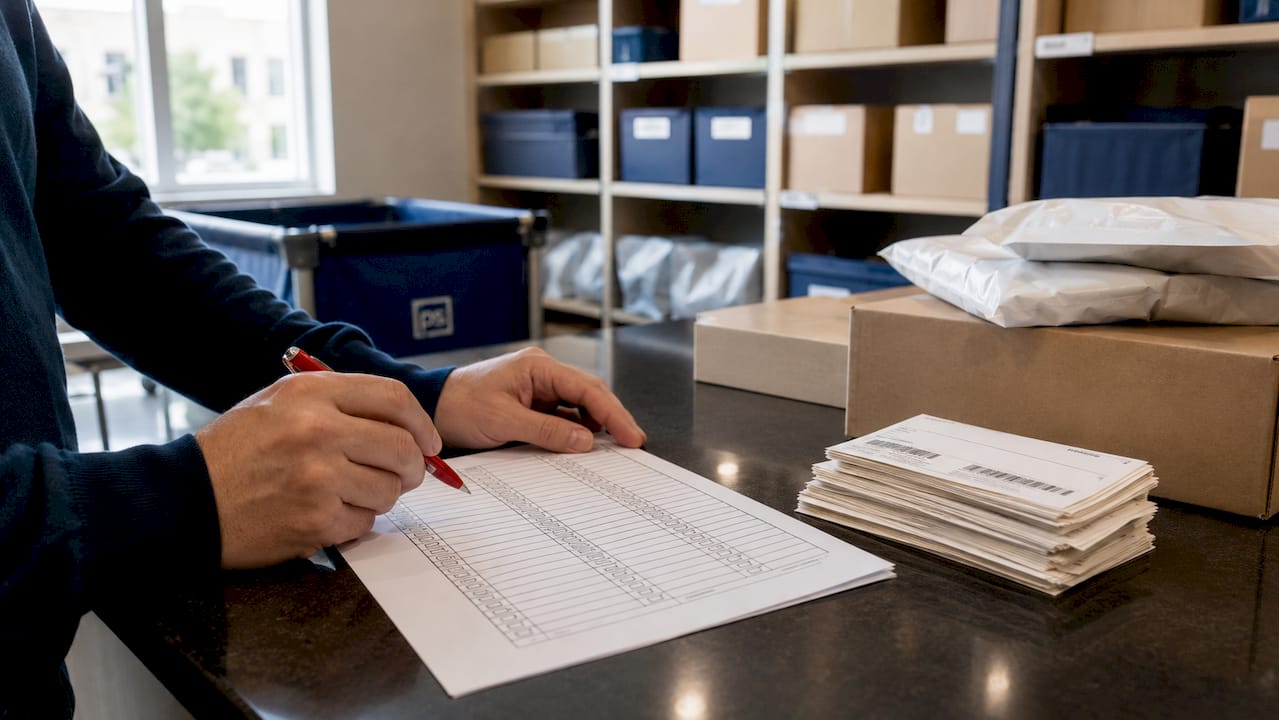
The most reliable approach is a dedicated daily visit window, ideally timed after peak carrier delivery hours. A package manager arrives, sorts all new parcels, marks each box with the resident’s unit number, and logs every item into the property’s tracking software. This single routine eliminates the guesswork that causes resident complaints.
Pro Tip: Schedule your package room visit in the early afternoon, after USPS, UPS, and FedEx have completed their morning rounds. This gives you a complete picture of the day’s deliveries in one organized pass.
Properties using shift-based scheduling with a dedicated visit protocol report fewer resident inquiries at the front desk. Staff are freed to focus on leasing, maintenance, and service tasks that directly affect revenue.
2. Use checklists and logging protocols to maintain consistency
A written checklist is the simplest tool that most properties skip. Without one, each visit depends on whoever shows up that day, and quality varies.
A strong logging protocol covers four actions: scan or photograph each package label, write the unit number on the box, enter the package into the tracking system, and flag any items that need special handling. This process creates a reliable record for every parcel in the room. Digital package logging and visual scanning create a “digital breadcrumb trail” that improves package tracking and guides residents directly to their parcels.
Consistency matters most during high-volume periods like the winter holidays or back-to-school season in student housing. A checklist keeps the process identical whether the room holds 20 packages or 200.
3. Build communication protocols for drivers and residents
Package room management fails when carriers and residents operate without clear instructions. Delivery drivers need to know exactly where to place parcels, and residents need timely notifications.
Post clear signage at every entry point directing carriers to the package room. Include instructions for oversized items, refrigerated deliveries, and signature-required parcels. These three categories cause the most friction when left unaddressed.
For residents, automated notifications via text or email reduce front desk calls dramatically. QR code notifications and guided pickup technology tell residents exactly where their package is located, cutting retrieval time to an average of 10 seconds per pickup. That speed reduces lobby congestion and improves the resident experience without adding staff hours.
4. Automate package intake with electronic tracking systems
Automation does not replace the daily visit. It makes each visit faster and more accurate. Electronic tracking systems log packages at intake, send resident notifications automatically, and generate audit reports without manual data entry.
The operational impact is significant. Automated package rooms reduce manual touches from 4–5 per package to near zero, enabling self-service resident pickup in under 10 seconds. That shift recovers more than 6 staff hours daily at a 75-package property.
Key features to look for in a tracking system include:
- Label scanning at intake
- Automated resident notifications via text and email
- QR code guided pickup for residents
- Weekly audit reporting
- Integration with existing property management software
Properties that pair electronic tracking with daily professional oversight get the best results. Technology handles the data. The daily visit handles the physical organization.
5. Optimize package room layout for volume and variety
Layout decisions affect how fast packages move through the room and how often residents find what they need without staff help. Fixed locker banks work well for standard parcel sizes but struggle during volume surges and with oversized items.
Flexible shelving and open-format package rooms reduce installation costs and accommodate seasonal delivery surges better than fixed lockers. Open layouts allow easy reconfiguration and handle diverse parcel sizes without leaving empty locker cells during slow periods.
Designate specific zones for oversized packages, refrigerated items, and signature-required parcels. Clear zone labeling reduces the time a package manager spends sorting during each visit and helps residents locate atypical deliveries without staff assistance.
Pro Tip: Label each shelf zone with unit number ranges rather than individual unit numbers. This scales as your property grows and keeps the room organized even when volume spikes.
6. Address the hidden labor costs of manual package management
Most property managers calculate package management costs by looking at direct payroll. The real cost is higher. Hidden labor costs include payroll for manual package handling plus lost productivity from leasing and maintenance teams pulled away from core tasks.
A leasing agent spending 30 minutes per day on package questions is not just costing you 30 minutes. That agent is not touring units, following up on leads, or renewing leases during that time. The same logic applies to maintenance staff who handle package deliveries instead of completing work orders.
Properties that treat package management as a standalone operational function, rather than a task absorbed by existing staff, consistently report better NOI outcomes. Outsourcing the daily visit to a dedicated package management service removes the double cost of payroll plus lost productivity.
7. Combine technology with daily professional oversight
The best package room programs do not choose between technology and human management. They use both. Combining disciplined daily oversight with advanced package room technology optimizes space, improves pickup speed, and improves resident notifications.
“The best managed package room systems blend technology with consistent human oversight to maintain room order and resident service quality. Technology handles the data trail. A trained package manager handles the physical organization, quality checks, and exception handling that no software can fully automate.”
Daily professional visits cover tasks that automation cannot: reorganizing shelves when volume spikes, identifying misdelivered parcels, flagging damaged boxes, and handling refrigerated or oversized items that fall outside standard workflows. These tasks require judgment, not just software.
Postal Solutions manages six-day-per-week package room visits for multifamily properties across the country. Each visit includes physical organization, unit number labeling, and weekly audits using the property’s existing software or a Luxer One system installed by Postal Solutions.
8. Choose the right system based on your property’s needs
Not every property needs the same solution. The right package room setup depends on unit count, delivery volume, budget, and whether you want to manage visits in-house or outsource them.
| Decision factor | Manual-focused approach | Locker-based system | Open shelving with oversight |
|---|---|---|---|
| Upfront cost | Low | High | Moderate |
| Staff time required | High | Low | Low with outsourcing |
| Scalability during surges | Poor | Limited by locker count | High |
| Resident self-service | None | Full | Full with guided pickup |
| Oversized package handling | Flexible | Limited | Flexible |
Properties with fewer than 100 units and moderate volume can often manage with a well-organized open shelving system and a daily outsourced visit. Larger properties with 200-plus units benefit from a Luxer One locker or package room system combined with professional daily management. Postal Solutions has completed over 1,200 Luxer One installations across more than 40% of U.S. states, covering conventional multifamily, student housing, senior housing, and university P3 projects.
For properties deciding between in-house management and outsourcing, the calculation is straightforward. In-house management requires hiring, training, and supervising a dedicated package manager. Outsourcing transfers that responsibility to a specialist while keeping costs predictable. You can review apartment package management options to compare both paths.
9. Conduct weekly audits to keep the room current
A weekly audit is the quality control step that most properties skip until something goes wrong. Packages sit unclaimed, residents complain, and staff spend hours tracking down parcels that were never properly logged.
A structured audit reviews every package in the room against the tracking log, identifies items unclaimed for more than 7 days, and triggers a second resident notification. This process takes less than 30 minutes when the room is organized and the log is current.
Postal Solutions manages weekly audits as part of its daily visit program, using either the property’s existing package room software or a Luxer One system. Audits reduce the number of long-term unclaimed packages and give property managers a clear picture of room capacity at any point in the week.
Key Takeaways
Managed package room visits deliver the greatest operational return when daily professional oversight is paired with electronic tracking and a layout designed for volume flexibility.
| Point | Details |
|---|---|
| Daily visits are non-negotiable | A structured daily visit prevents room disorder and reduces resident complaints at the front desk. |
| Automation multiplies visit efficiency | Electronic tracking and QR code notifications cut resident pickup time to under 10 seconds per package. |
| Hidden labor costs are real | Manual package handling diverts leasing and maintenance staff from revenue-generating tasks, raising true operational cost. |
| Layout affects throughput | Flexible open shelving handles volume surges and oversized items better than fixed locker banks. |
| Weekly audits close the loop | Regular audits identify unclaimed packages early and keep the tracking log accurate. |
What I’ve learned after years of managing package rooms
Property managers often ask whether technology alone can solve their package problem. The honest answer is no. Technology is a force multiplier, but it multiplies whatever discipline you already have. A disorganized room with great software is still a disorganized room.
The properties that get this right share one habit: they treat the daily package room visit as a non-negotiable operational task, not something that happens when someone has time. That consistency is what separates properties where residents trust the system from properties where residents call the front desk every time they get a delivery notification.
The other mistake I see regularly is underestimating the true cost of manual management. Property managers look at the direct payroll line and think they are saving money by having existing staff handle packages. They are not accounting for the leasing tours that did not happen, the maintenance requests that sat open, and the renewal conversations that got delayed. Those costs are real, and they compound over time.
The hybrid model, daily professional visits paired with electronic tracking and a well-designed room layout, is the approach that consistently produces the best outcomes. It is not the cheapest option on day one. It is the least expensive option over a full operating year when you count everything.
— Postal Solutions
Postal Solutions manages package room visits for multifamily properties
Postal Solutions offers daily package room management outsourcing for conventional multifamily, student housing, and senior housing communities across the United States. Each managed visit includes physical organization, unit number labeling on every parcel, and weekly audits using your existing software or a Luxer One system. For properties that want a complete solution, Postal Solutions sells and installs Luxer One locker and package room systems nationwide, then manages the daily visits to keep the system organized and current. If your team is spending hours each week on packages instead of residents, professional package room management is the direct fix.
FAQ
What are managed package room visits?
Managed package room visits are scheduled, professional visits to a residential property’s package room to organize parcels, label boxes with unit numbers, and complete tracking audits. They reduce staff workload and improve the resident pickup experience.
How often should a package room be visited?
Daily visits are the standard for properties with consistent delivery volume. Postal Solutions manages up to six visits per week, timed after peak carrier delivery hours to capture the full day’s intake.
How does automation improve package visit management?
Automated systems reduce manual touches from 4–5 per package to near zero and enable resident self-service pickup in under 10 seconds. They work best when paired with a daily professional visit for physical organization.
What is the real cost of manual package handling?
Manual package handling costs more than direct payroll. It diverts leasing and maintenance staff from core tasks, creating hidden productivity losses that directly affect net operating income.
When should a property outsource package room management?
Outsourcing makes sense when existing staff are spending more than 30 minutes per day on package-related tasks, or when the property lacks a dedicated package manager. It removes the double cost of payroll plus lost productivity from diverted staff.
Recommended
- Package Room Management | Daily Services for Apartments & Student Housing | Postal Solutions
- Meet Package Demand for Metro Apartment Renters | Postal Solutions
- Apartment Package Management Services | Multifamily Package Room Operations | Postal Solutions
- How to Accept Resident Packages Safely in Apartments | Postal Solutions