Resident Package Complaints: A 2026 Guide for Property Managers
Resident Package Complaints: A 2026 Guide for Property Managers Resident package complaints are one of the most preventable sources of friction in multifamily communities, yet they remain among the most common. The fix is not more storage o
Published
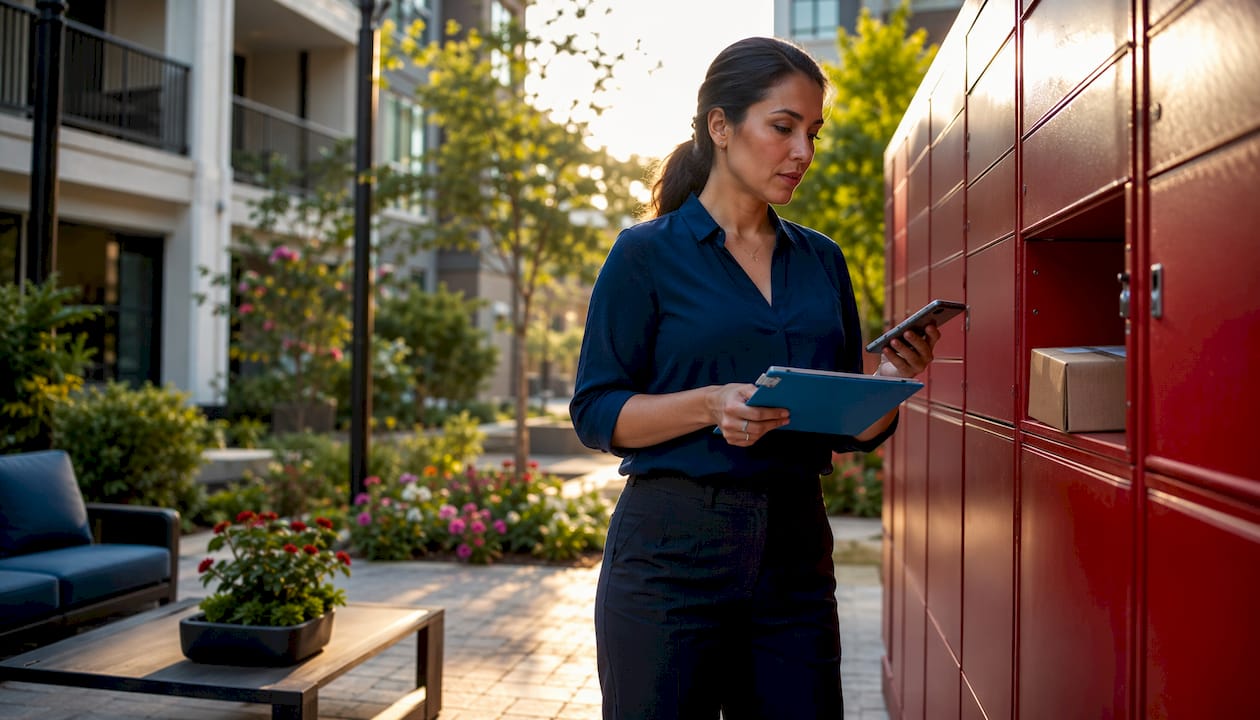
Resident package complaints are one of the most preventable sources of friction in multifamily communities, yet they remain among the most common. The fix is not more storage or more staff hours. It is a structured approach: identify the root cause, match the right management solution to your property, and build consistent processes around carrier compliance and resident communication. Properties that do this well report complaints dropping to zero and staff recovering hours each week that were previously lost to package-related emails and interruptions.
TL;DR: What actually works
- Carrier non-compliance is the top frustration for property operators, cited by 70% of surveyed operators. Fix it first.
- Professional package room management eliminates daily complaint volume and saves staff time.
- Self-service lockers and managed package rooms reduce manual handling and give residents 24/7 access.
- Hybrid systems handle oversized items that lockers alone cannot accommodate.
- Consistent resident notification and clear pickup procedures prevent most delivery issues before they escalate.
- Measuring KPIs before and after implementation confirms whether your solution is working.
Case study snapshot: At Crossing D.C., an 818-unit luxury community in Washington, D.C., implementing a managed package program brought resident complaints to zero and saved staff 5 hours per week in email management alone, while handling more than 9,000 packages monthly.
What causes resident package complaints in multifamily communities?
Most package complaints trace back to a small set of operational failures, not resident expectations that are too high. Understanding which failure is driving your complaint volume is the first step toward fixing it.
Carrier non-compliance is the most widely shared pain point among property operators, cited by 70% of surveyed operators as a primary issue. Drivers who bypass intake procedures, leave packages in lobbies, or fail to log deliveries correctly create a cascade of problems: residents cannot find their packages, staff spend time investigating, and complaints pile up fast.
Rising package volume compounds every other issue. When a community receives a high number of parcels daily, even a small process gap becomes visible quickly. Storage overflow, misplaced items, and delayed notifications all become more likely as volume grows.
Common root causes of resident delivery issues:
- Carrier non-compliance with intake procedures and delivery protocols
- Missing or delayed resident package notifications
- Package theft or unauthorized access to storage areas
- Manual handling errors such as mislabeled or misplaced parcels
- Storage overflow during peak periods or high-volume days
- Oversized items that do not fit standard lockers or designated spaces
- Inconsistent staff procedures across shifts or team members
- Lack of clear resident communication about pickup policies
Secondary causes often go unaddressed: no standardized process for handling returns, no clear policy for perishables, and no written protocol for what happens when the package room is full. Each gap is a complaint waiting to happen.
KPIs and metrics every property manager should track
You cannot improve what you do not measure. Before implementing any new package management solution, establish a baseline for each of these metrics so you can verify improvement after the fact.
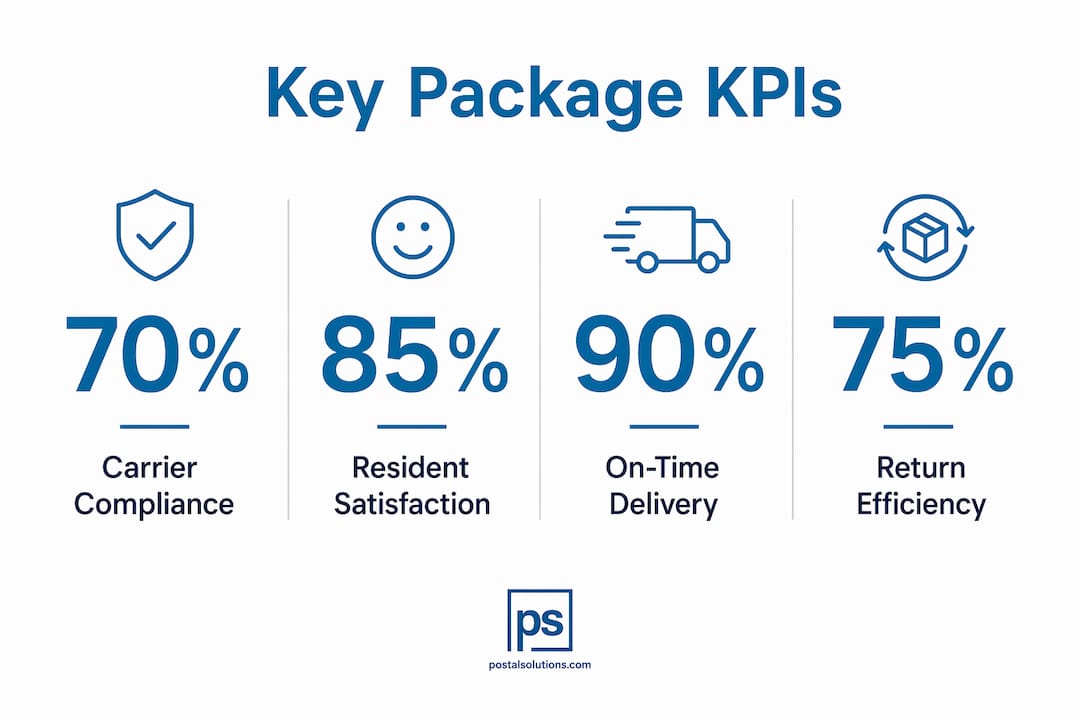
Complaint volume is the most direct measure. Track the number of package-related complaints or emails your team receives per week, broken down by type: missing package, delayed notification, access issue, or damaged item. Staff time spent on package handling is equally telling. At properties without a management solution in place, each package can require four to five staff touches, adding up to more than six hours of daily labor at a community averaging 75 packages per day.
Recommended KPIs for ongoing monitoring:
- Weekly package complaint volume by category
- Average staff time spent per package (receipt, logging, notification, retrieval)
- Package pickup rate within 24 and 48 hours of delivery
- Package misplacement or lost-package incidents per month
- Resident satisfaction scores related to package delivery experience
- Storage overflow incidents during peak periods
- Carrier compliance rate (percentage of compliant deliveries, with 70% of operators citing non-compliance as their top issue)
Resident satisfaction surveys, even informal ones sent after a package pickup, give you qualitative data that complaint counts alone miss. A resident who stops complaining is not necessarily satisfied. They may have simply given up and started shipping packages elsewhere, which affects your community’s perceived value as a residential amenity.
How to implement effective package delivery solutions step by step
The most common implementation mistake is skipping the audit phase and going straight to hardware. A volume audit before any investment is critical to match the right solution to your property’s actual characteristics.
Step-by-step implementation guide:
- Audit package volume and delivery patterns. Count daily and weekly deliveries by carrier for at least two weeks. Note peak days, oversized item frequency, and current staff time spent on package tasks.
- Assess your property layout and storage capacity. Identify whether your current package room, locker bank, or lobby space can realistically handle your volume, including seasonal surges.
- Evaluate solution options. Consider professional package room management outsourcing, self-service smart lockers, a hybrid system combining both, or a fully managed daily visit program.
- Establish carrier compliance protocols. Create a single-page pictorial standard operating procedure covering where to stage deliveries, how to log packages, where oversized items go, and where to place perishables. Distribute it to all regular carriers before go-live.
- Issue access credentials to frequent drivers. QR codes or PIN-based access for regular-route drivers create a compliance audit trail and give high-frequency carriers an incentive to use the intake workflow correctly.
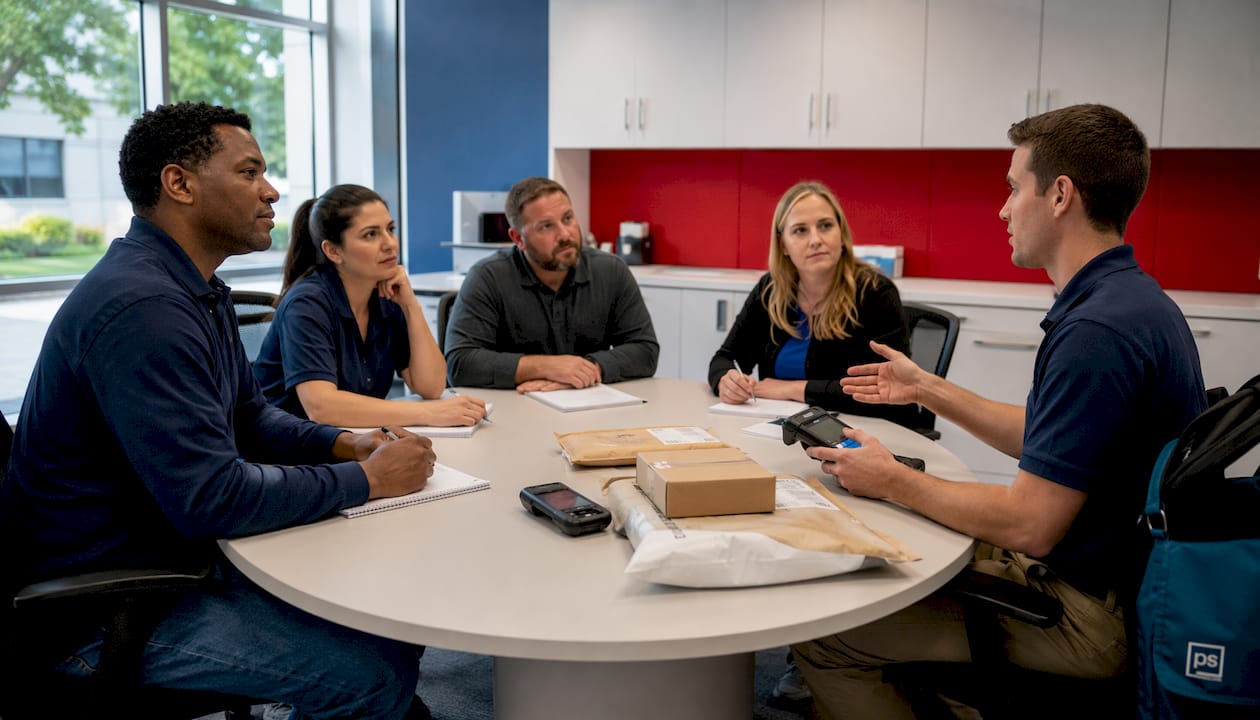
- Train staff on new procedures. Define clear roles: who receives packages, who handles notifications, who manages overflow, and who responds to resident inquiries.
- Communicate the new system to residents. Send a written notice explaining how the new process works, where to pick up packages, and what to do if they have a question. Post clear signage in the package room.
- Go live and monitor KPIs weekly for the first 30 days. Adjust carrier protocols, notification timing, or storage layout based on early data.
Pro Tip: Carrier training and resident education done before go-live prevent the majority of complaints. Operators who introduce protocols reactively, after problems surface, spend far more time correcting issues than those who set expectations upfront.
For a detailed setup reference, the package room setup checklist from Postal Solutions walks through the physical and operational requirements for multifamily properties.
Handling package surges, oversized items, and edge cases
Seasonal surges and oversized deliveries expose weaknesses in any package system that was designed only for average daily volume. Planning for these scenarios before they happen is what separates a resilient operation from one that generates a wave of complaints every holiday season.

During high-volume periods like the winter holidays or Amazon Prime Day, locker banks fill up quickly. When every locker is occupied, packages default to lobby floors or office corners, which creates exactly the clutter and confusion that generates complaints. Scalable storage solutions such as open-format managed package rooms allow flexible reconfiguration to absorb surges without requiring permanent infrastructure expansion.
Oversized items present a separate challenge. Furniture, mattresses, and appliances cannot fit in standard lockers, and a hybrid approach combining managed rooms with locker systems is the most practical solution. The locker handles standard parcels autonomously while the managed room accommodates bulk deliveries, with staff or a dedicated package manager coordinating oversized item delivery directly to resident doors when needed.
Troubleshooting methods for special cases:
- Pre-position additional temporary shelving in managed rooms before known surge periods.
- Establish a clear protocol for oversized items: direct-to-door delivery or a designated overflow zone with resident notification.
- Use QR code or PIN-based room access for gig economy drivers. Amazon Flex-style drivers rotate frequently, making traditional staff-led training ineffective. Autonomous access removes the dependency on static instructions.
- Set a package hold limit and communicate it to residents. Packages held beyond a set number of days create storage bottlenecks and should trigger a follow-up notification.
- For perishables, designate a refrigerated zone or a clearly marked area with a short hold window and an immediate notification to the resident.
For guidance on managing high-volume periods specifically, Postal Solutions covers high-volume delivery strategies for multifamily properties in detail.
How to measure improvement and verify resident satisfaction
Measuring results after implementation confirms whether your investment is working and gives you the data to justify further improvements to ownership or asset management teams.
Complaint volume before and after implementation is your primary benchmark. If your team was receiving five package-related emails per day and that number drops to near zero within the first week of a new managed program, the impact is clear. Staff time savings are equally concrete: track hours spent on package tasks before and after, and calculate the labor cost recovered. At Crossing D.C., a managed program handled 470 resident emails, saving staff 5 hours per week.
Metrics to verify improvement:
- Complaint volume: weekly count before vs. after implementation
- Staff time: hours per week spent on package tasks before vs. after
- Pickup rate: percentage of packages collected within 48 hours
- Misplacement incidents: lost or misdirected packages per month
- Resident survey scores: satisfaction with package delivery experience
- Lease renewal correlation: track whether communities with resolved package issues show improved renewal rates
Resident feedback collected directly through brief surveys or follow-up messages after pickup provides context that numbers alone cannot. Positive package experiences directly support higher lease renewal rates, while repeated failures erode resident trust in ways that go beyond any single complaint.
Best practices for resident communication about package management
Clear communication prevents the majority of package-related friction before it becomes a complaint. Residents who understand the system, know what to expect, and receive timely notifications rarely need to contact the office about a package.
Automated notifications upon package arrival are the baseline. The notification should include the carrier name, a photo of the item when possible, and clear pickup instructions including access codes or hours. Residents who receive a photo of their package at arrival have immediate confirmation it was received correctly, which eliminates a large category of “where is my package” inquiries.
Communication best practices:
- Send arrival notifications within minutes of package intake, not hours.
- Include pickup instructions in every notification: location, access method, and hours.
- Communicate oversized or special delivery handling separately, with a direct contact option.
- Post clear signage inside the package room with step-by-step pickup instructions.
- Use consistent messaging across your resident portal, email, and text channels.
- Educate new residents on package procedures during move-in orientation, not after their first complaint.
- Send a follow-up reminder for packages not picked up within 24–48 hours.
Onboarding is an underused communication opportunity. A brief walkthrough of the package room during move-in, combined with a written one-page policy, sets expectations before any delivery issues arise. Properties that skip this step typically see a spike in package-related questions during the first 30 days of a new resident’s tenancy.
Future-proofing your community’s package management system
Package volume in multifamily communities is not leveling off. Planning for growth now prevents the reactive scramble that typically follows when a system designed for today’s volume hits its ceiling next year.
Scalable infrastructure is the foundation. Open-format managed package rooms can be reconfigured as volume grows, while fixed locker banks require capital investment to expand. A hybrid system that combines both gives you flexibility without locking you into a single hardware footprint. Pairing that infrastructure with a daily package room management program keeps the physical space organized and current regardless of volume changes.
Key future-proofing tactics:
- Choose package room layouts that allow reconfiguration without construction.
- Select technology platforms that integrate with your existing property management software.
- Standardize carrier communication protocols across all properties in your portfolio to prevent uneven implementation.
- Build continuous staff training into your operations calendar, not just onboarding.
- Establish a vendor partnership with a package management provider who can scale with your portfolio.
- Review package management KPIs quarterly and adjust storage or staffing before problems surface.
- Stay current with carrier behavior changes, particularly the growth of gig-economy delivery services that require autonomous access solutions rather than staff-dependent protocols.
The operators who treat package management as a permanent operational discipline rather than a one-time hardware purchase are the ones who avoid recurring complaint cycles. A comprehensive property management approach that includes package handling as a defined service category, with assigned ownership and regular review, keeps the system functioning as a resident amenity rather than a liability.
How Postal Solutions transformed package management for multifamily communities
Postal Solutions has managed package room operations since 2016, and the results from properties across the country follow a consistent pattern: complaints drop, staff recover time, and residents gain confidence in the system.
The Crossing D.C. case is the clearest example. This 818-unit luxury community in Washington, D.C. was handling more than 9,000 packages monthly with a system that was, by the property’s own account, failing visibly. Staff were receiving at least five package-related complaints and emails per day. The lobby was cluttered. Packages were being lost or misplaced regularly. After implementing a managed package program, complaints dropped to zero. Staff saved 5 hours per week in email management. 95% of residents collected their packages within 48 hours of delivery. The package room went from a liability to an amenity that staff could highlight during property tours.
Impact at a glance: Zero resident complaints. 5 hours of staff time recovered weekly. 95% of packages picked up within 48 hours. 9,000+ monthly deliveries managed at a single 818-unit community.
Postal Solutions manages this kind of outcome through two core offerings. The first is daily package room management outsourcing: a dedicated package manager visits the property daily to organize the package room, mark unit numbers on incoming parcels, and complete weekly audits using the community’s existing package room software. The second is the sale and installation of Luxer One package room and locker systems, including combination setups that handle both standard and oversized deliveries. Postal Solutions is the largest Luxer One sales agency in the country, with over 1,200 Luxer One installations across more than 40% of U.S. states.
What Postal Solutions manages for multifamily communities:
- Daily package room organization and unit-number labeling on incoming parcels
- Weekly audits via existing package room software or a Luxer One system
- Sale and installation of Luxer One locker systems, package rooms, and hybrid combinations
- Six-day-per-week managed visits for communities that want full-service coverage
- Package management for conventional multifamily, student housing, senior housing, and off-campus student apartments
Pro Tip: Properties that combine a Luxer One locker or package room system with daily managed visits from Postal Solutions eliminate the two most common failure points: hardware that goes unmonitored and staff who are pulled away from leasing to handle package tasks. Without daily management, a property pays twice: once in payroll and once in lost productivity.
For communities evaluating their options, Postal Solutions’ apartment package management services page details how daily management outsourcing works in practice across different property types.
Legal and compliance considerations for package handling
Package handling in residential properties carries real legal exposure that property managers often underestimate until a claim is filed. Liability for lost, stolen, or damaged packages is the most immediate concern. Without a documented intake and notification process, a property has limited ability to defend against a resident’s claim that a package was lost under the property’s care.
Written package policies, included in the lease or as a signed addendum, establish the property’s liability limits and the resident’s responsibilities. These policies should specify whether the property accepts packages on the resident’s behalf, what the hold period is, and what happens to unclaimed items. Fair housing compliance applies to package management as well: any policy that restricts package access, charges fees, or limits delivery hours must be applied consistently across all residents without regard to protected class characteristics.
Data privacy is a growing consideration as package management systems collect more resident information. Notification systems that store resident contact data, access logs, and delivery photos are subject to applicable state privacy laws. Properties operating in states with active consumer privacy legislation should review their package management vendor’s data handling practices and ensure their lease language addresses data collection. Consulting legal counsel before implementing a new package management system, particularly one that collects biometric or access data, is a practical step that avoids costly corrections later.
Training and roles of staff in managing resident packages effectively
Clear role definition is what separates a package management system that works from one that creates confusion. When every staff member handles packages differently, residents get inconsistent experiences and complaints follow.
Assign a primary package contact on each shift. This person is responsible for logging incoming deliveries, sending notifications, and responding to package inquiries. Secondary staff should know the procedure well enough to cover, but the primary contact owns the daily workflow. At larger communities, a dedicated package manager, whether in-house or through an outsourced daily visit program, removes the task from leasing staff entirely.
Training should cover four areas: intake procedures, notification protocols, overflow handling, and resident communication. Intake training ensures every package is logged correctly and labeled with the unit number before it enters storage. Notification training covers timing, content, and follow-up reminders. Overflow handling prepares staff for surge periods and oversized items. Resident communication training gives staff the language to respond to package complaints calmly and with a clear resolution path.
Refresher training matters as much as initial onboarding. Staff turnover in multifamily is a known challenge, and a package management process that lives only in one person’s memory is a process waiting to fail. Written procedures, posted in the package room and accessible digitally, give new staff a reference point from day one. For properties using Luxer One systems, Postal Solutions provides ongoing support to keep the system organized and staff aligned with current procedures.
Key Takeaways
Effective package management eliminates resident complaints, recovers staff time, and protects lease renewal rates when built on carrier compliance, consistent processes, and the right combination of technology and daily management.
| Point | Details |
|---|---|
| Carrier compliance is the top issue | Carrier non-compliance is the top frustration for property operators, cited by 70% of surveyed operators. Fix it first. |
| Managed programs eliminate complaints | At Crossing D.C., a managed package program brought complaints to zero and saved staff 5 hours per week across 9,000+ monthly deliveries. |
| Hybrid systems handle all package types | Combining lockers with a managed package room accommodates oversized items that lockers alone cannot handle. |
| Measure before and after | Track complaint volume, staff time, and 48-hour pickup rates before implementation to verify real improvement afterward. |
| Daily management prevents double costs | Properties without daily package room management pay twice: in payroll and in lost staff productivity diverted from leasing. |
FAQ
What are the most common resident package complaints in apartments?
The most frequent complaints involve missing or lost packages, delayed delivery notifications, and packages left in unsecured areas. Carrier non-compliance with intake procedures is the root cause behind most of these issues, according to 70% of surveyed operators.
How can property managers reduce package-related complaints quickly?
Implementing a standardized carrier intake protocol and automated resident notifications addresses the two most common complaint drivers immediately. Adding daily package room management outsourcing, as Postal Solutions provides, typically brings complaint volume to near zero within the first week.
Is a resident benefit package the same as package management?
No. A resident benefit package (RBP) is a bundled set of amenities and services included in a lease, such as renters insurance or HVAC filter delivery. Package management refers specifically to the operational handling of parcel deliveries. The two are distinct offerings and should be communicated separately to avoid resident confusion.
What is an RBP fee?
An RBP fee is a monthly charge added to a resident’s lease in exchange for a bundle of services such as renters insurance, credit reporting, or maintenance perks. It is separate from any fee associated with package locker access or package room management.
How do smart lockers reduce package delivery problems?
Smart lockers give residents 24/7 self-service access to their packages without requiring staff involvement. Carriers deposit packages directly into assigned locker compartments, the system logs the delivery and notifies the resident automatically, and the resident retrieves the package using an access code or QR scan. This removes manual handling from the equation and eliminates the most common sources of misplacement and delay.
Recommended
- How to Accept Resident Packages Safely in Apartments | Postal Solutions
- Managed Package Room Visits: Top Strategies for Property Managers | Postal Solutions
- Apartment Package Management Services | Multifamily Package Room Operations | Postal Solutions
- Class A Apartment Package Experience: What Residents Expect | Postal Solutions