Package Room Organization Best Practices for Multifamily
Discover essential package room organization best practices for multifamily housing to streamline deliveries, enhance security, and improve efficiency.
Published
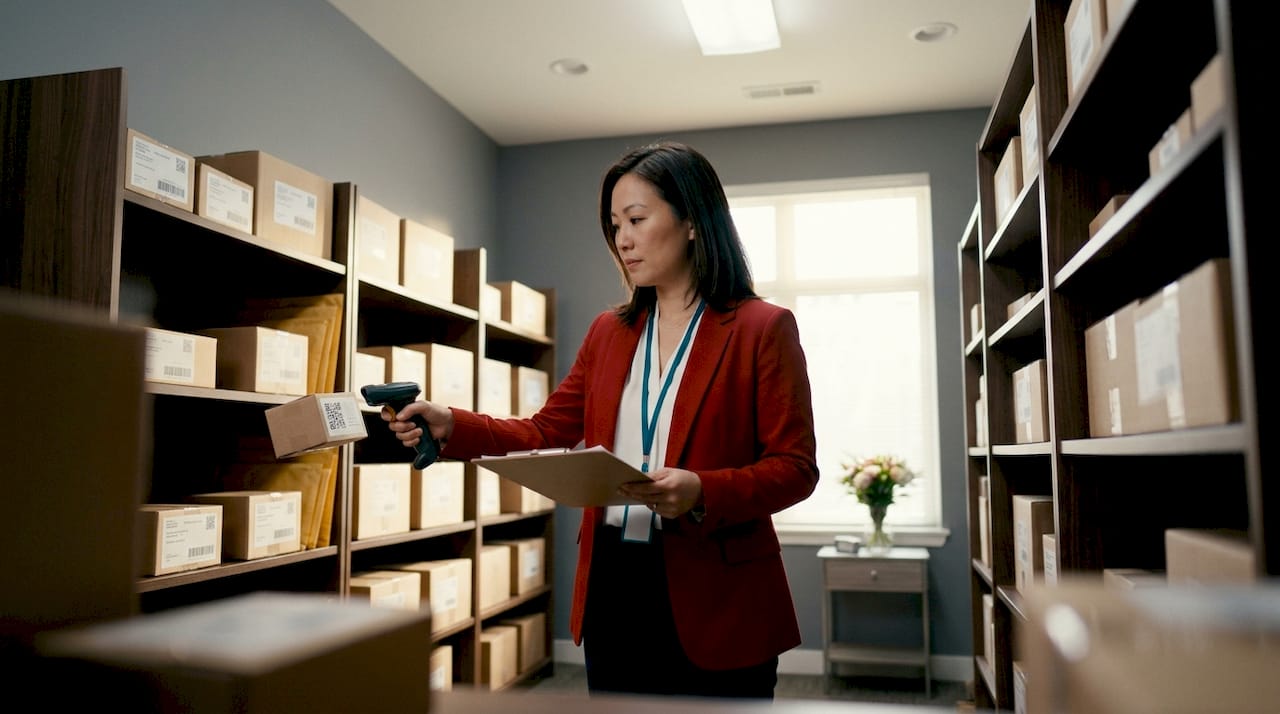
Package room organization best practices are defined as the structured strategies property managers use to control space, secure access, and process deliveries efficiently in multifamily housing environments. Proper package room workflow combines zone-based layouts, controlled entry, carrier compliance protocols, and digital tracking to prevent overflow and reduce resident friction. Properties handling high volumes of daily deliveries cannot rely on basic shelving alone. Systems like Luxer One locker installations and software-integrated labeling have become the operational standard for conventional multifamily, student housing, and senior living communities that expect both security and speed.
1. package room organization best practices start with scalable layouts
The foundation of any well-run package room is a layout designed to grow with delivery volume. Properties handling 5,000+ packages monthly require zone-based layouts, vertical shelving, and surge planning to reduce dwell time. That volume is not unusual for a mid-size urban apartment community, which means layout decisions made at setup directly affect daily operations for years.

Zone-based layouts group packages by floor, building wing, or unit range. This single change cuts the time a resident spends searching for a package and reduces the number of staff inquiries your team fields each day. Vertical and adjustable open shelving maximizes floor-to-ceiling capacity without expanding the room’s footprint.
Key layout elements to build into your package room setup:
- Zone sections labeled by floor or unit range (e.g., units 100–199, 200–299)
- Vertical shelving with adjustable heights to accommodate varying box sizes
- A dedicated oversized package area for freight, furniture, and large appliances
- A separate intake staging station adjacent to the main storage area
- Clear aisle space of at least 36 inches for resident navigation
Pro Tip: Plan a designated overflow zone before peak season arrives. Holiday delivery surges can double daily volume for six to eight weeks. A pre-labeled overflow section prevents the entire room from becoming disorganized when carriers arrive with more packages than your standard shelving can absorb.
2. how access control and security protocols strengthen package room operations
Security is not a feature you add to a package room. It is a core operational requirement. Controlled access via key fobs, PIN codes, or mobile credentials combined with CCTV cameras provides both theft deterrence and an audit trail for dispute resolution. Without that audit trail, a resident claiming a missing package becomes an unresolvable complaint.
“Property teams are advised to treat organization and security as a unified system. Lack of integrated security creates operational gaps that are hard to resolve after the fact.” — Swiftlane
The practical security checklist for any package room includes:
- Controlled entry using key fobs, PIN codes, or mobile credentials tied to individual resident accounts
- CCTV cameras covering the full room interior, not just the entry point
- Access logs linked to your property management platform for incident investigation
- No shared master keys for residents or carriers
- Limited-time PIN codes for carriers that expire after each delivery window
Limited-time carrier PIN codes create access audit trails and speed up carrier deliveries. That combination matters because it removes the ambiguity of “the carrier left it somewhere” disputes. You have a timestamp, an access record, and camera footage.
Swiftlane access control is one widely deployed solution in multifamily settings, offering mobile credential management and real-time access logs. The broader principle applies regardless of which system you choose: access control and surveillance must function as one integrated layer, not two separate tools.
3. what standardized carrier compliance practices improve package room workflow
Carrier non-compliance is the leading cause of package system failures and resident complaints in multifamily buildings. One carrier who ignores your staging protocol can create a backlog that takes days to untangle. The fix is not reactive. It is a standardized compliance system deployed before the first package arrives.
Follow these steps to build a carrier compliance framework:
- Create pictorial SOPs showing exactly where carriers should stage packages, how to scan or log deliveries, and which areas are off-limits.
- Post SOPs at the package room entrance in a format carriers can read in under 30 seconds.
- Issue carrier-specific access credentials tied to compliance expectations, not just building entry.
- Communicate protocol updates to all active carriers whenever your system or layout changes.
- Track compliance patterns using QR code scans or PIN entry logs to identify repeat offenders.
- Escalate non-compliance through the carrier’s regional operations contact, not just the driver.
The cascade effect of carrier non-compliance is underappreciated. One carrier who drops packages in the wrong zone forces your staff to re-sort, delays resident notifications, and generates inquiry calls. Standardized carrier communication and pictorial SOPs deployed at launch prevent these cascading management problems before they start.
Pro Tip: Laminate your carrier SOP and attach it directly to the package room door at eye level. Carriers rotate frequently. A new driver on a route should be able to follow your protocol without calling anyone.
4. how digital tracking and labeling improve resident pickup experience
Digital package tracking combined with clear labeling significantly shortens resident pickup times and lowers inquiry calls to your leasing office. The two systems work together: digital tools tell residents a package has arrived, and physical labeling tells them exactly where to find it.
| Approach | Strengths | Limitations |
|---|---|---|
| Manual labeling only | Low cost, no software required | Time-intensive, prone to human error |
| Digital tracking only | Automated notifications, real-time data | Residents still search without physical labels |
| Hybrid model | Fast resident navigation, audit trail | Requires consistent daily execution |
The hybrid model is the operational standard for high-performing package rooms. Staff or a daily package manager marks the unit number on each box and logs it in the tracking software. Residents receive a notification with their unit number referenced, then walk directly to the labeled shelf zone.
Additional labeling and tracking practices that reduce friction:
- Label shelves by unit number ranges, not resident names, to protect privacy
- Separate packages by type: flats and envelopes, standard boxes, and oversized items
- Use kiosk displays or audio guidance at the room entrance to direct residents to their zone
- Integrate your tracking software with resident notification platforms like Rent Manager, Yardi, or AppFolio for automated alerts
The time savings are real. A resident who receives a notification saying “your package is in Zone B, shelf 3” spends 90 seconds in the package room. A resident with no guidance spends five minutes and then calls your office.
5. operational protocols that keep package rooms organized year-round
Sustainable package room management requires consistent protocols, not just a good initial setup. Regular room cleanups, overflow protocols, and resident communication maintain efficiency during peak seasons. Clear policies on oversized items and unclaimed packages limit backlog during holidays. Without these protocols, even a well-designed room degrades within weeks of a high-volume period.
Core operational protocols to implement and maintain:
- Daily sorting visits to organize new arrivals, mark unit numbers, and clear staging areas
- Weekly audits to identify unclaimed packages and trigger resident follow-up notifications
- Unclaimed package policy with a defined hold period (typically 14–30 days) and a documented removal process
- Oversized item staging rules that prevent large freight from blocking standard shelving zones
- Inbound and outbound separation so resident returns and outgoing mail do not mix with incoming deliveries
- Resident signage inside the room reinforcing pickup procedures and hold policies
Tracking metrics like delivery-to-pickup time and complaint volumes helps you identify where your workflow breaks down. That data is the basis for every meaningful improvement. If your average dwell time is climbing, the problem is either notification lag, labeling inconsistency, or resident access friction. Each has a different fix.
Separating intake staging from long-term storage areas prevents delivery congestion and improves sorting speed. This is one of the most overlooked layout decisions in high-volume apartments. When carriers drop packages directly onto resident shelves, the room becomes unsortable within hours of a heavy delivery day.
Package Room Operational Metrics to Monitor
| Metric | Target Benchmark | Why It Matters |
|---|---|---|
| Average dwell time | Under 48 hours | Reduces overflow and unclaimed package backlog |
| Resident inquiry rate | Fewer than 5 calls per 100 packages | Indicates labeling and notification effectiveness |
| Carrier compliance rate | 95% or higher | Prevents sorting errors and staging violations |
| Weekly audit completion | 100% of weeks | Catches unclaimed packages before they create clutter |
Key takeaways
Effective package room management requires integrating layout design, access security, carrier compliance, and daily operational discipline into one connected system.
| Point | Details |
|---|---|
| Zone-based layouts scale with volume | Group packages by floor or unit range to cut resident search time and prevent overflow. |
| Security must be integrated | Combine access control and CCTV as one system to create audit trails and deter theft. |
| Carrier compliance prevents cascades | Deploy pictorial SOPs and limited-time credentials at launch to stop non-compliance before it starts. |
| Hybrid labeling reduces friction | Mark unit numbers physically and log digitally so residents navigate directly to their package. |
| Metrics drive sustainable improvement | Track dwell time, inquiry rates, and audit completion to identify and fix workflow gaps. |
What nine years of package room management taught us
The properties that struggle most with package management share one trait: they treat organization, security, and carrier compliance as three separate problems. They are not. They are one system. When a carrier ignores your staging protocol, it breaks your labeling workflow, which delays resident notifications, which generates inquiry calls, which consumes leasing staff time. The failure starts with one non-compliant delivery and ends with a staff member spending 20 minutes helping a frustrated resident find a package that was never logged correctly.
We have seen this pattern across conventional multifamily, student housing, and senior communities. The properties that run clean package rooms audit their workflows before they invest in new technology. They know their average dwell time, their complaint rate, and their carrier compliance percentage. That data tells them exactly where to spend money and where to change behavior.
The other insight worth stating directly: a well-organized package room is not a luxury amenity. It is a retention tool. Residents notice when pickup is fast and frictionless. They also notice when it is not. Properties that invest in daily organization, clear labeling, and integrated security see fewer complaints and stronger renewal rates. The operational cost of doing this well is lower than the cost of doing it poorly.
If you are starting from scratch or rebuilding a failing system, begin with a layout audit and a carrier compliance review. Fix those two things first. Then layer in digital tracking and access control. That sequence works. Jumping straight to technology without fixing the foundational workflow is the most common and most expensive mistake we see.
— Postal Solutions
How postal solutions manages package room organization for multifamily properties
Postal Solutions manages daily package room organizing for conventional multifamily, student housing, and senior communities across the country. Each managed visit includes sorting new arrivals, marking unit numbers on boxes, and completing weekly audits using your existing package room software or a new system we install. As the largest Luxer One sales agency in the United States, with over 1,200 installations across more than 40% of U.S. states, Postal Solutions also sells and installs Luxer One package room and locker systems for properties that want a fully monitored solution. For high-volume communities that need both hardware and daily management, explore apartment package management services built specifically for multifamily operations.
FAQ
What is the most important package room organization best practice?
Zone-based layouts that group packages by floor or unit range are the single most impactful starting point. This reduces resident search time and prevents overflow during high-volume delivery periods.
How do you prevent package theft in a multifamily package room?
Controlled access using key fobs, PIN codes, or mobile credentials combined with interior CCTV cameras provides both deterrence and an audit trail. Access control and surveillance must function as one integrated system, not two separate tools.
Why does carrier non-compliance cause so many package management problems?
One carrier who ignores your staging or logging protocol breaks the labeling and notification chain for every package they deliver. Pictorial SOPs and limited-time carrier credentials deployed at launch prevent these cascading failures before they start.
What metrics should property managers track in a package room?
Track average dwell time, resident inquiry rate per 100 packages, carrier compliance rate, and weekly audit completion. Automation and audit-driven improvements reduce dwell time and staff strain when these metrics guide your decisions.
When should a property upgrade from open shelving to a locker system?
Properties consistently handling high daily package volumes, experiencing theft complaints, or lacking staff time for daily sorting should evaluate a Luxer One locker or package room system. A locker system automates resident notification and access, removing the need for manual sorting on every delivery.