Controlled Access Package Room: A Property Manager's Guide
Discover how a controlled access package room enhances security and efficiency for property managers. Transform your package management today!
Published

A controlled access package room is a designated, secure space in a residential property that restricts entry to authorized couriers, residents, and staff, creating a defined system for receiving, storing, and retrieving packages. As parcel volumes in multifamily housing continue to climb, the gap between a well-managed secure package delivery room and a chaotic, staff-draining pile of boxes in the leasing office grows wider every month. This guide covers the technology types, operational benefits, solution-matching frameworks, and daily best practices property managers need to run a high-performing package management system without burning out their teams.
What is a controlled access package room, and what types exist?
A controlled access package room is not a single product. It is a category of solutions, each with different technology, cost, and scalability profiles. Understanding the distinctions helps you choose the right fit before committing budget.
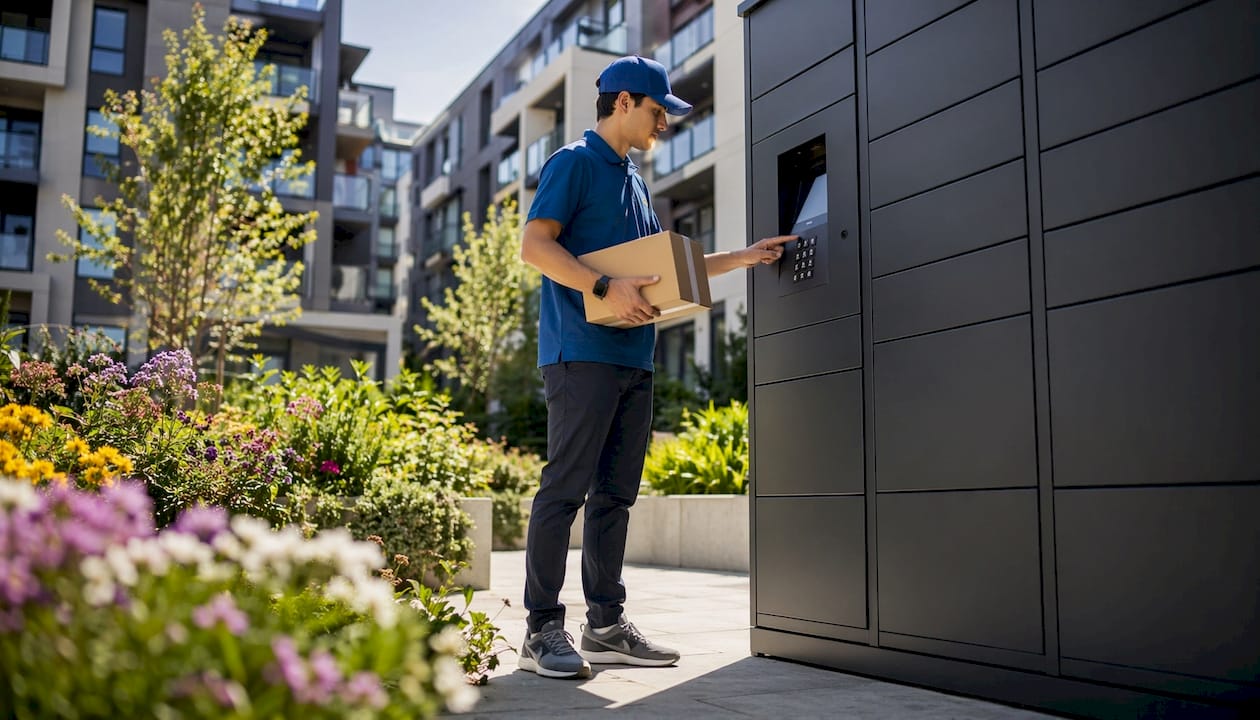
Smart lockers are the most familiar format. Each package occupies a fixed compartment, and residents receive a code or QR code to retrieve it. The limitation is structural: locker installations range from $6,000 to $20,000 and require permanent dedicated space with fixed sizing. A surge in oversized deliveries, think furniture or bulk grocery orders, can overwhelm a locker bank quickly. Postal Solutions sells and installs Luxer One smart locker systems for apartments, student housing, universities, and municipalities across more than 40% of U.S. states.
AI-powered smart package rooms use open shelving combined with computer vision to automate intake tracking. The system photographs each parcel, reads the label using optical character recognition, and sends the resident a notification with a photo and retrieval instructions. At Stuyvesant Town, average wait times dropped from 30 minutes to seconds after adopting this model, and staffing fell from 12 to 2. That result is not typical of every property, but it illustrates the ceiling of what the technology can deliver at scale.
Hybrid models repurpose underused amenity spaces, such as a former business center or storage room, and pair them with access control panels and part-time attendants. This approach reduces labor cost while still providing restricted entry. It suits smaller properties where a full locker bank or AI room is not cost-justified.
Key technology components across all three types include:
- Presence sensors that detect when someone enters the room and log the visit
- Optical character recognition that reads address labels and links packages to resident profiles
- Automated notifications sent via text or app with photos and pickup instructions
- Access control panels that grant entry only to credentialed couriers and residents
Pro Tip: Before selecting a system, audit your property’s average daily package volume for 30 days. Volume data, not unit count alone, is the most reliable predictor of which format will hold up under real conditions.
How do controlled access package rooms improve operations and resident experience?
The operational case for access-controlled package management is direct. Onsite controlled access package rooms reduce manual handling and improve accountability by creating fewer touchpoints between delivery and pickup. Fewer touchpoints mean fewer opportunities for packages to go missing, and fewer resident complaints landing on the leasing team’s desk.
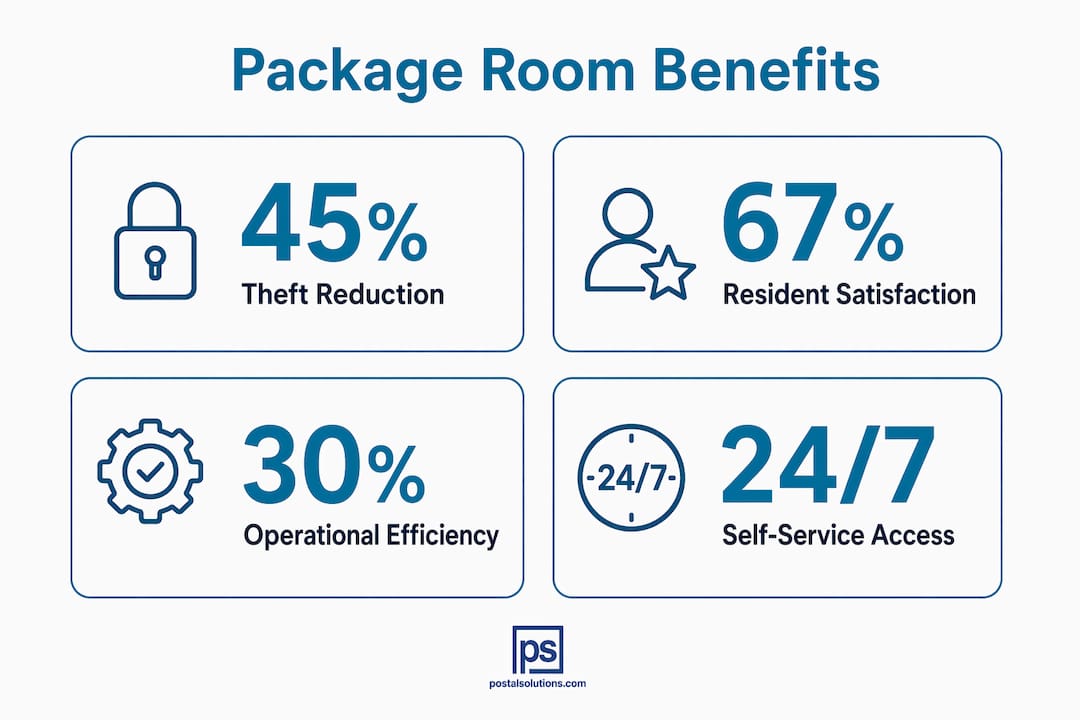
The resident-side impact is equally measurable. 67% of residents expect secure, self-service, 24/7 package pickup options in multifamily housing. That expectation is now a leasing factor, not a luxury amenity. Properties that cannot meet it face a real competitive disadvantage during lease renewals and new prospect tours.
Staffing relief is the benefit property managers most often underestimate. Outsourcing package management saves approximately 30 staff hours weekly in an average 300-unit community. Those hours represent leasing calls not made, move-in inspections not completed, and maintenance requests not followed up on. The cost of unmanaged package chaos is not just the packages. It is the opportunity cost of every hour your team spends sorting boxes instead of serving residents.
The benefits property managers report most consistently include:
- Reduced theft and package loss due to restricted entry
- Fewer resident complaints and front-desk interruptions
- Stronger leasing appeal, particularly for tech-forward resident demographics
- Documented chain of custody for every parcel
Pro Tip: Track package-related service requests in your property management software for 60 days before and after implementing a secure package delivery room. The before-and-after comparison is the clearest way to quantify ROI for ownership.
How to match package room solutions to your property profile
The best package management solution varies significantly by property profile. There is no universal answer, and operators who document explicit rationale for their solution choices by portfolio tier make better decisions and avoid costly retrofits.
A tiered framework based on unit count, daily volume, and resident demographics gives you a structured way to evaluate options:
-
Urban high-volume properties (300+ units): AI-powered smart package rooms with open shelving and computer vision deliver the best throughput. The technology handles volume surges without adding staff, and the resident self-service model aligns with urban renter expectations for speed and convenience.
-
Suburban mid-size properties (100–299 units): Smart locker banks, including Luxer One systems, perform well here. Volume is predictable, parcel sizes are more uniform, and the fixed-compartment model provides clear accountability without requiring significant technology infrastructure.
-
Smaller properties (under 100 units): Hybrid models using repurposed amenity space, access control panels, and part-time management coverage offer the best cost-to-benefit ratio. Full locker banks or AI rooms are rarely justified at this scale.
Decision criteria to document before selecting a solution:
| Factor | What to assess |
|---|---|
| Daily package volume | Average parcels per day across 30 days |
| Unit count | Total residential units, not just occupied |
| Available square footage | Dedicated space that can be secured |
| Resident demographics | Age, tech comfort, and pickup behavior patterns |
| Staffing capacity | Hours per week your team can realistically allocate |
Postal Solutions manages package room outsourcing for conventional multifamily, student housing, and senior housing communities. For properties that want a full-service path, Postal Solutions sells and installs Luxer One systems and provides six-day-per-week managed visits to organize the room, mark unit numbers on boxes, and complete weekly audits.
Best practices for operating and securing a package room
A well-designed access control system only works if the daily operating procedures match the technology. The most common failure point is not the hardware. It is carrier compliance with scanning and delivery procedures. When delivery drivers skip required intake steps, the tracking chain breaks, notifications do not fire, and residents cannot find their packages.
Presence sensors and video monitoring create an accountability layer that catches gaps in courier compliance. They log every entry and exit, giving your team a timestamped record to reference when a package dispute arises. This documentation is particularly valuable in student housing, where high turnover and high volume create more friction points than conventional multifamily.
Automated notifications with photos and QR codes reduce average pickup time to seconds for residents who know exactly where to go. Systems that use laser guidance or shelf-location indicators take this further, directing residents to the precise spot without any staff involvement. The result is faster turnover of the room and fewer packages sitting unclaimed for days.
Operational best practices that hold up across all property types:
- Set clear courier access hours and communicate them to all carriers in writing
- Post unit-number labeling requirements at the room entrance for couriers
- Conduct weekly audits to identify unclaimed packages and trigger follow-up notifications
- Establish a defined process for oversized or irregular parcels that do not fit standard shelving
- Review access logs monthly to identify unauthorized entry attempts
Pro Tip: Use your package room setup checklist before going live with any new system. Gaps in signage, courier briefing, or resident onboarding are the fastest way to undermine a well-designed room.
Key Takeaways
A controlled access package room succeeds when technology, operating procedures, and solution type are matched to the specific volume and profile of the property it serves.
| Point | Details |
|---|---|
| Solution type matters | Match smart lockers, AI rooms, or hybrid models to unit count and daily volume. |
| Resident expectations are high | 67% of residents expect secure, self-service, 24/7 package pickup in multifamily housing. |
| Staffing savings are real | Managed package rooms save approximately 30 staff hours weekly in a 300-unit community. |
| Carrier compliance is critical | Delivery driver intake compliance determines whether tracking and notifications work correctly. |
| Document your rationale | Record the specific criteria used to select a solution so future decisions are grounded in data. |
What working with package rooms for nearly a decade has taught us
The property management industry tends to treat package room decisions as one-time capital purchases. Buy the lockers, install them, done. That framing causes most of the operational problems we see at Postal Solutions.
The technology is only as effective as the daily discipline behind it. A Luxer One system installed in a 400-unit student housing community will underperform within six months if no one is auditing unclaimed packages, marking unit numbers clearly, or following up with residents who have not retrieved parcels in five days. The room becomes a storage unit, not a management system.
What actually works is treating the package room as a living operation, not a set-it-and-forget-it amenity. Properties that pair a quality hardware installation with consistent daily management, whether through an in-house process or a managed service like what Postal Solutions provides, see sustained resident satisfaction and far fewer escalations. The ones that skip the operational layer spend more in staff time and resident complaints than they saved on the technology.
The trend worth watching in 2026 is the convergence of AI-powered intake with managed human oversight. Neither pure automation nor pure staffing is the answer at most property sizes. The hybrid approach, technology handling intake and logging while a trained manager handles audits, exceptions, and resident communication, is where the best-performing properties are landing. Forward-thinking property teams are building that model now rather than retrofitting it after a resident satisfaction crisis.
— Postal Solutions
Postal Solutions and your package room operations
Property managers who want a reliable, professionally managed package room operation have a clear path forward with Postal Solutions. As the largest Luxer One sales agency in the country, with over 1,200 installations across more than 40% of U.S. states, Postal Solutions sells and installs Luxer One package room and locker systems for multifamily, student housing, senior housing, universities, and municipalities. Beyond hardware, Postal Solutions manages daily package room services including six-day-per-week organized visits, unit-number labeling, and weekly audits. For property teams ready to stop paying twice in payroll and lost productivity, Postal Solutions offers a consultation to match the right solution to your property’s specific volume, space, and resident profile.
FAQ
What is a controlled access package room?
A controlled access package room is a secured, access-restricted space in a residential property where packages are received, stored, and retrieved by authorized couriers and residents only. Entry is managed through key fobs, PIN codes, QR codes, or access control panels depending on the system installed.
How does access control for packages prevent theft?
Access control restricts entry to credentialed individuals, and presence sensors with video monitoring log every visit. This creates a documented chain of custody that deters theft and provides evidence when a package dispute arises.
What package volume justifies an AI-powered smart package room?
AI-powered smart package rooms deliver the strongest return at properties with 300 or more units and consistently high daily parcel volumes. Smaller properties typically see better cost efficiency from smart locker banks or hybrid staffed models.
How do resident notifications work in a package management system?
Systems use optical character recognition to read address labels at intake, then send residents an automated text or app notification with a photo of their package and retrieval instructions. Advanced systems include QR codes or laser guidance to direct residents to the exact shelf location.
Can Postal Solutions manage a package room without replacing existing hardware?
Postal Solutions manages daily package room organizing using the property’s existing package room software and physical setup. The service includes daily visits, unit-number labeling on boxes, and weekly audits, without requiring a hardware replacement unless the property chooses to upgrade to a Luxer One system.
Recommended
- Managed Package Room Visits: Top Strategies for Property Managers | Postal Solutions
- Package Room Setup Checklist for Multifamily Properties | Postal Solutions
- Package Room Management | Daily Services for Apartments & Student Housing | Postal Solutions
- How to Accept Resident Packages Safely in Apartments | Postal Solutions