How the Package Receipt Process Works in Apartments
Discover how the package receipt process works in apartments. Boost efficiency, reduce lost packages, and enhance resident satisfaction today!
Published
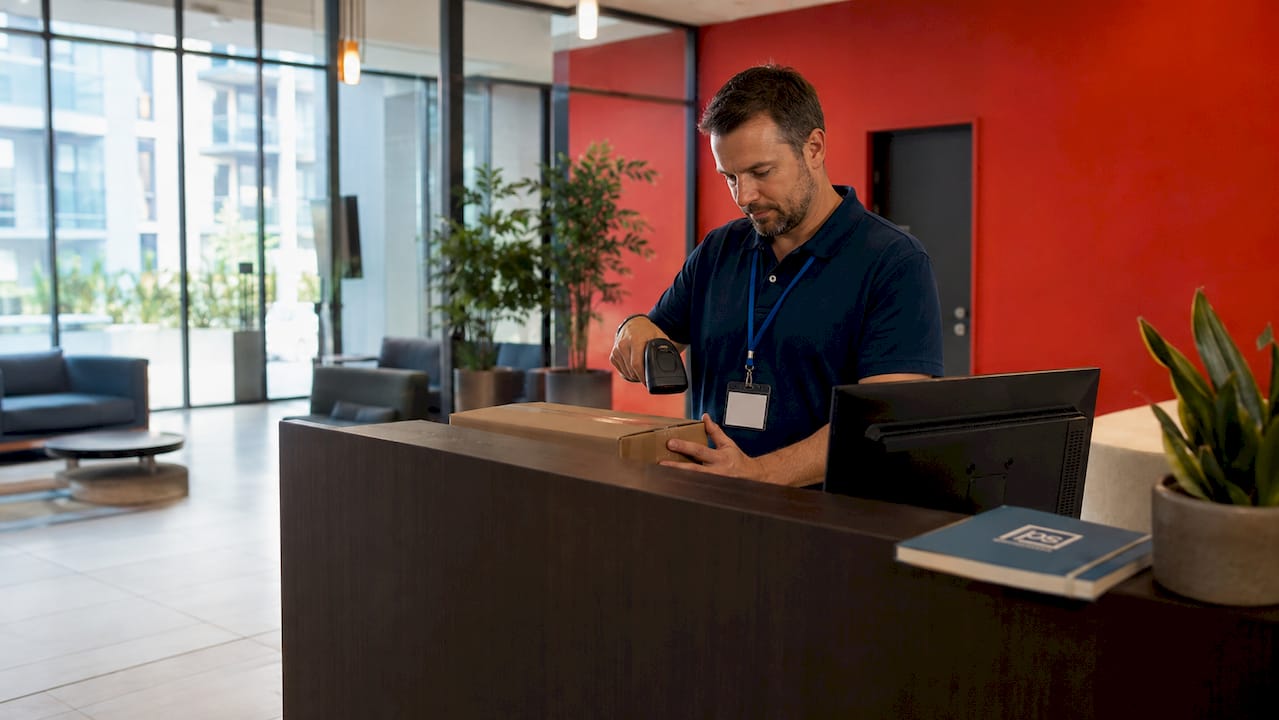
The package receipt process in apartments is defined as the systematic workflow of accepting, logging, securing, notifying, and releasing parcels to residents within a multifamily property. Property managers who understand this workflow reduce lost packages, cut staff time spent on manual sorting, and raise resident satisfaction scores. The industry term for managing this end-to-end flow is parcel management, and it applies across conventional multifamily, student housing, and senior living communities. With package volumes at apartment communities continuing to climb year over year, a documented parcel management process is no longer optional. It is the operational baseline every leasing team needs.
How does the package receipt process work in apartments?
The apartment package receipt process follows a defined sequence from the moment a carrier arrives to the moment a resident picks up their parcel. Each step has a responsible party, a tool, and a measurable outcome.
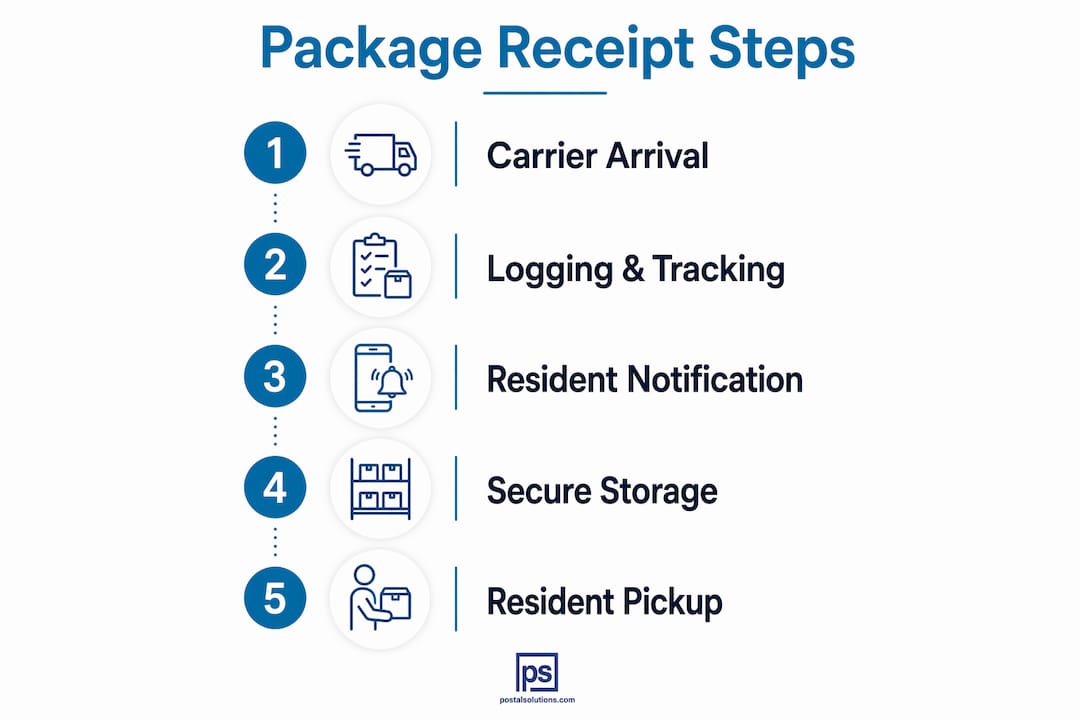
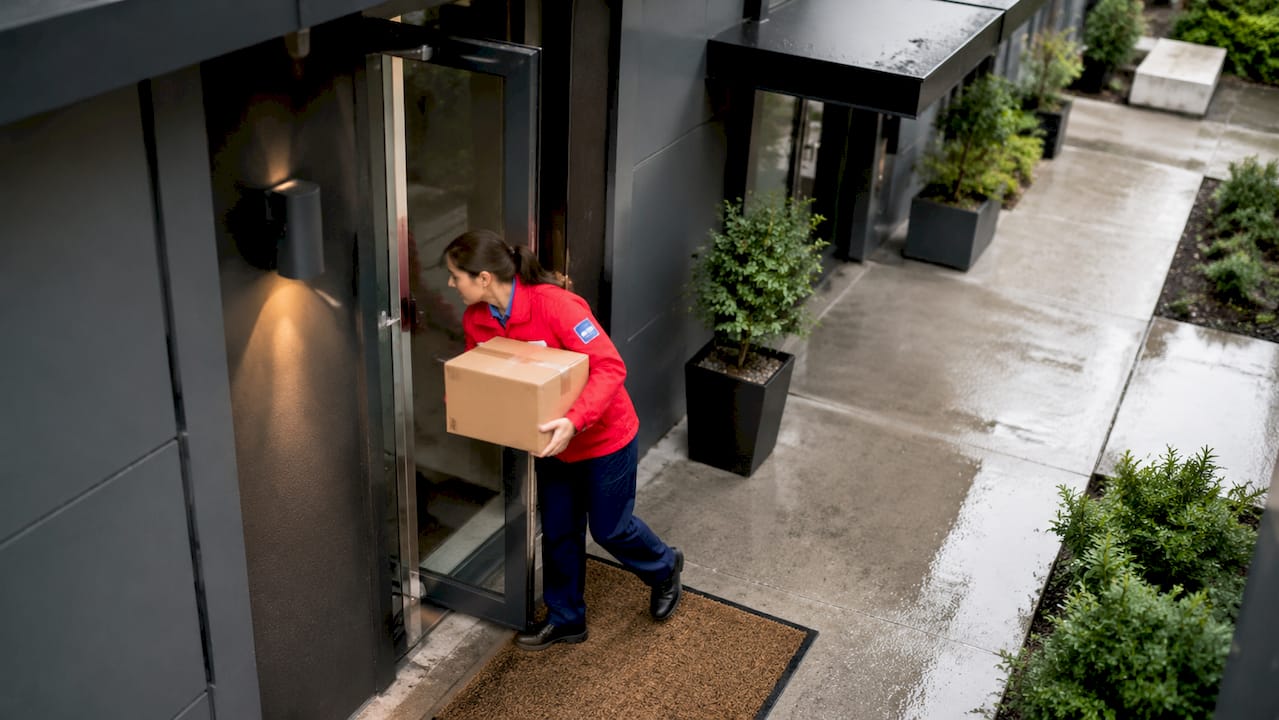
Step 1: Carrier arrival and building access Carriers including USPS, FedEx, UPS, and Amazon arrive at the property and require access to a designated delivery point. That point is typically a front desk, a dedicated package room, or a parcel locker bank. FedEx will deliver to apartment doors when building access allows, but defaults to a leasing office or secured parcel room when intercoms or access codes are unavailable. This means your building access policy directly shapes where packages land.
Step 2: Logging and tracking Every parcel must be logged at the point of receipt. Manual logging uses a paper sign-in sheet or a spreadsheet, which creates gaps in the chain of custody. Digital logging uses computer vision technology to timestamp each parcel automatically and record its location. That time-stamped record reduces lost packages and increases resident trust because every parcel has a documented history from arrival to pickup.
Step 3: Resident notification Once a package is logged, the resident receives an alert. Immediate text and email alerts sent upon delivery with package details reduce front desk inquiries and give residents the information they need to plan their pickup. Properties that skip this step see higher rates of unclaimed packages and more staff interruptions.
Step 4: Secure storage Packages are stored in one of three ways. Apartment package lockers assign secured compartments with digital or physical keys, and residents retrieve parcels using unique codes. Package rooms hold all parcels in a locked, access-controlled space. Front desk storage places packages behind a staffed counter. Each method has a different security profile and staffing cost.
Step 5: Resident pickup and audit The resident retrieves their package using their unique code, key fob, or staff assistance. A weekly audit confirms that every logged parcel has been claimed or flagged as uncollected. Properties using package room software can run this audit automatically. Those without software rely on manual counts, which are slower and more error-prone.
How do smart package room technologies improve management?
Smart package room systems change the parcel management workflow by replacing manual steps with automated ones. The result is faster retrieval, fewer errors, and less demand on leasing staff.
Key features of a smart package room system include:
- Automated parcel logging using computer vision or QR code scanning, which creates a digital record without staff involvement
- Guided retrieval using laser pointers, audio prompts, or room maps that direct residents to their specific package location
- 24/7 resident access so pickups are not limited to office hours
- Mobile credential access that lets residents open the package room from their phone
Residents retrieve packages in under 20 seconds using QR codes or mobile credentials in a fully automated system. That speed matters because it eliminates the bottleneck at the front desk and removes the need for staff to locate and hand over each parcel.
Oversized, flat, cold storage, or dry cleaning items require dedicated storage outside standard lockers, and smart systems handle these with room maps and audio prompts that guide residents to the correct area. This is a detail many properties overlook when they first set up a package room.
Pro Tip: If your property already owns package room software, a daily management visit from an outside service can integrate with that software to complete weekly audits without requiring you to purchase a new system.
| Feature | Standard package room | Smart package room system |
|---|---|---|
| Parcel logging | Manual, staff-dependent | Automated via computer vision or QR scan |
| Resident notification | Manual call or email | Instant text and email alert |
| Retrieval time | Variable, staff-assisted | Under 20 seconds, self-serve |
| After-hours access | No | Yes, 24/7 |
| Audit capability | Manual weekly count | Automated via software |
Postal Solutions sells and installs Luxer One smart locker systems for multifamily communities nationwide. As the largest Luxer One sales agency in the country, with over 1,200 installations across more than 40% of U.S. states, Postal Solutions brings direct field experience to every system recommendation.
What best practices can property managers use to improve package receipt?
Documented procedures separate properties that run clean package operations from those that spend staff hours chasing lost parcels. These practices apply across all apartment classes.
- Set a structured pickup window. Automated reminders at 48 and 96 hours nudge residents to collect packages within a 3 to 5 day window. This prevents package room clutter and keeps turnover moving.
- Control access to the package room. Restricting entry to authorized couriers and residents reduces unsupervised access and limits your liability for lost or damaged parcels. A key fob or PIN system is the minimum standard.
- Label every package clearly. A daily organizing visit that highlights or handwrites the unit number on each box cuts resident retrieval time and reduces misdirected packages. This is the single most overlooked step in high-volume properties.
- Train staff on digital logging. Staff who understand how to use your package room software log parcels faster and make fewer errors. A 30-minute onboarding session per new hire pays for itself in the first week.
- Plan for delivery surges. Proper scheduling and space management during peak delivery periods, such as the holiday season or move-in week, prevent elevator bottlenecks and package room overflow. Designate a staging area for overflow before you need it.
Pro Tip: Collect resident feedback on package pickup experience twice a year. Residents notice problems before staff do, and a short survey surfaces issues like poor lighting, confusing room layouts, or notification delays.
Properties that manage high-volume package deliveries with a combination of documented procedures and technology see measurable reductions in staff time spent on parcel-related tasks.
How do carrier policies and package size affect apartment delivery?
Carrier behavior varies, and that variation forces property managers to build flexible intake procedures rather than a single fixed process.
USPS delivers to individual mailboxes when box size allows. Oversized parcels go to the front desk or a parcel locker if one is available. FedEx and UPS use intercoms or building access codes to reach apartment doors, but both default to a leasing office or secured room when direct access is blocked. Amazon Logistics has expanded its use of building access partnerships, allowing drivers to enter secured lobbies in many urban properties.
| Carrier | Preferred delivery point | Fallback when access is restricted |
|---|---|---|
| USPS | Individual mailbox | Front desk or parcel locker |
| FedEx | Apartment door | Leasing office or parcel room |
| UPS | Apartment door | Leasing office or parcel room |
| Amazon | Lobby or door | Parcel locker or leasing office |
Package size adds another layer of complexity. Standard lockers handle most parcels, but oversized boxes, refrigerated deliveries, and specialty items like dry cleaning need a separate intake process. Properties without a dedicated overflow area for large packages end up storing them in hallways or leasing offices, which creates both a safety issue and a liability gap. A flexible apartment package management plan accounts for all package types before they arrive, not after.
Key Takeaways
A well-run apartment parcel management process requires documented procedures, access controls, automated notifications, and a clear plan for carrier variation and package size.
| Point | Details |
|---|---|
| Define each step clearly | Document carrier intake, logging, notification, storage, and pickup as separate procedures with assigned owners. |
| Automate notifications | Send text and email alerts immediately on delivery to reduce front desk inquiries and unclaimed packages. |
| Control package room access | Restrict entry to authorized couriers and residents to limit liability and prevent package loss. |
| Plan for oversized parcels | Designate a separate staging area for large, cold storage, or specialty items outside standard locker banks. |
| Use pickup windows and reminders | A 3 to 5 day pickup window with automated reminders at 48 and 96 hours keeps package room turnover consistent. |
What working in multifamily package management has taught us
After nearly a decade working with apartment communities across the country, one pattern stands out. Properties that struggle with package management almost always have the same root problem: they treat package receipt as a front desk task rather than a building operation.
When packages are a front desk task, every new hire reinvents the process. Residents get inconsistent answers. Packages pile up because no one owns the audit. Staff spend 20 to 30 minutes per shift just locating and handing out parcels, and that time compounds across a 300-unit property.
The properties that run clean operations treat parcel management the way they treat maintenance requests. There is a documented workflow, a responsible party, a tracking system, and a follow-up step. Technology helps, but technology without process still fails. We have seen properties install Luxer One locker systems and still have package chaos because no one was maintaining the system daily, confirming unit numbers, or running weekly audits.
The most underrated fix in this space is the daily organizing visit. Someone comes to the property each day, marks every box with the unit number, checks the system for unclaimed packages, and flags anything that needs attention. That single step removes the two biggest friction points: residents who cannot find their package, and staff who get pulled away from leasing work to help them look. Properties that add this layer on top of their existing software or locker system see the fastest improvement in resident satisfaction.
The uncomfortable truth is that most properties are paying twice for package management. Once in staff payroll for time spent on parcels, and once in lost productivity from leasing agents who should be focused on renewals and tours. A managed daily visit solves both problems at a fraction of the combined cost.
— Postal Solutions
Postal Solutions’ approach to apartment package management
Postal Solutions manages daily package room organizing for conventional multifamily, student housing, and senior living communities across the country. Each daily visit includes unit number labeling on every box, package room organization, and weekly audits using your existing software or a new monitored system. For properties that want a full hardware and management solution, Postal Solutions sells and installs Luxer One package room and locker systems, then provides up to six managed visits per week to keep the system current. With over 1,200 Luxer One installations nationwide, Postal Solutions brings proven field experience to every property it serves. Contact Postal Solutions to build a package management plan that fits your property’s size, volume, and budget.
FAQ
What is the package receipt process in an apartment building?
The package receipt process is the end-to-end workflow of accepting, logging, storing, notifying, and releasing parcels to residents. It covers every step from carrier arrival to resident pickup.
How do apartment package lockers work?
Carriers deposit packages into secured locker compartments, and residents retrieve them using unique codes sent by text or email. Residents can access their parcels at any time without staff assistance.
What is the best way to notify residents about package arrivals?
Immediate text and email alerts sent at the moment of delivery are the most effective notification method. Automated reminders at 48 and 96 hours after delivery reduce unclaimed packages and front desk inquiries.
How should property managers handle oversized packages?
Oversized packages that do not fit standard lockers need a designated staging area with clear unit number labeling. Smart package room systems use room maps and audio prompts to guide residents to large item storage.
How does carrier access affect the package delivery procedure in apartments?
Carriers default to leasing offices or secured parcel rooms when direct apartment door access is unavailable. Building access codes, intercoms, and carrier partnership programs reduce this friction and keep packages out of the leasing office.
Recommended
- Apartment Package Management Services | Multifamily Package Room Operations | Postal Solutions
- Meet Package Demand for Metro Apartment Renters | Postal Solutions
- Package Room Management | Daily Services for Apartments & Student Housing | Postal Solutions
- Cost Per Package Delivered: Apartment Manager’s 2026 Guide | Postal Solutions