150–200 Units: Monitored Electronic Package Rooms With Carrier SOPs
150–200 Units: Monitored Electronic Package Rooms With Carrier SOPs Monitored electronic package rooms combine controlled entry, camera surveillance, and software tracking to give every parcel a documented chain of custody from carrier drop
Published
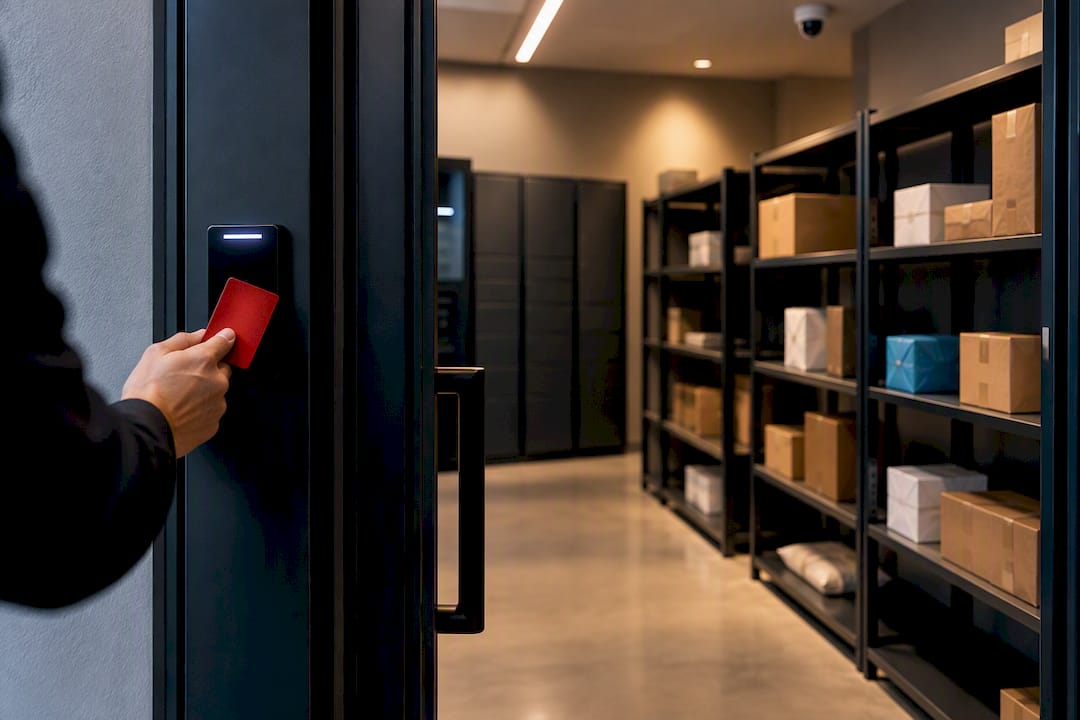
Monitored electronic package rooms combine controlled entry, camera surveillance, and software tracking to give every parcel a documented chain of custody from carrier drop off to resident pickup. They cut staff touches, reduce lobby overflow, and work best for properties with high delivery volume, tight common areas, or frequent oversized and perishable shipments. Self-managed operation works for some communities; others get better results pairing the hardware with a managed daily-visit service.
TL;DR:
- Monitored package rooms are most beneficial for properties with high delivery volumes exceeding 1,500 packages monthly or frequent oversized and perishable shipments.
- System success relies heavily on carrier compliance, so onboarding drivers with clear procedures and detection tools for non-compliance are essential.
- Hardware costs are generally lower for package rooms, but staffing or managed service expenses are necessary to ensure proper operation and inventory audits.
- Vendors should provide core features such as access control, real-time audit trails, and integration with property management systems for reliable tracking.
- Properties above 150 units or with complex delivery needs should consider a monitored room over lockers, often deploying a hybrid approach for optimal efficiency.
Table of Contents
- What Is a Monitored Electronic Package Room, and How Does It Work?
- What Operational Benefits Should Property Managers Expect?
- What Features and Specs Should You Require From Vendors?
- How Do You Roll Out and Operate a Package Room Successfully?
- How Do You Size and Budget a Package Room for Your Property?
- Postal Solutions: Managed Service Experience for Package Room Operations
- Choosing the Right Approach Across a Portfolio
- Ready to Evaluate a Package Room for Your Property?
- Sources
- FAQ
What Is a Monitored Electronic Package Room, and How Does It Work?
A monitored electronic package room combines four elements: a controlled entry point (badge, code, or app), open shelving or locker banks, ceiling or wall cameras, and software that logs every event. The setup differs from a bank of individual lockers in one key way: packages sit on shelves inside a shared, access-controlled space rather than behind separate compartment doors.
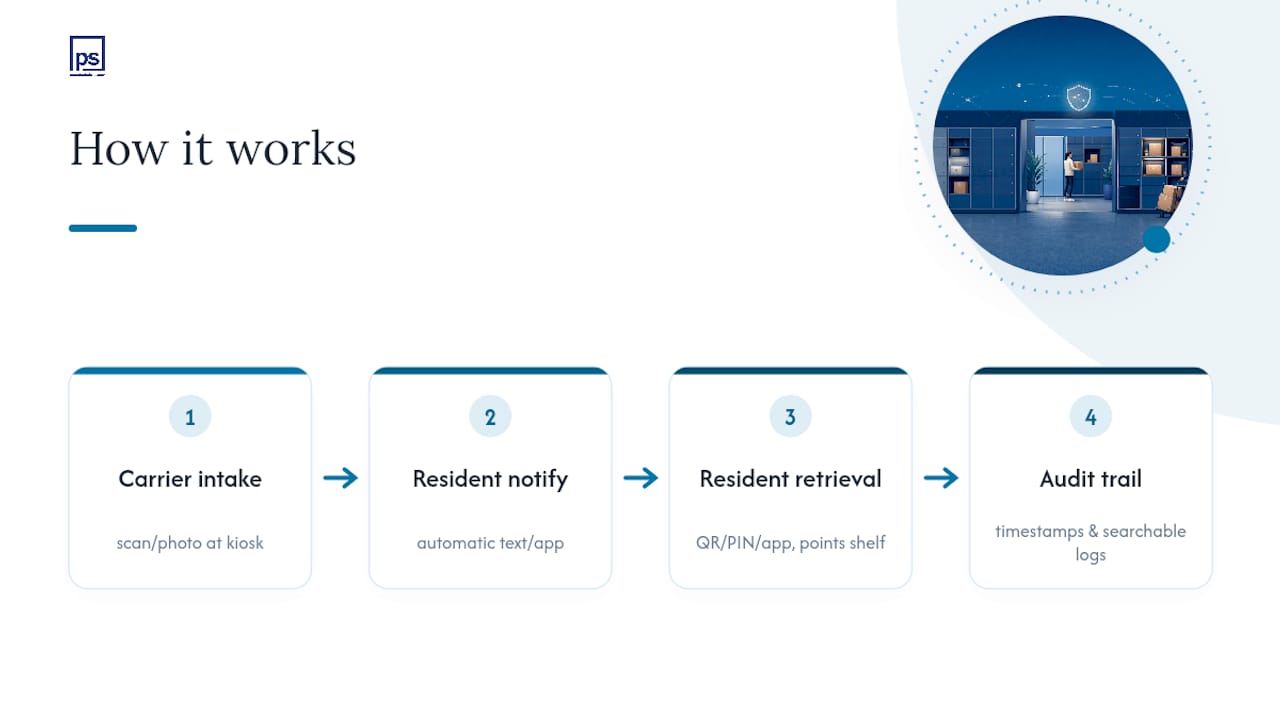
Intake starts when a carrier scans or photographs a package at a kiosk, which triggers an automatic resident notification by text or app. Industry guidance increasingly favors software-centric logistics using computer vision and OCR over hardware-only tracking, since it scales better as delivery volume climbs and gives managers a searchable digital record instead of a paper log.
Residents retrieve packages using a QR code, PIN, or mobile app credential, and the software points them to the exact shelf location. Every entry and exit gets timestamped, building an audit trail that shows who accessed the room and when.
What Operational Benefits Should Property Managers Expect?
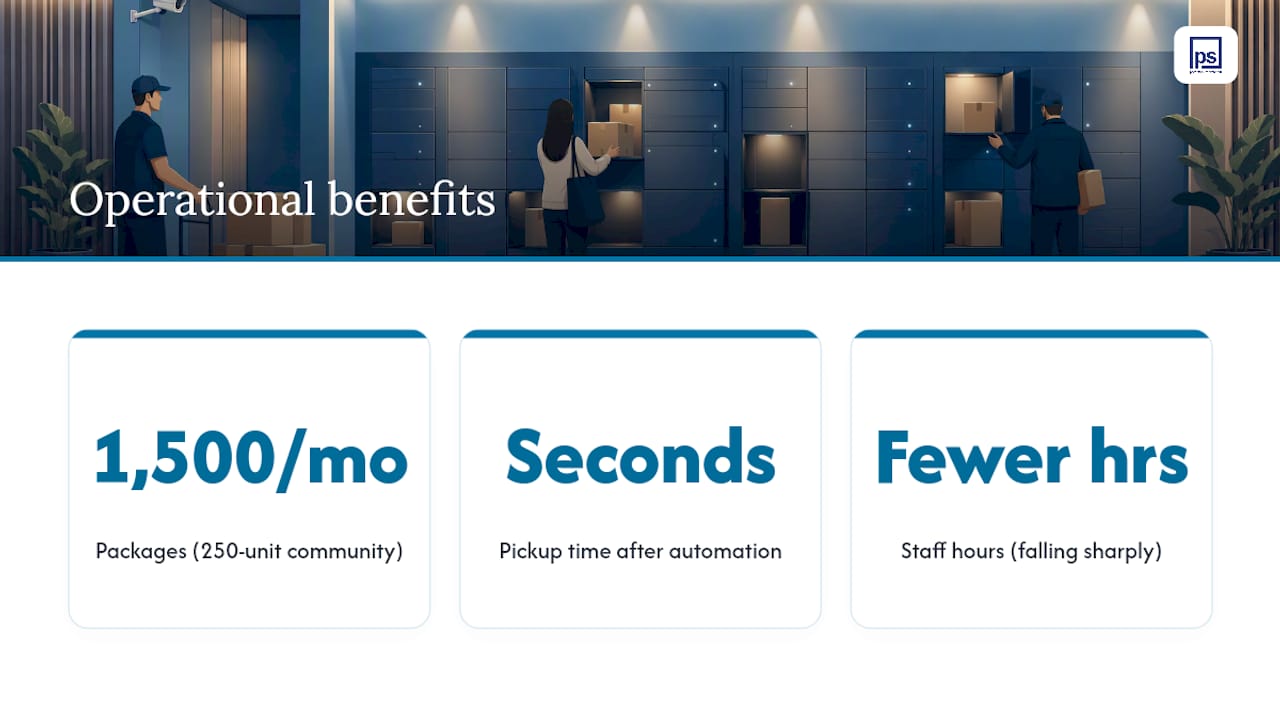
The clearest payoff is time. Case studies on smart package rooms show pickup times dropping to seconds and staff hours falling sharply once intake and notification run automatically instead of through a front-desk clerk sorting boxes by hand.
Resident satisfaction improves for a simple reason: nobody wants to dig through a pile of boxes in a leasing office lobby looking for their name on a label. A monitored room replaces that guesswork with a guided, self-service retrieval flow, and the audit trail gives management a clear record if a resident disputes a missing package.
A 250-unit community typically receives around 1,500 packages a month, with surge weeks pushing past several hundred deliveries. That kind of volume overwhelms a front desk fast, which is exactly why software-driven tracking, not just extra shelf space, is the real fix.
Open shelving also handles overflow better than fixed locker compartments, since staff can restack rather than turn residents away when every locker is full.
What Features and Specs Should You Require From Vendors?
An RFP for a monitored package room should treat certain capabilities as non-negotiable rather than nice-to-have upgrades. Vendors vary widely on how much of this comes standard.
- Access control: QR code, PIN, or resident app credentials, with optional integration into existing property access systems.
- Video and photo audit trail: continuous camera coverage plus a timestamped photo captured at the moment of intake for every package.
- Chain-of-custody logging: a searchable digital record tying each package to a specific carrier scan, storage location, and pickup event.
- Intake technology: barcode or OCR scanning and driver-issued PINs or QR codes that speed up carrier drop-off.
- Flexible handling: oversized item staging areas and refrigerated locker options for perishable or temperature-sensitive deliveries.
- Software integration: connections to your property management system, resident notification platform, and reporting dashboards for audits.
Pro Tip: Ask every vendor exactly how their system detects and responds to carrier non-compliance, such as a driver skipping the scan step or leaving a package outside the intake zone. This single question separates vendors who have solved the hardest operational problem from those who haven’t thought about it yet.
How Do You Roll Out and Operate a Package Room Successfully?
Deployment succeeds or fails on the carrier compliance plan more than the hardware itself. Non-compliant drivers who skip scanning steps are the most common cause of system failure, so a rollout plan needs to address it directly rather than assume the kiosk alone solves the problem.
- Build a carrier onboarding packet. Include a pictorial standard operating procedure, posted instructions at the kiosk, and a direct contact for driver questions.
- Establish daily operating routines. Log intake, apply or verify unit-number labeling, trigger resident notifications, and run weekly audits to reconcile logged packages against physical inventory.
- Decide staffing versus outsourcing. A managed daily visit model, where someone organizes the room and audits inventory on-site, catches mislabeled or unclaimed packages before they pile up.
- Plan for peak season. Set overflow rules, line up temporary staging or lockers, and prepare resident communication templates before the November and December surge hits.
Weekly audits matter more than most managers assume. They’re the mechanism that catches a mislabeled unit number or a carrier who scanned a package to the wrong shelf before it becomes a resident complaint.
How Do You Size and Budget a Package Room for Your Property?
Match the solution to your building’s volume and layout, not the other way around. A framework matching solution type to unit count and package volume generally favors a smart package room over a locker bank once a property crosses roughly 150 to 200 units or handles frequent oversized deliveries, since shelving scales more cheaply than adding locker compartments one at a time.
Request itemized quotes covering site conversion costs, hardware, software subscription fees, ongoing maintenance, and any managed-service recurring fee separately. Package rooms typically cost less in hardware capex than full locker banks, but that savings only holds if you budget for the staffing or managed visits needed to keep the room organized.
For ROI, weigh reclaimed staff hours, fewer resident service calls, and reduced loss claims against the deployment cost. Consider a single-building pilot before committing across a portfolio.
Postal Solutions: Managed Service Experience for Package Room Operations
Postal Solutions has focused on multifamily and student housing mail and package operations since 2016, now in its 11th year, and has completed over 1,200 Luxer One installations across 40% of U.S. states. That footprint spans conventional multifamily, student housing, senior living, and university partnerships, giving the company a working view of what breaks in package rooms and what doesn’t.
The daily on-site package management service covers organizing incoming packages, highlighting or handwriting unit numbers on labels, and completing weekly audits through whatever software the property already runs, or through a Postal Solutions-installed system. When evaluating this or any vendor, ask about reporting cadence, carrier onboarding support, and what happens when a package is scanned but never physically placed on the shelf.
Choosing the Right Approach Across a Portfolio
Monitored package rooms make the most sense as a portfolio standard for high-volume urban assets, student housing, and mixed-use properties with limited lobby space. Suburban or mid-volume assets often do fine with fixed locker banks or a hybrid setup. Whatever you choose, standardize the selection criteria and pilot one property before rolling out portfolio-wide. Inconsistent carrier compliance across buildings is the fastest way to undermine an otherwise sound rollout.
— Postal Solutions
Ready to Evaluate a Package Room for Your Property?
Postal Solutions sells and installs Luxer One package room and locker systems, and pairs that hardware with six-day-per-week managed package operations that keep the room organized and audited without adding headcount to your payroll. That combination matters because a property paying only for hardware, without someone managing daily organization, often ends up paying twice: once in staff time helping frustrated residents search for packages, and again in lost productivity when the room falls into disorder.
The next step is a site volume audit. Postal Solutions reviews your current package volume, lobby space, and carrier patterns, then proposes whether an automated package room solution or a hybrid locker and room combo fits best. From there, request a proposal covering installation timeline, managed-visit scope, and reporting details before you commit.
Sources
- Package Management: Logistics technology prevents apts from getting boxed in | National Apartment Association
- MDU property managers shut door on lockers in favor of smart package rooms | Buildings
- A framework for solving multifamily’s package management problem | Insights by Blueprint
- Multifamily Package Management Solutions Impact Resident Retention | Techscribe
FAQ
What Is the Difference Between a Package Room and Lockers?
A package room uses open shelving inside a controlled-access space, while lockers assign each package to its own individual compartment. Rooms typically cost less to install and handle oversized or overflow items more easily, while lockers offer more privacy per package.
How Much Staff Time Do Monitored Package Rooms Save?
Case studies on smart package room deployments report pickup time dropping to seconds and significant reductions in staff hours once automated intake and notifications replace manual sorting. Actual savings depend on your current package volume and staffing model.
How Do You Prevent Carrier Non-Compliance in a Package Room?
Post pictorial intake instructions at the kiosk, provide drivers with clear scanning steps, and choose software that flags packages left outside the designated intake zone. Carrier non-compliance is the leading cause of system failures, so vendor selection should prioritize detection and response tools for this exact issue.
Does Postal Solutions Install Package Room Hardware or Just Manage Operations?
Postal Solutions does both: it sells and installs Luxer One package room and locker systems and offers separate daily managed-visit services to organize and audit the room. Pricing for either service is available directly through Postal Solutions.
What Size Property Needs a Monitored Package Room Instead of Lockers?
Properties above roughly 150 to 200 units, or those with frequent oversized and perishable deliveries, generally see better results from a package room than a fixed locker bank. Many operators run a hybrid setup, using both a package room and a smaller locker bank for after-hours or high-value items.