On-Site Team Labor Savings: The Fastest Way to Cut Costs
On-Site Team Labor Savings: The Fastest Way to Cut Costs The fastest way to achieve measurable on-site team labor savings is pairing managed locker or package-room hardware with regular outsourced package-room organization. This combination
Published
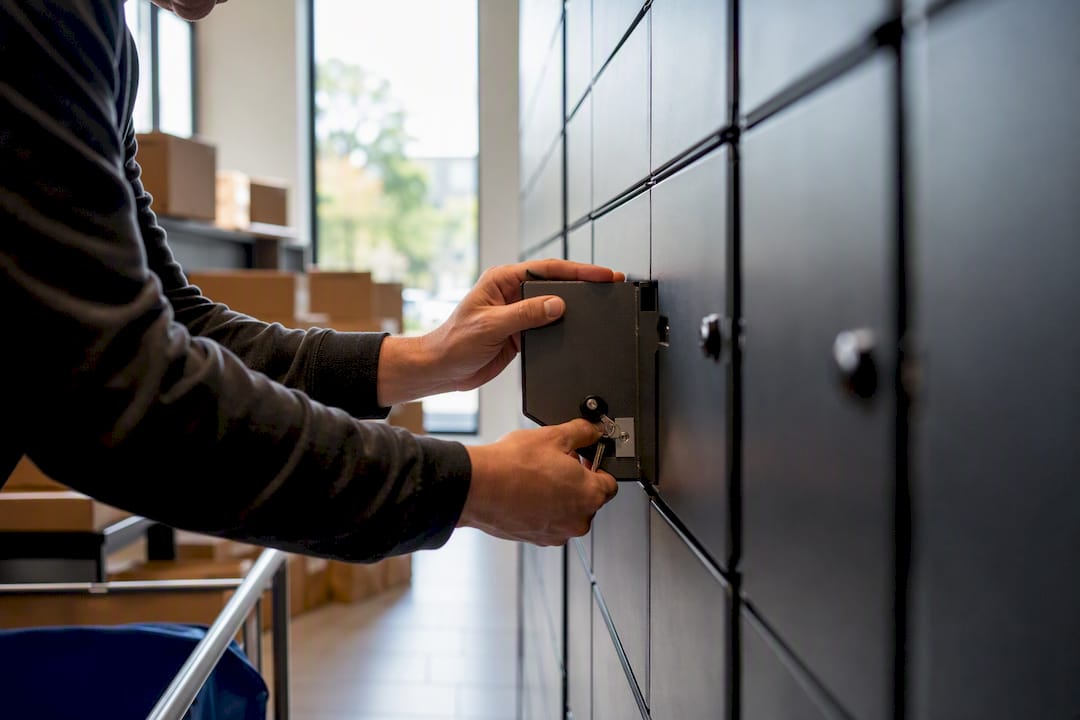
The fastest way to achieve measurable on-site team labor savings is pairing managed locker or package-room hardware with regular outsourced package-room organization. This combination consistently returns the most staff hours to core resident-facing duties, faster than hardware or outsourcing alone.
At one 558-unit property, concierge staff previously spent three to four hours a day just handling roughly 520 daily packages before a managed system took over. That is not an outlier. It is what happens whenever package intake sits on a front-desk team’s plate without a system built to absorb it.
Your next step is simple:
- Run a 30-day time audit of every hour your team spends on package handling.
- Pilot a managed package room or six-day-per-week managed visits at one building.
- Compare the audit hours against the pilot results before rolling out property-wide.
Pro Tip: Track package-handling hours at the same time each week during your audit. Volume swings by day, and an average from a single Monday will skew your baseline.
Key Takeaways
Combining managed package-room hardware with daily outsourced organization reclaims more staff hours than either approach used alone, and it pays off fastest at mid-to-high-volume properties.
| Point | Details |
|---|---|
| Run a time audit first | Log package-handling hours for 30 days before choosing hardware or a service provider. |
| Carrier accountability drives savings | Scan-on-delivery systems end lobby dumping and cut daily staff triage time. |
| Match the option to volume | High-volume multifamily and student housing see the biggest returns from combined hardware plus managed visits. |
| Track a small KPI set | Monitor hours per day, pickup time, claims, and carrier compliance to prove savings. |
| Postal Solutions offers the combined model | Six-day managed visits, weekly audits, and Luxer One installation across 1,200+ properties in about 40% of U.S. states. |
Table of Contents
- How On-Site Team Labor Savings Actually Happen
- Which Package Management Option Actually Saves the Most Labor?
- What’s the ROI Formula for Package Room Labor Savings?
- How to Roll Out a Managed Package Program in 90 Days
- Which KPIs Prove Your Labor Savings Are Real?
- What Do Property Operators Actually Report Saving?
- How Postal Solutions Delivers On-Site Team Labor Savings
- Why Managed Package Programs Are Becoming the Default
- Start a Package Room Labor Audit With Postal Solutions
- Sources
- FAQ
How On-Site Team Labor Savings Actually Happen
Labor savings come from removing four specific tasks from your staff’s daily workload, not from a vague promise of “efficiency.” Managed lockers and outsourced organization work because they attack the actual mechanics of package handling.
Carrier accountability is the biggest lever. When couriers scan packages into a managed system instead of dumping them in a lobby, Regional Property Manager Timothy Colgan has observed that the added accountability to the delivery process ends package dumping and hands staff time back for other duties. Centralized intake means every parcel gets logged and classified once, not re-handled every time a resident asks about it.
Here is where the hours actually get reclaimed:
- Concierge staff stop manually sorting and shelving packages.
- Front-desk teams stop logging deliveries by hand in spreadsheets.
- Staff stop fielding “where’s my package” searches throughout the day.
- Nobody spends afternoons re-organizing an overflowing storage closet.
- Resident self-service pickup windows eliminate after-hours interruptions.
Operators also report that intelligent package rooms reduce liability tied to lost or stolen packages, which cuts down on the hours staff spend investigating claims after the fact.
Which Package Management Option Actually Saves the Most Labor?
Most mid-to-high-volume properties get the strongest labor return from combining managed hardware with outsourced daily organization. Smaller boutique buildings with lower package volumes sometimes find pure hardware or in-house handling adequate, at least until volume grows.
Here’s how the four realistic paths compare on the factors that matter to your payroll:
| Option | Estimated labor hours saved | Cost model | Implementation time | Property fit | Security/accountability |
|---|---|---|---|---|---|
| Keep in-house handling | Minimal to none | Opex (existing payroll) | None needed | Low-volume, small properties | Depends entirely on staff diligence |
| Managed lockers/room hardware only | Moderate | Capex (hardware purchase) | 4 weeks | Mid to large properties with space | Strong, with scan-on-delivery |
| Managed room + outsourced daily visits | Highest | Opex (service fee) + capex option | 4 weeks | Mid to high-volume, multifamily and student housing | Strongest, with daily audits |
| Direct-to-door third-party concierge | High, for oversized items | Opex (per-item or contract fee) | Immediate for existing partners | Properties with heavy oversized-item volume | Varies by provider |
Direct-to-door services can pull bulky items out of the package room equation entirely, which some operators use as a supplemental strategy rather than a full replacement. For most communities, though, the combination of hardware and daily managed organization delivers the deepest and most predictable hours saved, since it addresses both the intake bottleneck and the ongoing housekeeping that hardware alone doesn’t solve.
What’s the ROI Formula for Package Room Labor Savings?
The math is straightforward: (hours saved per day × fully loaded hourly rate × workdays per month) minus (monthly service fee or amortized hardware cost) equals net monthly savings.
Here’s a worked example using the reported figures from a 558-unit property that logged three to four hours daily on package handling before switching to a managed room:
- Estimate hours reclaimed: 3.5 hours/day (midpoint of the reported range).
- Apply a fully loaded hourly rate for concierge or leasing staff (use your actual payroll figure, including benefits).
- Multiply by roughly 22 workdays per month.
- Subtract your monthly managed-service fee or your hardware cost divided by its amortization period (commonly 3 to 5 years for locker systems).
- The remainder is your net monthly labor savings.
Break-even timing depends on your starting cost model. Properties financing hardware outright typically see payback within 12 to 24 months once labor hours are factored in; properties choosing a managed service model often see net savings from month one, since there’s no upfront capital outlay to recover.
How to Roll Out a Managed Package Program in 90 Days
Expect a working pilot within 30 days and a full property rollout within 60 to 90 days. Here’s the sequence that keeps the transition from creating resident confusion:
- Audit package volumes, including peak days and hours.
- Measure available lobby or storage space and confirm hardware fit.
- Select your hardware, such as Luxer One locker or room systems, and your managed-visit cadence.
- Negotiate service SLAs, including audit frequency and response times.
- Train carriers on the new intake process and post clear signage.
- Communicate the change to residents before go-live, not after.
- Run weekly audits and track KPIs for the first 90 days.
Pro Tip: Stagger the rollout by floor or building phase if you manage a large community. Residents adapt faster when they see a working system before their own building switches over.
Which KPIs Prove Your Labor Savings Are Real?
Track three to six metrics, not a dozen, or you’ll drown in reporting instead of managing the program. The ones that actually validate savings:
- Hours spent on package handling per day, logged via staff time sheets before and after.
- Packages processed per labor-hour, pulled from your package room software.
- Median resident pickup time, tracked automatically by most managed systems.
- Claims and theft incidents per month, compared against your pre-transition baseline.
- Resident satisfaction related to deliveries, gathered through a short survey or NPS question.
- Carrier scan-on-delivery compliance rate, which should climb toward 100% once carriers adjust to the new process.
What Do Property Operators Actually Report Saving?
Operators consistently describe multi-hour daily savings once carriers are held accountable and package intake stops running through ad-hoc staff effort. This isn’t isolated to one property type. It shows up across conventional multifamily, student housing, and senior living communities alike.
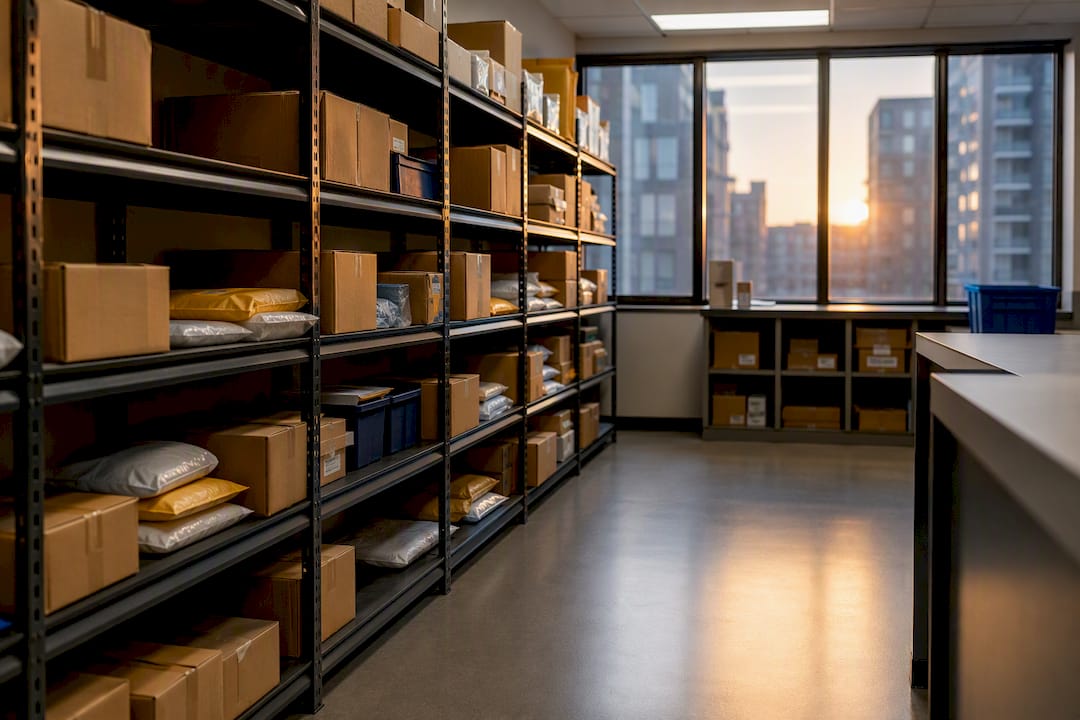
At Country Club Towers, the shift from lobby-based handling to a managed smart package room took concierge staff from 3 to 4 hours of daily package work down to a fraction of that, freeing them for leasing tours and resident requests.
Operators also point to a lighter mental load on staff. Removing package management from a leasing associate’s daily list frees them to focus on the tasks they were actually hired to do, rather than acting as an unpaid parcel clerk.
How Postal Solutions Delivers On-Site Team Labor Savings
Postal Solutions combines the two levers that drive the deepest labor savings: Luxer One hardware and daily managed organization, so operators don’t have to choose one or piece together vendors on their own.
The service package includes:
- Six-day-per-week package room management with a dedicated visit for daily organization.
- Weekly audits to catch discrepancies before they become resident complaints.
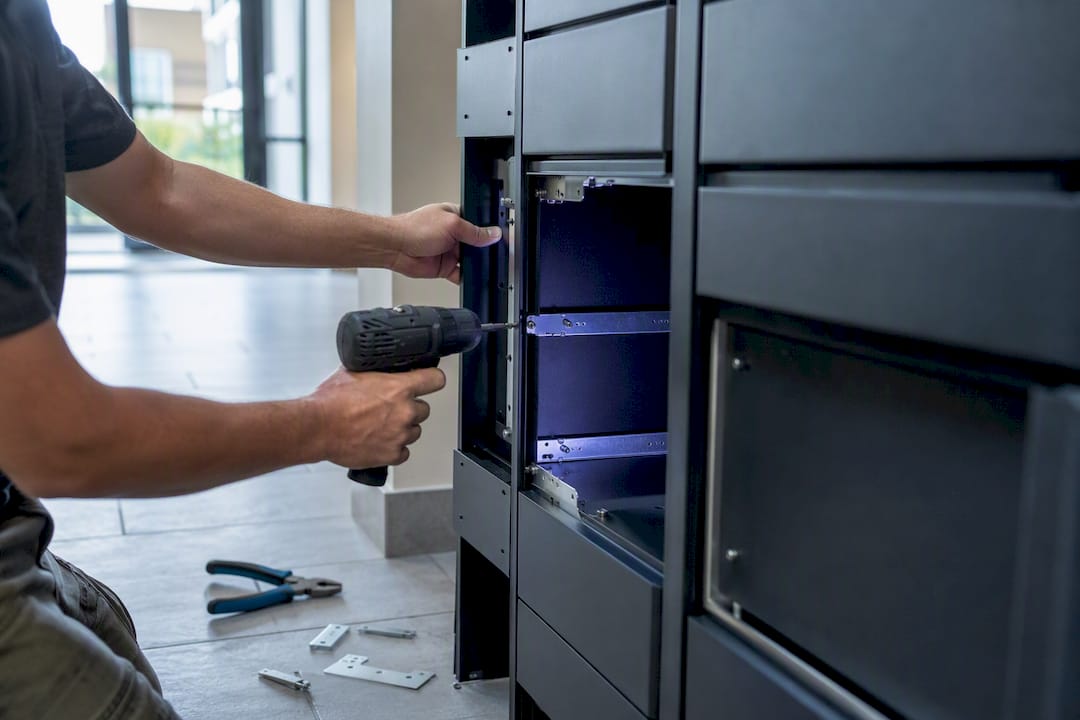
- Luxer One sales and installation, sized to your property’s volume and space.
- Software integration with the package room platform your property already runs.
- Tailored service-level agreements based on your building’s package volume.
Postal Solutions has sold and installed over 1,200 Luxer One systems across roughly 40% of U.S. states, working directly with conventional multifamily communities, student housing operators, and large public-private university partnerships. That volume of installations means the combined hardware-plus-visits model has been tested across property types most operators will recognize as similar to their own.
Why Managed Package Programs Are Becoming the Default
E-commerce volume keeps climbing, and package sizes keep getting less predictable, which is exactly the combination that breaks a locker-only strategy. Add rising labor costs, and the math on keeping package handling entirely in-house stops working for most properties above a modest unit count.
The common pitfall isn’t choosing the wrong hardware. It’s assuming hardware alone solves the problem without someone keeping the room organized day to day. A managed visit component closes that gap.
Start a Package Room Labor Audit With Postal Solutions
Most operators don’t need a full system overhaul to see where labor is leaking. They need a clear-eyed audit of what their staff is actually spending time on. Postal Solutions runs that audit alongside you and can pilot a managed package room or six-day managed visit schedule at a single building before you commit property-wide, so you see the labor savings before signing anything larger. If your team is still hand-sorting packages every afternoon, that’s payroll you’re spending twice: once to receive the package, and again every time a resident asks where it is. Get in touch with Postal Solutions to scope a pilot for your property.
Sources
- MDU property managers shut door on lockers in favor of smart package rooms | Buildings
- The Benefits of Outsourcing | Multifamily Executive
FAQ
How Much Labor Time Can a Package Room Save Daily?
Properties handling high package volumes have reported reclaiming three to four hours a day of concierge or front-desk time after switching to a managed package room.
Should I Choose Lockers or a Managed Package Room?
It depends on volume and item size. Lockers work well for smaller, uniform packages, while a managed room with regular organization handles oversized items and higher daily volume more reliably.
Does Postal Solutions Install Luxer One Systems?
Yes. Postal Solutions sells and installs Luxer One package room and locker systems and has completed over 1,200 installations across about 40% of U.S. states.
What’s the Fastest Way to Start Reducing Package-Related Labor?
Run a 30-day audit of current package-handling hours, then pilot a managed room or six-day-per-week managed visit schedule at one property before expanding.
How Do I Measure Whether the Program Is Working?
Track hours spent on package handling, packages processed per labor-hour, resident pickup time, and carrier scan-on-delivery compliance during the first 90 days.