Cut Admin 30%: PMS First Package Room Integration for Property Ops
Cut Admin 30%: PMS First Package Room Integration for Property Ops Yes, integrate your package room software with your property management system and access control platform using a PMS-first architecture: the PMS holds resident and lease d
Published
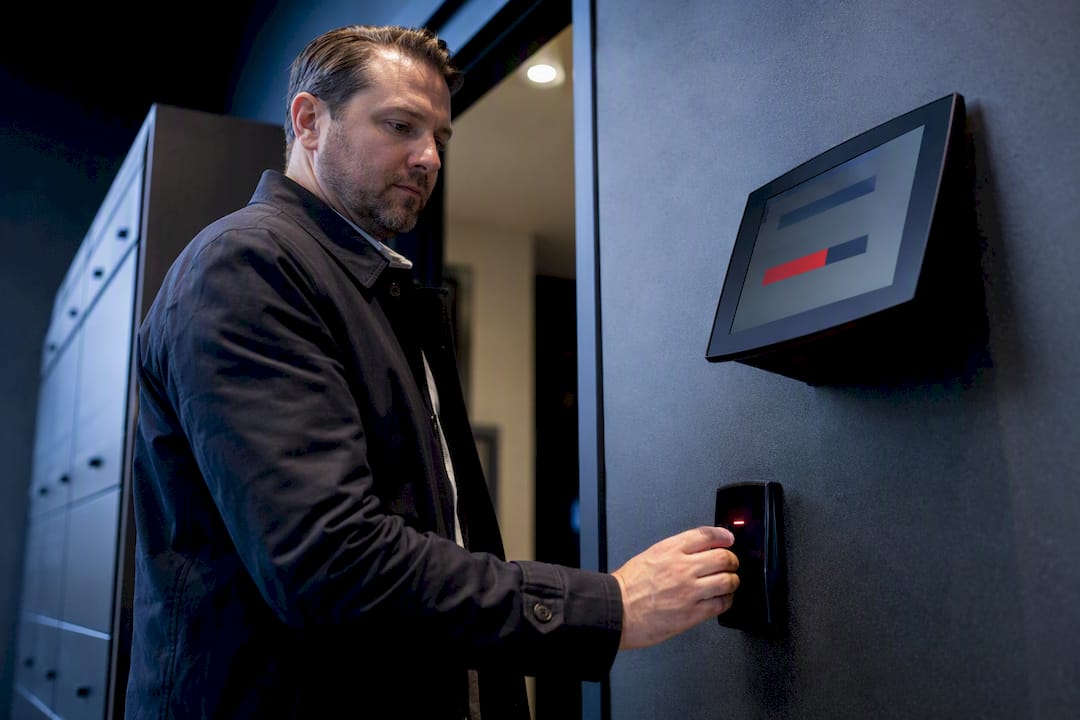
Yes, integrate your package room software with your property management system and access control platform using a PMS-first architecture: the PMS holds resident and lease data as the single source of truth, while a middleware or API layer pushes that data to your package room and access control systems. The payoff is automated credential provisioning, real-time pickup notifications, and audit trails that used to eat hours of staff time every week. Start with a compatibility check on your current PMS and access control vendor before you sign anything.
TL;DR:
- A successful integration requires confirming API support, data format compatibility, and webhook functionality from property management and access control vendors beforehand.
- Pilot testing at one property for 30 to 45 days reveals network readiness, data mismatches, and documentation issues before a full rollout.
- Critical connection points include PMS to package room software, PMS to access control, locker hardware, notifications, and courier workflows, each addressing specific operational needs.
- Ensuring data hygiene, especially standardizing unit number formats, is vital to prevent failed syncs and inaccuracies in automation.
- An ongoing managed pilot can help maintain integration performance, reduce errors, and ensure long-term system stability beyond initial implementation.
Table of Contents
- How Package Room Software Integrations Actually Work
- Integration Touchpoints Every Property Manager Should Plan For
- Operational Benefits and the Metrics That Prove It’s Working
- What to Check Before You Start an Integration Project
- Postal Solutions’ Experience With Package Room Integration
- What the Data Actually Tells Property Managers to Prioritize
- Get Your Integration Readiness Assessment
- Sources
- FAQ
How Package Room Software Integrations Actually Work
The property management system should function as the control tower for every other system on the property. Resident names, unit numbers, lease start and end dates, and contact information all originate there, and your package room and access control platforms should consume that data rather than maintain their own separate copies. Duplicate resident records are how properties end up granting locker access to someone who moved out four months ago.
Two connection patterns dominate the multifamily and student housing space: direct API connectors built between two specific platforms, and middleware layers that sit between multiple systems and translate data formats. Middleware tends to win as portfolios grow past a handful of properties, mainly because it avoids building a separate point-to-point connector for every combination of PMS, access control, and locker vendor.
Most integrations run on a handful of predictable triggers:
- Lease signing, which should auto-provision package room access before move-in day
- Move-out, which should revoke access the same day the lease ends
- Package scan-in at the locker or shelf, which fires a resident notification
- Pickup confirmation, which closes the loop and updates dwell-time reporting
Authentication matters more than most property teams realize going in. Look for OAuth2-based token authentication and confirm that data is encrypted both in transit and at rest, not just one or the other. Svitla Systems notes that the PMS must serve as the central source of truth so that access rights automatically track lease dates rather than requiring manual updates from staff. Sync cadence should run near real-time for access provisioning and revocation, with daily reconciliation logs so IT and property ops can catch mismatches before they become resident complaints.
Integration Touchpoints Every Property Manager Should Plan For
Four systems typically need to talk to each other, and each connection point solves a different operational problem.
- PMS to package room software. The PMS exposes resident ID, unit number, and lease dates. The package room software uses that data to match incoming parcels to the correct resident automatically instead of relying on a staff member typing names into a spreadsheet.
- PMS to access control. Access platforms consume the same lease data to provision package room and building credentials on move-in and revoke them on move-out. Cascadia Global Security points out that many modern access platforms now support automatic provisioning tied to lease events, but that support varies by vendor, so confirm it before purchase.
- Locker and parcel hardware. Locker systems typically use webhooks to fire open events and API calls to handle assignment and release. This is the layer that actually moves a package from “scanned in” to “resident notified” to “compartment opened.”
- Notifications. Plan for multiple channels (SMS, email, app push) with a fallback rule, such as escalating to email after 24 hours if a text goes unread.
- Courier workflows. Short-term access codes for delivery drivers, scheduled delivery windows, and proof-of-delivery flags all reduce the odds of a package getting misrouted or held up at the door.
Pro Tip: Ask any vendor for a sample webhook payload before you sign a contract. If their sales team can’t produce one, their API documentation probably isn’t mature enough to support a clean integration.
Operational Benefits and the Metrics That Prove It’s Working
Integration pays off in ways you can measure within the first 30 to 60 days. Staff stop manually cross-referencing resident rosters against package logs, pickup times drop because residents get notified the moment a parcel is scanned in, and misplaced packages become rare because every item is tied to a unit number automatically instead of a handwritten label.
Track these numbers before and after your rollout:
- Packages processed per day, to confirm the system handles peak volume
- Average dwell time, from arrival scan to pickup confirmation
- Pickup compliance rate, or how many packages get collected within a target window
- Staff hours spent weekly on package-related tasks
Oxmaint’s research on enterprise property integrations found that portfolios running integrated tech stacks cut administrative overhead by 30 percent while improving data accuracy across PMS, access control, and maintenance systems. Automated logs are also just more trustworthy than a manual sign-in sheet. When every scan and pickup is timestamped automatically, your dwell-time numbers reflect what actually happened, not what a rushed staff member remembered to write down.
What to Check Before You Start an Integration Project
Run through a compatibility checklist before you request a proposal from any vendor. Confirm API availability, supported data formats (JSON and XML are the standards), webhook support for real-time events, and the authentication method the vendor requires. Ask to see actual API documentation, not a marketing one-pager. Thin documentation is usually a sign the integration will require more custom development than the vendor is letting on.
Data hygiene matters just as much as the technical connection. Standardize how unit numbers are formatted (204 vs. 2-04 vs. Unit 204 causes more failed matches than any other single issue) and normalize resident contact fields before the first sync runs.
A realistic sequence looks like this:
- Pilot at one property for 30 to 45 days to validate data flow end to end
- Validation phase where IT and property ops confirm access provisioning, revocation, and notification accuracy
- Portfolio rollout once the pilot clears without major field-mapping issues
Clouddle’s guidance on managed package solutions recommends exactly this kind of single-property pilot to surface unexpected network or field-mapping problems before a full rollout, since network readiness is often the real bottleneck rather than the software itself.
Assign clear ownership: IT typically signs off on security and data flow, property ops signs off on daily workflow fit, leasing confirms the resident-facing experience, and the vendor provides support during testing. Budget for integration fees, a possible middleware subscription, any hardware retrofit costs, staff training time, and a contingency line for the inevitable edge case nobody planned for.
Pro Tip: Run your pilot during a slower delivery month if you can. Testing a new integration during peak holiday shipping volume is how minor bugs turn into resident complaints.
Many modern platforms now offer low-code connectors for standard PMS-to-access or PMS-to-locker integrations, which Oxmaint also notes reduces the developer hours needed for a straightforward setup. Ask your vendor directly whether your specific combination qualifies, or whether it requires custom development.
Postal Solutions’ Experience With Package Room Integration
states. That footprint spans conventional multifamily housing, student housing communities, and some of the largest public-private partnerships in the country.
Where integration work actually happens, our support includes:
- Sales and installation of Luxer One package room and locker systems, including combo systems for properties running both a room and locker units
- Daily managed visits where the package room is organized, unit numbers are marked on boxes, and coordination with the property’s existing software occurs
- Weekly audits that keep inventory counts accurate and flag discrepancies before residents notice them
- Coordination with property PMS and access control teams during setup so credential provisioning matches lease data from day one
A typical engagement starts with a readiness assessment of your current package management workflow, followed by a scoped pilot and full documentation handover so your team knows exactly how the system runs day to day.
What the Data Actually Tells Property Managers to Prioritize
Most integration advice treats package room software like a standalone purchase decision, weighing feature lists against price. That misses the point. The software matters far less than whether it can talk cleanly to the PMS you already run, because a package system that can’t automate provisioning and revocation just becomes another manual task wearing a digital costume.
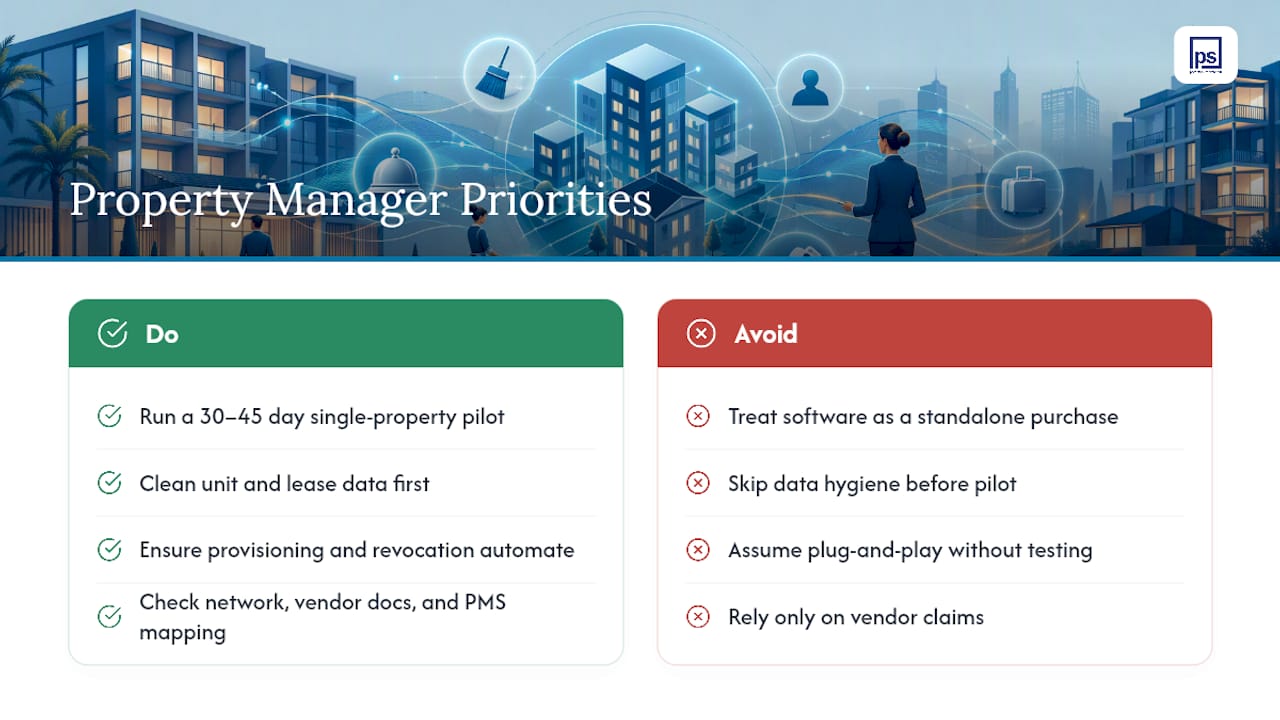
The conventional wisdom also oversells the “plug and play” promise. Even with low-code connectors, unit number formatting and lease-date mismatches cause more failed integrations than any API limitation. Property teams that skip the data hygiene step before their pilot are the ones who end up frustrated three weeks in.
If you take one thing from this guide, prioritize the pilot. A 30 to 45 day test at a single property will surface your real bottlenecks, whether that’s network readiness, a vendor’s thin documentation, or a PMS field that doesn’t map the way you assumed. Software vendors will always tell you their integration is seamless. Your own pilot data is the only source that won’t have a sales incentive to say so.
— Postal Solutions
Get Your Integration Readiness Assessment
You’ve seen what a clean PMS-first integration looks like on paper. Getting there on your own property, with your specific access control and PMS vendors, is a different job, and it’s one Postal Solutions has done more than 1,200 times. Unlike a software-only vendor that hands you an API document and moves on, services pair Luxer One sales and installation with ongoing managed visits and weekly audits, so the integration doesn’t just work on day one. It keeps working.
If you’re evaluating package room software or planning to connect a Luxer One system to your existing PMS and access control, request an integration readiness assessment or a demo of the full Luxer One setup at Postal Solutions. Ask for a pilot scope tied to your specific property before you commit to a portfolio-wide rollout.
Sources
For deeper technical grounding, review Svitla Systems on PMS-first integration architecture, Oxmaint on enterprise integration patterns, and Zuma on system-of-action orchestration. Always cross-check vendor API documentation against your own PMS integration guide before signing.
- Property management software integrations (Svitla Systems)
- Enterprise integrations for property management (Oxmaint)
FAQ
Does package room software need to integrate with my PMS?
Yes. Without that connection, staff must manually update resident and lease data in two systems, which increases errors and defeats the purpose of automation.
What authentication method should a package room integration use?
Look for OAuth2 token-based authentication with encryption both in transit and at rest; anything less leaves resident data exposed during the sync.
How long does a typical integration pilot take?
Most pilots run for about a month to allow enough time to validate data flow and catch field-mapping issues before a portfolio rollout.
Can Postal Solutions help with both the hardware and the integration?
Yes. Postal Solutions sells and installs Luxer One package room and locker systems and coordinates with your property’s PMS and access control teams during setup and ongoing managed visits.
What’s the biggest cause of failed package room integrations?
Data hygiene issues, especially inconsistent unit number formatting, cause more failed syncs than actual API limitations.