Package Management Solutions for Build-to-Rent Properties
Package Management Solutions for Build-to-Rent Properties For most build-to-rent portfolios, the most effective package management approach combines onsite package rooms for high-volume and oversized deliveries with targeted locker banks fo
Published
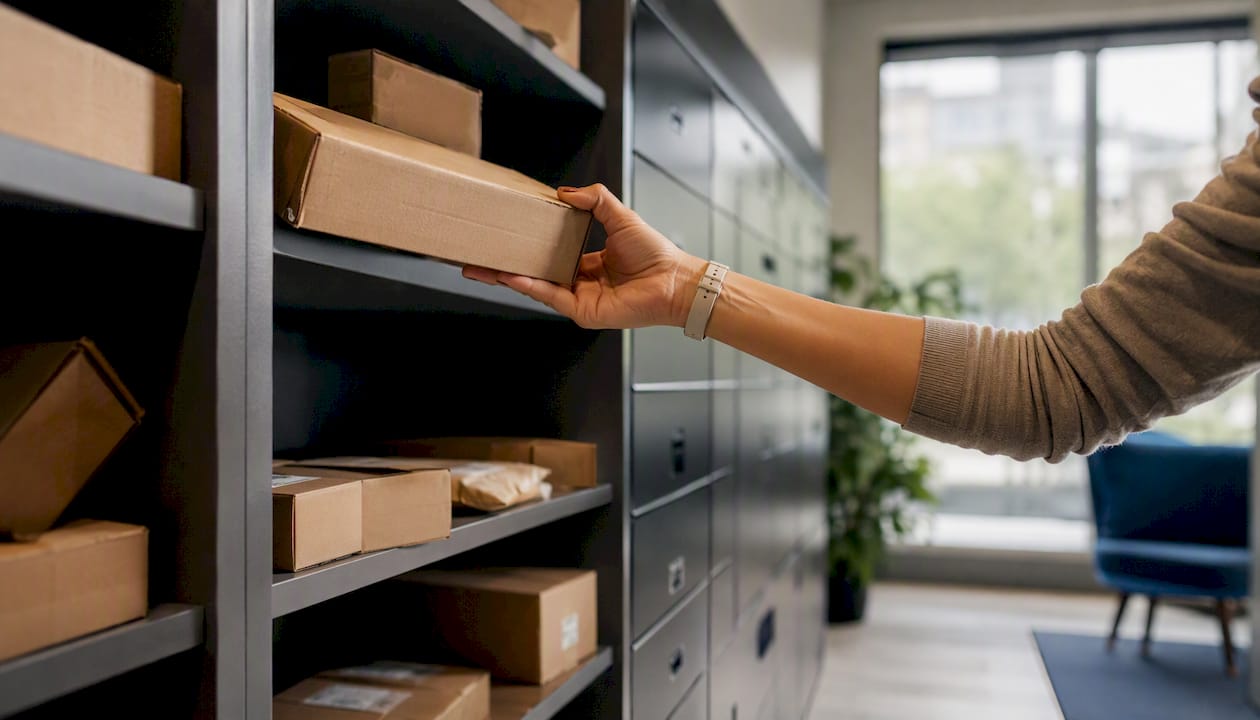
For most build-to-rent portfolios, the most effective package management approach combines onsite package rooms for high-volume and oversized deliveries with targeted locker banks for self-service access, governed by standardized carrier protocols and centralized operational oversight.
- Onsite package rooms fit best for communities with 150+ units or high daily parcel volume; primary benefit is accommodating any package size without resident friction.
- Locker banks work well as a complement at mid-size properties or in lobbies where 24/7 self-service pickup matters most; primary benefit is reducing staff contact entirely.
- Centralized governance (carrier SOPs, weekly audits, PMS integration) applies across all property types; primary benefit is consistent accountability and measurable staff-hours saved.
Postal Solutions, the largest Luxer One sales agency in the U.S. states, supports all three elements through hardware sales, installation, and daily package room management outsourcing.
Key Takeaways
Effective build-to-rent package management requires matching the right solution to each property’s unit count and volume, then sustaining it with weekly audits and standardized carrier protocols.
| Point | Details |
|---|---|
| Volume is rising | Residents averaged 10.65 packages/month in 2023; size your system for 18 months of projected growth. |
| Hybrid setups scale best | Locker banks plus a package room handle both standard and oversized parcels for 100+ unit BTR assets. |
| Carrier SOPs prevent most failures | Pictorial one-page SOPs with PIN/QR access reduce non-compliance before it becomes a resident complaint. |
| Staff-hours saved justify the cost | A 300-unit property can recover hardware and software costs within about one year through labor savings alone. |
| Postal Solutions covers hardware and management | Over 1,200 Luxer One installations plus daily package room management outsourcing available across many U.S. states. |
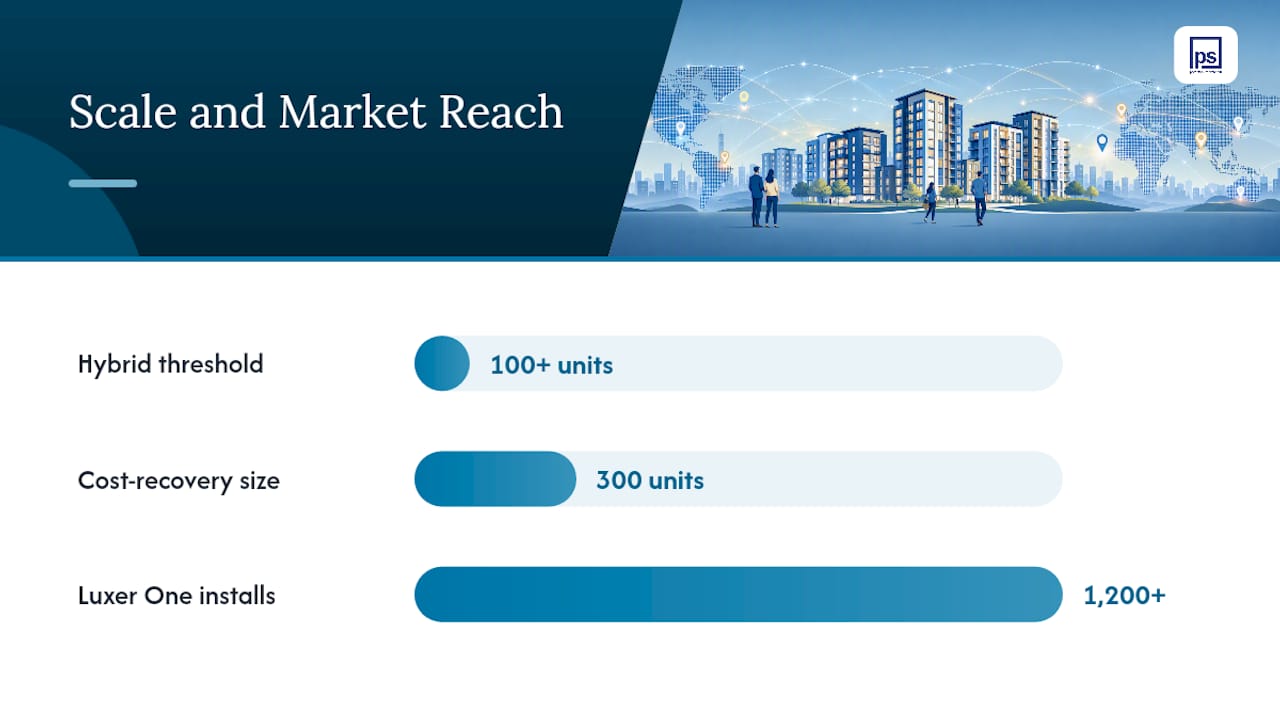
Table of Contents
- Why does build-to-rent package management keep getting harder?
- What are the practical package management options for BTR?
- How do you implement a package management system in a BTR property?
- What does day-to-day BTR package room operations look like?
- How do you calculate the ROI of a BTR package management system?
- How should you size lockers and package rooms for a BTR property?
- What should you look for when evaluating package management vendors?
- What results have BTR properties seen from structured package management?
- What Postal Solutions has learned from BTR portfolio rollouts
- How Postal Solutions supports build-to-rent rollouts
- Sources
- FAQ
Why does build-to-rent package management keep getting harder?
Residents received an average of 9.41 packages per month in 2022, rising to 10.65 in 2023. For a 300-unit BTR community, that translates to roughly 3,000+ parcels arriving every month. The volume alone strains any ad-hoc system.
The operational pain points that follow are predictable:
- Space: Package rooms fill faster than planned; overflow spills into hallways or leasing offices.
- Tracking: Manual logs miss packages, creating liability exposure when items go missing.
- Pickup bottlenecks: Residents who cannot locate their parcel generate leasing-staff calls and complaints.
- Staff time: Properties averaging 75 daily packages can consume multiple staff-hours per day on manual sorting, re-logging, and resident assistance.
- Liability: Without an audit trail, disputed or missing packages become a property management problem with no clean resolution.
BTR communities face a compounding version of this challenge. Residents in purpose-built rental communities expect hotel-grade amenities, and package handling is now part of that expectation. A disorganized package room signals operational neglect as clearly as a broken elevator. For metro renters especially, reliable tenant package delivery ranks alongside in-unit laundry as a retention factor.
What are the practical package management options for BTR?
A solution-to-property matching framework outperforms picking a vendor by brand recognition. The four dominant models each carry distinct tradeoffs:
- Policy-only: Written carrier instructions and a designated drop zone. Zero capital cost, but zero accountability. Works only for very small communities (under 50 units) with low daily volume.
- Onsite package room: A dedicated, access-controlled room where carriers deposit all parcels. Handles any size, scales with volume, and supports audit workflows. Best for 100+ unit BTR assets.
- Locker banks: Fixed-cell automated lockers with resident notification. Fast self-service pickup, but cells fill quickly with oversized items and require hardware investment.
- AI-powered smart rooms: Camera-based or sensor-based intake that logs packages automatically. Reduces manual touches; higher upfront cost. Suited for high-volume urban BTR.
- Offsite third-party acceptance: Carrier delivers to an off-property hub; resident schedules pickup. Removes onsite storage pressure but adds handoffs and scheduling friction, and accountability becomes less direct. Onsite models generally deliver better resident convenience because there are fewer handoffs.
- Hybrid staffed model: Onsite room or lockers plus a managed daily visit to organize, audit, and notify. Combines hardware reliability with human oversight. The most practical choice for mid-to-large BTR portfolios.
For high-volume urban BTR, smart rooms or hybrid staffed models scale best. Smaller suburban communities often get full value from a well-managed package room alone.
How do you implement a package management system in a BTR property?
Start with a property assessment before committing to hardware. The sequence below applies whether you are rolling out one property or a portfolio.
- Property assessment (Weeks 1–2): Measure available square footage, count units, estimate daily parcel volume, and document current carrier access points. Segment properties by unit count and volume tier.
- Solution selection (Week 3): Match each property to a solution type using the framework above. Decide between package room, locker bank, hybrid, or managed-only.
- Carrier access planning (Weeks 3–4): Assign PIN codes or QR access credentials to regular-route drivers. Produce a one-page pictorial SOP for each carrier. Standardized carrier communication materials reduce driver non-compliance during peak periods.
- Space preparation (Weeks 4–6): Clear and prep the designated room or locker alcove. Confirm electrical, lighting, and ventilation meet hardware specs.
- Hardware and software integration (Weeks 6–8): Install Luxer One lockers, package room hardware, or refrigerated units. Integrate with your existing property management system (PMS) and package-room software for automated resident notifications.
- Resident communication (Week 8): Send move-in and existing-resident notices explaining pickup procedures, hours, and notification methods. Post clear signage at the room entrance.
- Staff training (Week 8): Walk leasing and maintenance staff through exception workflows: lost packages, carrier non-delivery, and overflow handling.
- Go-live and 30/60/90-day audits: Run weekly audits from day one. At 30 days, review dwell time and unclaimed package rates. Adjust carrier SOPs and resident notifications based on findings.
Essential documentation to produce before go-live: carrier SOP sheet, resident package policy, and a vendor SLA checklist covering uptime guarantees, response times, and escalation contacts. The multifamily package management guide for operators from Postal Solutions covers these documentation templates in detail.
What does day-to-day BTR package room operations look like?
The recommended operations model is self-service intake plus centralized monitoring plus weekly audits. Daily workflows should cover:
- Carrier intake: Verify carrier deposited packages in the correct zone; flag any items left outside the room.
- Logging and notification: Confirm the system has logged each parcel and triggered resident alerts. For managed-visit properties, a package manager highlights or handwrites unit numbers on boxes to reduce resident confusion.
- Oversized handling: Route freight and oversized items to a designated shelf or overflow area; notify the resident immediately with pickup instructions.
- Cold storage: Refrigerated lockers or a designated cold zone handle grocery and pharmacy deliveries; check temperature logs daily.
- Exception handling: Misdirected packages get flagged in the software and held in a secure exception bin. Lost-package claims require a timestamped log entry and carrier contact within 24 hours.
For weekly audits, inspect these metrics: average dwell time per package, unclaimed package count (trigger escalation at 5+ days), carrier compliance rate (percentage of packages deposited correctly), and locker or room fill rate. Detailed guidance on managed package room visits covers staffing cadence and audit documentation.
How do you calculate the ROI of a BTR package management system?
Package management cost is a mix of CAPEX (hardware, installation) and OPEX (software subscriptions, managed service fees, ongoing maintenance). The right balance depends on whether you choose an onsite or offsite model and how much you automate.
Primary cost drivers:
- Hardware and installation: package room baseline around $1,500–$3,000; locker banks vary by cell count and configuration
- Software subscription: roughly $30–$300/month depending on platform and features
- Managed service fees: daily or six-day-per-week visit contracts
- Staff labor (current cost): multiply daily package-handling hours by hourly labor rate
- Overflow and exception handling: occasional courier or storage costs
Simple ROI example for a 300-unit BTR property:
Properties that automate intake and pickup report resident pickup times reduced from several minutes to under a minute, and dedicated package-staff needs drop in proportion to automation level. Beyond the labor math, a well-run package amenity supports lease renewal rates, which has a direct NOI impact that far exceeds the hardware cost.
How should you size lockers and package rooms for a BTR property?
Choose hybrid configurations for mid-to-large BTR assets. A locker bank alone cannot handle the volume or size variation that a 200+ unit community generates; a package room alone misses the 24/7 self-service convenience residents expect.
Sizing rules of thumb:
- Under 100 units: a managed package room of 80–120 sq ft handles typical volume.
- 100–300 units: hybrid setup with a locker bank (24–48 cells) plus a package room of 120–200 sq ft.
- 300+ units: expand the room to 200–300+ sq ft; add refrigerated lockers and a dedicated oversize shelf zone.
Hybrid locker-plus-room layouts scale best for larger properties and accommodate both standard parcels and freight-size deliveries without overflow. Place refrigerated units near the main room entrance for easy carrier access. Oversize items should have a clearly marked floor zone with a maximum dwell time posted.
Pro Tip: Size for 18 months of projected volume, not today’s count. BTR communities typically see parcel volume grow as residents settle in and online ordering habits increase.
What should you look for when evaluating package management vendors?
Prioritize vendors who can demonstrate carrier compliance tooling, portfolio-level reporting, and clear SLAs. Market prominence is not a substitute for operational proof.
Vendor evaluation checklist:
- Carrier compliance: Does the vendor provide driver workflow documentation, PIN/QR access credentials, and a compliance audit trail?
- Failure handling: What is the documented process for missed deliveries, system downtime, or lost packages?
- Hardware flexibility: Can the system accommodate oversized items, refrigerated storage, and future cell expansion?
- PMS integration: Does the platform connect with your existing property management software for automated notifications?
- Onboarding and training: What does the vendor provide for staff training and resident communication at launch?
- SLA metrics: What uptime guarantees, response times, and escalation paths are contractually defined?
- Install volume and references: How many properties has the vendor deployed? Can they provide references from comparable BTR communities?
Postal Solutions, as the largest Luxer One sales agency with over 1,200 installations, brings both hardware depth and managed-service experience to portfolio evaluations. For AI-driven property operations context, smart landlord software trends offers useful perspective on how package management integrates with broader proptech stacks.
Pro Tip: During a pilot run, send a test package via each major carrier (UPS, FedEx, USPS, Amazon) and verify that every parcel appears in the system log within 15 minutes of delivery. Gaps in that audit trail reveal carrier compliance problems before they become resident complaints.
What results have BTR properties seen from structured package management?
The headline outcome across portfolio deployments is a measurable reduction in staff time and resident friction. Properties that move from manual handling to a managed or automated system report:
- Resident pickup times reduced from several minutes to under a minute in automated deployments
- Dedicated package-handling staff needs reduced as automation absorbs intake and notification tasks
- Carrier compliance rates improve when pictorial SOPs and PIN access replace verbal instructions
states, spanning conventional multifamily, student housing, on-campus universities, and large Public Private Partnership (P3) developments. That installation scale means the operational patterns are well-documented: properties that combine hardware with daily package room management see the fastest reduction in leasing-staff time because the system stays organized between resident pickups, not just at go-live.
Regional deployment examples from markets including Tennessee, Columbus, and Houston show consistent outcomes when the hybrid managed model is applied. Tennessee apartment deployments illustrate how the hardware-plus-managed-service combination performs across different community sizes.
What Postal Solutions has learned from BTR portfolio rollouts
The single most important priority when deploying across a portfolio is standardization before scale. Properties that rush to install hardware without first establishing carrier SOPs and resident communication protocols spend the first 90 days fixing compliance problems instead of capturing the efficiency gains.
Three practical lessons from Postal Solutions’ experience across 1,200+ Luxer One deployments:
- Carrier training cannot be skipped. A pictorial one-page SOP with QR or PIN access instructions, given to every regular-route driver before go-live, prevents the majority of non-compliance incidents. Verbal instructions do not hold across driver shift changes.
- Standardize the audit cadence from week one. Properties that begin weekly audits at launch build a baseline dataset within 30 days. That data drives every subsequent decision about sizing, overflow handling, and carrier escalation.
- Managed daily visits close the gap hardware alone cannot. A Luxer One system that goes unorganized for days creates the same resident friction as no system at all. Six-day-per-week managed visits keep the room current and reduce the leasing team’s package-related workload to near zero.
How Postal Solutions supports build-to-rent rollouts
Postal Solutions offers turnkey package room management and Luxer One installations with ongoing audits and carrier compliance support, making it a practical single-source partner for BTR operators who want hardware and operations covered together.
Core services include daily package room organization outsourcing (six days per week), weekly audits using your existing package-room software or a Luxer One system Postal Solutions sells and installs, and full Luxer One hardware sales and installation for package rooms, locker banks, refrigerated units, and combo configurations. Postal Solutions operates in multiple states and represents Luxer One at national conferences and trade shows.
For a property assessment or to discuss a pilot rollout, contact Postal Solutions directly through the apartment package management services page.
Sources
- A Framework for Solving Multifamily’s Package Management Problem | Insights by Blueprint
- Multifamily data research: package delivery pain points
- How To Set Up A Package Room In 2026 | Swiftlane
- What Package Wrangling Is Really Costing Your Team - Multifamily & Affordable Housing Business
FAQ
How many packages does a typical BTR resident receive per month?
Research estimates 10.65 packages per resident per month in 2023, up from 9.41 in 2022. Plan your package room capacity around that volume, not historical averages.
What is the baseline cost to install a package room?
Hardware and installation for a basic package room starts around $1,500–$3,000, with software subscriptions typically running $30–$300 per month depending on the platform.
Should a BTR property use lockers, a package room, or both?
For properties with 100+ units, a hybrid setup combining a locker bank with a dedicated package room handles both standard parcels and oversized deliveries most reliably. Smaller communities can often manage with a well-organized package room alone.
What does Postal Solutions offer for BTR package management?
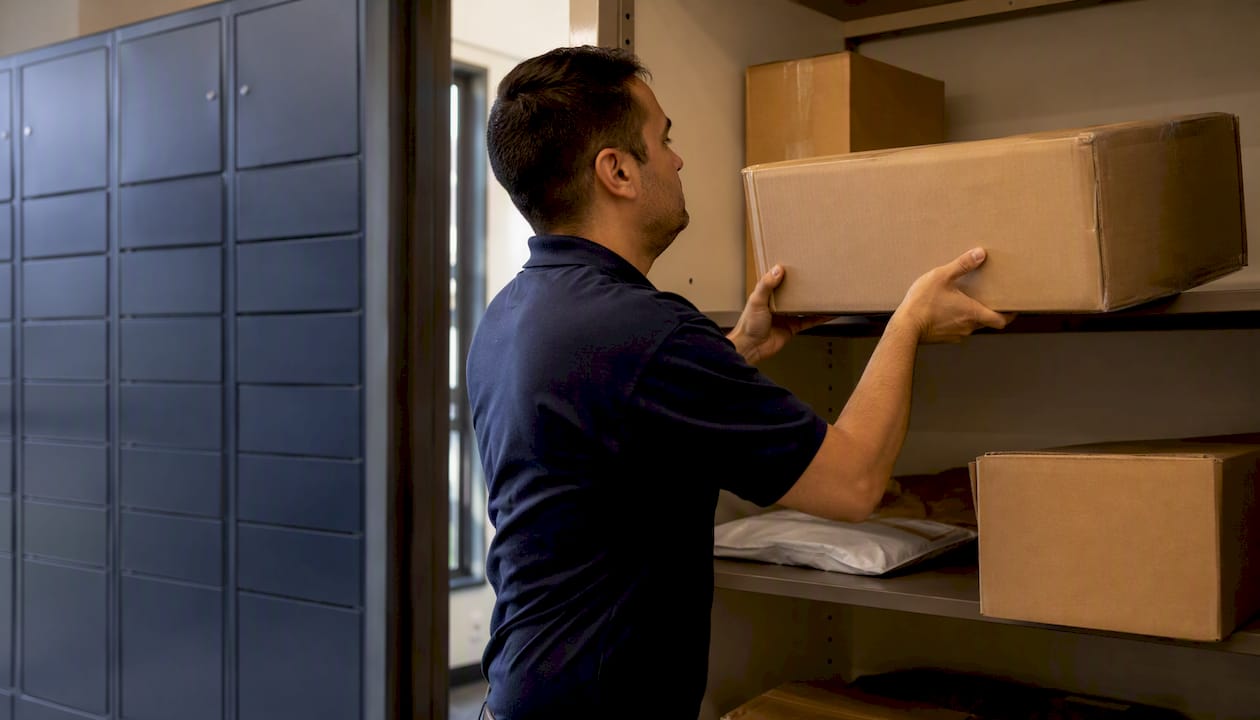
Postal Solutions sells and installs Luxer One package rooms, locker banks, and refrigerated units, and offers daily package room management outsourcing with weekly audits. states.
How do you reduce carrier non-compliance in a package room?
Provide every regular-route driver with a one-page pictorial SOP and assign PIN or QR access credentials before go-live. Verify compliance during the first 30 days by auditing whether each carrier’s packages appear in the system log within 15 minutes of delivery.