Senior Living Package Management: A Guide for Community Managers
Senior Living Package Management: A Guide for Community Managers The most effective approach to senior living package management combines hardware (smart lockers or an organized package room) with vendor-managed daily operations. Here is wh
Published
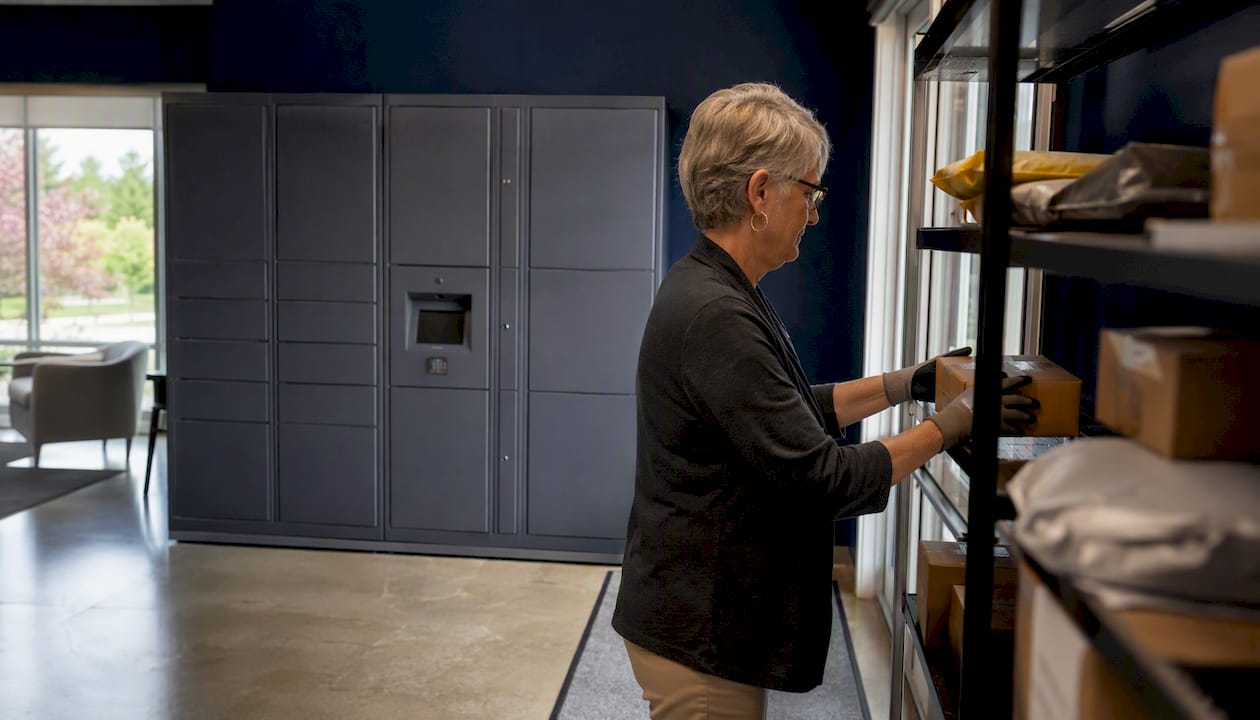
The most effective approach to senior living package management combines hardware (smart lockers or an organized package room) with vendor-managed daily operations. Here is why that matters and what to do next.
Three reasons this model outperforms front-desk handling alone:
- Staff time. Outsourced package-room management can save roughly 30 hours per week for a 300-unit property, freeing staff for resident care and leasing tasks.
- Resident security and satisfaction. Locked, tracked storage with automated notifications reduces theft, misplaced parcels, and the friction seniors experience when searching for packages.
- System integration. Modern solutions connect to your property management software and send SMS or email pickup alerts automatically, closing the notification gap that drives the most resident complaints.
Your immediate next step: spend 15–30 minutes auditing your current package volume, available storage space, and weekly staff hours spent on parcel handling. Involve your property manager, maintenance lead, and a leasing team member. That data drives every vendor conversation that follows.
Key Takeaways
Effective senior living package management requires combining the right hardware with consistent daily operations — neither element alone delivers lasting results.
| Point | Details |
|---|---|
| Volume is rising fast | Average communities receive ~150 packages/week; holiday surges reach ~270/week, an 81% increase. |
| Outsourcing saves measurable staff time | Vendor-cited examples show ~30 hours/week saved at a 300-unit property when operations are outsourced. |
| Evaluate on seven criteria | Score solutions on volume fit, security, integrations, staffing impact, space, SLA, and total cost. |
| Workflow standardization is non-negotiable | Intake, notify, secure, and verify pickup must be documented and audited weekly regardless of solution type. |
| Postal Solutions offers a turnkey option | Postal Solutions sells and installs Luxer One systems and manages daily package-room operations across 40%+ of U.S. states. |
Table of Contents
- Why package management is an operational priority in senior living
- What solution types are available and which fits your community?
- How do you evaluate and select the right system?
- What does a daily package-room workflow look like?
- What does it cost, and how do you calculate ROI?
- How Postal Solutions manages package operations for senior living
- What Postal Solutions has learned from 1,200+ deployments
- Postal Solutions is the turnkey option for senior living package operations
- Sources
- FAQ
Why package management is an operational priority in senior living
Package volumes are rising, and the workload lands directly on your staff. Industry survey data shows the average apartment community receives roughly 150 packages per week, with holiday surges pushing that figure to approximately 270 per week, an increase of about 81%. Senior living communities are not exempt from that trend. Residents order medications, medical supplies, groceries, and personal goods online at rates comparable to the broader multifamily market.
The operational reality: when packages pile up without a system, staff spend hours sorting, logging, and fielding “where is my package?” calls instead of serving residents. That is a direct drain on care quality and administrative capacity.
The U.S. domestic parcel market reached a record 23.9 billion shipments in 2025, and the carrier mix is shifting. Regional and alternative carriers are growing their share, which means your team now handles more carrier types, variable delivery windows, and inconsistent labeling. The Pitney Bowes Parcel Shipping Index confirms revenue-per-parcel increases and continued carrier fragmentation through 2025–2026, a signal that multicarrier flexibility is no longer optional.
The pain points in senior housing are specific. Residents may have mobility limitations that make repeated trips to a disorganized package room frustrating or unsafe. Packages containing prescription medications or temperature-sensitive items require secure, prompt handling. Documentation gaps create liability. And when a parcel goes missing, the complaint escalates faster in a senior community than in a conventional apartment building.
What solution types are available and which fits your community?
Four workable models exist. Each has a distinct cost shape, space requirement, and staffing impact.
Smart lockers (automated)
Automated locker banks like Luxer One accept deliveries 24/7, send residents an immediate pickup code via SMS or email, and log every transaction. Residents retrieve packages on their own schedule without staff involvement.
- Pros: high security, full audit trail, zero staff time per transaction, resident convenience
- Cons: upfront hardware cost, space requirements, limited capacity for oversized items, and refrigerated units carry a premium
Automated locker systems are well-suited to communities with 100+ units and consistent daily volume. Some operators offset hardware costs by repurposing underused amenity space or charging a small per-use fee.
Dedicated package room plus tracking software
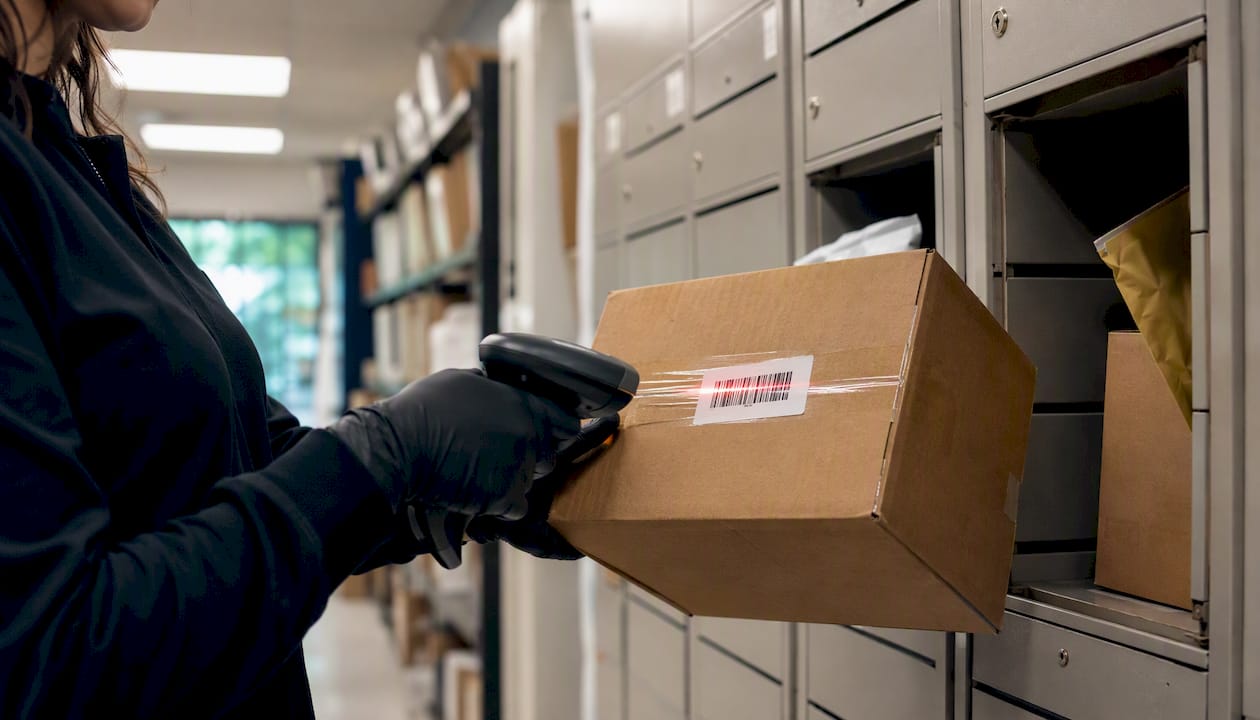
A secured room with barcode scanning software and resident notification tools. Staff or a managed-service provider scans incoming parcels, assigns them to resident units, and the system sends pickup alerts automatically.
- Pros: handles oversized items, lower hardware cost than full locker banks, flexible layout
- Cons: requires daily staffing or outsourcing, room must remain organized to avoid pickup friction
This model works well for medium-to-large communities (50–200+ units) where parcel volume justifies a dedicated space but locker capacity would be insufficient for oversized deliveries.
Front-desk check-in with manual logging
Staff sign for packages, log them in a spreadsheet or basic app, and notify residents manually.
- Pros: no hardware cost, minimal setup
- Cons: high staff time per package, no automated notifications, audit trail gaps, scales poorly above 50 units
Appropriate only for small communities (under 50 units) with low daily volume. Beyond that threshold, the hidden labor cost exceeds the savings on hardware.
Outsourced package-room management
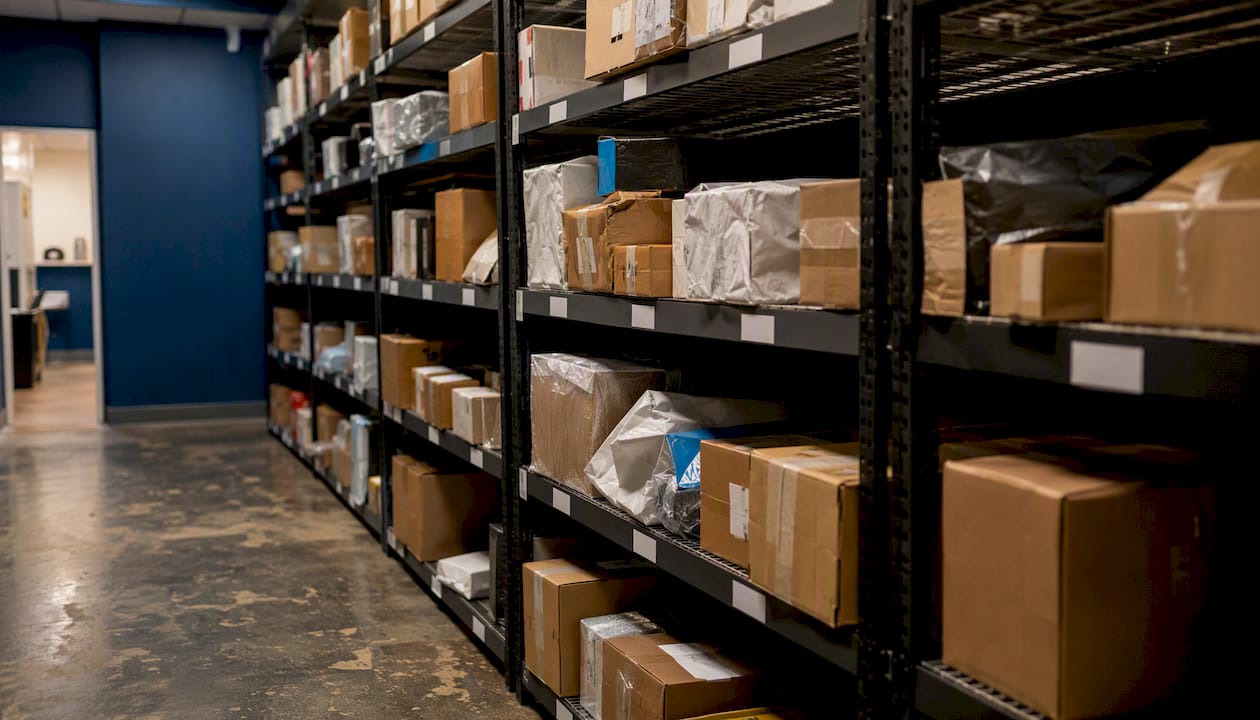
A third-party provider manages daily package-room operations: organizing incoming parcels, labeling boxes with unit numbers, completing weekly audits, and maintaining the tracking system.
- Pros: predictable OPEX, no internal hiring, consistent process regardless of staff turnover
- Cons: requires a reliable vendor with senior-living experience and a clear SLA
Special handling note: refrigerated lockers are now available for perishable and medication deliveries. Oversized items need a defined overflow protocol. Any solution you evaluate should address both.
Quick-fit guide:
- ≤50 units: front-desk logging or basic package room with simple software
- 50–200 units: dedicated package room plus tracking software, or entry-level locker bank
- 200+ units: smart locker system, full package room with software, or a combined locker-plus-managed-room model
How do you evaluate and select the right system?
Start with a seven-criteria scorecard: volume fit, security and resident privacy, property management integrations, staffing impact, space and installation requirements, vendor support and SLA, and total cost of ownership. Score each criterion 1–3 for every solution you demo.
Evaluation checklist for demos and site visits:
- Confirm the system handles your peak weekly volume (use your holiday estimate, not your average).
- Verify carrier compatibility — UPS, FedEx, USPS, Amazon Logistics, and regional carriers.
- Test the resident notification flow end-to-end (SMS, email, and in-app if applicable).
- Confirm integration with your property management platform (Yardi, RealPage, Entrata, or equivalent).
- Review the audit log and data export options.
- Inspect the physical space requirements against your available footprint.
- Ask for references from senior living communities specifically.
Ten vendor interview questions:
- What is your typical installation timeline and what site prep do we need to complete first?
- What is your SLA for hardware downtime, and what is the contingency for residents during an outage?
- How does your system handle oversized packages that do not fit a standard locker?
- Do you offer refrigerated units for perishable or medication deliveries?
- Which property management platforms do you integrate with natively?
- How are resident data and pickup records stored, and who owns that data?
- What training do you provide for on-site staff?
- What does your managed-operations service include, and how often does a representative visit?
- How do you handle carrier-label discrepancies or packages with missing unit numbers?
- What does your pricing include, and what triggers additional fees?
Red flags to watch for: vague installation timelines with no operations plan attached, pricing that excludes software licensing or support, no data export capability, and vendors who cannot name a training protocol. Technology can free staff time and improve accuracy, but real operational gains require workflow redesign and staff training — a vendor who skips that conversation is selling hardware, not a solution.
What does a daily package-room workflow look like?
Standardize four steps: intake, notify, secure, verify pickup. The specifics vary by solution type.
Workflow A: Smart locker flow
- Carrier scans package at locker kiosk; system assigns an available compartment
- Resident receives automated SMS/email with a unique pickup code
- Resident retrieves package independently; system logs timestamp and closes the transaction
- Weekly audit: review unclaimed packages (typically flagged after 3–5 days) and contact residents
Workflow B: Package room plus software flow
- Staff or managed-service provider scans incoming parcels; software assigns unit numbers
- System sends automated resident notification
- Resident enters package room with a key fob or access code; retrieves parcel
- Weekly audit: reconcile logged packages against physical inventory, flag and document discrepancies
Workflow C: Front-desk/manual flow
- Staff signs for package, logs carrier, unit number, and timestamp in a tracking sheet
- Staff calls or texts resident manually
- Resident signs a pickup log at the front desk
- Weekly audit: review open log entries and follow up on unclaimed items
Weekly audit checklist (all models):
- Pull the unclaimed-package report from your software (or review your manual log).
- Cross-check physical inventory against the logged count.
- Document any discrepancies with date, carrier, and tracking number.
- Contact residents with packages older than your community’s hold policy (typically 5–7 days).
- Escalate lost or damaged items to the carrier and document the claim.
Resident notification template (SMS): “Hi [Name], a package has arrived for unit [#]. Pick it up at [location] using code [####] or during office hours. Questions? Call [number].”
Pro Tip: During holiday surges, when volume can jump to roughly 270 packages per week, designate a temporary overflow area adjacent to your main package room, brief your managed-service provider or staff at least two weeks in advance, and send residents a proactive communication about expected delays. Pre-labeling overflow shelves by floor or building section cuts retrieval time significantly.
What does it cost, and how do you calculate ROI?
The combined hardware-plus-managed-service model typically shows payback within months to a few years, depending on your labor costs and package volume.
Cost items to budget:
- Hardware (locker bank or package-room equipment): capital expenditure, varies by unit count and locker configuration
- Installation and site prep: typically included or quoted separately by the vendor
- Software licensing: monthly or annual fee, often bundled with hardware
- Monthly managed-service fee: OPEX, covers daily visits, audits, and system upkeep
- Staff time savings: credit against payroll cost when outsourcing replaces internal labor
Sample ROI calculation (conservative assumptions):
| Item | Assumption |
|---|---|
| Average weekly packages | 150 (per industry survey data) |
| Holiday weekly packages | ~270 (81% seasonal increase) |
| Staff hours saved per week (outsourced, 300-unit property) | ~30 hours |
| Average staff hourly cost (wages + burden) | Use your actual figure |
| Annual labor savings | 30 hrs × 52 weeks × hourly cost |
At $20/hour fully burdened, 30 hours per week saved equals roughly $31,200 in annual labor savings. Set that against your combined hardware and managed-service cost to calculate your payback period.
Statistic to anchor your business case: industry reporting cites outsourcing examples where operators recovered approximately 30 staff hours per week at a 300-unit property — a figure that translates directly to payroll savings or redeployment of staff toward resident care.
How Postal Solutions manages package operations for senior living
Postal Solutions offers a turnkey combination of Luxer One hardware and managed package-room operations, purpose-built for multifamily and senior living communities. As the largest Luxer One sales agency in the United States, Postal Solutions has completed over 1,200 Luxer One installations across more than 40% of U.S. states.
What Postal Solutions manages:
- Daily package-room organization: a package manager visits the property, marks unit numbers on incoming boxes, and organizes parcels by unit
- Weekly audits using your existing package-room software or a Luxer One system Postal Solutions installs
- System upkeep: keeping the locker or package room current and organized so residents find their packages without staff assistance
- Escalation handling: flagging discrepancies, unclaimed packages, and carrier issues
What remains with the property:
- Carrier access and delivery scheduling
- Resident communication policy and hold-period rules
- Integration setup with your property management platform (Postal Solutions supports most major systems)
The operational case for outsourcing: when a property manages package operations internally without a dedicated system, it pays twice — once in direct payroll and again in lost staff productivity when leasing agents and maintenance staff field package inquiries instead of doing their primary jobs.
For communities evaluating a Luxer One locker system alongside managed operations, Postal Solutions can scope both in a single conversation. Request an operational audit or quote directly at postalsolutions.com.
What Postal Solutions has learned from 1,200+ deployments
After nearly a decade managing package operations across multifamily and senior living communities, one pattern holds: the communities that struggle most are not the ones with the wrong hardware. They are the ones with no consistent daily process behind the hardware. A locker system that goes unaudited for two weeks becomes a source of resident frustration, not relief. A package room without a labeled organization system is just a room with boxes.
The operational discipline — daily organization, weekly audits, clear escalation paths — is what converts a hardware investment into a resident experience improvement. Postal Solutions focuses on that operational layer because it is where the real value is recovered. If you want to discuss what a managed package-room program would look like for your community, reach out to Postal Solutions for a no-obligation operational review.
Postal Solutions is the turnkey option for senior living package operations
Senior living managers who want both the hardware and the daily operations managed under one agreement have a direct path: Postal Solutions sells and installs Luxer One smart locker and package-room systems and manages daily package-room operations with six-day-per-week visits, weekly audits, and system upkeep. There is no need to coordinate a hardware vendor separately from an operations partner.
states and supports integrations with most major property management platforms. Communities evaluating new senior living builds can also reference how integrated amenity planning shapes package-room design from the ground up.
To get a quote or schedule an operational audit for your community, contact Postal Solutions at postalsolutions.com.
Sources
- Can technology use alleviate workforce needs in Finnish assisted living services? - PMC
- How to best handle package deliveries at apartment communities - Multi-Housing News
- Pitney Bowes Parcel Shipping Index report 2026 - Pitney Bowes
FAQ
What is the best package management system for senior living?
A combined smart locker or organized package room paired with managed daily operations delivers the strongest results for most communities. Postal Solutions offers this as a turnkey service, including Luxer One hardware and six-day-per-week managed visits.
How many packages does the average senior living community receive per week?
Industry survey data shows the average apartment community receives roughly 150 packages per week, with holiday surges reaching approximately 270 per week.
How much staff time can outsourced package management save?
Vendor-cited examples from industry reporting show outsourcing package-room operations can save approximately 30 staff hours per week at a 300-unit property.
What should go in a care package for an elderly resident?
Practical items tend to be most appreciated: non-perishable snacks, personal care products, books or puzzles, warm socks, and handwritten notes. For communities managing incoming care packages, a clear intake and notification process protects these items from being misplaced.
How do senior living communities handle refrigerated or perishable deliveries?
Refrigerated locker units are now available and designed specifically for perishable and medication deliveries. Communities without refrigerated lockers should establish a defined overflow protocol with immediate resident notification to minimize spoilage risk.