White-Glove Package Service for Multifamily Housing
White-Glove Package Service for Multifamily Housing A white-glove package service, in the multifamily context, means outsourced daily management of your property’s package room or locker system, including Luxer One hardware sales and instal
Published
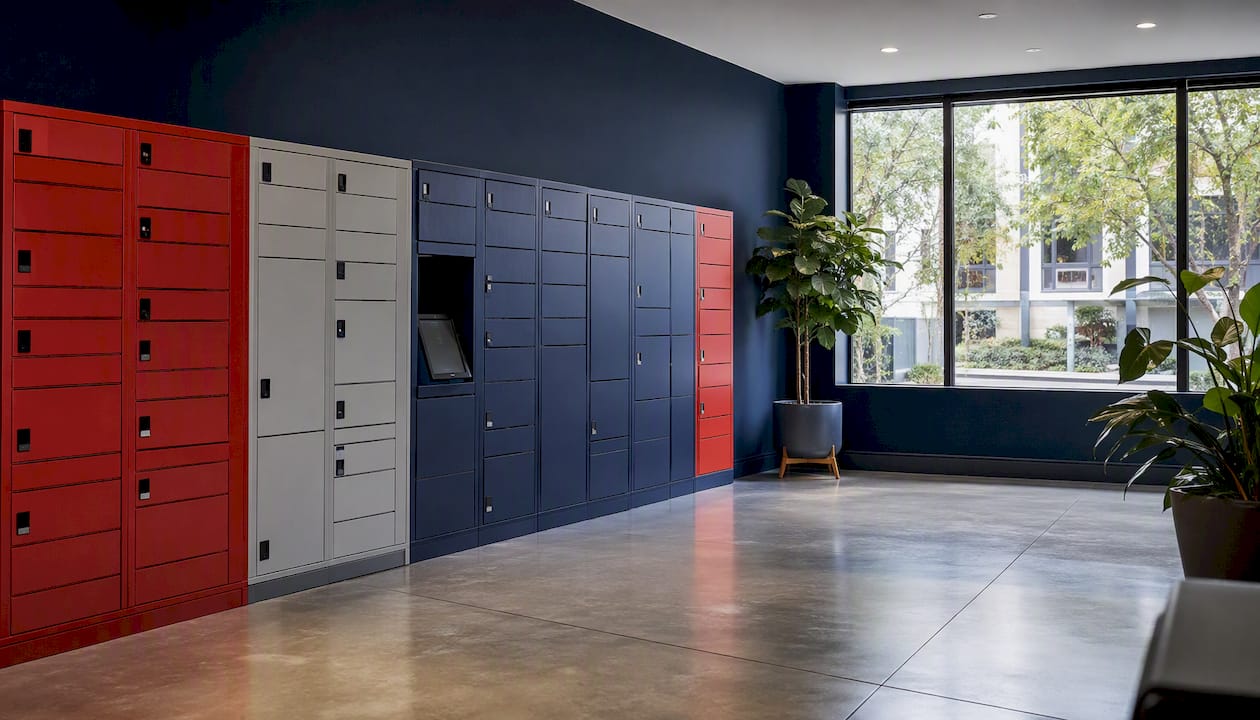
A white-glove package service, in the multifamily context, means outsourced daily management of your property’s package room or locker system, including Luxer One hardware sales and installation, not in-home delivery or furniture assembly. A trained package manager visits your property to organize incoming parcels, tag unit numbers on boxes, run weekly audits, and keep your system current so residents find their packages without involving your leasing staff.
Who should invest in this:
- High-volume urban, campus, or senior properties where staff spend meaningful hours weekly on parcel handling
- Communities where package theft or resident complaints about missing deliveries are recurring issues
- Operators who want predictable labor recovery and a clear ROI timeline within the first year
Who may not need it yet:
- Very low-volume properties (fewer than 20–30 packages per day) with available staff capacity
- Properties without dedicated package-room space or adequate connectivity for locker hardware
Your first step: Run a 30/60-day package-volume and staff-time audit before reaching out to any vendor.
Key Takeaways
Outsourced white-glove package management paired with Luxer One hardware delivers measurable labor recovery, theft reduction, and resident satisfaction gains, with hardware costs typically recouped within the first operational year.
| Point | Details |
|---|---|
| Define scope before budgeting | White-glove package service means outsourced package-room management and Luxer One installation, not in-home delivery. |
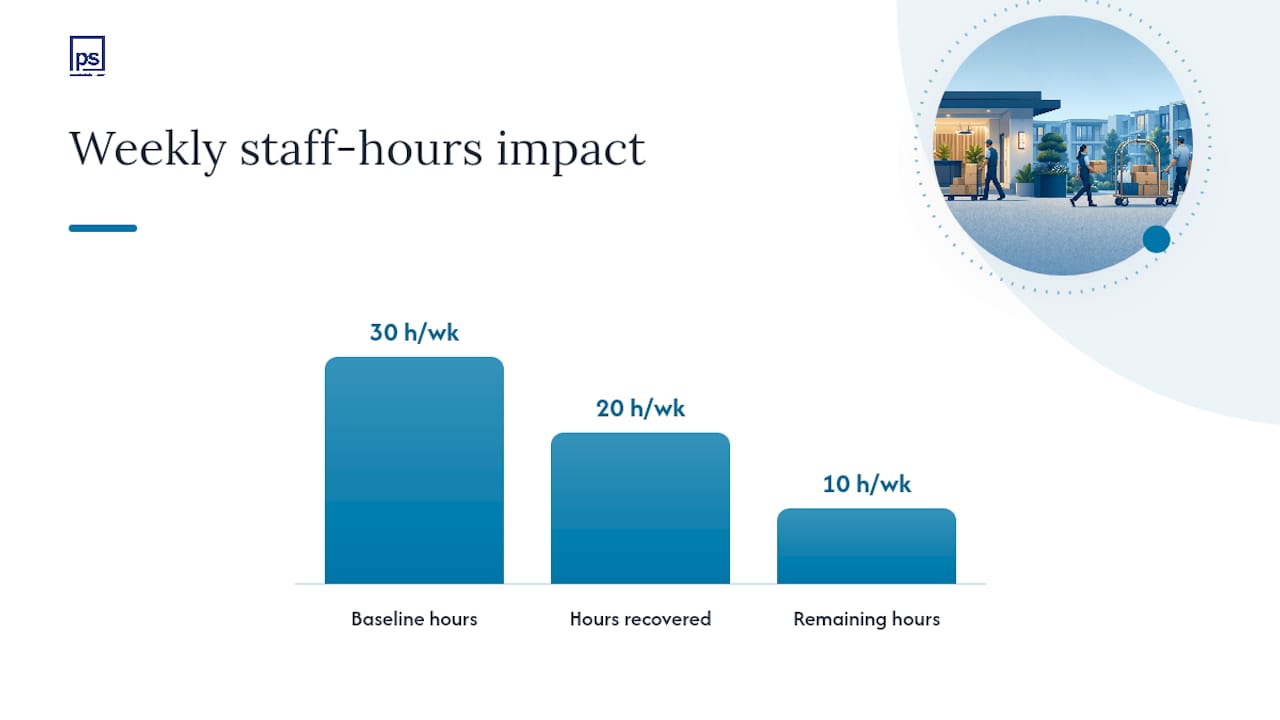
| Labor recovery is the primary ROI driver | A 300-unit property can spend roughly 30 staff-hours per week on manual parcel handling; outsourcing reclaims that time. |
| Hybrid hardware outperforms lockers alone | Pairing a Luxer One locker bank with an overflow package room handles peak volume and oversized items that lockers cannot. |
| Audit cadence determines program health | Daily intake verification, weekly deep audits, and monthly carrier reviews keep theft incidents and resident complaints low. |
| Postal Solutions manages the full program | As the largest Luxer One sales agency with 1,200+ installations, Postal Solutions manages daily organizing, weekly audits, and hardware from a single contract. |
Table of Contents
- What does a white-glove package service actually include?
- Why operators adopt this service, and what the ROI looks like
- Which hardware types pair best with managed services?
- How to implement a managed package program step by step
- What does this cost, and when does it pay back?
- How do you measure whether the program is working?
- Common rollout problems and how to avoid them
- How Postal Solutions manages white-glove package programs
- DIY lockers vs. outsourced managed service: which is right for your property?
- Postal Solutions is ready to assess your property
- Further reading and primary sources
- Sources
- FAQ
What does a white-glove package service actually include?
Managed package-room programs cover far more than dropping off a locker system and walking away. NAAHQ guidance is direct on this point: package rooms require routine operational standards and regular audits to prevent parcel loss and resident dissatisfaction.
Daily operational tasks:
- Intake logging of every parcel received
- Shelf or locker placement organized by unit number
- Resident notification via the property’s existing software or the Luxer One platform
- Handwriting or highlighting unit numbers on boxes for fast resident retrieval
- Oversized and perishable package handling with appropriate staging
- Same-day reconciliation to close out the intake log
Recurring process checklist:
- Daily intake sweep and conflict-resolution workflow for misaddressed or unclaimed parcels
- Release-and-sign procedures for high-value items
- Secure staging for valuables and refrigerated items
- Weekly deep audit comparing system records to physical inventory
- Monthly carrier compliance review to flag recurring drop errors
Out of scope: in-home delivery, furniture placement or assembly, and any task requiring entry into a resident’s unit. This is package-room management, not a luxury delivery service in the traditional sense.
Why operators adopt this service, and what the ROI looks like
The financial case is concrete. MultiHousing News reports that a 300-unit property can spend roughly a significant amount of staff time per week on manual package handling. At a fully loaded hourly cost of $25, that is $750 per week, or approximately a considerable amount annually in labor costs, before accounting for productivity loss on leasing and maintenance tasks displaced by parcel duty.
Stat to know: Smart Package Room analysis estimates approximately five minutes of staff time per package at typical daily volumes for a 300-unit property, which aggregates to five staff-hours daily before a single lease is signed or a work order is closed.
The security case is equally strong. Industry reporting attributes an estimated $6 billion in annual losses to package theft nationally. Managed programs with audited intake logs and access-controlled hardware reduce exposure significantly.
Primary operator benefits:
- Staff hours reclaimed for leasing and maintenance
- Measurable reduction in theft incidents and resident complaints
- Resident satisfaction gains that support retention and renewal rates
- Smart locker ROI commonly recovered within the first operational year when labor savings and theft reduction are included
Which hardware types pair best with managed services?
Multifamily Dive coverage documents rapid delivery-volume growth and notes that dedicated package rooms generally provide greater capacity than locker-only banks during peak periods. The right hardware depends on your property’s volume, unit mix, and available space.
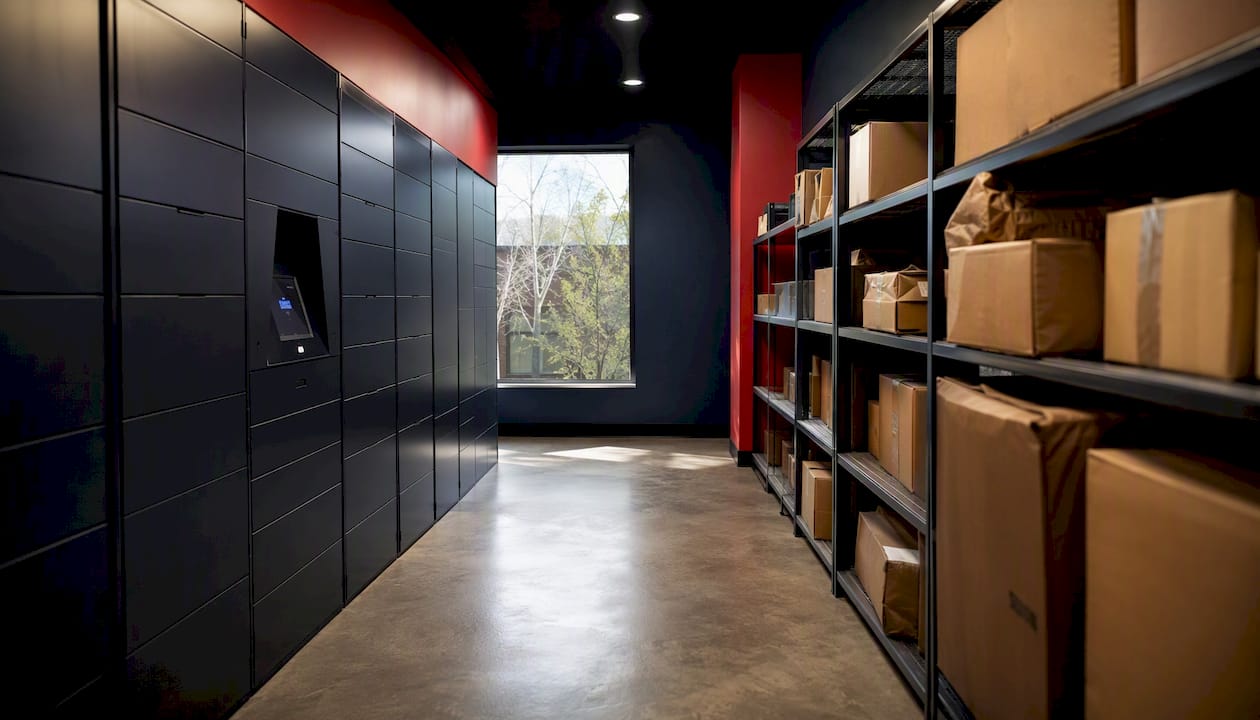
Smart locker banks (Luxer One)
Purpose-built electronic lockers with carrier-accessible drop zones and resident-facing retrieval screens. Best for properties with consistent daily volume and space for a dedicated locker corridor. Dimensional limits apply to oversized items.
Pros: 24/7 resident access, automated notifications, strong audit trail. Cons: Capacity ceiling on large parcels; requires reliable connectivity and power.
AI-assisted package rooms
Shelving-based rooms with camera or computer-vision tracking. Higher raw capacity than lockers, better for oversized items, and carrier-agnostic.
Pros: Handles all parcel sizes, lower per-unit hardware cost. Cons: Requires more active management to stay organized without daily oversight.
Refrigerated lockers
Temperature-controlled compartments for grocery deliveries and meal kits. Increasingly relevant for senior housing and urban high-rises with health-conscious residents.
Hybrid room-plus-locker configurations
Multifamily Executive reporting documents the industry shift toward hybrid designs that pair a locker bank for standard parcels with an overflow room for oversized items. This is the configuration most operators with 200+ units should evaluate first.
Pro Tip: Before selecting hardware, confirm USPS parcel-locker guidance requirements for your building type and verify that your designated package-room space has the electrical capacity and network connectivity the hardware requires. Skipping this step is the most common cause of delayed installations.
How to implement a managed package program step by step
Pre-deployment
- Conduct a site survey: measure available space, map power outlets, and test connectivity in the proposed package-room location.
- Validate USPS and municipal constraints for your building type.
- Get stakeholder sign-off from ownership, property management, and the leasing team on scope and timeline.
Deployment
- Select and procure hardware (Luxer One locker bank, package room, refrigerated locker, or hybrid).
- Complete installation and integrate with your property management system and resident-notification platform.
- Install signage at building entrances, mailroom, and package-room entry with carrier drop instructions and access codes.
Launch
- Conduct carrier training sessions for USPS, UPS, FedEx, and Amazon drivers serving your property.
- Run a phased rollout: pilot one building or floor for the first 30 days before full deployment.
- Execute weekly audits for the first 90 days and document escalation procedures for system failures or overflow events.
| Phase | Key Task | Owner | Timeline |
|---|---|---|---|
| Pre-deployment | Site survey and power/connectivity validation | Property manager + vendor | Weeks 1–2 |
| Deployment | Hardware install and software integration | Vendor (Postal Solutions) | Weeks 3–5 |
| Launch | Carrier training and phased rollout | Managed service team | Weeks 6–8 |
| Stabilization | Weekly audits and KPI baseline | Managed service team | Days 1–90 |
What does this cost, and when does it pay back?
Pricing structures vary by scope. Most managed package programs combine a one-time hardware cost with a recurring management fee.
Typical cost components:
- One-time: locker bank or package-room hardware, site preparation, and installation
- Recurring: managed service fee (daily visits, weekly audits, carrier communication)
- Software/subscription: package-tracking platform or Luxer One software license
- Watch for: connectivity upgrades, seasonal surge staffing, and signage replacement
Common pricing models:
- Per-unit/per-month: predictable for budgeting; scales with property size
- Per-package handling fee: aligns cost to volume; better for lower-volume properties
- Flat monthly management fee: simplest to administer; common for full-service outsourced programs
- Hybrid fee: flat base plus a per-package overage for peak periods
Payback context: Luxer One’s ROI analysis indicates many properties recover smart-locker installation costs within the first operational year by replacing manual handling and recovering thousands of staff hours. For a 300-unit property spending a considerable amount annually in labor costs on parcel labor, even partial recovery of that cost accelerates payback substantially.
A property that recovers 20 of those 30 weekly staff-hours through outsourced management and hardware automation saves roughly $26,000 per year in direct labor, putting a typical installation on a payback timeline well under 18 months.
How do you measure whether the program is working?
Blueprint Advisory recommends a process-first framework, which means defining measurable standards before deployment, not after the first complaint.
Core KPIs to track:
- Average resident pickup time (target: under 48 hours from delivery)
- Packages processed per staff-hour
- Weekly audit pass rate (target: 95%+ inventory accuracy)
- Theft incidents per 1,000 deliveries
- Resident satisfaction score delta (pre- vs. post-implementation survey)
Recommended audit cadence:
- Daily: intake verification and same-day reconciliation
- Weekly: deep physical audit against system records, carrier compliance check
- Monthly: carrier performance review and KPI report to property ownership
Pro Tip: Build a carrier-specific access-code sheet and laminated drop-instruction card for every carrier serving your property. Distribute it at the initial training session and re-send it every quarter. Carrier noncompliance is the leading cause of misplaced packages, and a one-page reference card cuts incorrect drops measurably.
Common rollout problems and how to avoid them
Predictable failure modes have predictable fixes. Address these before go-live.
Troubleshooting by issue:
- Carrier noncompliance: Standardized training materials and QR-code access workflows reduce incorrect drops. Escalate repeat offenders to the carrier’s local district manager.
- Connectivity outages: Install a cellular backup or UPS battery for the locker system. Document a manual intake fallback procedure for outage periods.
- Oversized packages: Designate a clearly marked overflow staging area adjacent to the locker bank. Brief the managed service team on the escalation path for items that exceed locker dimensions.
- Locker saturation during peaks: MultiHousing News notes that blended tech plus recurring manual oversight gives resilient capacity. A hybrid room-plus-locker design is the most reliable buffer.
Peak-period plan (holidays, Prime Day):
- Increase managed-visit frequency during the two weeks before and after major shopping events.
- Pre-position overflow staging in a secured secondary space.
- Send residents a proactive communication template reminding them to retrieve packages within 24 hours during peak periods.
- Confirm carrier drop schedules with local USPS and UPS contacts at least two weeks in advance.
How Postal Solutions manages white-glove package programs
Postal Solutions has managed package-room outsourcing since 2016 and is the largest Luxer One sales agency in the United States, with over 1,200 Luxer One installations across more than 40% of U.S. states. That footprint spans on-campus universities, Public Private Partnerships (P3), conventional multifamily, student housing, senior housing, municipalities, and businesses of all sizes.
What Postal Solutions manages and provides:
- Daily package-room organization with unit-number tagging on every parcel
- Weekly audits using the property’s existing software or a Luxer One system
- Carrier communication templates and compliance follow-up
- Luxer One locker bank, package room, refrigerated locker, and hybrid system sales and installation
- Six-day-per-week managed visits for full-service clients
- Integration support for most major property management and resident-notification platforms
Postal Solutions manages the full package-room lifecycle: from site survey and Luxer One installation through daily organizing visits and weekly audits, so your leasing staff can focus on leasing. Properties that run this program stop paying twice, once in payroll and once in lost productivity.
For a representative 300-unit property, outsourcing daily package management recovers the staff hours that would otherwise be consumed by parcel duty, with hardware costs typically recouped within the first operational year. Explore Luxer One locker benefits and package-room operations to see how the model applies to your property type.
DIY lockers vs. outsourced managed service: which is right for your property?
The honest answer depends on four variables: daily package volume, available staff capacity, dedicated space, and how your property is positioned in the market.
Choose DIY (lockers plus internal staff) when:
- Daily volume is under 30 packages and your team has genuine capacity to manage intake
- The property is a smaller suburban community where parcel management is a minor operational task
- Budget constraints make a managed service fee difficult to absorb in year one
Choose outsourced managed service when:
- Volume exceeds 40–50 packages per day and staff are visibly burdened
- Resident complaints about missing or disorganized packages are recurring
- The property competes on amenity quality and package management is part of that brand promise
- You operate a student housing or senior housing community where resident expectations and turnover risk are both elevated
For portfolio operators, negotiate an initial pilot contract on one property before committing to a full rollout. A 90-day pilot with defined KPI targets gives you real performance data and a stronger negotiating position for subsequent buildings.
Postal Solutions is ready to assess your property
Postal Solutions offers site assessments for multifamily, student, and senior housing operators evaluating outsourced package management. During the assessment, the team evaluates package volume, available space, connectivity, resident demographics, and existing software to recommend the right hardware and service configuration.
What the assessment covers:
- Current daily package volume and staff-time consumption
- Space and power validation for Luxer One hardware
- Connectivity requirements and any infrastructure gaps
- Resident demographics and pickup-behavior patterns
- Software integration options with your existing property management platform
Properties that complete an assessment leave with a clear recommendation: hardware type, service level, estimated cost, and a projected payback timeline. Contact Postal Solutions to request a package management assessment and get a site-specific recommendation for your community.
Further reading and primary sources
- What’s The ROI on Smart Lockers for Apartments? (Luxer One) — used for hardware payback timelines and first-year cost-recovery benchmarks
- A Framework for Solving Multifamily’s Package Management Problem (Blueprint Advisory) — process-first framework, solution-matching criteria, and carrier compliance findings
- Package Management (NAAHQ guidance PDF) — operational standards, audit cadence recommendations, and parcel-loss prevention
- How to Best Handle Package Deliveries at Apartment Communities (MultiHousing News) — 30 staff-hours-per-week estimate and blended tech-plus-oversight findings
- Thinking Outside the Box to Solve Package Delivery Issues (Multifamily Affordable Housing) — $6 billion annual package-theft loss figure
- As E-Commerce Booms, Managers Boost Package Infrastructure (Multifamily Dive) — delivery-volume growth trends and package-room capacity advantages
- Multifamily Properties Face Flood of Packages (Multifamily Executive) — hybrid locker-plus-room design trends and USPS parcel-locker guidance context
Contact Postal Solutions directly for proprietary case studies and community-specific testimonials from current managed-service clients.
Sources
- Thinking Outside the Box to Solve Package Delivery Issues
- A Framework for Solving Multifamily’s Package Management Problem | Insights by Blueprint
- As e-commerce booms, managers boost package infrastructure
- Multifamily properties face flood of packages
- How to Best Handle Package Deliveries at Apartment Communities - Multi-Housing News
- Package Management (NAAHQ guidance PDF)
FAQ
What is a white-glove package service for apartments?
In multifamily housing, a white-glove package service is outsourced daily management of a property’s package room or locker system, including intake logging, unit-number tagging, resident notification, weekly audits, and Luxer One hardware installation. It does not include in-home delivery or assembly.
How quickly can a property recover the cost of a Luxer One installation?
Luxer One’s own ROI analysis indicates many properties recover installation costs within the first operational year by eliminating thousands of hours of manual labor and reducing theft-related losses.
How many staff-hours does manual package handling typically consume?
A 300-unit property can spend roughly 30 staff-hours per week on manual package handling, according to MultiHousing News reporting. At roughly five minutes of staff time per package, that labor cost compounds quickly at scale.
What hardware works best for high-volume multifamily properties?
A hybrid configuration pairing a Luxer One locker bank with an overflow package room handles the widest range of parcel sizes and surge periods. Locker-only setups hit capacity limits on oversized items and during peak delivery events.
How does Postal Solutions differ from simply buying a locker system?
Postal Solutions manages the full program: it sells and installs Luxer One hardware and provides daily package-room organizing, weekly audits, and carrier communication support under a single managed-service contract, so properties get both the hardware and the ongoing operational oversight.