24-7 Package Pickup for Apartments: A Manager's Guide
Discover how 24-7 package pickup can enhance efficiency in apartments. Reduce staff workload and improve resident satisfaction effortlessly.
Published
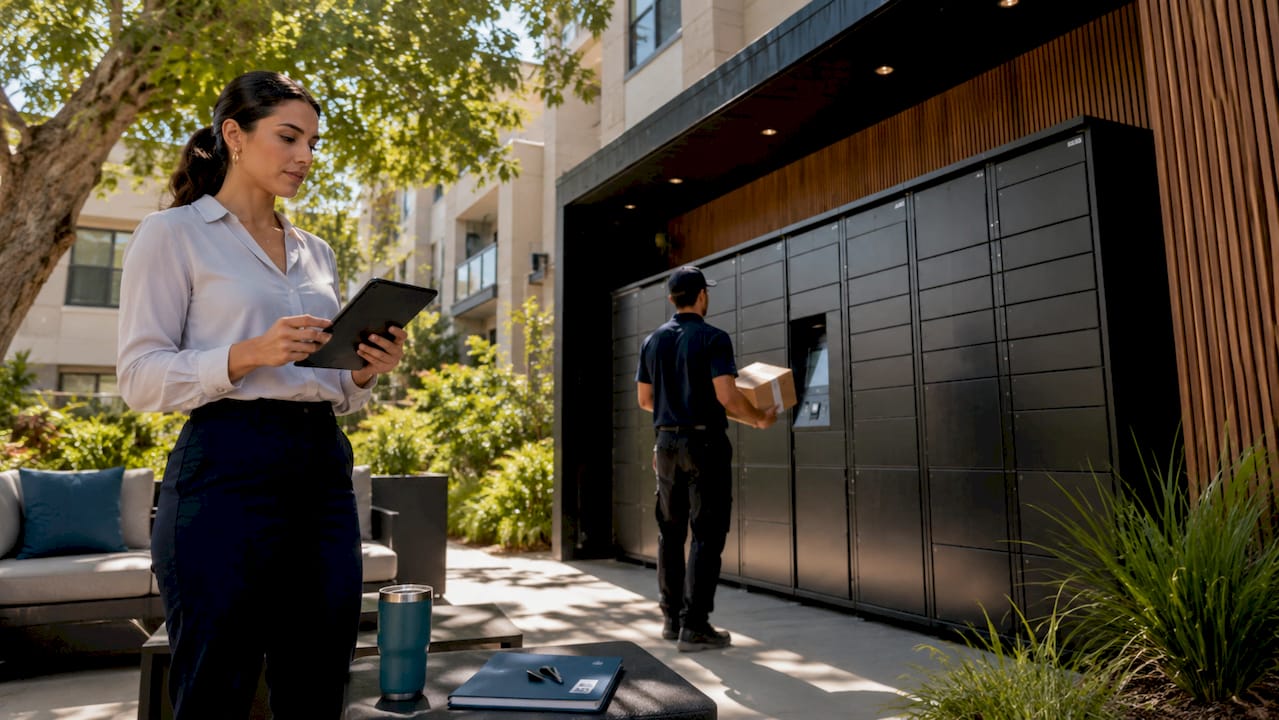
24-7 package pickup is defined as self-service, anytime access to delivered parcels without requiring staff assistance at the moment of retrieval. The industry term for this model is “self-service package retrieval,” and it has become a baseline expectation in multifamily housing. Average apartment communities receive 150 packages per week, surging to roughly 270 during the holiday season. That volume creates real operational pressure, and property managers who rely on manual handling are paying for it in labor costs, staff time, and resident frustration. Round-the-clock package collection solves the core problem by distributing pickup activity across all hours, reducing congestion, and freeing your team to focus on higher-value work.
How does 24-7 package pickup reduce staff workload and costs?
Manual package processing is one of the most underestimated labor drains in multifamily operations. Each package consumes about five minutes of staff time for logging, sorting, notifying, and handing off. At a 370-unit property receiving 75 packages daily, that adds up to more than six hours of staff time lost every single day.
The annual cost of that labor runs approximately $30,000. That figure does not include the indirect cost of pulling leasing agents or maintenance staff away from revenue-generating tasks to handle package inquiries.
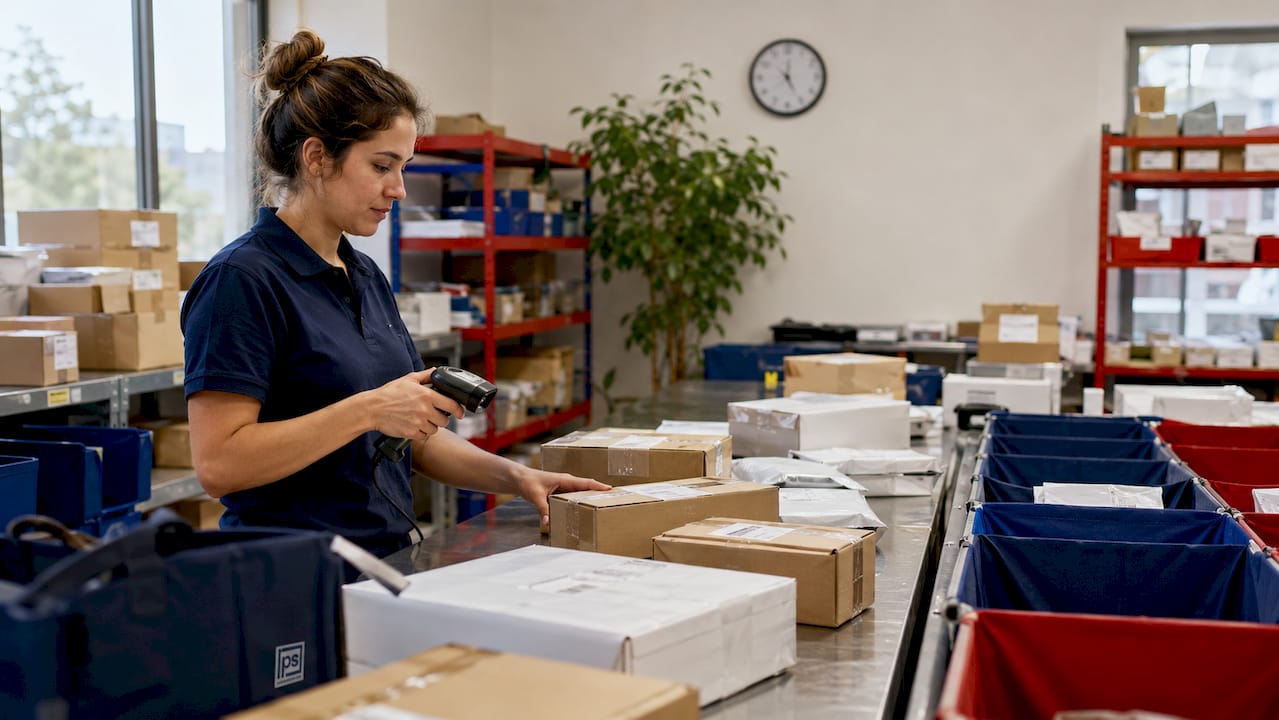
Constant package pickup service changes the equation. When residents retrieve packages on their own schedule through a secure, automated system, staff involvement drops to oversight and auditing rather than active handling. Labor savings at 300-unit properties can exceed 30 hours per week when package handling is outsourced or automated. Those hours translate directly into leasing productivity and improved net operating income.
Key labor and cost benefits of 24-7 pickup systems include:
- Elimination of manual package logging and resident notification calls
- Reduction in package-related staff interruptions during leasing hours
- Lower liability exposure from lost or misdelivered parcels
- Reallocation of onsite staff to leasing, maintenance, and resident relations
Pro Tip: Calculate your property’s current cost per package by multiplying daily volume by five minutes and your average staff hourly rate. Most managers are surprised by the annual total.
What types of 24-7 package pickup systems work best for apartments?
Three primary system types support anytime delivery pickup in multifamily communities: smart lockers, managed package rooms, and hybrid systems. Each fits a different operational profile.
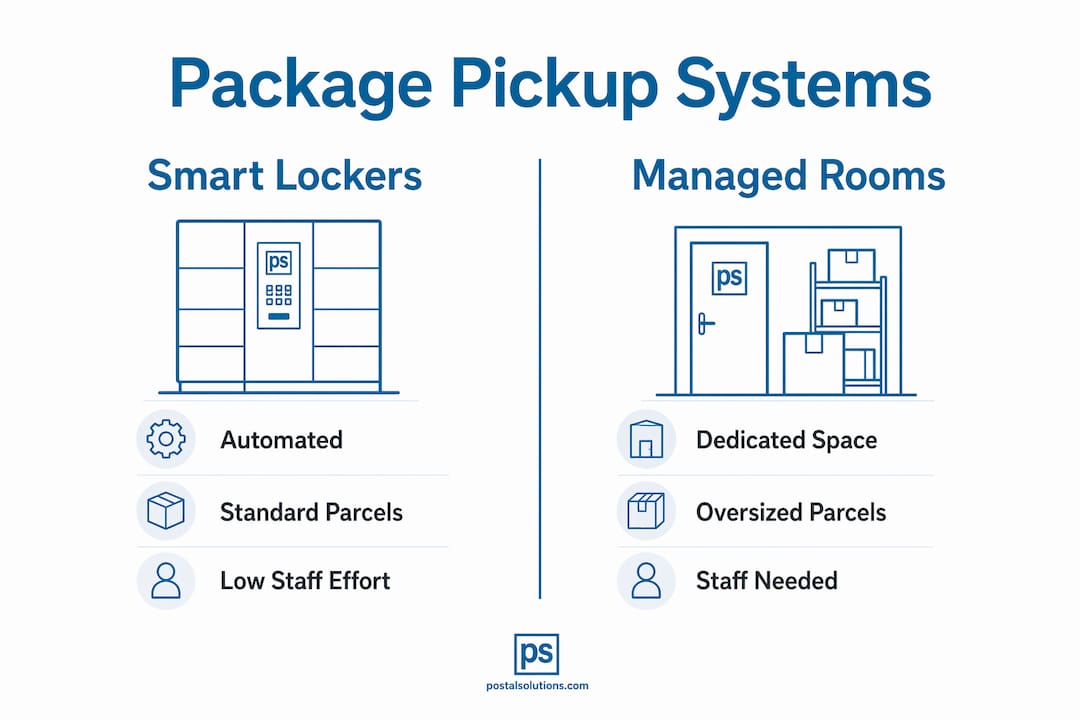
Smart lockers
Smart lockers are automated, electronic kiosks that accept packages from carriers and send residents a unique access code for retrieval. They require no staff involvement at the point of pickup. The tradeoff is size. Standard locker compartments cannot accommodate oversized freight, large appliances, or bulk deliveries. For communities with high volumes of large parcels, lockers alone create overflow problems quickly.
Managed package rooms
A managed package room is a dedicated, secure space where all deliveries are received, sorted, and organized. Residents access the room using a key fob, PIN, or mobile credential. Package rooms handle virtually any parcel size, making them well-suited for student housing and large conventional communities with diverse delivery types. The operational requirement is daily organization. Without consistent sorting and auditing, package rooms become chaotic, which defeats the purpose of self-service access.
Hybrid systems
Hybrid systems combine lockers and package rooms to handle both standard and oversized parcels efficiently. Carriers deposit standard packages into lockers and route larger items to the package room. This model reduces manual intervention while covering the full range of delivery sizes. It is the most adaptable configuration for large complexes with high and varied package volumes.
| System type | Best for | Size flexibility | Staff involvement |
|---|---|---|---|
| Smart lockers | Standard parcel volume | Low | Minimal |
| Managed package room | High volume, mixed sizes | High | Daily organization |
| Hybrid system | Large, diverse communities | High | Periodic auditing |
Pro Tip: Before selecting a system, audit three months of delivery records. If more than 20% of your packages are oversized, a locker-only setup will create recurring overflow problems.
Best practices for implementing round-the-clock package collection
Deploying a 24-hour package drop-off and pickup system requires more than installing hardware. Operational protocols determine whether the system actually works at scale.
Step 1: Establish carrier compliance
Carriers must deliver packages to the designated system, not to doorsteps, lobbies, or leasing offices. Communicate your package room or locker location to all major carriers in writing. Register your property’s delivery instructions with USPS, UPS, FedEx, and Amazon directly. Without this step, hardware expansion alone will not solve your package management problems.
Step 2: Configure automated resident notifications
Every package retrieval system should send timestamped notifications to residents at the moment of delivery. Email, SMS, and app-based alerts all work. The goal is to minimize package dwell time. Packages that sit uncollected for days create congestion and increase the risk of loss.
Step 3: Implement access controls
Secure access is non-negotiable. More than half of property managers use cameras in their package rooms, and half incorporate touchscreen interfaces for resident guidance. Credential-based access, whether via fob, PIN, or mobile app, creates an audit trail and deters theft.
Step 4: Schedule daily organization and weekly audits
Self-service does not mean unsupervised. Package rooms require daily sorting so residents can locate their parcels without staff help. Weekly audits identify unclaimed packages, flag discrepancies, and keep the system current. Without this discipline, even a well-designed room becomes a source of resident complaints.
Step 5: Train staff and communicate with residents
Staff need to understand the system well enough to guide residents through first-time use. Residents need clear instructions at move-in and reminders when the system changes. A brief onboarding video or printed guide reduces the volume of package-related service calls in the first 30 days.
Additional operational considerations:
- Post clear signage inside the package room with unit number guidance
- Set package dwell limits and communicate them to residents in the lease
- Review pickup data monthly to identify peak delivery windows and adjust staffing accordingly
How does anytime delivery pickup improve resident satisfaction and retention?
Package delivery has shifted from a peripheral amenity to a core resident expectation that directly affects retention and net operating income. Property managers who treat it as a competitive differentiator are right to do so.
Anytime pickup removes the single biggest friction point in package retrieval: the mismatch between office hours and resident schedules. A resident who works until 7:00 PM cannot pick up a package from a staffed office that closes at 6:00 PM. A self-service system eliminates that conflict entirely.
Automated notifications and self-service retrieval reduce lost packages and build resident trust. When residents know exactly where their package is and can retrieve it on their own schedule, the number of “where is my package?” calls drops significantly. That reduction improves both resident experience and staff morale.
“24/7 self-service pickup reduces package dwell time and congestion by allowing residents to collect packages on their own schedule, distributing pickups across all hours and preventing bottlenecks during peak delivery periods.”
The retention impact is real. Residents who experience repeated package problems, whether lost parcels, inaccessible rooms, or long wait times, cite it as a reason for non-renewal. Conversely, a property with a well-managed, always-available pickup system earns positive reviews and referrals. In competitive rental markets, that reputation carries measurable value.
Benefits residents cite most often from self-service package access:
- Flexibility to pick up at any hour, including early morning and late evening
- Confidence that packages are secure and tracked from delivery to retrieval
- Fewer interactions needed with leasing office staff for package-related issues
- Faster retrieval with clear organization and unit number labeling
Key Takeaways
24-7 package pickup is the most direct way to reduce labor costs, prevent package congestion, and meet the access expectations residents now treat as standard.
| Point | Details |
|---|---|
| Labor costs are measurable | Manual handling costs approximately $30,000 annually at a 370-unit property. |
| System type must match volume | Hybrid locker and package room systems handle the widest range of parcel sizes. |
| Carrier compliance is required | Carriers must be registered to deliver to your designated pickup system, not alternate locations. |
| Daily organization prevents chaos | Package rooms require daily sorting and weekly audits to remain functional for self-service. |
| Retention depends on access | Residents cite package friction as a non-renewal factor in competitive rental markets. |
What we’ve learned after years of managing package operations
The property managers who struggle most with package operations share one pattern: they focus on the hardware and ignore the workflow. They install lockers or build a package room, and then assume the problem is solved. Six months later, the room is disorganized, carriers are still dropping packages at the front desk, and residents are filing complaints.
The hardware is necessary. It is not sufficient. What actually determines whether a 24-7 pickup system works is the daily discipline behind it. Someone has to organize that room, label those boxes with unit numbers, and audit the system weekly. Without that, you are paying for infrastructure that creates friction instead of removing it.
We have also seen properties try to solve volume problems by simply adding more lockers. That approach fails without addressing carrier compliance and daily protocols. More lockers fill up just as fast if carriers are not routing deliveries correctly.
The properties that get this right treat package management as an operational system, not a one-time capital purchase. They invest in both the technology and the ongoing management. The return shows up in staff hours recovered, resident satisfaction scores, and renewal rates. That combination is hard to argue with.
— Postal Solutions
How Postal Solutions supports 24-7 package pickup operations
Postal Solutions manages package room outsourcing for multifamily communities across the country, including conventional apartments, student housing, and senior living properties. As the largest Luxer One sales agency in the United States, with over 1,200 installations in more than 40% of U.S. states, Postal Solutions sells and installs Luxer One locker systems, package rooms, and hybrid configurations tailored to each property’s volume and layout. Daily management visits cover package organization, unit number labeling, and weekly audits to keep systems current and residents moving efficiently. For property managers who want to learn more about smart locker options or full-service package room management, Postal Solutions provides a complete path from hardware selection through ongoing operations.
FAQ
What is 24-7 package pickup in multifamily housing?
24-7 package pickup is self-service, anytime access to delivered parcels through a secure system such as smart lockers or a managed package room, without requiring staff assistance at the moment of retrieval.
How much does manual package handling cost a property annually?
Manual package processing costs approximately $30,000 per year in labor at a 370-unit property, based on five minutes of staff time per package and 75 daily deliveries.
What is the best system for high-volume apartment communities?
Hybrid systems that combine smart lockers with a managed package room offer the best coverage for high-volume communities, handling both standard and oversized parcels while reducing manual intervention.
How do I schedule package pickup for residents in a self-service system?
Automated notifications sent at the moment of delivery prompt residents to retrieve packages on their own schedule. No scheduling is required. Residents access the system using a PIN, key fob, or mobile credential at any hour.
Does 24-7 package access actually improve resident retention?
Package friction is a documented non-renewal factor. Properties with well-managed, always-available pickup systems earn stronger reviews and higher renewal rates compared to those relying on staffed, office-hours-only distribution.
Recommended
- Apartment Package Management Services | Multifamily Package Room Operations | Postal Solutions
- Managed Package Room Visits: Top Strategies for Property Managers | Postal Solutions
- Cost Per Package Delivered: Apartment Manager’s 2026 Guide | Postal Solutions
- Urban Apartment Package Challenges: A 2026 Manager’s Guide | Postal Solutions