The One Amenity That Boosts Retention More Than Any Other
The One Amenity That Boosts Retention More Than Any Other Secure, frictionless package management paired with a smooth digital move-in experience is the amenity combination that most reliably keeps residents from moving out. Maintenance qua
Published
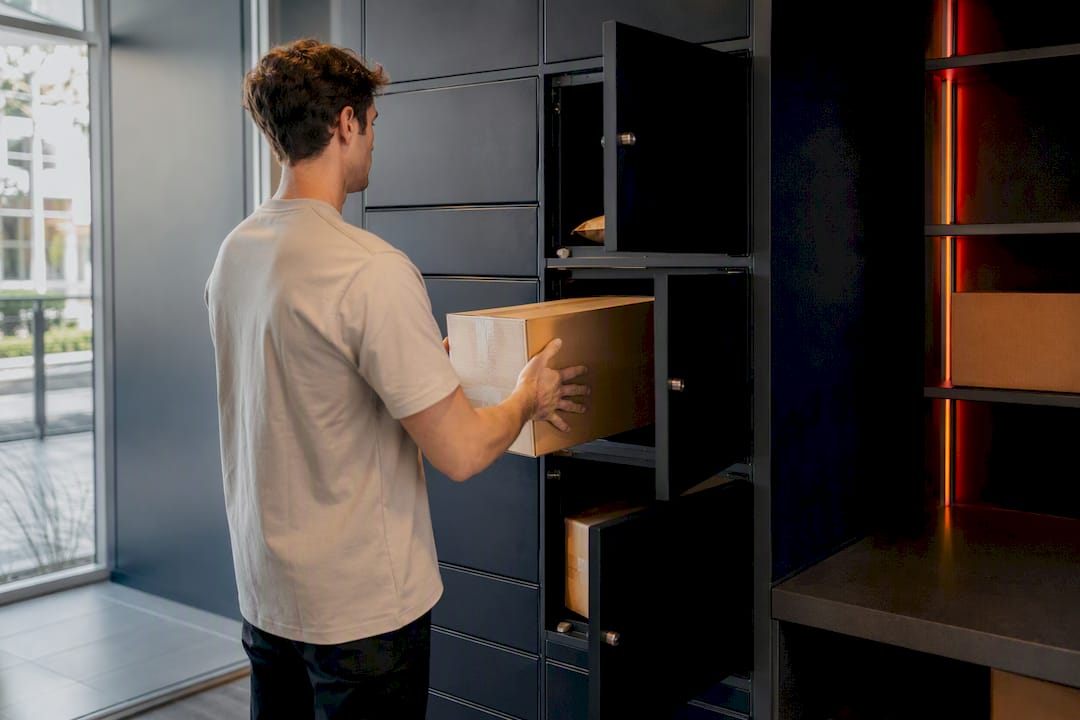
Secure, frictionless package management paired with a smooth digital move-in experience is the amenity combination that most reliably keeps residents from moving out. Maintenance quality still ranks as the single strongest driver of resident satisfaction, but package handling and move-in friction are the two operational pain points that surface daily, week after week, in ways that quietly erode loyalty.
The case for prioritizing this combination:
- Daily touchpoint frequency: Residents interact with package systems far more often than with a gym or a clubhouse.
- Measurable adoption: Locker and package room usage can be tracked automatically, unlike vague “amenity satisfaction.”
- Low disruption to base rent: Package management upgrades don’t require raising rent to justify the cost.
- Revenue potential: A well-run package program can become an ancillary income line, not just a cost center.
Postal Solutions has spent more than 11 years selling, installing, and operating package systems for multifamily and student housing communities, which is exactly the kind of daily-friction problem this article is built around.
Key Takeaways
Secure package management combined with a smooth move-in experience produces the most measurable and repeatable retention lift among multifamily amenities.
| Point | Details |
|---|---|
| Package friction drives move-outs | Residents receive packages weekly in notable quantities, making package handling a frequent satisfaction touchpoint. |
| Maintenance still ranks highest | Maintenance excellence remains the top overall driver of resident satisfaction per 2026 data. |
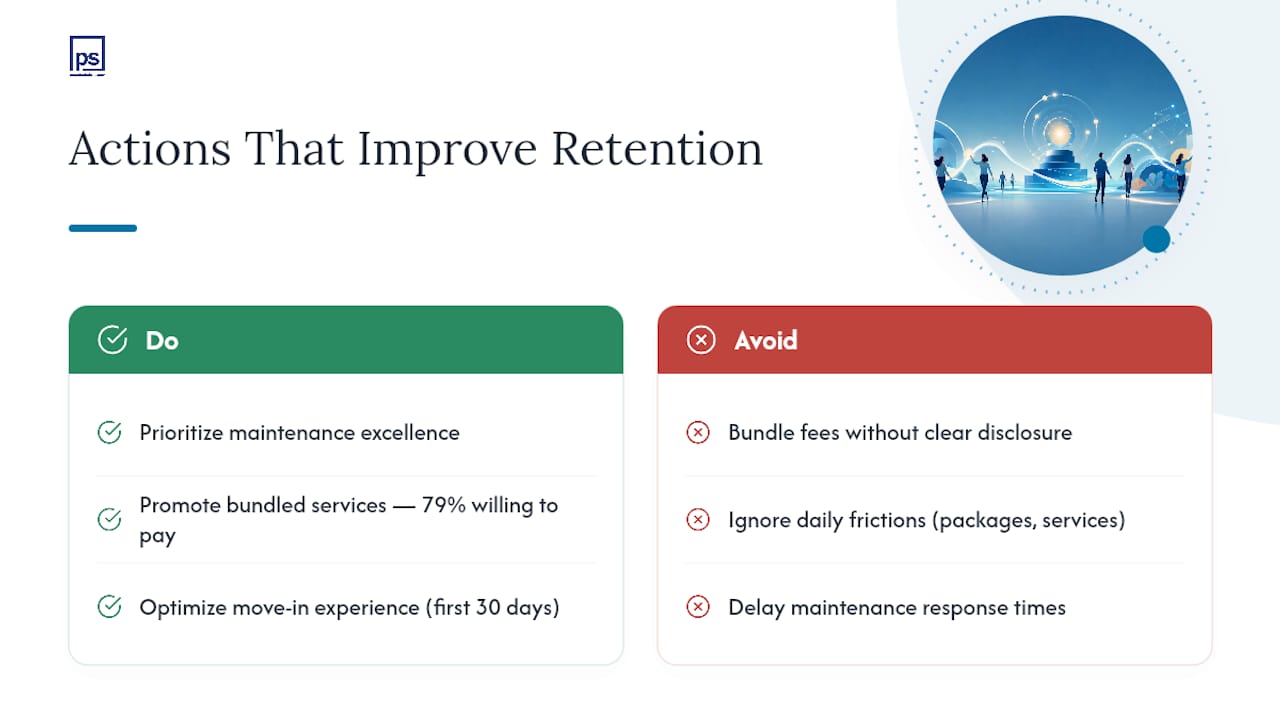
| Bundled services have demand | 79% of residents say they would pay for integrated services like insurance or bulk internet. |
| Pilot before scaling | Test any new amenity on one building or cohort and price it transparently from the start. |
| Postal Solutions offers proven experience | Postal Solutions has spent more than 11 years selling, installing, and operating package systems for multifamily and student housing communities. |
Table of Contents
- What Research Says About Amenities and Resident Retention
- Which Amenities Actually Move Retention Numbers
- How Do You Prioritize the Right Amenity to Add?
- Rolling Out Secure Package Management Step by Step
- Which Metrics Prove an Amenity Is Working?
- Why We Recommend Package Management First
- How Postal Solutions Supports Your Package Management Rollout
- Sources
- FAQ
What Research Says About Amenities and Resident Retention
Renewal decisions aren’t driven by the flashiest amenity. They’re driven by whether daily life at the property feels easy or aggravating. Data from AppFolio’s 2026 renter preferences report confirms that maintenance excellence is the top predictor of resident satisfaction, ahead of any single physical amenity.
79% of residents say they’d pay their property manager for additional integrated services, according to AppFolio’s 2026 data. That includes things like renters insurance, group internet plans, and package handling folded directly into the resident experience.
That number matters because it flips the usual amenity conversation. Residents aren’t just tolerating extra services. Many actively want them bundled in, which opens the door to amenity programs that pay for themselves.
The mechanics behind this are straightforward. Small daily frictions compound. A resident who has to track down a missing package once might shrug it off. A resident who deals with package chaos every week, on top of a slow-to-respond maintenance team, starts shopping around before their lease is even up. Move-in satisfaction correlates strongly with renewal likelihood, which means the first 30 days set the tone for the next 12 months.
One caution worth building into any amenity strategy from day one: optional paid services need clear, itemized disclosure in the lease or a separate service agreement, since bundling fees without transparency invites both resident complaints and regulatory scrutiny in many states.
Which Amenities Actually Move Retention Numbers
Not every amenity earns its square footage. The ones that consistently show up in renewal data share a common trait: they solve a problem residents deal with regularly, not occasionally.
- Secure package management (lockers, monitored package rooms, or a hybrid of both) addresses a need that hits every resident, every week.
- Maintenance excellence with rapid-response systems remains the top overall satisfaction driver and should anchor any retention budget.
- Bulk or group-rate internet solves a recurring cost and hassle point; convenience and connectivity amenities reliably support both rent and retention better than novelty features do.
- Renters insurance and financial tools reduce a resident’s mental overhead and can be built into onboarding at little operational cost.
- Food partnerships and meal programs create habit-forming touchpoints, especially in student housing and urban mid-rise properties.
- Paid fitness and on-demand wellness classes convert existing gym space into a revenue line instead of a pure amenity cost.
- Flexible co-working or private workspace appeals to remote workers willing to pay a premium for reliable, quiet space.
Each category fits a different budget model. Maintenance and package management typically belong in the base rent structure, since they’re baseline expectations now, not luxuries. Fitness classes, cabana rentals, and co-working memberships work better as optional add-ons that let residents self-select into paid convenience.
Operators who convert amenities into voluntary, priced experiences tend to see higher actual usage than operators who bundle the same amenity into rent for free. Pricing forces quality, and quality drives repeat use.
That dynamic is already reshaping how properties think about pools and fitness centers, turning them into amenity profit centers rather than sunk costs. A pool deck that once just sat there can generate steady weekend income through cabana rentals. A fitness studio can host paid instructor-led classes instead of unused equipment. Luxer One remains one of the most widely deployed electronic locker platforms in the multifamily and student housing space.
How Do You Prioritize the Right Amenity to Add?
Start with demand signals before you start with vendor brochures. The fastest way to waste capital is to install an amenity residents didn’t ask for while ignoring the one they complain about weekly.
Run through this checklist at the property or portfolio level:
- Survey current residents directly about daily friction points, not hypothetical wish-list amenities.
- Count daily package volume and compare it against current staff hours spent sorting and notifying residents.
- Audit available physical space for lockers, a package room, or a converted amenity area.
- Assess staffing model constraints, since a lean office team can’t absorb another manual process.
- Benchmark competitor amenities in your submarket to see what’s now a baseline expectation versus a genuine differentiator.
- Estimate capital cost against a fee or subscription revenue model, if the amenity can be monetized.
- Check regulatory and lease-disclosure requirements for any fee tied to an optional service before rollout.
For a rough return-on-investment estimate, gather five numbers: installation or subscription cost, staff-hours saved per week, expected ancillary revenue per resident who opts in, projected adoption rate in the first quarter, and the renewal-rate lift you’d need to justify the spend.
Pro Tip: Pilot any new amenity on a single building or resident cohort first. Price it transparently from day one rather than discounting to drive early adoption, since residents who pay a fair price from the start tend to value the amenity more and complain less about it later.
Rolling Out Secure Package Management Step by Step
A hybrid model, meaning a package room sized to your volume plus a locker bank for overflow and after-hours pickup, gets most mid-size properties to measurable retention lift fastest. The right sizing decision depends heavily on unit count and delivery volume, since the average resident now receives three to four packages weekly, a volume most legacy systems were never built to handle.
- Assess current package volume and staff hours spent on manual sorting and resident notification.
- Choose your model: secure room, locker bank, or hybrid, based on space and volume.
- Define carrier access and intake rules, including how packages get logged and labeled.
- Select software and hardware compatible with your existing property management system.
- Train staff on daily organizing routines and weekly audit procedures.
- Run a pilot on one building or floor before a portfolio-wide rollout.
- Iterate on communication and rules based on real resident feedback from the pilot.
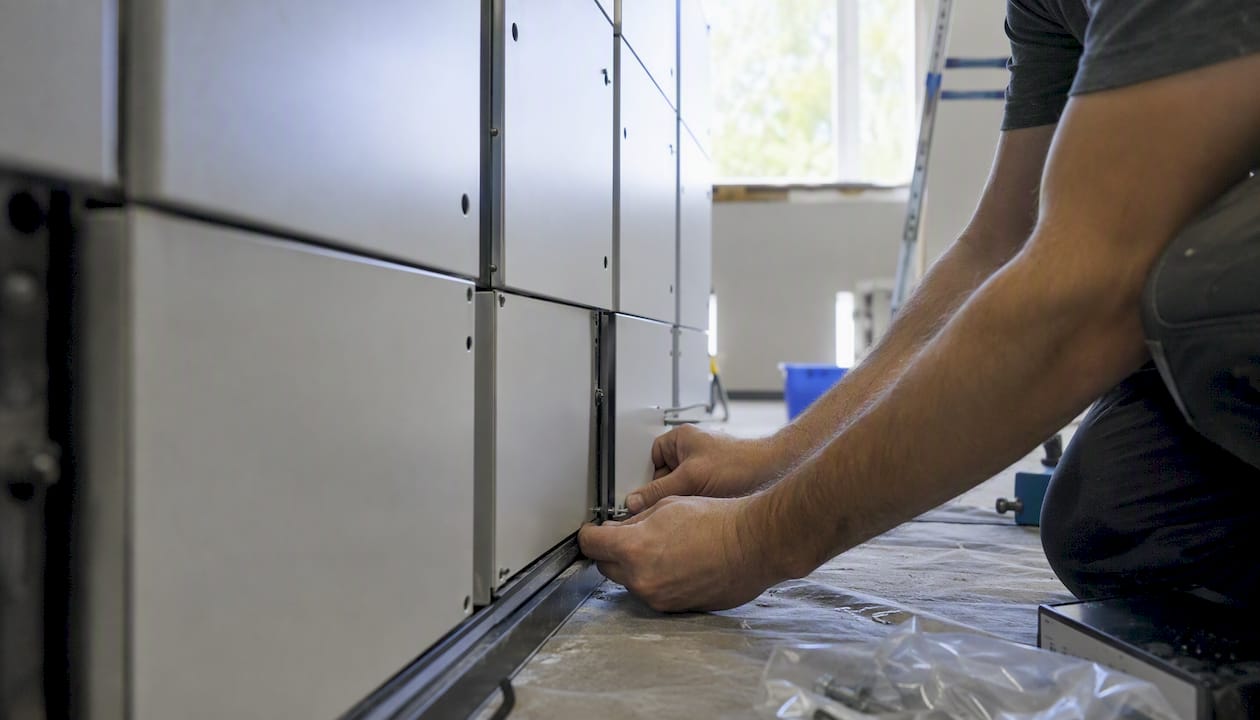
Postal Solutions has operated package room outsourcing and Luxer One installations for more than a decade, giving it direct visibility into which intake rules cut resident complaints fastest and which staffing models actually hold up under peak delivery volume.
Most pilots run four to twelve weeks from initial assessment through go-live, depending on whether the property needs new hardware installed or is simply restructuring an existing space.
Which Metrics Prove an Amenity Is Working?
Track adoption rate, resident satisfaction scores, renewal-rate lift, ancillary revenue, staff-hours saved, and NOI contribution. Skipping any one of these leaves a blind spot in whether the amenity actually earned its budget line.
- Adoption rate: Percentage of eligible residents using the amenity monthly; a healthy target for paid amenities is 20 to 40% adoption within the first three months.
- Resident satisfaction or NPS: Survey quarterly to catch friction before it shows up in move-out notices.
- Renewal-rate lift: Compare pilot-cohort renewals against a historical baseline; small pilots often target a 1 to 3% lift as a realistic first signal.
- Ancillary revenue: Track monthly income against installation or subscription cost to gauge payback timeline.
- Staff-hours saved: Log hours before and after rollout to quantify labor relief.
- NOI contribution: Roll adoption, revenue, and renewal data into a single line for portfolio reporting.
Attribute renewal changes carefully. Use a control cohort or a pre-rollout baseline, and pair the numbers with direct resident feedback so you’re not crediting an amenity for a renewal trend driven by something else entirely.
Why We Recommend Package Management First
Postal Solutions built its business around one recurring headache: package chaos in multifamily and student housing. Years spent organizing package rooms and installing Luxer One systems have shown a consistent pattern. Properties that fix package friction first free up staff hours and see clearer, calmer resident communication almost immediately.
The amenity-as-revenue and move-in-first framing isn’t a trend chase. It’s a practical response to what 2026 portfolios actually need: stability, predictable costs, and resident goodwill that doesn’t depend on discounting rent. Postal Solutions’s role is straightforward. Deliver operational reliability on package handling and scale that reliability across a portfolio, one property at a time.
How Postal Solutions Supports Your Package Management Rollout
Postal Solutions gives property managers a faster path to a working package program than building one in-house from scratch. Instead of guessing at sizing or piecing together vendor quotes yourself, Postal Solutions can assess your daily package volume, recommend the right model (package room, locker bank, or hybrid), and supply the Luxer One installation itself. Postal Solutions brings direct, on-the-ground experience most in-house teams simply haven’t accumulated.
Beyond the hardware, Postal Solutions can also operate the package room outsourcing day to day: organizing incoming packages, labeling units, and running weekly audits so your leasing staff isn’t buried in parcel management. If you’re ready to see what a properly sized system would cost and deliver for your property, request a site assessment through Postal Solutions.
Sources
- How to reduce tenant turnover | Second Nature
- Multifamily amenities shift to profit center models | HousingWire
- Renter preferences report 2026 | AppFolio
- Survey: What multifamily amenities actually move the NOI needle? | Insights By Blueprint
FAQ
What is the amenity that boosts retention the most?
Secure, well-organized package management paired with a smooth move-in experience is the amenity combination that most consistently improves resident renewal rates, since residents interact with it multiple times per week.
Does maintenance response time affect resident retention more than amenities?
Yes. Maintenance excellence is currently the single strongest driver of resident satisfaction, ahead of any individual physical amenity, according to AppFolio’s 2026 data.
Can package management generate revenue instead of just cutting costs?
Package rooms and locker systems primarily save staff time and reduce complaints, but some operators layer in optional premium locker access or expedited notification services as small ancillary revenue add-ons.
How long does it take to roll out a package locker system?
Most pilots run four to twelve weeks from initial assessment to go-live, depending on whether new hardware needs installation or an existing space is being restructured.
What metrics prove an amenity investment is working?
Track adoption rate, renewal-rate lift, ancillary revenue, staff-hours saved, and NOI contribution, comparing results against a historical baseline or control cohort to isolate the amenity’s actual impact.