Multifamily Package Management: A Property Manager's Guide
Discover how effective multifamily package management can enhance efficiency and reduce costs for property managers. Transform package handling into a key...
Published
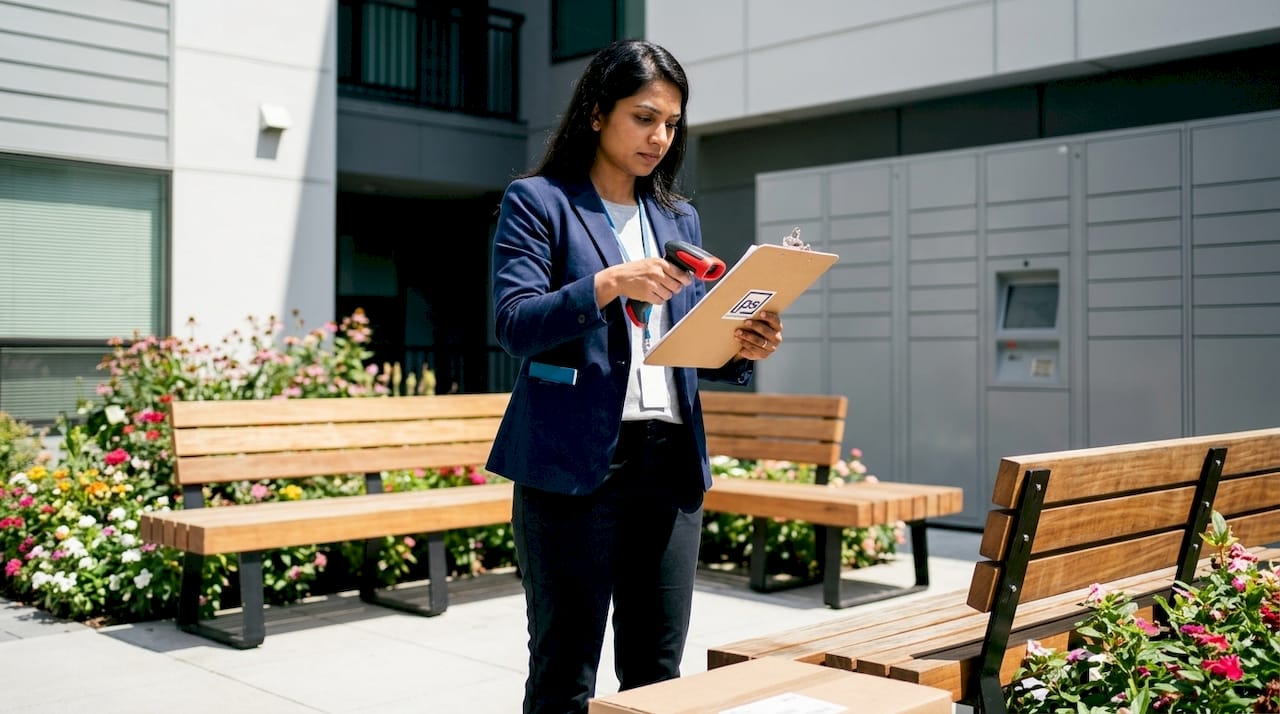
Multifamily package management is the strategic coordination of package intake, organization, storage, and resident retrieval across apartment communities. Package volume has grown 67% since 2019, and a typical 370-unit property now absorbs roughly 75 parcels per day. That volume translates directly into staff time, resident friction, and operational cost. Property managers who treat parcel handling as a secondary task pay for that choice twice: once in payroll and once in lost productivity. The right apartment package management system turns a daily liability into a measurable operational advantage.
What are the main challenges multifamily properties face in package management?
Package volume is the root cause of most operational breakdowns in multifamily housing. A 370-unit community now requires about 10 hours of staff time per week just to handle incoming parcels, with each package consuming roughly five minutes of staff attention. That is time pulled directly from leasing, maintenance coordination, and resident engagement.
The specific pain points property managers report most often include:
- Package dwell time: Parcels sitting unclaimed for days create storage bottlenecks and security risks.
- Lost and stolen packages: Manual intake systems produce no reliable audit trail, making claims difficult to resolve.
- Space limitations: Most package rooms were designed for far lower volumes than properties now receive.
- Staff burden: Properties without automation spend over six hours daily managing approximately 75 packages, a figure that crowds out higher-value work.
- Resident dissatisfaction: Delayed pickup notifications and disorganized rooms generate complaints and affect lease renewal decisions.
Resident expectations have also shifted. Renters now treat fast, self-service package access as a baseline amenity, not a bonus. Properties that cannot meet that expectation face a real competitive disadvantage at renewal time. Manual and under-scaled systems cannot close that gap regardless of how well-intentioned the staff is.
What are the primary package management solutions used in multifamily housing?
Four main models define the current solution landscape for parcel delivery in rentals. Each carries distinct trade-offs in cost, space, scalability, and resident experience.
| Solution type | Best fit | Key limitation |
|---|---|---|
| Smart locker systems | Low-to-mid volume, predictable parcel sizes | Fixed compartments overflow during surges |
| AI-powered package rooms | High volume, mixed parcel sizes | Higher upfront cost, requires reliable power and connectivity |
| Managed package room service | Any volume, staffing-constrained properties | Requires daily visit coordination |
| Hybrid locker plus managed room | Peak-season or high-density properties | Requires space for both systems |
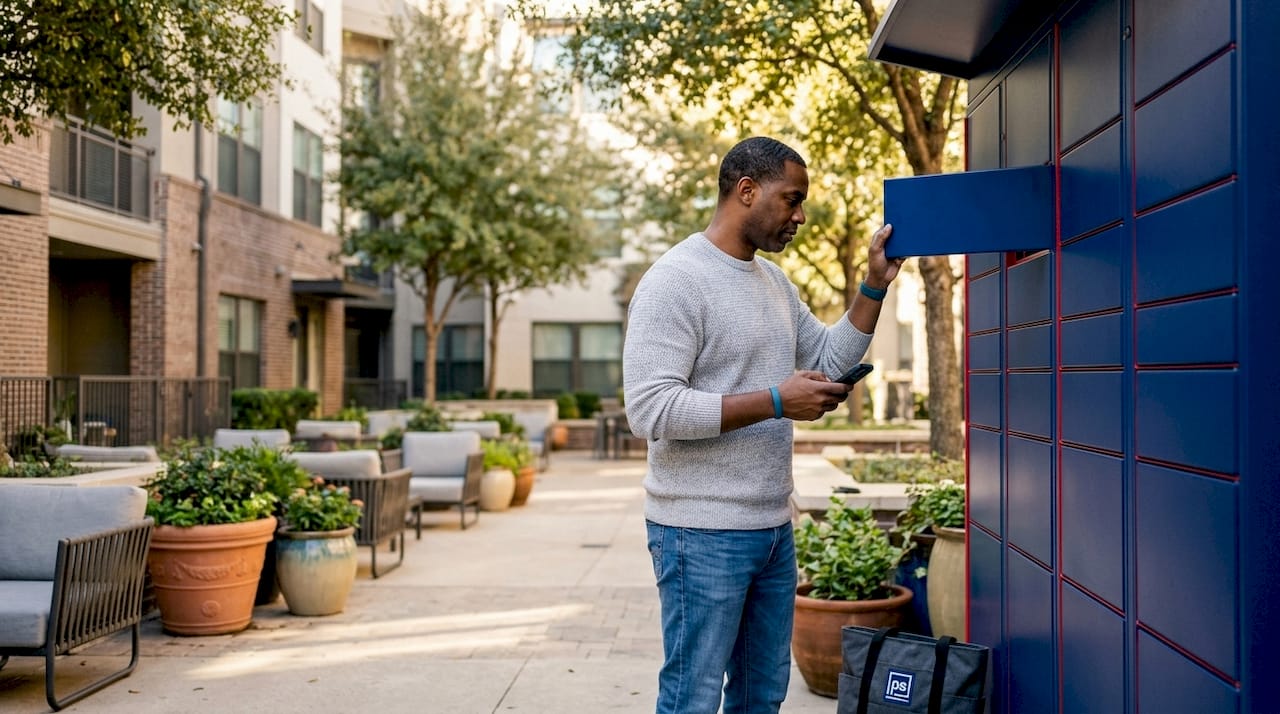
Smart locker systems provide secure, self-service access and work well for predictable parcel volumes. The core problem is dimensional rigidity. Locker systems struggle when oversized packages arrive or when volume surges during peak seasons, because fixed compartments cannot expand. High expansion costs make scaling difficult after installation.
AI-powered smart package rooms use open shelving and computer vision to manage storage far more efficiently. One documented example reduced package pickup time from 30 minutes to seconds and cut dedicated package staff from 12 to 2 at a single property. That kind of efficiency gain is real, but it depends on consistent power, network connectivity, and proper resident onboarding.
Managed package room services bring an organized, daily presence to the package room without requiring the property to hire dedicated staff. Postal Solutions offers this model, sending a package manager to the property daily to organize parcels, mark unit numbers on boxes, and complete weekly audits. This approach works across conventional multifamily, student housing, and senior housing communities.
Pro Tip: Never choose a locker system based on current volume alone. Size for the volume you expect in three years, not the volume you have today.
How to match package management solutions with property characteristics
Selecting the right solution starts with a baseline audit. The industry standard is 20–25 packages daily per 100 units, and properties that skip this audit routinely under-provision their locker capacity. Annual audits are the minimum standard; quarterly reviews are better for properties with growing occupancy.
Use this framework to match solutions to property type:
- Audit current volume. Count daily parcels per 100 units for at least 30 days. Include peak periods such as the holiday season and back-to-school move-in weeks.
- Assess available space. Locker systems require permanent square footage. Managed package rooms need organized shelving and clear zone layouts. Confirm what your floor plan can support before committing to hardware.
- Evaluate staffing capacity. If your leasing team currently handles packages, calculate the actual hours lost per week. Convert that to a payroll cost and compare it against the cost of a managed service.
- Consider resident demographics. Student housing communities and urban renters tend to receive higher parcel volumes and expect faster, self-service access. Senior housing residents may prefer a staffed interaction over a locker interface.
- Review carrier compliance. Any system fails if carriers do not use it correctly. Carrier non-compliance is one of the leading causes of package system breakdowns. Build carrier communication protocols into your selection criteria, not as an afterthought.
Pro Tip: Request a package room setup checklist before finalizing any solution. The physical layout of your package room determines whether even the best system performs as expected.
What operational best practices improve package management efficiency?
The best hardware fails without disciplined workflows. Operational consistency separates properties that run clean package rooms from those that manage daily chaos.
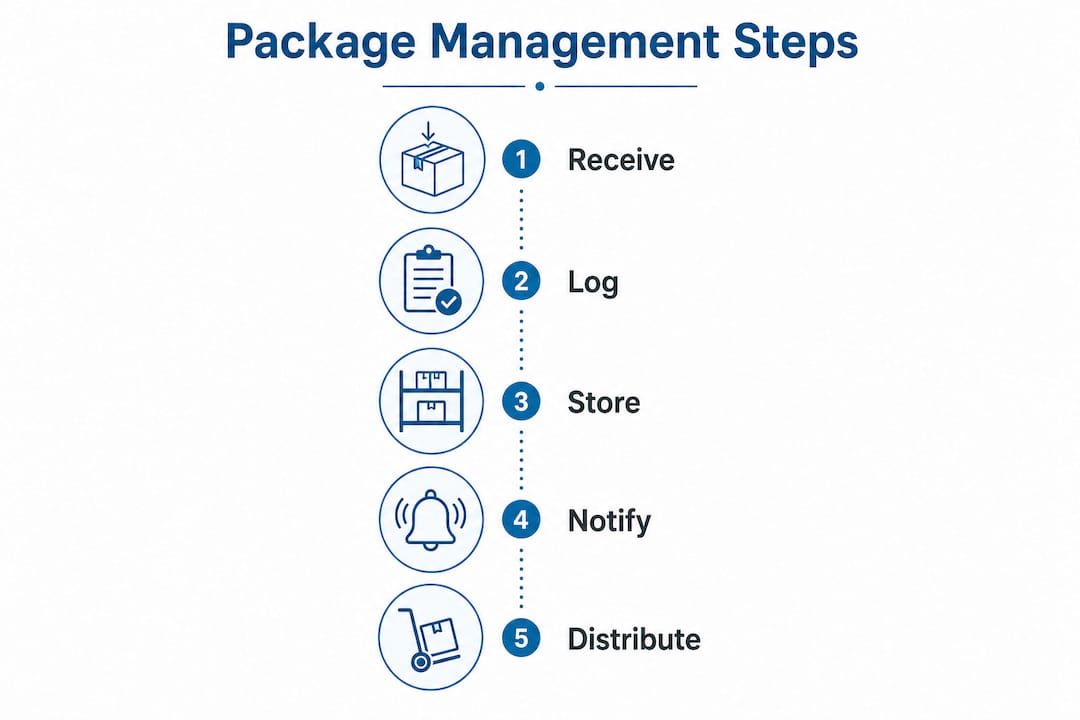
Structured intake and logging is the foundation. Every parcel that enters the building should be scanned, logged, and assigned to a unit number before it touches a shelf. Handwriting the unit number directly on the box is a simple but effective practice that Postal Solutions uses during daily managed visits. It eliminates the most common source of resident confusion at pickup.
Zone-based shelving reduces dwell time and speeds up resident retrieval. Organizing package rooms by category, such as standard parcels, oversized items, flat envelopes, refrigerated deliveries, and dry cleaning, prevents the visual chaos that slows residents down and generates staff calls. Clear labeling by zone and unit range makes self-service pickup faster and reduces the number of residents who need staff assistance.
Key workflow practices that reduce friction:
- Send automated pickup notifications within minutes of package intake, not hours.
- Set a clear dwell-time policy (typically 5–7 days) and communicate it to residents at move-in.
- Conduct weekly audits to identify unclaimed packages and follow up with residents directly.
- Maintain an overflow protocol for peak seasons. Hybrid systems that combine lockers with a managed overflow room handle volume surges without system failure.
- Track pickup rates and average dwell time monthly to identify bottlenecks before they become complaints.
Data tracking is not optional for high-volume properties. Without it, you cannot identify whether a problem is a carrier compliance issue, a notification failure, or a resident behavior pattern. Each requires a different fix.
How can multifamily properties use technology to future-proof package operations?
Software integration is the clearest path to reducing manual errors and improving accountability. Platforms like Yardi and Entrata connect package tracking directly to resident records, automate notifications, and generate audit trails that protect the property in the event of a dispute. Properties that rely on spreadsheets or paper logs cannot produce that level of accountability.
Automated notifications reduce dwell time by prompting residents to act. A resident who receives a text within five minutes of package arrival picks up faster than one who checks a bulletin board. That behavioral difference compounds across hundreds of packages per week and meaningfully reduces storage pressure.
Analytics give property managers the ability to anticipate volume surges rather than react to them. Tracking daily parcel counts by month reveals seasonal patterns that allow you to pre-position overflow storage, adjust staffing, and communicate proactively with residents before the holiday rush arrives.
Pro Tip: Use your package management software’s reporting tools to calculate cost per package delivered. That single metric makes the ROI case for automation clearer than any vendor presentation.
Carrier accountability also depends on technology. Standardized communication protocols, driver instructions posted at building entrances, and digital confirmation of delivery placement all reduce the non-compliance that causes packages to end up in wrong locations or outside the system entirely.
Key Takeaways
Effective multifamily package management requires matching the right solution to your property’s volume, space, staffing, and resident demographics, then maintaining it with disciplined daily workflows.
| Point | Details |
|---|---|
| Volume drives every decision | Audit daily parcels per 100 units before selecting any hardware or service. |
| Locker systems have hard limits | Fixed compartments overflow during surges; plan for overflow capacity from day one. |
| Managed services reduce double costs | Properties paying staff to handle packages pay in both payroll and lost productivity. |
| Software integration is non-negotiable | Yardi and Entrata connections automate notifications and create audit trails that protect the property. |
| Carrier compliance makes or breaks systems | Standardized driver protocols are as important as the hardware itself. |
What most property managers get wrong about package management
After nearly a decade of working with multifamily communities across the country, the most consistent mistake I see is treating package management as a hardware problem. A property installs lockers, considers the issue resolved, and then discovers six months later that the lockers are full by noon, carriers are leaving packages in the lobby, and residents are filing complaints.
The real problem is that package management is a continuous operational system, not a one-time installation. Hardware is only as effective as the workflows, carrier protocols, and daily organization practices that support it. Properties that skip the operational layer consistently underperform, regardless of how much they spent on equipment.
The second mistake is underestimating volume. Operators routinely fail to budget for the actual parcel volume their community receives, which leads to under-provisioned systems and staff absorbing the overflow. The fix is straightforward: audit before you buy, and revisit that audit every year.
The properties that run the cleanest package operations share one trait. They treat parcel management as a defined operational function with assigned accountability, daily processes, and measurable outcomes. That mindset, more than any specific product, is what separates properties that manage packages well from those that manage them reactively.
— Postal Solutions
Postal Solutions manages package operations so your team does not have to
Postal Solutions has managed apartment package management for multifamily communities since 2016, working across conventional apartments, student housing, and senior living properties nationwide. As the largest Luxer One sales agency in the country, with over 1,200 installations across more than 40% of U.S. states, Postal Solutions sells and installs Luxer One package room and locker systems tailored to each property’s volume and layout. For properties that need ongoing operational support, Postal Solutions offers daily package room management, with a package manager visiting six days per week to organize parcels, mark unit numbers, and complete weekly audits. If you want to see how managed package room visits work in practice, the details are worth reviewing before your next lease-up season.
FAQ
What is multifamily package management?
Multifamily package management is the organized system for receiving, logging, storing, and returning packages to residents in apartment communities. It includes hardware such as lockers or shelving, software for tracking and notifications, and operational workflows for daily intake and pickup.
How many packages does a typical apartment community receive daily?
The industry baseline is 20–25 packages per 100 units per day. A 370-unit community typically receives around 75 parcels daily, which requires structured systems to avoid staff overload.
What is the difference between smart lockers and a managed package room?
Smart lockers provide automated, self-service access through fixed compartments, while a managed package room uses open shelving organized by a dedicated package manager. Lockers work well for predictable volumes; managed rooms handle larger and more variable parcel sizes more effectively.
How does package management software integrate with property management platforms?
Platforms like Yardi and Entrata connect directly with package tracking systems to automate resident notifications, log delivery records, and generate audit trails. This integration reduces manual data entry and protects the property in the event of a lost-package dispute.
Why do package management systems fail at multifamily properties?
The two most common causes are carrier non-compliance and under-provisioned capacity. Carriers who bypass the designated system and staff who absorb overflow without a formal protocol both undermine even well-designed systems. Annual volume audits and standardized carrier communication protocols address both issues directly.
Recommended
- Apartment Package Management Services | Multifamily Package Room Operations | Postal Solutions
- Managed Package Room Visits: Top Strategies for Property Managers | Postal Solutions
- How to Manage High Volume Package Deliveries in Multifamily Housing | Postal Solutions
- Package Room Setup Checklist for Multifamily Properties | Postal Solutions