30/60/90 Carrier Compliance Plan for Apartment Property Managers
30/60/90 Carrier Compliance Plan for Apartment Property Managers Carrier compliance for apartment deliveries comes down to five things working together: a single designated intake point, a posted pictorial standard operating procedure, mand
Published
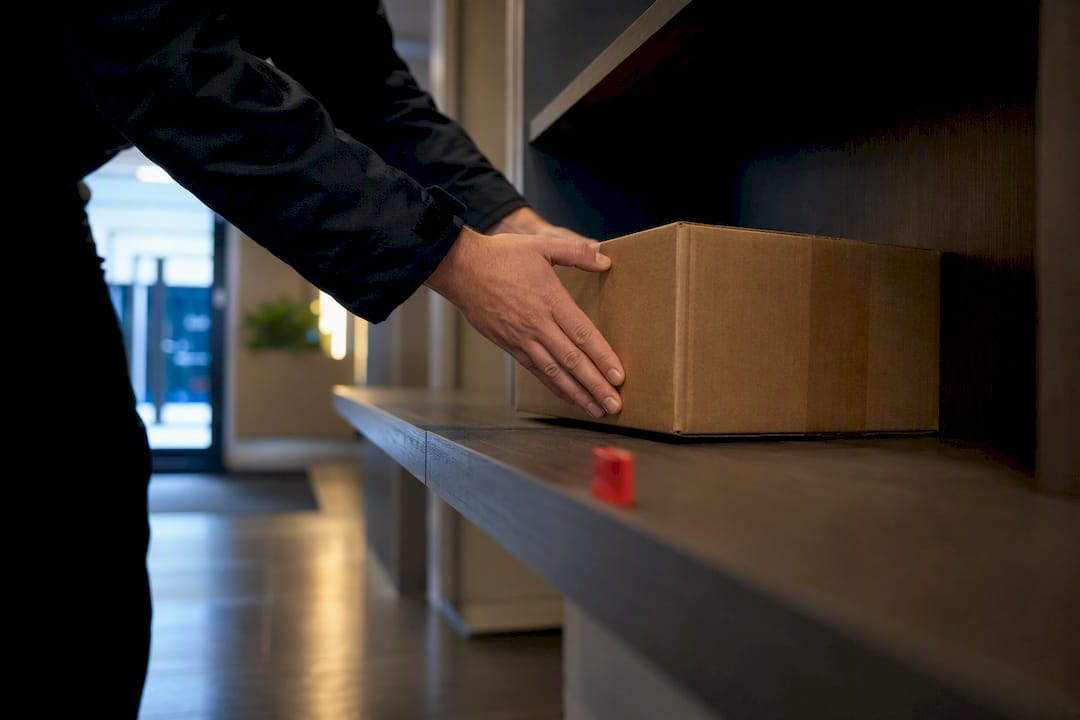
Carrier compliance for apartment deliveries comes down to five things working together: a single designated intake point, a posted pictorial standard operating procedure, mandatory scanning at drop off, automatic resident notification, and a weekly audit that catches breakdowns before they become patterns. Properties that put all five in place typically see fewer missed scans, faster resident pickups, and less staff time lost to package disputes. With an estimated 58 million packages stolen in the U.S. in 2024, the stakes for getting intake right have never been higher.
TL;DR:
- Properties should ensure carriers follow a strict SOP, including staged areas, scan steps, and escalation procedures, to prevent missed scans and incomplete audits.
- A hybrid intake system combining lockers and a package room is ideal for properties over 150 units, with capacity set to at least one-third of daily parcel volume.
- Weekly audits measuring dwell time, complaint rates, and missing scans are essential to catch compliance breakdowns early; dwell times should stay under 48 hours.
- Proper signage, visual SOP postings, and accountability measures like driver QR codes reduce errors caused by route confusion or unfamiliar drivers.
- A structured 30/60/90 plan, combined with a dedicated manager or managed services, ensures consistent compliance, regular audits, and effective carrier relationships.
Table of Contents
- Intake Systems: Smart Lockers, Package Rooms, and Hybrid Models
- What Causes Carrier Compliance Failures at Intake?
- Building Carrier SOPs That Actually Get Followed
- Auditing and Measuring Carrier Compliance
- Handling Oversized, Perishable, and ADA Deliveries
- The 30/60/90 Plan for Carrier Compliance
- How Postal Solutions Supports a Managed Compliance Program
- Regulatory Standards Around Carrier Compliance
- Technology Integration Challenges Between Carriers and Property Systems
- Data Privacy and Security in Carrier Compliance Systems
- Collaboration Between Carriers and Apartment Management
- What Successful Compliance Programs Look Like in Practice
- Operator Perspective: Carrier Compliance as a Portfolio Advantage
- Get Help Managing Carrier Compliance and Package Rooms
- Sources
- FAQ
Intake Systems: Smart Lockers, Package Rooms, and Hybrid Models
Every apartment community lands on one of three intake designs, and the wrong choice creates compliance problems no amount of driver training will fix.
Smart lockers are bank-of-compartments systems where carriers scan a barcode, deposit a parcel, and the system texts or emails the resident a pickup code. They shine on security and audit trails but struggle with oversized furniture boxes, multi-parcel orders, and true 24/7 volume once a locker bank fills up.
Package rooms are staffed or managed spaces where drivers stage deliveries on shelving, sorted by unit. They handle volume and irregular shapes far better than lockers, but they depend entirely on someone organizing them daily. Skip that step for a week and a package room becomes a pile.
Hybrid models pair a locker bank for standard parcels with an adjoining room for overflow, oversized items, and perishables. Most portfolios researching this problem eventually land here, because locker capacity limits mean many properties need overflow space regardless of locker count.
A rough sizing rule: locker count should cover at least a third of daily parcel volume as a floor, not a ceiling, with room or overflow capacity built in for peaks. Use this quick match to pick a starting model:
- Under 150 units, moderate volume: a single locker bank often suffices, provided overflow shelving exists nearby.
- 150 to 400 units: hybrid locker plus package room, sized to daily parcel counts rather than unit counts alone.
- 400+ units or student housing with move-in surges: managed package room with locker supplement, plus a documented surge plan.
- Senior housing or properties with heavy ADA traffic: package room prioritized over locker-only, since pathway and reach clearances matter more than automation.
Comparing lockers against traditional package rooms side by side helps clarify which tradeoffs matter most for a specific property profile.
What Causes Carrier Compliance Failures at Intake?
Carrier non-compliance is widely cited as the leading cause of package system breakdowns across multifamily properties, and it rarely comes from bad intent. It comes from time pressure, unfamiliar routes, and unclear instructions.
Drivers making 200-plus stops a day default to whatever gets them back on the road fastest. That produces a predictable set of failure modes:
- Skipped scans: the driver drops a parcel without scanning it into the locker or logging system, breaking the audit trail entirely.
- Wrong staging: boxes get left at the front door, in a stairwell, or stacked outside a locker bank that is already full.
- Route substitutions: a regular driver who knows the property’s process gets swapped for someone unfamiliar with it, and compliance drops immediately.
- Signage confusion: multiple entrances or unclear instructions send drivers to the wrong building or unit cluster.
- Bypassing the system: frustrated drivers leave packages with a leasing office or a resident directly, sidestepping the locker or room altogether.
Each behavior breaks something specific. A skipped scan means the resident notification never fires, so the package sits unclaimed while the resident assumes it never arrived. Wrong staging turns into a liability question the moment a parcel goes missing. And once one carrier learns bypassing the system is easier than following it, others follow. Property teams end up fielding complaint calls, chasing tracking numbers, and re-training front desk staff on disputes that a scan requirement would have prevented.
Building Carrier SOPs That Actually Get Followed
A posted standard operating procedure only works if it is visual, short, and placed where drivers actually look. Posting a pictorial SOP in multiple locations at the delivery entrance, the intake point, and inside the package area cuts down on missed scans and lobby pileups more effectively than any written manual.
An effective SOP covers four things, in this order:
- Where to stage: a marked zone, clearly separated from resident traffic, with a diagram rather than a paragraph.
- Scan steps: exactly which barcode to scan, in what sequence, and what the system confirms on success.
- Exceptions: oversized item handling, perishable placement, and what to do when a locker bank is full.
- Who to contact: a phone number or QR code linking to a short help page when something does not match the SOP.
This structure lines up with USPS guidance on intake procedures, which recommends defining staging, scan steps, and oversized handling as baseline requirements, not optional add ons.
Driver QR or PIN codes, where the intake system supports them, add a layer of accountability. Every access gets logged against a driver identifier, which turns “someone left this in the wrong place” into “Carrier X’s driver on Tuesday afternoon.” Pair that with a 60 to 90 second onboarding script, either read aloud during a first delivery or sent as a short video link, and most carriers pick up the routine within a week.
Pro Tip: Laminate the SOP and mount it at eye level next to the scanner, not above it. Drivers glance down at the device, not up at a wall.
When a driver bypasses the process anyway, escalation should follow a fixed sequence: document the incident with a timestamp and photo, notify the carrier’s local station or account manager directly rather than a general customer service line, and request a corrective note on file. Skipping straight to a complaint email without documentation rarely produces results.
Auditing and Measuring Carrier Compliance
Compliance is only real if someone measures it. Four metrics do most of the work: parcel dwell time, daily parcel counts, complaints per 100 packages, and missing-scan incidents.
Dwell time should stay under 48 hours even during peak season. Once packages sit longer than that, either resident notifications are failing or pickup friction is too high. Parcel counts establish a baseline so a sudden spike (move-in week, holiday surge) can be planned for instead of discovered. Complaints per 100 packages is the cleanest resident-facing signal. Missing-scan incidents point straight back to carrier compliance, since a properly followed SOP should produce a scan for every parcel that enters the building.
A weekly audit should check:
- Every logged parcel against its physical location (no phantom scans, no unscanned physical items).
- Dwell time outliers, flagged for follow-up with the resident or carrier.
- Locker or room capacity against current volume trends.
- Signage condition and SOP visibility at the intake point.
Weekly audits paired with daily organization visits catch overflow and compliance drift before they cascade into a backlog. Given that roughly 58 million packages were stolen nationally in a single year, that audit trail is not a bureaucratic exercise. It is the evidence property teams need if a resident disputes a “delivered” scan or a claim goes to a carrier’s loss department.
Monthly reports to asset or regional managers should include dwell time trends, total parcel volume, complaint counts, and any carrier escalations opened that month. That rollup turns package operations from an anecdotal frustration into a tracked line item.
Handling Oversized, Perishable, and ADA Deliveries
Standard lockers cannot fit a mattress topper or a case of wine coolers, and every property needs a plan for what falls outside the locker’s dimensional limits.
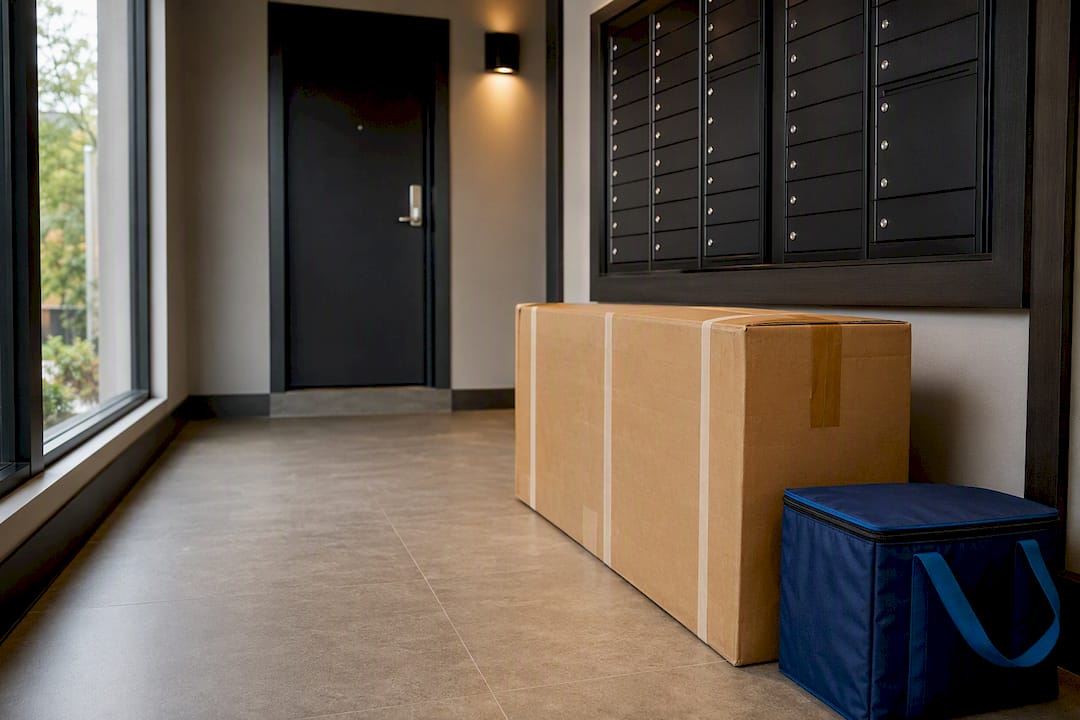
Designate a marked staging zone specifically for oversized items, separate from the standard package area, with a simple label system (unit number, date received, driver initials if using paper tags). For perishable deliveries, a policy should specify whether the property offers refrigerated locker space or requires same-day pickup notification, since food left in a warm package room for 48 hours is a liability nobody wants.
ADA compliance deserves a specific checklist rather than a general assumption that a package room is accessible:
- Pathway width to lockers and shelving meets clearance requirements.
- At least one row of lockers sits within reachable height range.
- Door hardware at the intake point operates without tight grasping or twisting.
- Lighting at the access point meets a level sufficient for residents with low vision.
Overflow planning matters just as much. Properties leaning on locker-only systems often add exterior weatherproof lockers, temporary staging in an underused utility room, or a rented pod during peak weeks like the December holidays or August move-in. A holiday surge playbook built ahead of time, with a tabletop run-through, temporary runner shifts, and a pre-written resident communication script, prevents the scramble that turns a busy week into a compliance breakdown.
The 30/60/90 Plan for Carrier Compliance
A structured rollout gets a property from inconsistent intake to a measured, audited system inside one leasing quarter.
- Days 1 to 30: Pick one designated intake point, post the pictorial SOP in three locations, install clear signage, and pilot driver QR or PIN codes with the highest-volume carrier.
- Days 31 to 60: Reach out to remaining carriers with the short training script, launch weekly audits on a fixed day, and configure resident notification triggers for every scan type.
- Days 61 to 90: Review the first full KPI cycle, adjust capacity based on real dwell time and volume data, and formalize an escalation process with each carrier’s local contact.
Accountability needs a name attached at each level. On-site staff own daily organization and the weekly audit checklist. A property manager or assistant manager owns carrier communication and escalation follow-up. Regional or asset management owns the monthly KPI review and any capital decisions about adding locker or room capacity. This phased approach mirrors how the sharpest package management rollouts sequence SOP posting before carrier training and audits, since daily organization in the first 30 days prevents overflow from undoing compliance gains before they take hold.
How Postal Solutions Supports a Managed Compliance Program
A managed service can provide daily package room organization and weekly audits for apartment and student housing communities, aligning naturally with the 30/60/90 framework above. Rather than leaving intake organization to whichever staff member has time, a dedicated visit each day keeps shelving current, unit labels legible, and audit checklists actually completed on schedule.
Companies in this sector also sell and install Luxer One package room and locker systems, supporting nationwide installation across many U.S. states.
When evaluating a managed program, ask about:
- Daily visit frequency and what the weekly audit checklist actually covers.
- How scan logs and resident notification history get reported back to the property.
- Installation timelines for a locker, package room, or combo system.
- Whether a pilot period or sample audit report is available before signing a full agreement.
Regulatory Standards Around Carrier Compliance
There is no single federal statute mandating how apartment communities must receive carrier deliveries, which surprises many property managers researching this topic. What exists instead is a patchwork of USPS-specific rules, fair housing obligations, and local building code requirements that intersect with package operations.
USPS maintains specific guidance on delivery growth management covering centralized mail receptacles, cluster box unit placement, and intake procedures for multi-unit properties. This governs mail specifically, not third-party carrier parcels, which is why USPS and carriers like UPS, FedEx, and Amazon Logistics often follow different intake expectations at the same property.
Fair housing law adds a second layer. ADA accessibility requirements apply to package rooms and locker installations the same way they apply to any common area, meaning pathway clearance, reach ranges, and door hardware are not optional design choices but compliance obligations tied to federal accessibility law.
Local fire and building codes frequently govern package room layout too, particularly around staging zones that could obstruct egress paths or fire suppression access. A package room stacked floor to ceiling during a holiday surge is not just an operational problem. It can be a code violation depending on jurisdiction.
Because no single regulatory body owns “carrier compliance” as a category, the practical compliance standard most properties adopt is a documented SOP, consistent scanning, and an audit trail that would hold up if a dispute, theft claim, or accessibility complaint ever required evidence.
Technology Integration Challenges Between Carriers and Property Systems
The biggest technical friction point in apartment deliveries is that carriers and property management systems rarely speak the same language natively. A locker system’s software logs a scan and a resident notification. A property management platform tracks unit occupancy and resident contact information. Getting those two systems to sync accurately, especially when a resident moves out mid-month, is where most technology failures start.
Stale resident data is the most common breakdown. If a locker system is not synced with the property’s move-in and move-out schedule, packages get flagged to a resident who no longer lives there, and notifications go nowhere.
Carrier-side integration adds another layer of complexity. Not every carrier’s routing software recognizes a property’s designated intake point automatically, which is part of why properties that act as carrier-agnostic intake points see better delivery success rates. Treating UPS, FedEx, and Amazon Logistics with identical staging instructions and scan requirements, rather than trying to customize per carrier, reduces the integration burden considerably.
Practical fixes include running a resident data sync at minimum weekly, testing notification delivery through actual test parcels rather than assuming the system works, and choosing package management software that offers an open API or established property management system connectors rather than a closed platform. Properties considering automated parcel locker systems should confirm integration compatibility with their existing resident database before installation, not after.
Data Privacy and Security in Carrier Compliance Systems
Every scan, notification, and access log a package system generates is resident data, and that data needs handling standards just like any other personal information a property collects.
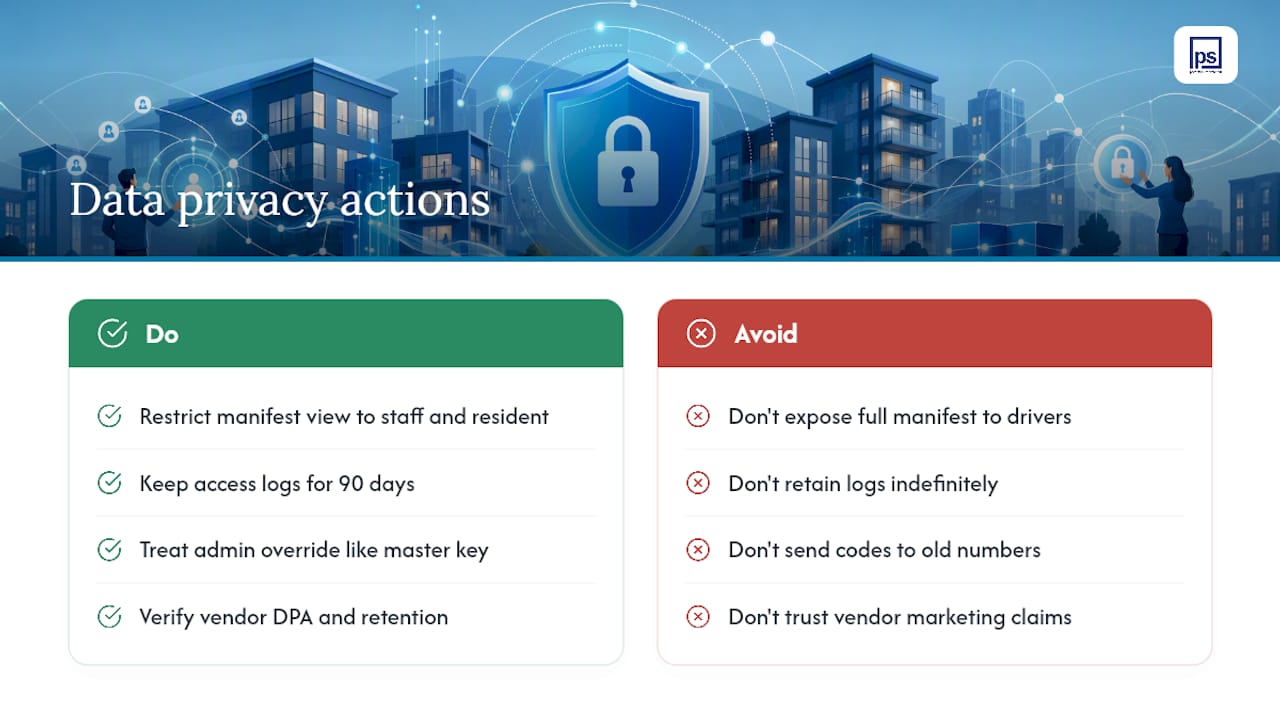
The core privacy question is access control: who can see resident names next to unit numbers, delivery timestamps, and pickup codes? Locker and package room software should restrict this view to authorized on-site staff and the specific resident, not expose a full manifest to every carrier driver who scans a package.
Driver QR or PIN code systems raise a related question. Logging driver access is valuable for accountability, but that log itself is data that needs a retention policy. Most properties are well served keeping access logs for a rolling 90 days, long enough to resolve disputes but not indefinitely accumulating driver identity data with no clear purpose.
Security extends to the physical side too. A locker system’s admin override, the master key or code that opens any compartment for maintenance, needs the same restricted access as a master apartment key. Properties that treat digital access credentials more loosely than physical keys create an unnecessary vulnerability.
For resident notifications specifically, confirm the system does not text or email a pickup code to an old resident’s number still on file, and that any third-party integration (a locker vendor’s cloud platform, for instance) carries a clear data processing agreement covering how long resident information is retained after move-out. This is a detail worth confirming directly with any vendor before installation, not assuming from marketing materials.
Collaboration Between Carriers and Apartment Management
The properties with the fewest compliance problems are not the ones with the strictest rules. They are the ones that made following the rules easier than not following them.
That starts with treating every major carrier the same way at intake, rather than negotiating separate arrangements. Consistency reduces confusion for substitute drivers and route swaps, which are the single biggest source of compliance drift when a regular driver who knows the property gets replaced.
Direct communication channels matter more than most property teams expect. A single point of contact, whether that is the property manager or a package room lead, who can reach a carrier’s local station directly cuts resolution time dramatically compared to routing every issue through a national customer service line. Building that relationship before a problem occurs, rather than during a dispute, changes how carriers respond to corrective requests.
Feedback should flow both directions. If a carrier consistently flags a signage or access problem, that is operational information worth acting on, not just a complaint to log. Some of the most durable compliance improvements have come from a driver pointing out that a locked side gate was slowing deliveries, not from a property audit.
Finally, treat the intake point itself as part of the property’s infrastructure planning, not an afterthought bolted on after leasing decisions are made. Properties that plan intake location and door counts deliberately tend to secure better long-term carrier routing behavior, because drivers learn the property is easy to work with and prioritize it accordingly.
What Successful Compliance Programs Look Like in Practice
The pattern across well-run properties is consistent even when the hardware differs. A student housing community managing move-in week surges, a senior housing property prioritizing ADA-accessible package rooms, and a 500-unit conventional multifamily building running a hybrid locker and room system all converge on the same operational habits: one intake point, a visible SOP, mandatory scanning, and a weekly audit that actually happens.
The properties that struggle share a different pattern. They add lockers to solve a volume problem without addressing the underlying SOP or audit gap, then wonder why compliance issues persist. More hardware without more discipline rarely closes the gap.
What separates the properties getting this right is not the size of their locker bank. It is whether someone visits the package area daily, whether the audit checklist gets completed on the same day every week without exception, and whether carrier issues get escalated with documentation instead of a vague complaint. Daily organization and weekly audits sound almost too simple to matter, but properties that maintain both consistently report fewer resident complaints and faster dispute resolution when a package does go missing.
Operator Perspective: Carrier Compliance as a Portfolio Advantage
Package operations get treated as a maintenance annoyance far too often, when the properties handling this well treat it as infrastructure, the same category as parking or amenity access. A resident who can reliably find their package without a leasing office intervention renews at a higher rate than one who cannot, and staff who are not fielding daily package complaints spend that time on retention and leasing instead. Carrier compliance is not a one-time fix. It is a recurring operational discipline that belongs on the same performance dashboard as occupancy and delinquency, reviewed monthly, not revisited only when something breaks.
— Postal Solutions
Get Help Managing Carrier Compliance and Package Rooms
Property teams juggling leasing, maintenance, and resident requests rarely have bandwidth left for daily package room organization on top of everything else. Managed services offer daily package room organizing, weekly audits, and unit-number labeling for conventional multifamily, student housing, and senior housing communities nationwide. For properties still deciding between hardware options, Some providers also sell and install Luxer One package room and locker systems, backed by extensive nationwide installation experience.
If a property is weighing whether to add managed daily visits, expand locker capacity, or formalize an audit process, the practical next step is requesting a sample audit report and an installation timeline estimate directly. That gives a clear picture of what a pilot program would look like before committing to a full agreement. Reach out through Postal Solutions to start that conversation.
Sources
- Package Theft in the United States — US Postal Service Office of Inspector General
- Where smart infrastructure meets logistics: Trends in property-level delivery — IT Supply Chain
FAQ
Why won’t USPS deliver to my apartment door?
USPS delivers to centralized mail receptacles or cluster box units at most multifamily properties rather than individual doors, per USPS delivery guidance, because door-to-door delivery at scale is not operationally efficient for the carrier.
How do mail carriers get into apartment buildings?
Mail carriers typically use a master key or code for the building’s centralized mailbox area, separate from resident access, while package carriers like UPS and FedEx rely on a designated intake point, buzzer access, or a gate code shared during onboarding.
How do delivery drivers get inside apartment buildings?
Most properties provide drivers with gate codes, a designated entrance, or QR/PIN-based temporary access tied to the package system, which also creates a logged record of when and where each driver entered.
Can I get my Amazon package delivered to my apartment complex?
Yes. Amazon Logistics, like UPS and FedEx, delivers to a property’s designated intake point, whether that is a smart locker bank, a managed package room, or a hybrid system, provided the property’s address and access instructions are current in the carrier’s routing system.
What is the biggest cause of carrier non-compliance at apartment properties?
Route substitutions and time pressure are the leading causes, since a driver unfamiliar with a property’s specific SOP is far more likely to skip a scan or stage a package incorrectly than a regular driver who already knows the routine.
How often should property teams audit their package system?
A weekly audit is the standard cadence, checking scan logs against physical inventory, flagging dwell time outliers, and confirming signage and SOP visibility, backed by daily organization visits to prevent overflow between audits.