Mail and Package Management for Multifamily Properties
Enhance resident satisfaction with effective mail and package management. Discover efficient systems to streamline deliveries in multifamily properties.
Published
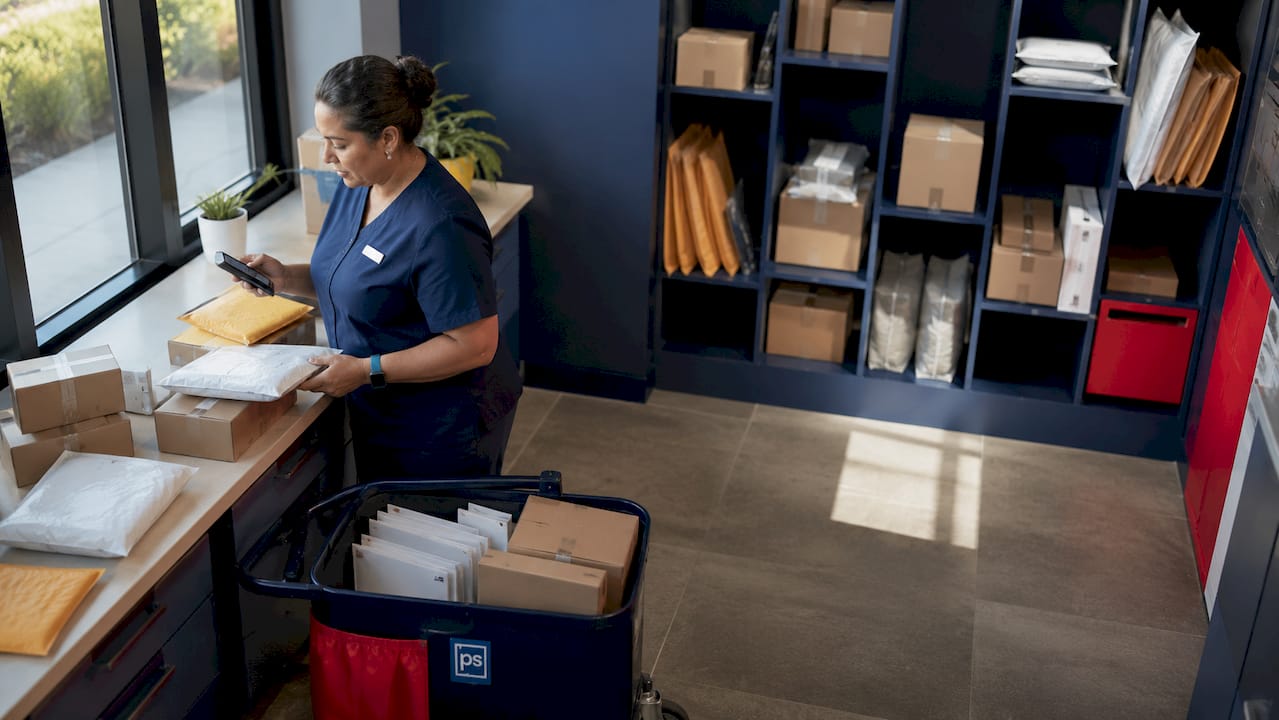
Mail and package management is the end-to-end process of receiving, sorting, tracking, and organizing all incoming deliveries within a multifamily property so that every resident gets the right parcel at the right time. For property managers and facility operators, this process sits at the center of daily operations and resident satisfaction. Manual mail routing wastes over 10 hours weekly per location, pulling leasing and facilities staff away from higher-value work. The shift toward automated parcel management systems and dedicated package room operations has made structured, repeatable workflows the new standard for apartment communities of every class.
What are the essential components of mail and package management?
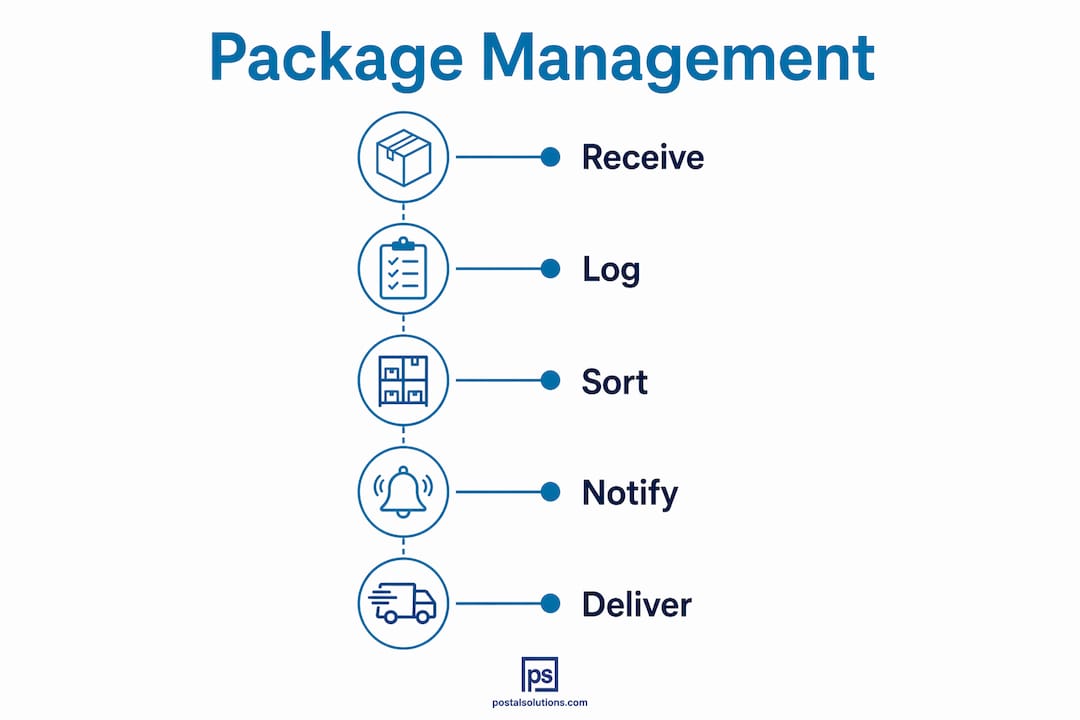
Effective parcel handling in multifamily housing depends on five core steps executed consistently every day.
- Receiving and logging every delivery. Every parcel that arrives at the property must be scanned and recorded at intake. Skipping this step creates gaps in the audit trail and makes it nearly impossible to locate a package later.
- Sorting and secure storage by unit number. Packages must be organized by apartment number, not carrier or delivery date. Marking the unit number clearly on each box, either by highlighting the address label or handwriting the number directly, is the single fastest way to cut resident pickup time.
- Automated resident notification. Once a package is logged, the resident should receive an alert immediately. Delays between receipt and notification are a leading cause of resident complaints.
- Digital tracking and delivery confirmation. Every pickup should be recorded with a timestamp and, where possible, a digital signature or photo. This creates a defensible record if a resident claims a package was never received.
- Reducing manual errors with technology. Automated scanning and recipient matching eliminate the transcription mistakes that come with handwritten logs. Fewer errors mean fewer staff hours spent resolving disputes.
Pro Tip: Label every package with the unit number before placing it in the package room. This single habit cuts the time residents spend searching for their parcels and reduces calls to the leasing office.
These five steps form the foundation of any apartment package management workflow. Properties that skip even one step tend to see the same problems repeat: lost packages, frustrated residents, and staff pulled into time-consuming searches.
How can automation and modern mailroom management systems enhance multifamily operations?
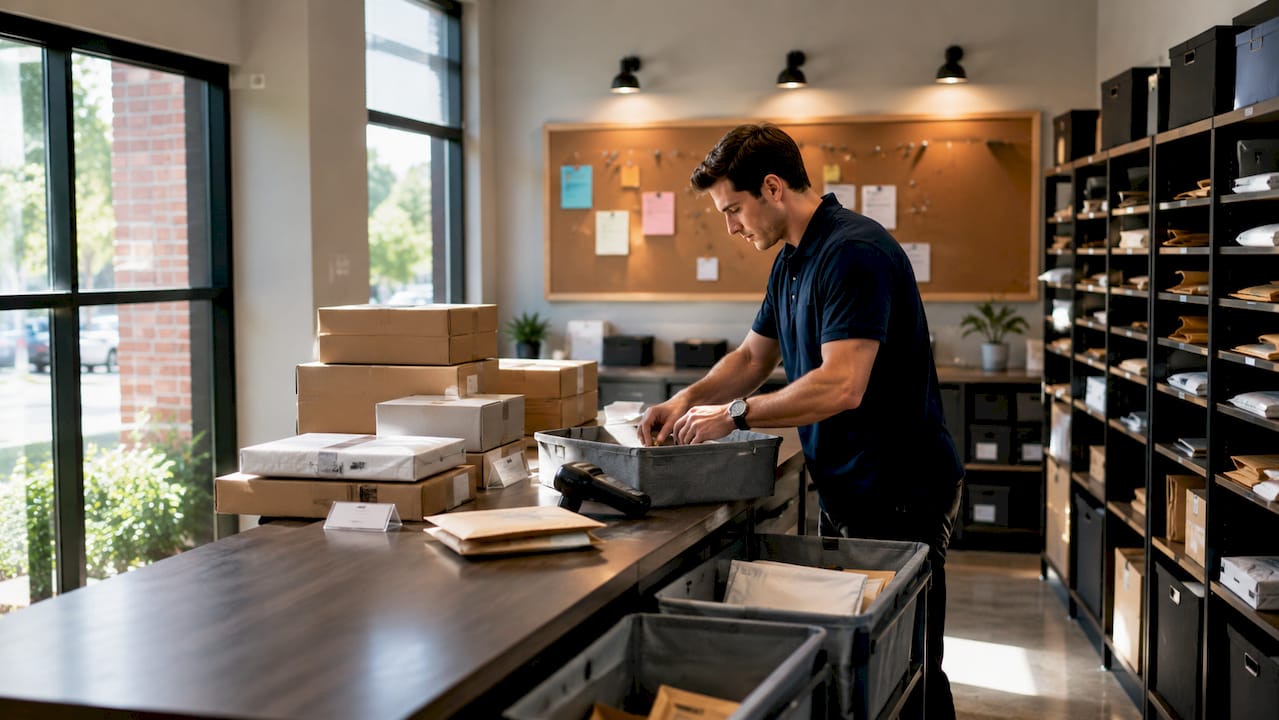
Automation replaces the most error-prone parts of parcel handling with consistent, repeatable digital processes. A modern mailroom management system performs four core functions automatically: scanning at intake, matching each delivery to the correct recipient, sending instant notifications, and capturing digital proof of delivery at pickup. Each step that was once manual becomes a logged, searchable record.
The operational benefits are concrete. Searchable delivery history and role-based access controls give property managers full visibility into what arrived, when it was picked up, and who confirmed the pickup. This transparency is especially valuable during staff transitions, audits, or resident disputes.
For properties with multiple buildings or large resident populations, the scale advantage is significant. Automated systems track parcels across multiple buildings from a single centralized dashboard. That means a property manager overseeing a 400-unit community can see the status of every package in every building without walking the property.
Here is how a well-structured automated workflow operates from intake to pickup:
- Carrier drops packages at the designated receiving area. The package room or locker system is the only accepted delivery point.
- Staff or a managed service provider scans each package. The system logs the carrier, tracking number, and timestamp automatically.
- The system matches the delivery to a resident record. Unit number and resident name are confirmed against the property directory.
- The resident receives an instant notification. Email, text, or app alert goes out within minutes of the scan.
- The resident retrieves the package. Access is granted via a locker code, key fob, or managed room entry. Pickup is confirmed digitally.
- The system flags unclaimed packages. After a set number of days, aging parcels appear on a report so staff can follow up before the room becomes congested.
Well-implemented mailroom software reduces collection delays and improves parcel location tracking across the entire property. The practical result is fewer calls to the leasing office and more time for staff to focus on resident services.
What strategies help manage high volumes of packages in multifamily housing?
Package volume in multifamily housing has grown steadily as e-commerce deliveries increase. Properties that lack a structured intake process feel the pressure first in their package rooms and then in their leasing offices. The following strategies address volume at scale.
- Standardize intake procedures. Every staff member or managed service provider who handles packages should follow the same steps in the same order. A standardized process eliminates reliance on institutional memory, so the workflow does not break down when a team member is absent or leaves the property.
- Designate a dedicated package room or locker system. Packages stored in hallways, leasing offices, or maintenance closets create security risks and confusion. A dedicated space with clear location tracking is the baseline requirement for any property handling significant daily volume.
- Implement aging parcel management. Packages that sit unclaimed for more than five to seven days consume space and create clutter. Weekly audits identify aging parcels so staff can send follow-up notices and clear the room before the next wave of deliveries arrives.
- Evaluate outsourcing vs. in-house staffing. Treating package handling as an ad hoc task burdens high-value property staff. Outsourcing daily package room organization to a managed service provider reclaims that labor and applies it to leasing, maintenance, and resident relations.
- Use reporting data to balance workload. Most package management platforms generate delivery volume reports by day and time. Use this data to schedule managed visits or staff coverage during peak delivery windows.
Pro Tip: Run a weekly audit of your package room every monday morning before carriers arrive. Clearing unclaimed parcels at the start of the week prevents the room from reaching capacity by wednesday or thursday.
The table below shows how different property types typically approach high-volume package deliveries and the management model that fits each.
| Property type | Typical daily volume | Recommended management model |
|---|---|---|
| Conventional multifamily (under 200 units) | Low to moderate | Managed daily visits with existing software |
| Conventional multifamily (200+ units) | Moderate to high | Managed visits plus Luxer One locker system |
| Student housing | High, with seasonal spikes | Daily managed visits, six days per week |
| Senior housing | Low to moderate | Managed visits with assisted pickup support |
| Mixed-use or large campus | Very high | Centralized Luxer One system with daily audits |
How to ensure resident satisfaction through reliable package handling?
Resident satisfaction in multifamily housing is directly tied to how predictably and transparently packages are handled. A resident who receives a notification within minutes of delivery and finds their package organized and accessible has a fundamentally different experience than one who waits hours for an alert and then spends ten minutes searching a disorganized room.
The following practices build the kind of reliability that residents notice and remember:
- Send notifications promptly. The notification should go out within minutes of the package being scanned, not at the end of a batch process hours later. Prompt alerts reduce the number of residents who visit the package room before their parcel has been organized.
- Verify pickup with a digital record. Require residents to confirm pickup through the property’s package management platform. This protects both the resident and the property in the event of a dispute.
- Handle exceptions professionally. Lost or damaged packages require a clear escalation path. Staff should know exactly who to contact, what information to gather, and how to communicate with the resident throughout the resolution process.
- Solicit resident feedback regularly. A short quarterly survey focused on package pickup experience surfaces problems before they become lease renewal issues. Residents who feel heard are more likely to renew.
- Coordinate with carriers and vendors. Establish clear delivery instructions for USPS, UPS, FedEx, and Amazon. Carriers who know exactly where to drop packages reduce misdeliveries and the time staff spend redirecting parcels.
Mailroom software that functions with complete predictability reduces stress for both staff and residents. When the process is consistent, residents build trust in the system and stop treating every delivery as a potential problem.
Key takeaways
Effective parcel handling in multifamily housing requires a standardized, automated workflow that covers every step from intake to resident pickup, with consistent daily management to keep the process reliable.
| Point | Details |
|---|---|
| Standardize every intake step | Log, sort, and label every package the same way every day to eliminate errors and lost parcels. |
| Automate notifications and tracking | Use package management software to send instant alerts and capture digital pickup confirmation. |
| Manage aging parcels weekly | Audit unclaimed packages every week to prevent room congestion and follow up with residents. |
| Outsource or dedicate daily coverage | Assign a managed service or dedicated role to package room operations to free leasing staff for higher-value work. |
| Match the management model to property type | Student housing, senior housing, and large conventional properties each require different levels of daily managed coverage. |
What we have learned after years of managing package rooms
The most common mistake property managers make is treating package handling as a secondary task that leasing or maintenance staff can absorb. The reality is that staff spend 10 or more hours per week on manual mail routing when no structured system is in place. That is a full quarter of a full-time employee’s week spent on a task that adds no leasing value.
The properties that get this right share one characteristic: they treat the package room as a managed operation, not a storage closet. That means daily visits, consistent labeling, weekly audits, and a clear escalation path for exceptions. It does not require a large budget. It requires a repeatable process and someone accountable for executing it every day.
Automation is not the end goal. The end goal is a package room that residents trust and staff do not have to babysit. Automation is the tool that makes that possible at scale. A Luxer One locker system paired with daily managed visits, for example, gives residents 24-hour self-service access while keeping the room organized and current. Without the managed visits, even the best locker system becomes disorganized within weeks.
The properties that invest in both the technology and the daily management process stop paying twice. They stop paying in payroll for staff time spent on packages and stop paying in lost productivity when leasing agents spend their afternoons searching for parcels instead of closing leases.
— Postal Solutions
How Postal Solutions supports multifamily package room operations
Postal Solutions manages daily package room operations for conventional multifamily, student housing, and senior housing communities across the country. The service includes daily visits to organize the package room, unit number labeling on every parcel, and weekly audits using the property’s existing software or a new system. For properties that need a physical infrastructure upgrade, Postal Solutions is the largest Luxer One sales agency in the United States, with over 1,200 installations across more than 40% of U.S. states. Whether a property needs a managed service, a locker system, or both, Postal Solutions manages the full solution. Learn more about apartment mailroom operations or visit postalsolutions.com to discuss your property’s needs.
FAQ
What is mail and package management in multifamily housing?
Mail and package management is the organized process of receiving, logging, sorting, and organizing all incoming deliveries at a multifamily property so residents can retrieve their parcels accurately and efficiently. It covers every step from carrier drop-off to resident pickup confirmation.
How does automation improve package handling for property managers?
Automated systems scan packages at intake, match them to resident records, send instant notifications, and record digital pickup confirmation. This eliminates manual logging errors and reduces the time staff spend resolving package disputes.
How often should a package room be audited?
Weekly audits are the standard practice for multifamily properties. Auditing every week identifies unclaimed parcels before they congest the room and gives staff time to send follow-up notices to residents.
What is the difference between a package room and a locker system?
A package room is a secured space where all parcels are stored and organized by unit number, typically requiring staff or a managed service to maintain order. A locker system, such as Luxer One, provides individual automated compartments that residents access independently using a code or app.
When should a property outsource package room management?
A property should consider outsourcing when leasing or maintenance staff are spending significant time on package-related tasks, when the package room is frequently disorganized, or when resident complaints about missing or delayed parcels are increasing. Outsourcing reclaims staff time and applies a consistent daily process that in-house teams rarely have capacity to maintain.
Recommended
- Apartment Package Management Services | Multifamily Package Room Operations | Postal Solutions
- What Is Managed Mailroom Service for Multifamily Housing | Postal Solutions
- How to Manage High Volume Package Deliveries in Multifamily Housing | Postal Solutions
- Student Housing Mail Management | Postal Solutions