Contactless Package Delivery for Multifamily Properties
Discover how contactless package delivery boosts efficiency for multifamily properties. Reduce staff workload and enhance resident satisfaction.
Published
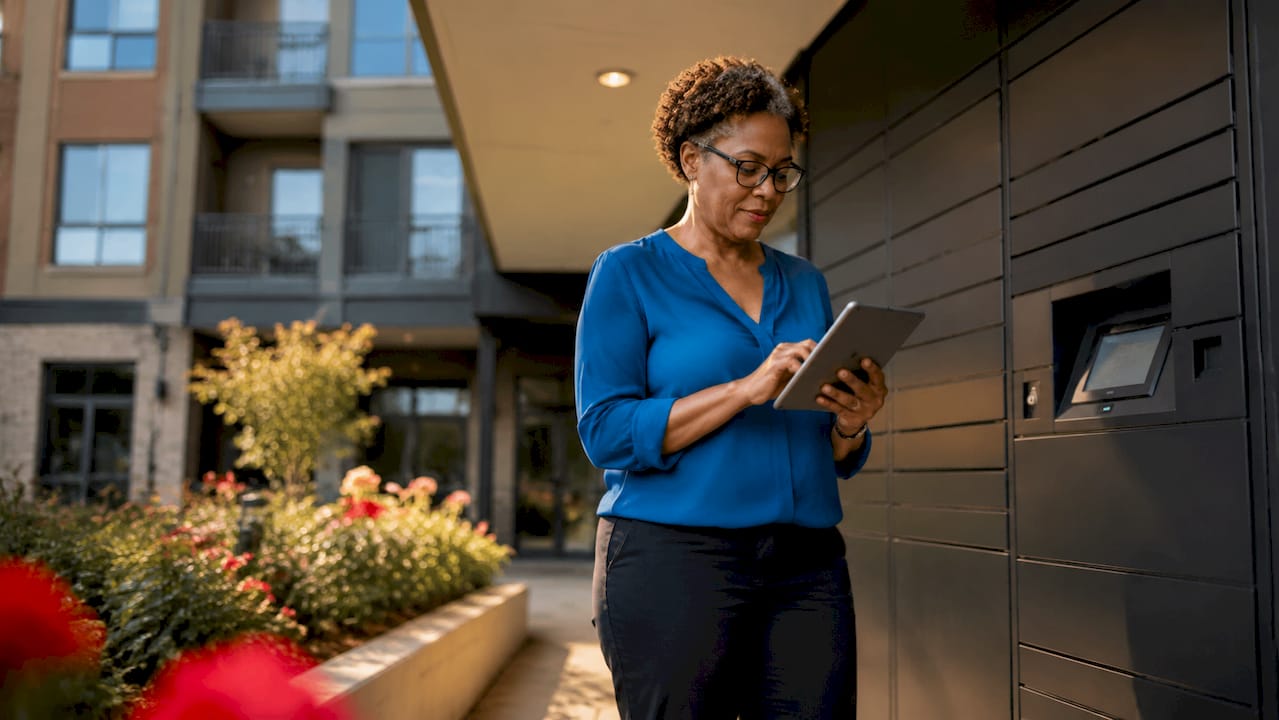
Contactless package delivery is the practice of receiving, organizing, and distributing resident packages without physical interaction between staff and parcels at the point of handoff. For property managers and facility directors, this method directly reduces staff workload, cuts liability exposure, and gives residents 24/7 access to their packages. The average resident now receives over 60 packages annually, and manual handling of that volume consumes up to 50% of one staff member’s daily working hours. That is a measurable operational cost, not a minor inconvenience. No-contact shipping solutions, including smart lockers and AI-powered package rooms, address this cost directly while raising the bar on resident satisfaction.
What are the main types of contactless package delivery solutions?
Property managers have four primary models to choose from. Each carries distinct tradeoffs in cost, space, and scalability.
Smart locker systems
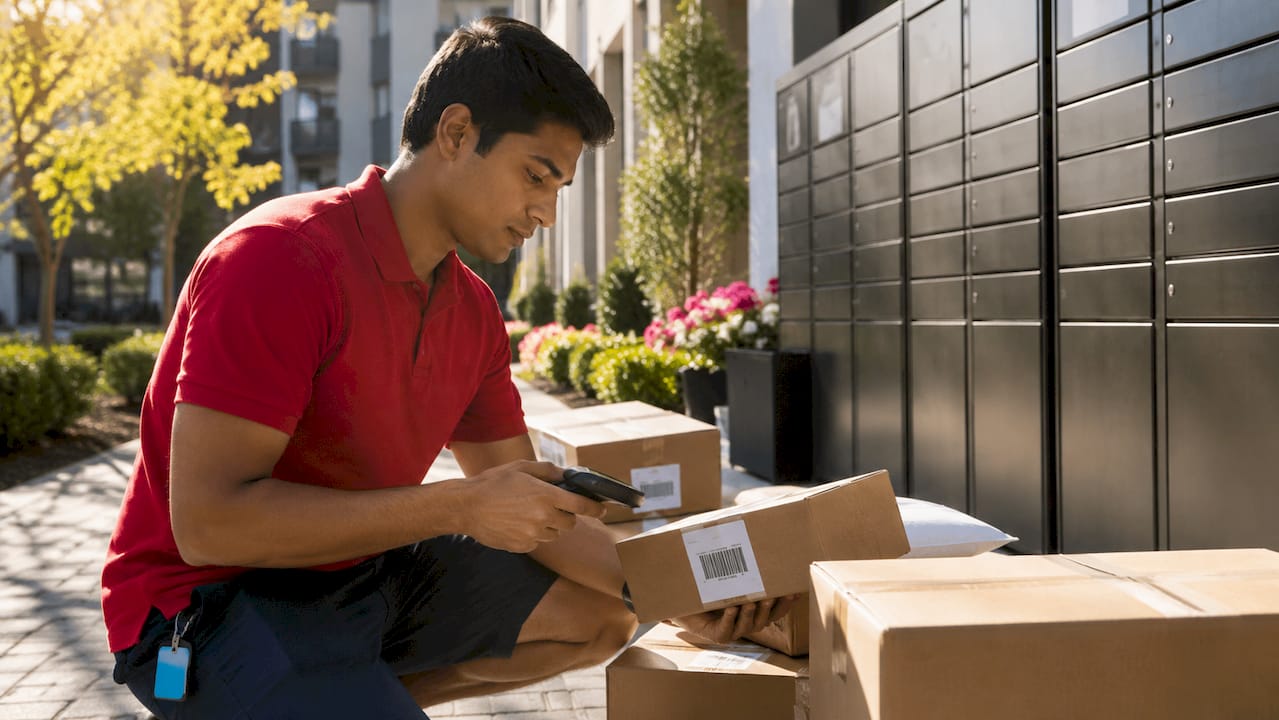
Smart lockers are fixed compartments that accept packages from carriers and issue residents an access code via SMS, email, or app notification. Residents retrieve packages in roughly 10 seconds with no staff involvement. The system logs every transaction automatically. The limitation is fixed compartment size. Oversized packages and surge periods can cause overflow when the bank is full, and expanding physical locker banks is expensive.
AI-powered smart package rooms
AI-powered smart package rooms replace fixed compartments with open shelving and use computer vision to track every parcel. Automated tracking systems eliminate overflow issues by accommodating varied package sizes flexibly. Residents receive automated notifications and enter a controlled room to retrieve their items. This model works well for high-volume properties where package sizes vary widely.
Offsite third-party delivery services
Some properties route packages to a centralized offsite warehouse, then schedule last-mile delivery to residents’ doors. This model removes the property entirely from the receiving equation. The tradeoff is reduced control. Delivery windows depend on a third-party operator, and residents may find the experience less convenient than on-site pickup.
Hybrid staffed package centers
Hybrid models combine controlled-access technology with part-time human oversight. A package manager handles overflow, audits inventory, and keeps the room organized. This approach works best for large communities where volume spikes regularly and a purely automated system would struggle without human backup.
Pro Tip: Match your solution to your property’s peak volume, not its average. A 300-unit student housing community in september will see three to four times normal volume. Size your system for the peak, not the mean.
How does touchless delivery improve operations and resident experience?
The operational case for touchless delivery services is straightforward: staff time spent on packages is time not spent on leasing, maintenance coordination, or resident relations.
Manual package handling consumes up to half a staff member’s daily hours at a typical multifamily property. Redirecting that time to higher-value tasks produces a measurable productivity gain without adding headcount. Properties that professionalize package management report 10–15% higher lease renewal rates, which directly affects revenue. A 300-unit property with a 5% improvement in renewals avoids significant re-leasing costs.
The resident experience benefit is equally concrete. Automated notifications mean residents know the moment a package arrives. They pick it up on their schedule, not during office hours. That convenience ranks as a top amenity for renters under 35, and it reduces the volume of “where is my package?” inquiries at the front desk.
Here is how the operational improvements stack up in practice:
- Staff time recovery. Removing manual package handling returns hours to leasing and maintenance teams daily.
- Reduced lost-package claims. Automated chain-of-custody logging creates a clear record from carrier drop-off to resident pickup.
- Fewer front-desk interruptions. Automated notifications cut resident inquiries about package status significantly.
- Competitive amenity positioning. Safe package drop-off and 24/7 access are now expected features in Class A and Class B communities.
- Retention impact. Package management quality connects directly to renewal decisions, particularly in student housing markets.
Pro Tip: Track the number of package-related staff interruptions per week before and after implementation. That single metric makes the ROI case faster than any cost model.
What challenges should property managers anticipate?
The biggest operational challenge is not technology. It is carrier behavior. 70% of multifamily operators cite carrier non-compliance as their top frustration with package management. Drivers bypass locker systems, leave packages in lobbies, or mark deliveries as completed when they are not. No software solves that problem on its own.
Common challenges property managers face include:
- Carrier non-compliance. Drivers skip the locker or package room and leave parcels in unsecured areas.
- Oversized package overflow. Bulky items from retailers like Amazon or Wayfair do not fit standard locker compartments.
- Surge volume periods. Move-in weeks, holidays, and back-to-school periods can overwhelm fixed-capacity systems.
- Staff role confusion. Leasing staff absorb package duties by default, blurring job responsibilities and reducing productivity.
- Resident onboarding gaps. Residents who do not understand the system generate complaints and workarounds that undermine compliance.
Standardized carrier communication and pictorial standard operating procedures for drivers, distributed at system launch, reduce non-compliance and resident complaints significantly during peak delivery periods. The investment in upfront carrier training pays back in fewer failed deliveries and fewer staff escalations.
Poorly sized or inflexible locker systems create their own problems. Fixed locker banks are costly to expand and can cause operational breakdowns during surges. Hybrid models that combine technology with human oversight manage overflow more effectively than fully automated systems at high-volume properties. Knowing your property’s peak volume before selecting a system is the single most important pre-implementation step. For a deeper look at common pain points in urban properties, the urban apartment package challenges guide from Postal Solutions covers carrier non-compliance and lost-package scenarios in detail.
What are best practices for selecting and implementing a delivery system?
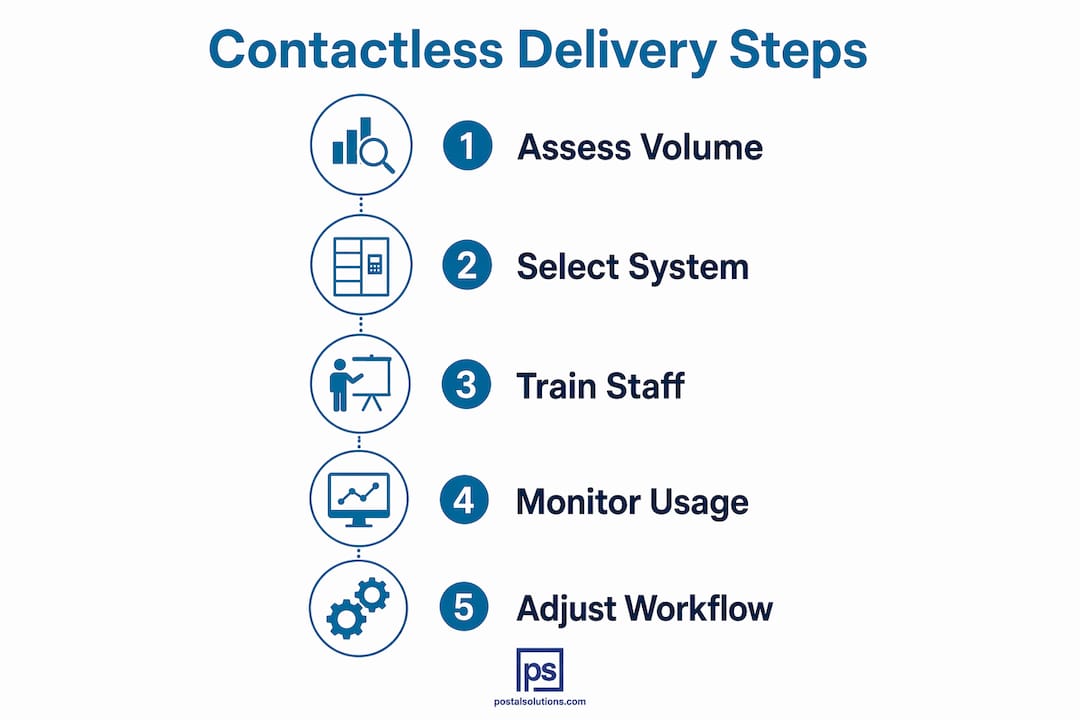
A structured selection process prevents the most common implementation mistakes. Follow these steps before committing to any system:
- Audit current package volume. Count daily and weekly packages by unit count. Identify your peak period and size your solution to handle it.
- Assess available space. Smart lockers require dedicated floor space. AI-powered package rooms need a controlled-access room with shelving. Confirm your building can support the physical footprint.
- Set a realistic budget and ROI timeline. Smart locker systems for a 200-unit community typically cost $12,000–$36,000, with payback in 12–18 months through labor savings and improved retention.
- Engage carriers before launch. Distribute pictorial SOPs and access codes to UPS, FedEx, USPS, and Amazon drivers before go-live. Carrier compliance determines whether the system works in practice.
- Onboard residents with clear communication. Send written instructions, post signage at the package room entrance, and follow up with new move-ins during their first week.
- Define package management as a distinct role. Do not assign package duties to leasing staff as a secondary task. Either designate a staff member or outsource the function to a managed service.
The table below summarizes key evaluation criteria when comparing delivery system options:
| Evaluation criterion | What to assess |
|---|---|
| Package volume capacity | Can the system handle your peak period without overflow? |
| Package size flexibility | Does it accommodate oversized parcels from major retailers? |
| Carrier compliance tools | Does it include driver SOPs, access codes, and compliance tracking? |
| Resident notification method | Does it send SMS, email, and app alerts automatically? |
| Audit and reporting tools | Does it provide chain-of-custody logs and weekly audit reports? |
| Scalability | Can the system expand as your property grows or volume increases? |
Monitoring does not stop at launch. Review carrier compliance rates and resident pickup times monthly. Adjust workflows when overflow patterns emerge. Properties that treat package management as a distinct operational service rather than an ad hoc leasing task consistently outperform those that do not on both staff productivity and resident satisfaction scores. For a detailed look at managing high-volume periods, Postal Solutions covers the topic in its guide on high-volume package deliveries in multifamily housing.
Key Takeaways
Contactless package delivery works when property managers treat it as a dedicated operational service, match the solution to peak volume, and enforce carrier compliance from day one.
| Point | Details |
|---|---|
| Staff time is the primary cost | Manual package handling consumes up to 50% of one staff member’s daily hours. |
| System sizing matters | Size your locker or package room for peak volume periods, not average daily counts. |
| Carrier compliance drives outcomes | 70% of operators cite non-compliance as their top frustration; address it before launch. |
| Retention is a financial metric | Properties with professionalized package management report 10–15% higher renewal rates. |
| Human oversight fills technology gaps | Hybrid models combining automation with managed visits handle overflow more reliably than fully automated systems. |
Why package management deserves its own operational category
After working with multifamily communities across more than 40 U.S. states, the pattern is consistent: properties that treat package management as a leasing task pay for it twice. They pay once in staff payroll absorbed by package duties, and again in lost productivity on leasing and maintenance work that does not get done.
The technology argument is real, but it is incomplete on its own. A Luxer One locker system or an AI-powered package room performs exactly as designed when carriers comply and residents are onboarded correctly. When those conditions are not met, the system becomes a source of complaints rather than a solution. That is why the human management layer matters. A package manager who visits the property daily, marks unit numbers on boxes, audits the room weekly, and keeps the system current is not redundant to the technology. That person is what makes the technology reliable.
The properties that get this right do not just reduce staff burden. They create a resident experience that shows up in renewal decisions. Residents notice when their packages are organized, accessible, and secure. They also notice when they are not. In a competitive rental market, that difference is not trivial.
The future of delivery management in multifamily housing is not fully automated. It is a combination of the right technology, properly sized for the property, managed by people who treat it as a professional service. That combination is what Postal Solutions has built its model around since 2016.
— Postal Solutions
Postal Solutions manages package operations so your team does not have to
Postal Solutions manages package room outsourcing for conventional multifamily, student housing, and senior housing communities nationwide. As the largest Luxer One sales agency in the country, with over 1,200 installations across more than 40 U.S. states, Postal Solutions sells and installs Luxer One locker systems, package rooms, and combo systems tailored to your property’s volume and layout. Daily managed visits keep your package room organized, unit numbers marked, and weekly audits completed. Your leasing team stays focused on leasing. Residents find their packages without friction. If you are evaluating smart locker options or need a fully managed package room service, Postal Solutions is the right starting point.
FAQ
What is contactless package delivery for apartments?
Contactless package delivery is a system where carriers drop packages into a secure locker or package room without staff involvement, and residents retrieve them using an automated access code or notification. It eliminates manual handling at every step of the process.
How much does a smart locker system cost for a multifamily property?
Smart locker systems for a 200-unit community typically cost $12,000–$36,000, with return on investment achieved within 12–18 months through labor savings and improved lease renewal rates.
Why do package lockers sometimes fail to work as expected?
Carrier non-compliance is the leading cause of locker system failures. Drivers bypass the system and leave packages in unsecured areas. Distributing pictorial SOPs and access codes to carriers before launch significantly reduces this problem.
How does no-contact shipping affect resident retention?
Properties with professionalized, technology-enabled package management report 10–15% higher lease renewal rates. Residents cite package access and security as a top amenity factor in renewal decisions.
Should property managers outsource package room management?
Outsourcing package room management to a dedicated service removes the burden from leasing staff and ensures daily organization, unit labeling, and weekly audits are completed consistently. Properties that treat package management as a distinct service consistently outperform those that assign it as a secondary leasing task.
Recommended
- How to Manage High Volume Package Deliveries in Multifamily Housing | Postal Solutions
- Apartment Package Management Services | Multifamily Package Room Operations | Postal Solutions
- Cost Per Package Delivered: Apartment Manager’s 2026 Guide | Postal Solutions
- How to Accept Resident Packages Safely in Apartments | Postal Solutions