Apartment Staff Playbook: 4 Step Package Returns Policy and Workflow
Apartment Staff Playbook: 4 Step Package Returns Policy and Workflow Yes, apartment communities can return unclaimed packages to sender, but only when a written policy authorizes it and staff follows proper notice and logging steps first. R
Published
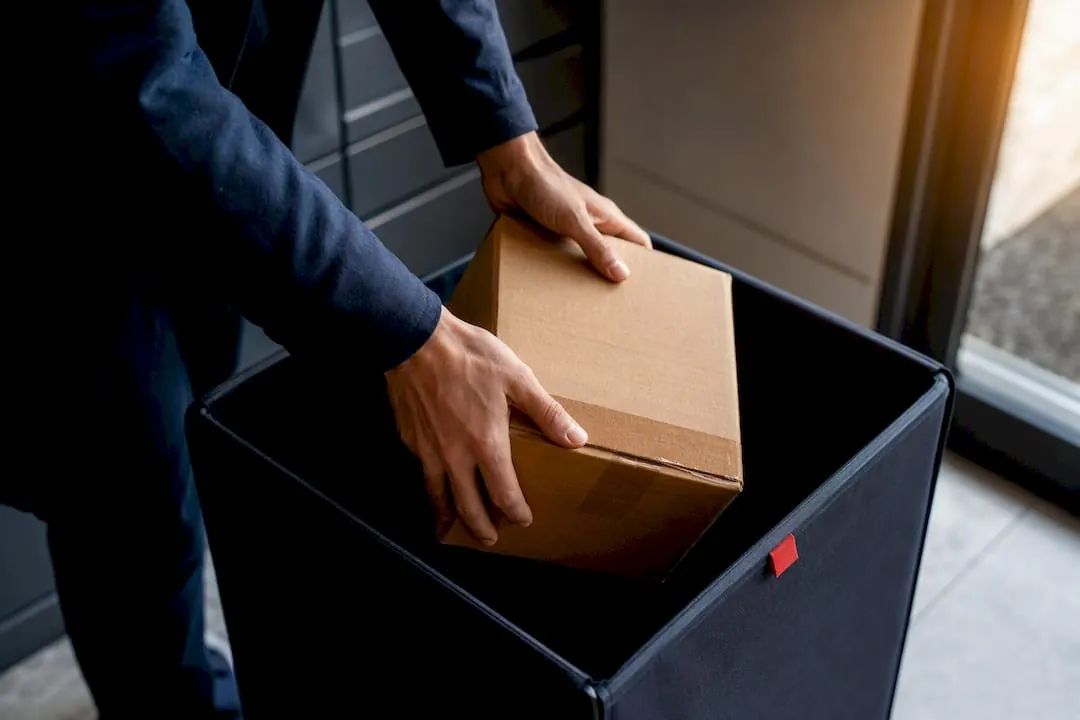
Yes, apartment communities can return unclaimed packages to sender, but only when a written policy authorizes it and staff follows proper notice and logging steps first. Residents who miss a delivery should check for pickup notifications, contact the leasing office immediately, and file a carrier claim if the item already shipped back. Staff should verify the recipient’s name and unit, log the package on arrival, and send a clear final notice before initiating a return to sender.
TL;DR:
- Packages should be returned only if the apartment community has a clear written policy that residents and staff follow precisely.
- A logging process that records arrival date, carrier details, unit number, and notifications is crucial to defending returns legally.
- Over holiday periods, communities must adjust notice frequency and increase overflow capacity to handle roughly 80 percent more packages.
- Using managed services or automated locker systems can significantly reduce staff workload and improve package handling accuracy.
- Returning a package to sender after proper notice generally does not pose legal issues unless the community fails to maintain documentation or follow local rules.
Table of Contents
- Package Returns Process for Apartments: The Quick Checklist
- Legal and Lease Considerations: How to Make Returns Defensible
- How to Write and Publish an Unclaimed-Package Policy
- Operational Workflow From Intake to Return
- Solution Categories: Lockers, Package Rooms, and Managed Services
- Costs, Resident Fees, and Holiday Overflow Planning
- Practitioner Lessons From Package-Room Installations
- Get Help Managing Package Returns and Installing Luxer One
- Sources
- FAQ
Package Returns Process for Apartments: The Quick Checklist
Before anyone returns a box, both sides need to know the basic rules. Here’s what typically governs the package returns process for apartments across most communities:
- Holding window: Common ranges run 7 to 14 days; some communities use a 2-week standard, as Stanford West Apartments posts in its own resident policy.
- Notice requirement: At least one dated, timestamped notification (email or text) counts as reasonable notice, and a second reminder before the deadline reduces disputes.
- Minimum log fields: Arrival date and time, carrier name, unit number, staff initials, and every notification timestamp.
- Resident options that prevent returns: Authorizing a proxy pickup, updating delivery instructions with the carrier, or confirming your building’s preferred delivery method in advance.
Staff capacity often decides the exact number of days. A property with daily package room organizing can afford a shorter window; one relying on occasional walk-throughs needs more buffer before a return.
Legal and Lease Considerations: How to Make Returns Defensible
A posted policy is the single biggest factor separating a defensible return from a resident complaint that turns into a legal headache. That policy needs to live in three places: the lease itself, the tenant handbook, and visible signage at the delivery entrance or package area, a placement pattern Apartment List recommends specifically to prevent surprise returns.
The mail-theft question worries a lot of managers unnecessarily. Returning a package to sender after giving reasonable notice typically does not trigger mail-theft or fraud statutes, since there’s no deception involved. One legal discussion on the topic notes that intent and disclosure are what matter, not the act of returning itself. That said, state and local rules vary, and this isn’t a substitute for advice from local counsel when a dispute escalates.
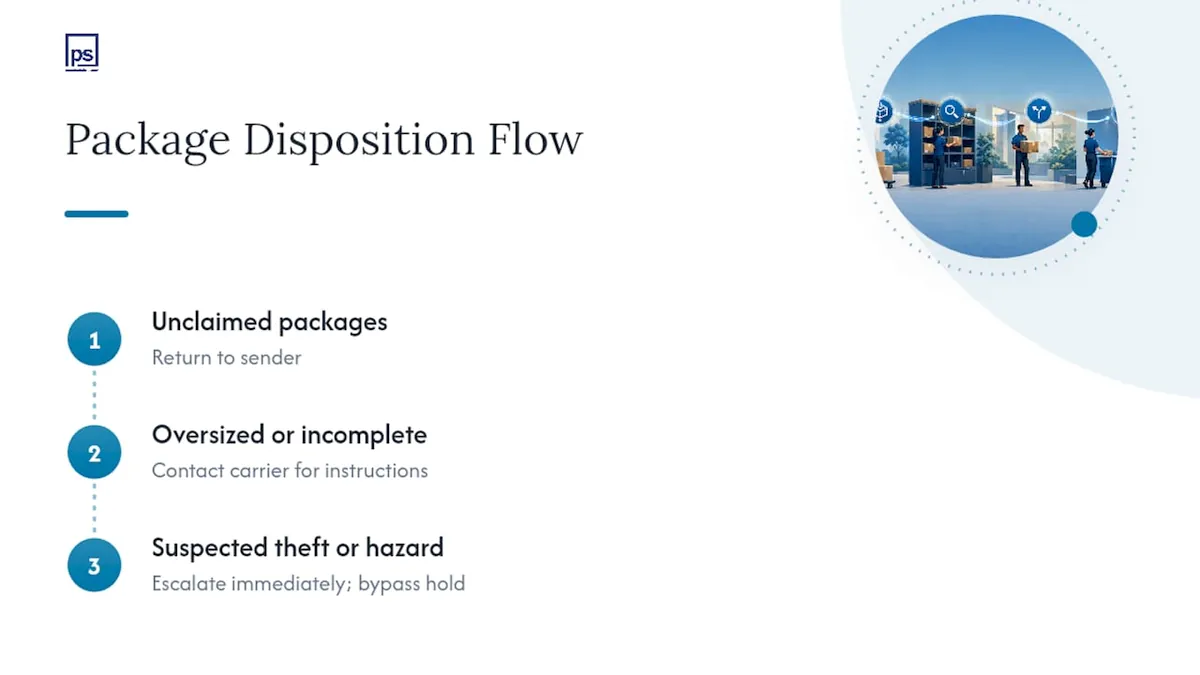
Return to sender fits most unclaimed situations. Contacting the carrier directly for disposition instructions makes more sense for oversized freight, or when the sender’s address on the label is incomplete. Escalate immediately, rather than following the standard hold window, for suspected theft, anything leaking or hazardous, and perishable goods that pose a health risk if left in a package room.
How to Write and Publish an Unclaimed-Package Policy
A policy only protects you if residents actually see it before a dispute happens. Build it in four steps:
- Set the holding window and exceptions. Pick a number of days your staff can realistically manage, then carve out separate rules for oversize items, perishables, and anything hazardous.
- Define the notification cadence. Send immediate notice on arrival, a reminder partway through the hold, and a final notice a set number of days before return.
- Specify return methods and approvals. State whether unclaimed items go back via carrier RTO request, get donated, or get disposed of, and who signs off on each path.
- Post the policy everywhere residents look. The delivery entrance, the package room, and the resident portal all need the same wording.
A sample policy line can be as short as this: “Packages held longer than 10 days without pickup or proxy authorization will be returned to the shipping carrier. Residents will receive email notice on arrival and a final reminder 48 hours before return.”
Pro Tip: Match your notice language to your lease’s legal terms exactly. If the lease says “unclaimed packages,” don’t switch to “abandoned property” on your signage. Mismatched language is what makes resident disputes drag on.
Operational Workflow From Intake to Return
The steps between a package landing on the shelf and a return label going back out determine whether your community avoids disputes or generates them.
- Intake: Log the package immediately, mark the unit number clearly on the label (highlight it or handwrite it if the original label is hard to read), note the carrier, and photograph the item if your policy calls for it.
- Hold and pickup: Require ID or a matching name at pickup, and document any proxy pickup in writing ahead of time so front desk staff aren’t guessing.
- Final checks before return: Confirm the last notice went out on schedule, double check the name and address match the resident of record, and fill out the carrier’s official return request form rather than just setting the box outside.
- Exceptions: Misdelivered items and packages addressed to unknown recipients should go back the same day, not sit through the full hold window. Hazardous or perishable items need immediate handling regardless of where they fall in the queue.
Consistency here is what keeps package management defensible when a resident challenges a return months after the fact.
Solution Categories: Lockers, Package Rooms, and Managed Services
Every apartment community lands on one of three operational models, and each affects the returns process differently.
- Parcel lockers give residents 24/7 pickup access with automated text or email notifications, which cuts staff touchpoints dramatically for high-volume buildings.
- Package rooms with access control handle bulky and perishable items better than lockers can, and give staff room to manage overflow during slow weeks.
- Managed services add daily organization and weekly audits on top of either system, which directly improves log quality and reduces the return-to-sender errors that come from mislabeled or misplaced items.
The numbers back up why this matters operationally: industry estimates put lost productivity at roughly 10 minutes per package when a manager handles lookup, notification, and pickup manually. Multiply that across a 300-unit property during a normal week and the staff-hour cost adds up fast. Some locker vendors now build resident-initiated return features directly into the system, letting residents ship items back without staff handling the box at all. Postal Solutions oversees Luxer One package room and locker systems, and provides a managed package program with visits 3-6 days per week to keep the room organized, audited, and current, which is the combination that tends to produce the cleanest package logs.
Costs, Resident Fees, and Holiday Overflow Planning
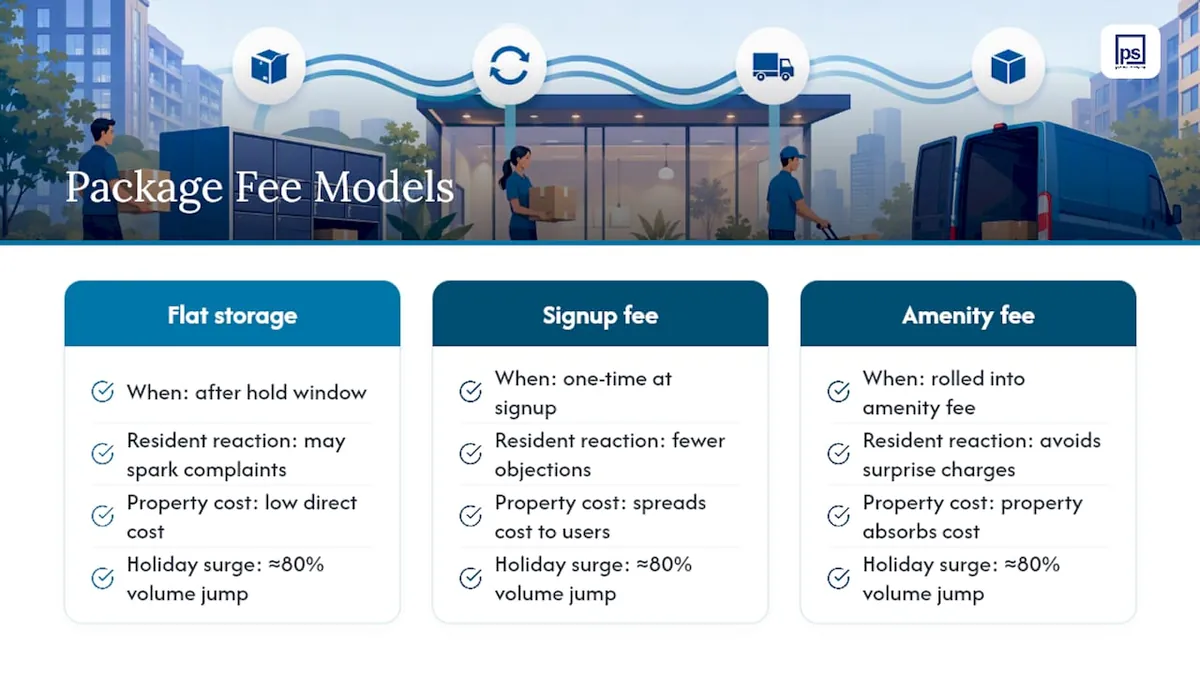
Fee structures split into a few common models. A flat storage fee charged after the hold window discourages residents from letting packages sit, but it can generate complaints if it’s not disclosed clearly in the lease. A one-time signup fee for locker access spreads cost differently and tends to draw fewer objections. Rolling package handling into an amenity fee avoids surprise charges altogether, though it means the property absorbs cost during low-volume months.
Holiday weeks change the math entirely. Package volume can jump by roughly 80 percent during peak holiday periods, which is exactly when overflow rooms, temporary lockers, extended pickup hours, and scheduled pickup windows earn their cost. Send a shortened notice cadence during these weeks (immediate notice, then a 48 hour reminder instead of the usual full cycle) since holding capacity shrinks fast when volume spikes.
Practitioner Lessons From Package-Room Installations
Experience across hundreds of Luxer One installations shows that properties with the fewest complaints aren’t the ones with the newest hardware, but those with daily organizing and consistent weekly audits. A locker system installed without a clear notification cadence can just become an expensive shelf.
The most common pitfall isn’t technical. It’s a vague holding window paired with no written notice trail, which turns every return into a he-said-she-said argument. Fix that with a dated log and a policy residents actually read, and pickup speed improves along with fewer disputes and a cleaner common area within weeks.
Get Help Managing Package Returns and Installing Luxer One
Some firms offer an alternative to hiring in-house package staff for communities that need daily organization without adding payroll. Instead of your leasing team splitting attention between resident tours and sorting boxes, these providers manage daily package room organizing, weekly audits, and Luxer One package room and locker installations, so returns follow a documented process instead of guesswork. Worth noting: these firms manage and sell these systems, but do not themselves deliver packages or staff a mailroom directly.
If your community is dealing with overflow during peak season or a returns process that generates complaints instead of resolving them, request an evaluation through the apartment package management page and get a quote built around your building’s actual volume.
Sources
- Multifamily package management
- Package management (NAAHQ white paper)
- Can my apartment complex return packages to sender if they are not picked up?
- Package Concierge offers resident shipping and returns
- How to get packages delivered to your apartment
FAQ
How Do Packages Get Dropped Off at Apartments?
Carriers typically deliver to a leasing office, a package room, parcel lockers, or directly to a unit door depending on the community’s posted delivery method. Confirm which method your building uses so deliveries don’t get misrouted.
Can My Apartment Refuse to Accept Packages?
Yes, a property can decline package acceptance if it lacks secure storage capacity, but it must state this clearly in the lease and tenant handbook so residents know to arrange direct delivery instead.
Can I Sue My Apartment Complex Over a Stolen Package?
Liability depends on your lease terms and whether the community had a documented, secure handling process in place; a property following logged intake and notification procedures has a much stronger legal position than one with no paper trail.
How Do You Return a Package That Isn’t Yours?
Check the label against the community’s package log, notify the leasing office of the mismatch immediately, and staff should process it as a misdelivered item rather than holding it through the standard pickup window.