Multifamily Operations Support: Cut Staff Time and Theft
Multifamily Operations Support: Cut Staff Time and Theft For most mid-to-large multifamily portfolios, the most effective approach is a bundled solution: outsourced daily package-room management combined with a Luxer One locker or package-r
Published
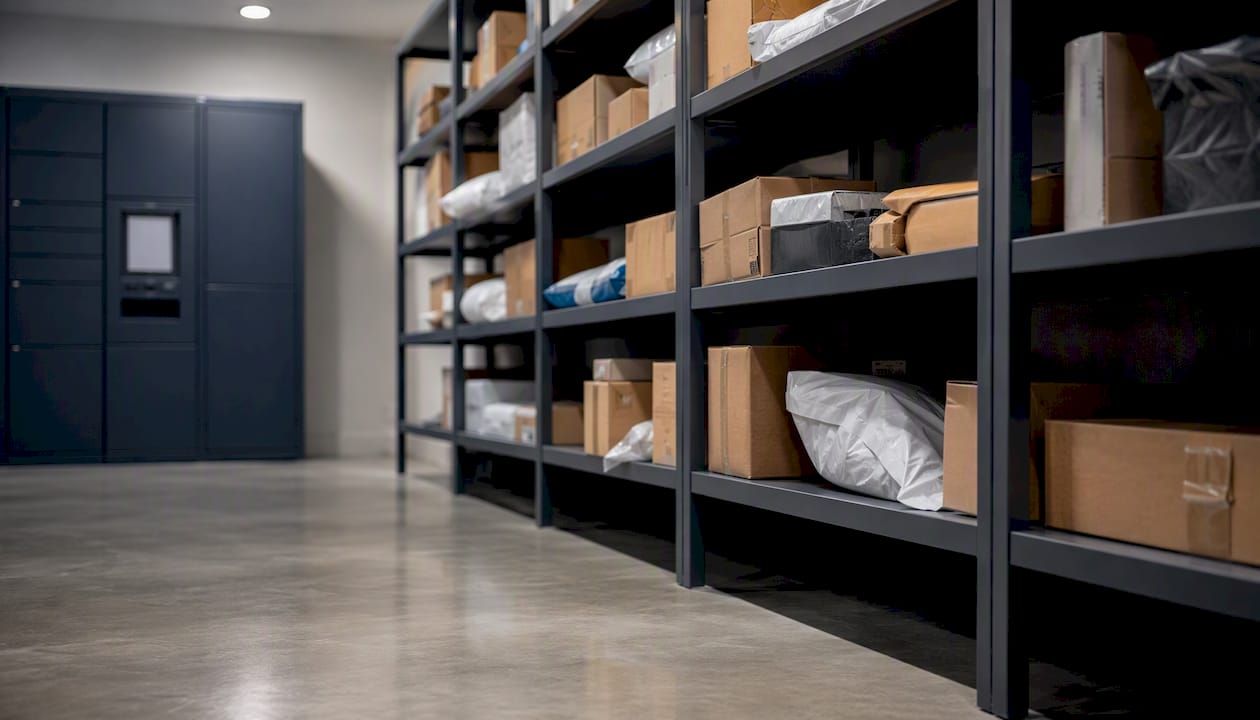
For most mid-to-large multifamily portfolios, the most effective approach is a bundled solution: outsourced daily package-room management combined with a Luxer One locker or package-room system. Smaller properties may do well with managed offsite acceptance and door delivery. Either way, the first move is a site survey to confirm scope and verify integrations with your property management software. Postal Solutions provides both the hardware and the ongoing management, making it a practical single-source option for operators who want the problem solved rather than just addressed.
Key Takeaways
Outsourced package-room management paired with Luxer One locker hardware is the most operationally effective model for mid-to-large multifamily and student-housing properties.
| Point | Details |
|---|---|
| Package volume is growing | Residents averaged 10.65 packages per month in 2023, up from 9.41 in 2022. |
| Hybrid model outperforms hardware-only | Combining Luxer One lockers with daily managed operations reduces both staff time and resident friction. |
| Evaluate on SLAs and integrations | Require a documented SLA, sample audit logs, and confirmed software integrations before signing. |
| TCO includes more than hardware | Budget for installation, monthly service fees, maintenance, and a peak-season labor contingency. |
| Postal Solutions covers both sides | With 1,200+ Luxer One installations and daily managed operations, Postal Solutions is a single-source option. |
Table of Contents
- What does multifamily operations support actually cover?
- Why outsourcing package-room operations is urgent now
- Which service model fits your property?
- How do you evaluate and select the right partner?
- What does a typical project timeline look like?
- What credentials and evidence should you request from any vendor?
- How Postal Solutions manages package-room operations
- How are these services priced?
- How do Postal Solutions and Luxer One compare to other options?
- What contract terms should you expect?
- What post-implementation support should you expect?
- What property teams say actually works
- Postal Solutions is the integrated option for outsourced package management
- Sources
- FAQ
What does multifamily operations support actually cover?
In the context of package and mail management, “multifamily operations support” refers to outsourced services that handle the daily logistics of receiving, organizing, and tracking parcels at apartment communities and student-housing properties. It is not a staffing category or a leasing function. The industry term is outsourced package-room management, and it covers a defined set of operational tasks.
Common service components include:
- Daily package sorting and organization: A package manager visits the property to sort incoming parcels, mark unit numbers on boxes, and organize the room so residents can locate their packages without staff assistance.
- Package-room auditing: Weekly audits reconcile packages on hand against resident pickup records, flagging aged parcels and reducing clutter.
- Resident notifications: Automated alerts (via locker software or property management platforms) tell residents a package has arrived and how to retrieve it.
- Locker hardware and software: Electronic package rooms and locker systems, such as Luxer One, provide secure, contactless pickup with networked dashboards for property teams.
- Carrier workflow management: Structured carrier instructions and access protocols reduce misdeliveries and ensure packages reach the correct room or locker.
- Overflow logistics: A defined process for oversized items that do not fit standard lockers, including staging areas and resident communication.
- Reporting and SLAs: Regular operational reports and documented service-level agreements give ownership groups visibility into package volume, pickup rates, and audit results.
Why outsourcing package-room operations is urgent now
Multifamily residents received an average of 10.65 packages per month in 2023, up from 9.41 in 2022. That growth is not slowing, and it lands directly on your leasing and maintenance teams.
10.65 packages per resident per month in 2023 — a volume that makes unmanaged package rooms one of the fastest-growing operational drains in multifamily.
The operational impacts compound quickly. Lobby and office bottlenecks form when residents cannot find their packages and turn to staff for help. Leasing agents spend time sorting boxes instead of showing units. Package theft and misdelivery damage resident satisfaction and can affect renewals. During peak leasing season, volume spikes make all of these problems worse simultaneously.
| Metric | Data Point | Source |
|---|---|---|
| Avg. packages per resident/month (2023) | 10.65 (up from 9.41 in 2022) | MRI Software |
| Package convenience influence on leasing | High renter influence reported by trade surveys | Multifamily Affordable Housing Business |
| Package theft exposure | Multi-million-dollar annual losses cited by industry trade reporting | Multifamily Affordable Housing Business |
Properties that treat package management as an amenity — not just a logistics problem — see measurable benefits at renewal time.
Which service model fits your property?
Three models cover most situations, and the right choice depends on property type, budget, and how much resident friction you can tolerate.
Managed on-site package-room operations
A package manager visits daily to sort, label, and organize parcels. Audits happen weekly. No hardware purchase is required beyond what the property already owns. This model works well for properties with an existing package room and software but no capacity to keep it organized. The trade-off is that security depends on room access controls already in place, and the model scales less efficiently at very high volumes.
Electronic locker systems (Luxer One)
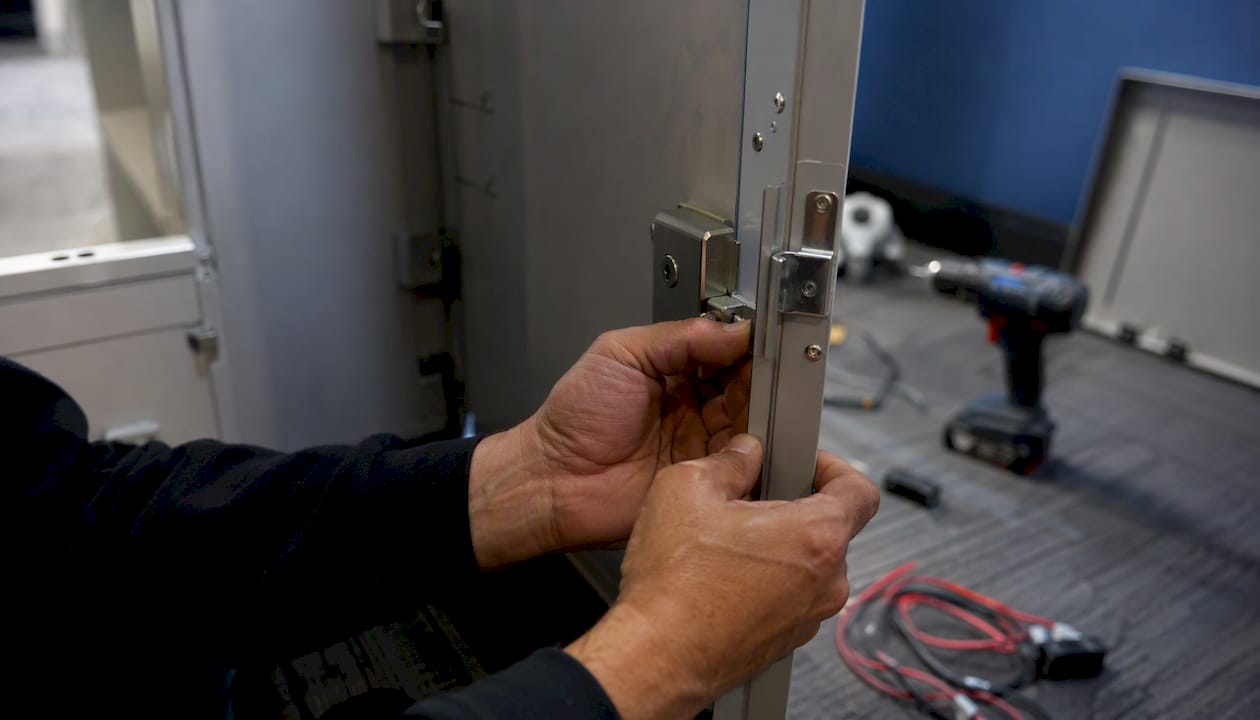
Luxer One locker systems combine secure steel compartments, networked software, automated resident notifications, and administrative dashboards. Carriers deposit packages directly into assigned compartments; residents retrieve them contactlessly with a PIN or app. Upfront hardware cost is higher, but staff-handling time drops sharply. This model suits mid-rise and high-rise properties, student housing, and any community where 24/7 self-service pickup is a leasing differentiator.
Hybrid and combo solutions
A hybrid approach pairs locker hardware with daily managed operations, covering both standard parcels in lockers and oversized or overflow items through a managed process. This is the strongest model for large portfolios and student-housing communities with high turnover and peak-season surges.
Pro Tip: For peak leasing season, designate a clearly marked overflow staging area before move-in week, and brief your package manager on the escalation path for items that cannot fit any locker. Handling this in advance cuts resident complaints by a significant margin.
How do you evaluate and select the right partner?
Start with one decision rule: match the service model to your property type, unit count, and existing software integrations. Then work through this checklist on every vendor call.
- Scope alignment — Does the vendor cover daily organizing, weekly audits, and hardware, or only one of those?
- Software integrations — Can the system connect with your property management platform and access-control hardware?
- Carrier participation — Are major carriers (UPS, FedEx, USPS, Amazon) already trained on the workflow?
- SLAs — Are service-level commitments documented, and what are the remedies for missed visits or audit gaps?
- Security and liability — Who bears liability for lost or damaged packages, and how is that documented?
- Staffing model — How does the vendor handle absences, turnover, or peak-season volume increases?
- Reporting and audits — How often are reports delivered, and in what format?
- Pricing transparency — Are setup fees, monthly service costs, and maintenance charges itemized separately?
- Escalation paths — Who do you call at 7 AM on move-in day when something goes wrong?
Sample questions to ask on vendor calls: “Can you provide a sample weekly audit log?” “What is your average installation timeline for a 250-unit property?” “Which property management platforms are you currently integrated with?” “Can you share a reference in student housing or a P3 community?”
Red flags: vague SLA language, no documented carrier workflow, inability to name reference properties in your asset class, and pricing that bundles everything without itemization.
Trust signals to look for: years selling and installing Luxer One units, total installation count, client types served (universities, P3s, conventional multifamily), and documented audit practices.
What does a typical project timeline look like?
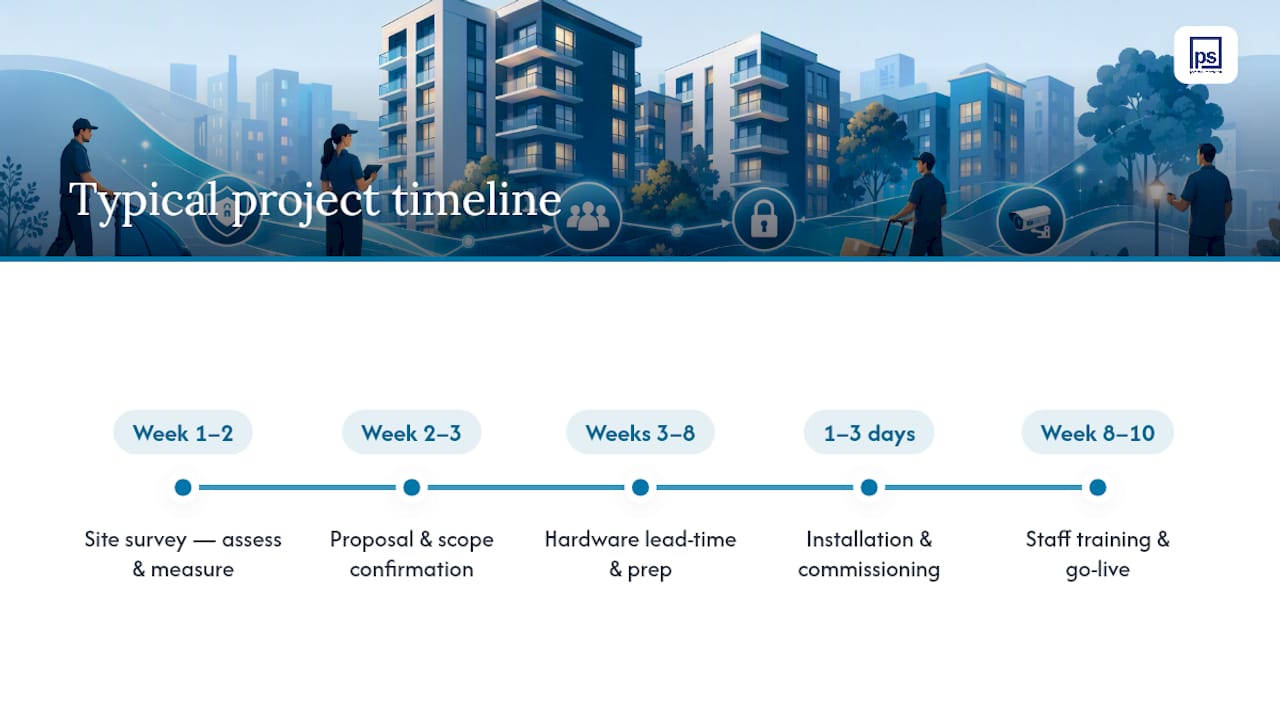
Site survey (Week 1–2): A vendor representative assesses the package room or locker location, measures the space, identifies electrical and structural requirements, and confirms software integration paths.
Proposal and scope confirmation (Week 2–3): You receive an itemized proposal covering hardware, installation, managed service fees, and integration costs.
Hardware lead times and site prep (Weeks 3–8): Locker hardware typically has a lead time of several weeks depending on configuration. Electrical and structural prep happens in parallel.
Installation and commissioning (1–3 days on-site): Hardware is installed, software is configured, and carrier workflows are documented.
Staff training and go-live (Week 8–10): Property staff and the package manager are trained; resident communications go out; the system goes live.
Major cost drivers include hardware size and customization, installation complexity (electrical runs, structural reinforcement, door modifications), software integration fees, recurring managed service fees, and maintenance allowances. When modeling total cost of ownership, include replacement cycles for locker components, a conservative allowance for carrier non-compliance during the first 90 days, and a staffing contingency for peak leasing windows.
Pro Tip: Frame locker hardware as a capital expense and managed service fees as an operating expense. That split often makes the project easier to approve across ownership and management structures.
What credentials and evidence should you request from any vendor?
Request a documented SLA, sample weekly audit logs, a written scope of work for daily package-room tasks, and at least two reference properties in your asset class. Ask for measured outcomes: hours of staff time recovered, theft incident reduction, and resident pickup time improvements.
Postal Solutions has been selling and installing Luxer One systems since 2016 and has completed over 1,200 Luxer One installations across more than 40% of U.S. states. The company is Luxer One’s largest sales agency and represents the brand at national conferences and trade shows. Client types include on-campus universities, large Public Private Partnerships (P3s), conventional multifamily communities, student housing, municipalities, and businesses of all sizes.
Properties working with Postal Solutions should expect reduced staff-handling hours, faster resident pickup times, and lower package-theft exposure. Outsourcing package management brings carrier workflows and scaled operational resources that most in-house teams cannot replicate.
How Postal Solutions manages package-room operations
Postal Solutions manages the full scope of outsourced package-room operations and sells and installs Luxer One hardware. Services include:
- Daily package-room organizing: a package manager visits the property to sort parcels, mark unit numbers on address labels or directly on boxes, and keep the room current.
- Weekly audits using the property’s existing package-room software or a Luxer One system installed by Postal Solutions.
- Sales and installation of Luxer One package rooms, locker systems, refrigerated lockers, and combo configurations.
- Integration assistance with most major property management platforms and access-control systems.
- Ongoing operational support, including carrier onboarding and resident communication guidance.
The engagement flow runs: discovery and site survey → proposal and scope confirmation → hardware installation or service onboarding → daily and weekly operations cadence → regular reporting and review. For properties that want a full-service approach to outsourcing package handling, Postal Solutions manages up to six days per week.
How are these services priced?
Pricing for outsourced package-room management and locker systems typically breaks into three categories.
Setup and hardware costs cover the Luxer One unit configuration, installation labor, electrical work, and any structural modifications. These are one-time capital expenses that vary by system size, number of compartments, and site complexity.
Monthly service fees for managed operations cover the daily package-room visits, weekly audits, and reporting. Fees scale with visit frequency and property size. Properties that already own locker hardware can contract for managed operations only.
Maintenance and support costs include spare parts, software subscription fees, and technical support. A realistic total cost of ownership model accounts for component replacement cycles and a contingency for peak-season labor. Postal Solutions provides itemized proposals so ownership groups can separate capital and operating line items cleanly.
How do Postal Solutions and Luxer One compare to other options?
Most operators evaluating this category are choosing between three approaches: a fully managed outsourced model, a hardware-only locker purchase with self-managed operations, or a hybrid that combines both.
Postal Solutions offers the hybrid model as its primary value proposition: Luxer One hardware sales and installation paired with daily managed operations. A hardware-only purchase from any vendor leaves the daily organization and auditing to property staff, which is where most of the staff-time cost actually lives. A managed-only service without hardware depends on the quality of the existing package room and access controls.
The Postal Solutions model reduces that double cost: properties that manage package rooms in-house pay both in payroll and in lost leasing productivity. Combining hardware with a managed operations cadence addresses both sides of that equation.
What contract terms should you expect?
Managed service agreements for outsourced package-room operations typically run on annual or multi-year terms, with renewal options. Locker hardware purchases are one-time transactions, though software subscriptions and maintenance agreements carry their own renewal cycles.
Key contract terms to review: visit frequency and audit schedule, SLA remedies for missed service, liability language for lost or damaged packages, integration support scope, and termination provisions. Ask for the SLA in writing before signing, and confirm that audit logs are delivered to you directly rather than held only by the vendor.
What post-implementation support should you expect?
A credible provider documents support pathways before go-live. For Luxer One systems, that includes technical support for hardware and software, carrier re-training when new carriers are added, and firmware or software updates. For managed operations, it means a defined escalation path when a scheduled visit is missed and a process for handling volume spikes during peak leasing season.
What’s included in a package locker system from a reputable vendor covers ongoing technical service alongside the hardware and software. Postal Solutions provides operational support as part of its service agreements, including guidance on managing high-volume delivery periods and resident communication templates.
What property teams say actually works
The properties that get the most out of outsourced package management are the ones that treat it as an operational system, not a one-time fix. The technology handles access and notifications. The managed operations cadence handles the daily reality that packages arrive in bulk, get misrouted, and pile up faster than any automated system can self-correct.
A clear carrier instruction sheet posted at the package room entrance eliminates a surprising share of misdeliveries. Scheduling the weekly audit on the same day each week, rather than when it feels necessary, keeps aged packages from accumulating. And during peak leasing season, having a defined overflow process in writing before the rush starts is the difference between a manageable week and a chaotic one.
No locker system is entirely self-managing. The best outcomes pair durable hardware with a defined daily operations plan. Properties that skip the operations layer often find their locker system organized on day one and in disarray by month three.
Postal Solutions is the integrated option for outsourced package management
Most operators shopping this category end up choosing between hardware vendors and managed-service providers separately, then trying to coordinate the two. Postal Solutions operates across many states and as a provider of daily package-room management with documented SLAs and weekly audits.
The practical advantage is a single point of accountability. One vendor owns the hardware installation, the carrier onboarding, the daily operations cadence, and the audit reporting. For property teams that have already spent time coordinating between multiple vendors, that consolidation has real operational value.
Request a site survey and itemized proposal at Postalsolutions to confirm scope, integrations, and total cost of ownership for your property.
Sources
- Multifamily data research: package delivery pain points
- Managing the package predicament: enhancing security & saving time
- Package Lockers for Apartments | 100% Package Acceptance
FAQ
What does outsourced multifamily package-room management include?
It covers daily package sorting and organization, weekly audits, resident notifications, carrier workflow management, and reporting. Providers like Postal Solutions also offer Luxer One locker hardware sales and installation as part of a bundled solution.
How long does a Luxer One locker installation typically take?
From site survey to go-live, most installations run eight to ten weeks, accounting for hardware lead times, site preparation, and carrier onboarding.
Can Postal Solutions integrate with my existing property management software?
Postal Solutions provides integration assistance for most major property management platforms and conducts weekly audits using either the property’s existing package-room software or a Luxer One system it installs.
What contract length should I expect for managed package-room services?
Managed service agreements typically run on annual or multi-year terms with renewal options. Hardware purchases are one-time transactions, though software subscriptions carry separate renewal cycles.
How do I handle oversized packages that do not fit a locker?
Define a dedicated overflow staging area and a written escalation process before go-live. A managed operations provider handles daily overflow organization as part of the service cadence, reducing the burden on leasing staff.