Receive Packages the Right Way: Managed Rooms and Lockers
Receive Packages the Right Way: Managed Rooms and Lockers The fastest way to fix a broken package process is to outsource daily package-room management and pair it with right-sized locker hardware where volume demands it. Properties that ma
Published
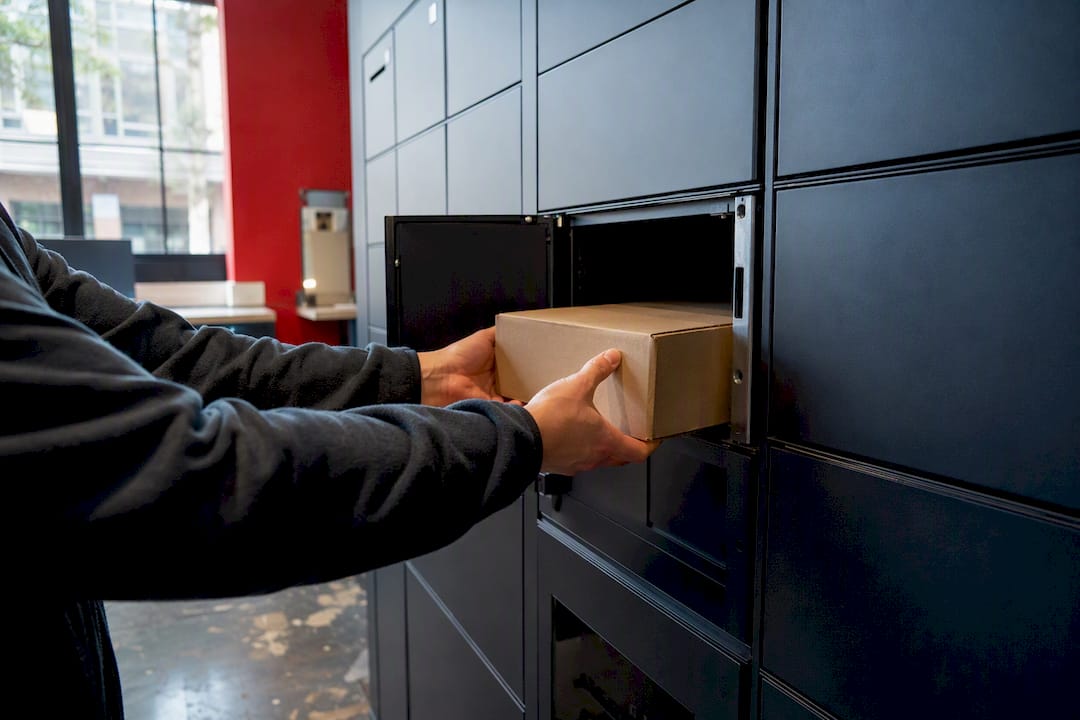
The fastest way to fix a broken package process is to outsource daily package-room management and pair it with right-sized locker hardware where volume demands it. Properties that make this switch cut staff hours spent chasing parcels and give residents a predictable pickup experience instead of a lobby full of boxes.
The case for acting now comes down to two numbers. Resident package volumes have increased significantly over the past decade, and for many residents, package problems now rank among the top complaints affecting lease renewals, according to Techscribe’s analysis of multifamily retention data. Postal Solutions has installed Luxer One systems more than 1,200 times across over 40% of U.S. states since 2016, giving property teams a proven path rather than a guess.
Before you evaluate vendors, gather three baseline numbers:
- Total units and current package volume per week
- Staff minutes currently spent per package (sorting, notifying, handing off)
- Peak-day volume, not just average daily volume
Once you have those figures, you can run a real ROI estimate and request a pilot instead of buying hardware on a hunch.
Key Takeaways
Outsourcing daily package-room management and pairing it with right-sized locker hardware cuts staff hours and reduces resident pickup friction more reliably than hardware alone.
| Point | Details |
|---|---|
| Collect baseline data first | Measure package volume per 100 units, staff minutes per package, and peak-day counts before contacting vendors. |
| Match the model to volume | Small properties often need only a managed service; high-volume sites typically need lockers plus daily managed visits. |
| Carrier compliance is the top risk | Require every vendor to explain their SOP for handling drivers who skip the intake workflow. |
| Size for peak days, not averages | Undersized locker banks overflow fast and push staff back into manual handling. |
| Postal Solutions offers a turnkey path | Postal Solutions manages daily package-room organization and audits, and sells and installs Luxer One lockers, backed by over 1,200 installations since 2016. |
Table of Contents
- What Are the Best Ways to Receive Packages at a Property?
- How Do Packages Get Received and Tracked Daily?
- How Do You Choose the Right Package Solution?
- What Should Be on Your Package Room Rollout Checklist?
- What Track Record Backs a Managed Package Program?
- Why Matching the Model to the Property Matters More Than the Technology
- Ready to Reduce Package Chaos at Your Property?
- Sources
- FAQ
What Are the Best Ways to Receive Packages at a Property?
Operators today choose from five basic models, and most successful properties end up blending two of them rather than picking one in isolation.
Managed package-room services put a person on-site to receive, sort, label, and log every parcel using the property’s existing Commercial Management software. This is the lowest capital outlay option and works well anywhere staff time is the bottleneck, not physical space.
Automated locker systems give residents 24/7 self-service pickup via PIN or QR code, with every transaction logged automatically. Lockers cost more upfront but create the strongest audit trail and remove staff from the pickup transaction entirely.
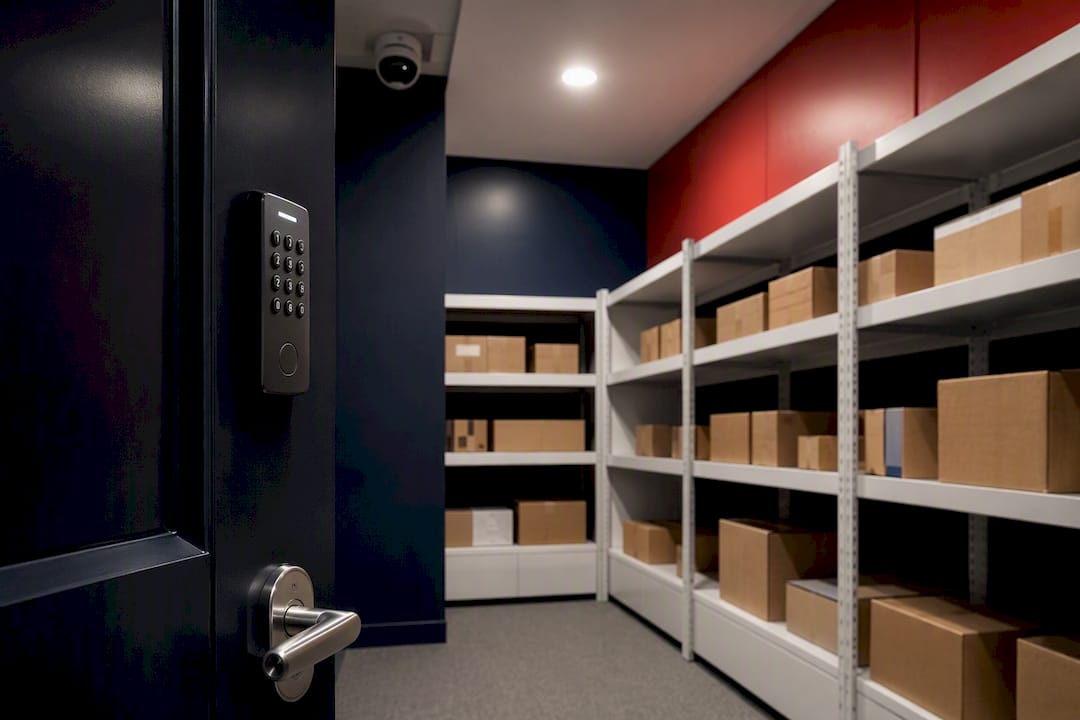
Smart package rooms sit between the two: a secured room with electronic access control and camera coverage, often without individual locker compartments, which keeps hardware costs down while still tightening security over an open mailroom, as outlined in Swiftlane’s setup guidance.
Offsite fulfillment routes packages to a third-party facility for resident pickup, a model mostly limited to properties with no viable on-site space.
Hybrid models combine a smaller locker bank with a managed package room for oversized items, and this combination often gives mid-size properties the best balance of cost and resident experience.
Here’s how volume typically maps to model choice:
- Small properties (under 150 units): managed service alone, or a modest locker bank
- Mid-size properties (150 to 400 units): hybrid, locker bank plus managed overflow room
- High-volume properties (400+ units or student housing at move-in): full locker deployment plus daily managed visits, since large sites can see hundreds of packages a day
How Do Packages Get Received and Tracked Daily?
A managed program follows a consistent daily rhythm, and understanding each step helps you spot gaps in whatever process you’re running now.
- Carrier arrival and intake. The driver drops packages at the designated point. If lockers are installed, the driver scans and places each parcel into an assigned compartment. If it’s a managed room, the daily visit staff scan or log each item against the property’s package software.
- Placement and labeling. Oversized items get staged separately with clear signage. Standard parcels get the unit number highlighted or handwritten directly on the label so residents can find their own packages fast without staff assistance.
- Resident notification. Locker systems trigger an automated text or app alert with a PIN or QR code. In a managed room, notification usually routes through the property’s existing software or the leasing office.
- Retrieval. Residents scan their code at a locker or check in with the package room during posted hours.
- Weekly audit. A manager reconciles what’s logged against what’s physically present, flags unclaimed items, and confirms nothing has aged out past the property’s disposal or return policy.
Pro Tip: Highlighting or handwriting the unit number directly on each box shaves real time off resident pickup, because they’re not hunting through shelves reading tiny shipping labels. It’s a small step that measurably reduces leasing office interruptions.
Integration matters here. A managed visit program should feed data into whatever package software the property already runs, whether that’s a standalone locker platform or a module inside the broader property management system, so audit history and resident notifications stay in one place instead of scattered across systems.
How Do You Choose the Right Package Solution?
Vendor selection starts with data, not a sales pitch. Collect your baseline package volume per 100 units, your current staff minutes per package, and your peak-day count before you take a single vendor call.
Run the math using a standard industry example: a 300-unit community receiving around a typical daily package volume, at roughly 5 minutes of staff handling time per package, works out to about a typical weekly staff time commitment spent just moving boxes around. Multiply that by a fully loaded hourly wage and you have your annual labor cost baseline, the number a managed service or locker install needs to beat.
Ask every vendor these five questions before signing anything:
- Carrier compliance: What happens when a driver skips the intake workflow and leaves a package unscanned? Driver non-participation is the single most common failure point in package systems, so demand a specific remediation SOP.
- Capacity and overflow: Is the system sized to peak volume, or average volume? Undersized locker banks overflow fast and push you right back to manual handling.
- Software integration: Does the platform connect with your existing property management system, or does it require a second login and a second data set?
- Service cadence: How many days a week does a manager actually visit, and what does that visit include?
- SLAs: What’s the guaranteed response time for hardware failure or software downtime?
Size for the busiest week of the year, not a typical Tuesday. Peak-day sizing prevents the exact overflow problem that undermines an otherwise well-designed locker install.
What Should Be on Your Package Room Rollout Checklist?
A rollout with no ambiguity moves faster and hits fewer resident complaints on day one.
Before install, measure the physical space, decide on access control (fob, code, or app-based), draft a one-page carrier SOP with pictures showing exactly where and how drivers should place packages, and designate a staging zone for oversized freight and pallets.
During install, confirm hardware placement matches traffic flow, put up clear signage at the entrance and near the leasing office, verify camera coverage and access logs are active, and run integration tests between the locker software and your property management system before go-live.
At go-live, run a short carrier pilot with your top two or three delivery services, send residents a clear communication explaining the new pickup process, simulate a peak-day volume scenario to catch bottlenecks, and set your first KPIs: staff-hours saved, average pickup time, unclaimed-package rate.
Ongoing, keep a daily visit checklist covering sort, label, and log; run weekly audits reconciling physical inventory against the system; and set a written policy for how long an unclaimed package sits before escalation.
Pro Tip: Send your carrier SOP directly to the local depot managers for UPS, FedEx, and Amazon Logistics, not just the drivers you happen to see on-site. Depot-level buy-in cuts driver non-compliance far more than a sign taped to the door.
Security basics matter regardless of which model you pick: access control and camera coverage are the minimum standard for any package room, even a basic one without electronic lockers.
What Track Record Backs a Managed Package Program?
Postal Solutions has operated in this space since 2016, entering its 11th year of Luxer One sales and installation work nationwide. That tenure adds up to more than 1,200 Luxer One installations across over 40% of U.S. states, spanning on-campus universities, large public-private partnerships, conventional multifamily, student housing, and municipalities.
The service itself is straightforward:
- Daily or six-day-per-week managed visits to organize the package room
- Unit numbers highlighted or handwritten on each label for faster resident pickup
- Weekly audits completed and logged against the property’s existing software
- Luxer One sales and installation, sold standalone or bundled with ongoing managed visits
Properties running large-scale smart locker or integrated package systems have reported significant staff-time reductions alongside measurable gains in resident satisfaction and renewal rates, according to Accessa’s case study analysis.
Without a managed program, a property effectively pays twice: once in staff payroll, and again in the lost productivity of leasing staff pulled away from leasing to sort boxes.
Why Matching the Model to the Property Matters More Than the Technology
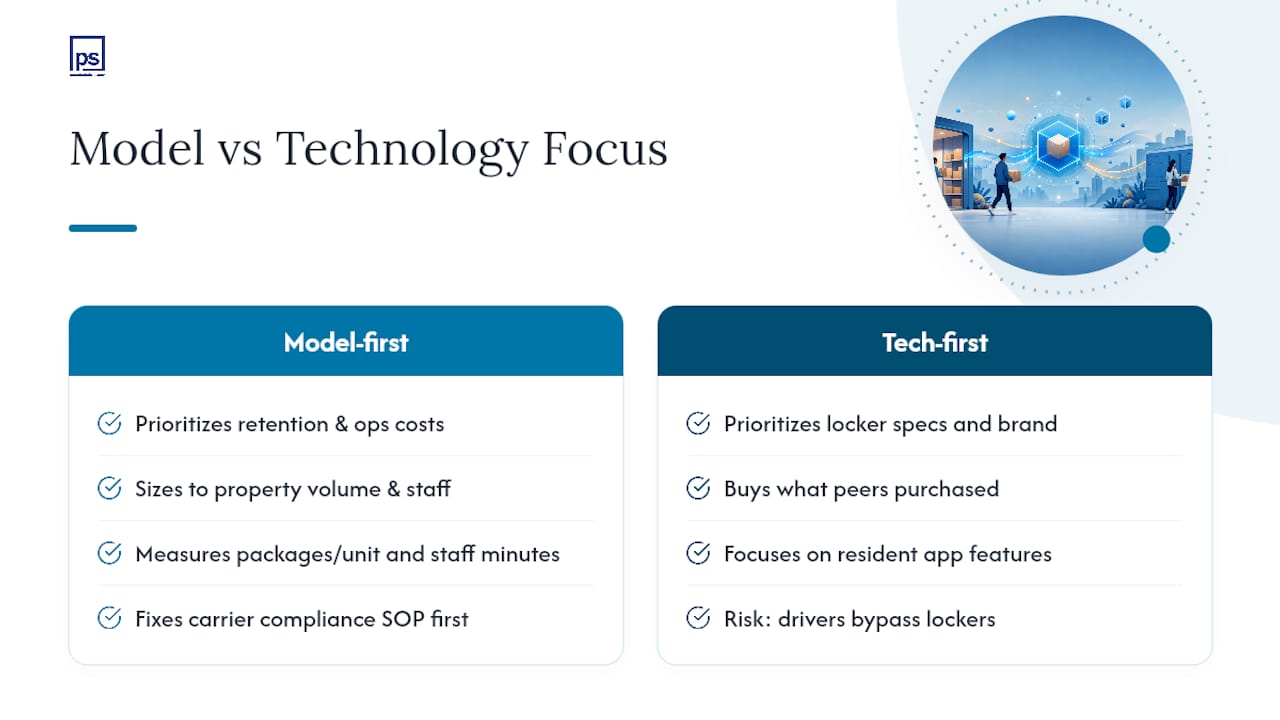
The conventional advice on this topic obsesses over hardware specs, comparing locker brands and touchscreen sizes as if the equipment were the whole answer. That misses the real lever. The business case for package management strengthens most when operators treat it as a retention and operating-cost issue first and a technology purchase second, since the strongest outcomes track back to process discipline, not the locker vendor’s logo.
A 500-unit student housing property and a 60-unit garden-style community do not need the same solution, and a lot of procurement decisions go sideways because someone bought what a peer property bought instead of sizing to their own volume and staffing reality. The honest starting point is your own package count per unit and your own staff minutes per package, not a vendor’s glossy case study from a building nothing like yours.
If there’s one thing worth prioritizing first, it’s carrier compliance. A gorgeous locker wall means nothing if drivers keep leaving packages on the leasing office counter because the intake workflow slowed them down. Get that SOP right before you worry about which app residents will use.
Ready to Reduce Package Chaos at Your Property?
Postal Solutions manages daily package-room organization and audits, and we sell and install Luxer One electronic package rooms and locker systems, either as standalone hardware or bundled with ongoing managed visits. Unlike a one-time hardware purchase with no follow-through, our approach keeps a person accountable for the room every single day, so unit labeling, sorting, and weekly audits actually happen instead of slipping once the installer leaves.
A pilot or ROI conversation starts with your property’s basic numbers: unit count, current package volume, and staff time spent handling parcels today. From there, we can model expected labor savings and recommend whether a managed service, a locker install, or a hybrid setup fits your building best. Visit our apartment package management page to request a quote and get your property’s ROI estimate started.
Sources
- What’s the ROI on smart lockers for apartments? | Luxer One
- A Framework for Solving Multifamily’s Package Management Problem | Insights by Blueprint
- Multifamily Package Management Solutions Impact Resident Retention | Techscribe
- How To Set Up A Package Room In 2026 | Swiftlane
FAQ
What is the best way to receive packages at an apartment community?
The most reliable approach combines a managed package-room service with right-sized locker hardware, matched to your property’s actual package volume and staffing capacity rather than a one-size-fits-all install.
How many packages does a typical apartment property receive?
Volumes vary widely by property, but many residents now receive three to four packages a week, and total resident package volume has roughly tripled over the past decade.
What is the difference between a package room and a locker system?
A package room is a secured space with access control and cameras where staff sort and store parcels, while a locker system gives residents individual, self-service compartments accessed by PIN or QR code with an automatic digital audit trail.
How do I calculate ROI on a package management upgrade?
Multiply your daily package count by staff minutes spent per package to estimate weekly labor hours, then compare that cost against a managed service or locker system’s projected labor savings.
Does Postal Solutions install package lockers or just manage packages?
Postal Solutions does both: we sell and install Luxer One package room and locker systems, and we also offer daily managed visits to organize, label, and audit the package room ongoing.