Property Managers: Template Clause & Checklist for Abandoned Packages
Property Managers: Template Clause & Checklist for Abandoned Packages Property managers generally cannot toss, sell, or claim an unclaimed package the moment it sits unpicked. Disposal usually requires following state abandoned-property
Published
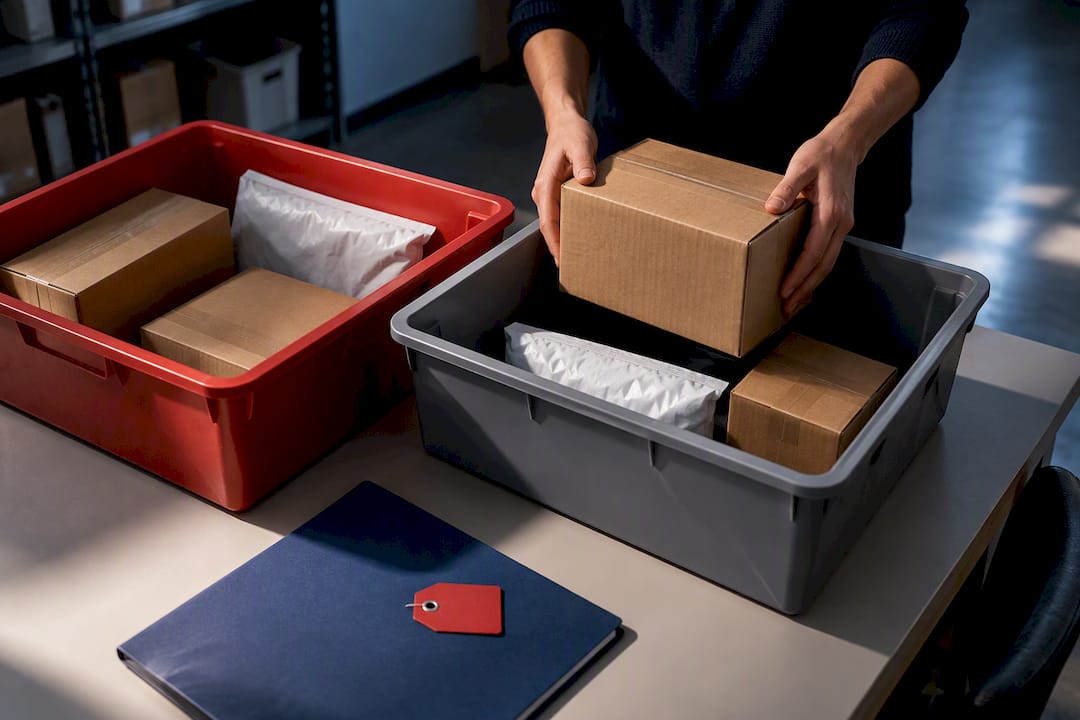
Property managers generally cannot toss, sell, or claim an unclaimed package the moment it sits unpicked. Disposal usually requires following state abandoned-property rules, giving residents written notice, and honoring a hold window before anything moves. Federal mail-theft law also applies to anything USPS delivered, so unilateral disposal carries real risk. Residents facing a missing package should document it, pull carrier tracking, and notify management and the carrier the same day.
TL;DR:
- Properly disposing of unclaimed packages requires adherence to state laws, including written notices and specific hold periods, which vary widely by jurisdiction.
- Federal law prohibits any unapproved disposal or sale of USPS-delivered packages, making documented, lawful procedures essential to avoid mail-theft violations.
- Property managers’ liability depends on their contractual promises; accepting packages as a courtesy limits responsibility unless lease or marketing suggests otherwise.
- Implementing controlled intake procedures, such as logging, photographing, and secure storage, helps prevent legal disputes and reduces theft risks.
- Clear, upfront communication about package acceptance policies and a documented return-to-sender process can turn package management into a resident-service advantage.
Table of Contents
- How Federal and State Laws Shape an Abandoned Package Policy for Apartments
- When Does Accepting Packages Create Liability for Property Managers?
- Sample Policy Language and a Return-to-Sender Procedure
- What Should a Resident Do if a Package Goes Missing?
- Operational Practices That Prevent Packages From Becoming a Legal Problem
- Why Policy Clarity Turns a Liability Into a Resident-Service Advantage
- How Postal Solutions Helps You Build a Compliant Package System
- Sources
- FAQ
How Federal and State Laws Shape an Abandoned Package Policy for Apartments
The federal piece is non-negotiable and it is stricter than most managers assume. 18 U.S.C. §1708 makes it a crime to steal, receive, or possess mail that was stolen, including packages the U.S. Postal Service actually delivered. That statute does not care whether the person holding the box is a resident or a leasing office employee. If a package came through USPS and gets thrown out, sold, or opened without a clear, documented process behind it, the property has stepped into mail-theft territory, not just a landlord-tenant dispute.
State abandoned-property law governs everything else. Most states require written notice to the resident, a defined reclamation window, and an inventory before a property can store, dispose of, or sell anything left behind. Nolo’s guide to abandoned tenant property walks through how these notice-and-storage rules typically work, and some states even let proceeds from a lawful sale apply to unpaid rent. The exact hold period varies widely by jurisdiction.
Philadelphia is a useful illustration of how granular this gets: local guidance describes a 10-day window for the tenant to make contact, followed by a 30-day storage period before final disposition, as one city’s implementation of the standard notice-plus-storage framework. Local abandoned-property rules in Philadelphia show that a policy written for one state will not automatically hold up in another.
Statutory hold windows commonly cited across states require a written notice period, followed by a separate storage period before disposal or sale, with specific times varying widely by jurisdiction and often set between about one to several weeks.
A compliant policy needs to check these boxes:
- Confirm your state’s abandoned-property statute and its specific notice and storage windows.
- Send written notice to the resident’s last known address and email, and keep proof of that notice.
- Log and photograph the item before moving or storing it anywhere.
- Store packages securely, separate from active inventory, until the hold period lapses.
- Follow the statute’s disposal or sale procedure exactly. Do not improvise.
One legal discussion on returning unclaimed packages to sender suggests that giving residents clear, documented notice before a scheduled clean-out reduces the odds that a return-to-sender action gets characterized as theft or fraud under federal law. That is not a substitute for legal advice, but it reinforces why notice comes before action, always.
When Does Accepting Packages Create Liability for Property Managers?
Duty of care changes based on what the property actually promises. A manager who advertises package acceptance as an amenity, or writes it into the lease, takes on a higher standard of care than one who accepts packages purely as a courtesy with no formal commitment. Bornstein Law’s analysis of package theft liability makes the distinction clear: securing common areas is a reasonable expectation, but that duty typically does not extend to every individually addressed package unless a lease or marketing promise creates it.
Even without a heightened contractual duty, reasonable care protects residents and the property’s reputation. Trade guidance from NAAHQ’s package management best practices recommends deciding deliberately whether to accept packages at all, then building carrier SOPs around that choice rather than letting policy form by accident at the front desk.
Controls that actually reduce liability include:
- Restricting package room or locker access to badge, key, or PIN entry.
- Logging every intake with unit number, carrier, and timestamp.
- Requiring photo ID or a matching name for release.
- Posting pickup windows and refused-carrier rules where residents see them.
- Treating hallway drop-offs and former-tenant deliveries under a written, consistent rule rather than case-by-case judgment.
Pro Tip: If you decide to stop accepting packages entirely, disclose that in the lease and leasing materials up front. NAAHQ’s guidance notes that silent refusal creates resident backlash and puts the property at a competitive disadvantage against communities that do offer package management.
Sample Policy Language and a Return-to-Sender Procedure
A workable clause needs three things: a defined hold window, a limitation on liability, and a specific disposal trigger tied to your state’s statute. Here is language many properties can adapt directly into a lease addendum or resident handbook.
“Management will accept packages delivered by common carriers as a courtesy and will exercise reasonable care in storing them. Packages must be retrieved within [X] days of arrival. Unclaimed packages will be logged, photographed, and held per [state] abandoned-property law. After the statutory notice period, unclaimed items may be returned to sender, donated, or disposed of according to state requirements. Management is not liable for items not retrieved within the stated window.”
The notice you send matters as much as the clause itself. It should include the resident’s name, unit number, a description of the item, the date received, and the deadline to claim it, sent by both email and a physical notice with a delivery record kept on file.
A simple intake sequence keeps the paper trail airtight:
- Log the package on arrival with unit number, carrier, and date.
- Highlight or handwrite the unit number directly on the label.
- Photograph the item if the address or resident status is unclear.
- Notify the resident immediately through your existing notification system.
- Mark the pickup deadline and track it against your state’s hold window.
- Record the final disposition (picked up, returned to sender, or disposed of) in a permanent log.
That log becomes your defense if a resident later disputes what happened to a package.
What Should a Resident Do if a Package Goes Missing?
Move fast and document everything before you call anyone.
- Photograph the delivery area and any packages currently sitting there.
- Pull the carrier’s tracking number and save the proof-of-delivery screenshot.
- Notify property management in writing, not just verbally at the front desk.
- Contact the carrier or seller directly to open a claim.
- File a police report if theft looks likely, especially for high-value items.
USPS losses escalate differently than a lost UPS or FedEx package. A missing USPS package that shows as delivered can be escalated to a USPS postal inspector investigation, since federal mail-theft law covers it directly. Private carriers instead route through their own internal claims process, which moves faster but offers less legal weight.
Packages addressed to a previous tenant need their own rule. Mark it “return to sender,” add a note that the addressee no longer resides there, or follow your property’s documented return policy; either way, log the action taken.
Pro Tip: Keep a screenshot folder, not just a mental note. Tracking pages disappear or get overwritten, and a saved image with a timestamp is worth more than a memory when you are filing a claim three weeks later.
Operational Practices That Prevent Packages From Becoming a Legal Problem
Most abandoned-package disputes trace back to a missing step in the intake process, not a bad-faith decision by anyone involved. Postal Solutions’ guidance on failed delivery and package intake at apartments lays out a five-stage flow that closes those gaps: intake, log, notify, pickup, and overflow or return. Publishing that sequence, and actually running it daily, does more to prevent legal exposure than any clause buried in a lease.

Carrier behavior is the biggest variable managers underestimate. Standardizing it with a posted pictorial SOP at the delivery entrance, plus a QR code or PIN for frequent-route drivers, cuts down on packages left in stairwells or mislabeled units.
Package theft has risen enough industry-wide that most multifamily package management guidance now treats audit trails and defined pickup windows as baseline requirements, not optional upgrades.
Choosing between a locker system and a monitored package room depends on volume and item type:
- Lockers work best for self-service pickup and produce a clean, automatic audit trail.
- Monitored rooms handle oversized or perishable deliveries lockers cannot.
- Hybrid setups absorb holiday surges without overwhelming either system.
A weekly audit, unit numbers highlighted on every label, and a staged overflow plan for peak seasons round out the operational side. Reducing apartment package theft starts with these habits, not with the lease clause alone.
Why Policy Clarity Turns a Liability Into a Resident-Service Advantage
Most properties treat abandoned-package policy as risk management. It works better as an amenity story. Residents notice when a community has a documented, predictable process, because it means fewer disputes over “where did my package go” and less staff time spent digging through unlabeled boxes.
The fastest fix is small: post a three-step driver SOP at the main delivery entrance this month. Pair it with a compliant hold-and-notice window, and you get a defensible record if a dispute ever escalates, plus a package room residents actually trust.
— Postal Solutions
How Postal Solutions Helps You Build a Compliant Package System
Writing a policy is one thing. Running it every day without burning out your leasing staff is another. The daily grind behind an abandoned package policy for apartments includes logging intake, highlighting unit numbers on labels, completing weekly audits, and keeping the return-to-sender and disposal steps documented so your property stays aligned with state notice requirements.
For properties still deciding between hardware, resellers offer sales and installation of Luxer One locker and package room systems, including indoor lockers, smart package rooms, and refrigerated units for perishable deliveries. Combine that with daily package management services, and you get a property that runs the process instead of reacting to it. This is operational guidance, not legal advice. Reach out to Postal Solutions for a consultation on the policy template and system that fits your property’s volume and staffing model.
Sources
- U.S. Code, Title 18 §1708 – Theft or receipt of stolen mail matter generally
- NAAHQ — Package management best practices
- Nolo — Handling tenants’ abandoned property: legal notice requirements
- Philadelphia Apartment Abandoned Property Rules in 2026
FAQ
How bad is it to leave abandoned items in a moved-out apartment?
Leaving property behind after move-out triggers your state’s abandoned-property statute, which typically requires the landlord to send written notice and hold the items for a set period before disposal. The former tenant can usually still face costs or lose claim to the property once that statutory window closes, so responding to notice quickly protects your options.
Can I sue my apartment complex for stolen packages?
It depends on whether the property created a duty of care through its lease or marketing. If package acceptance was promised or the lease outlines a responsibility, a resident may have a claim; if it was a pure courtesy with no contractual promise, liability is much harder to establish.
Can my apartment refuse to accept packages?
Yes, a property can choose not to accept packages, but NAAHQ’s guidance recommends disclosing that policy clearly in leasing materials first. Silent refusal creates resident frustration and puts the property at a disadvantage against communities offering package management as an amenity.
What should I do with a package addressed to a previous tenant?
Mark it for return to sender, add a note that the addressee no longer lives at the property, or follow your community’s written return policy, and log whichever action you take. Never dispose of it outright since it may still be actively tracked by the sender or carrier.
What does Postal Solutions charge for package management services?
Pricing depends on property size, package volume, and whether you want management services, Luxer One hardware, or a combined solution. Current pricing details are available directly through Postal Solutions.