High-Volume Package Handling for Apartment Communities
Discover effective high-volume package handling strategies for apartment communities. Enhance resident satisfaction and boost staff productivity.
Published
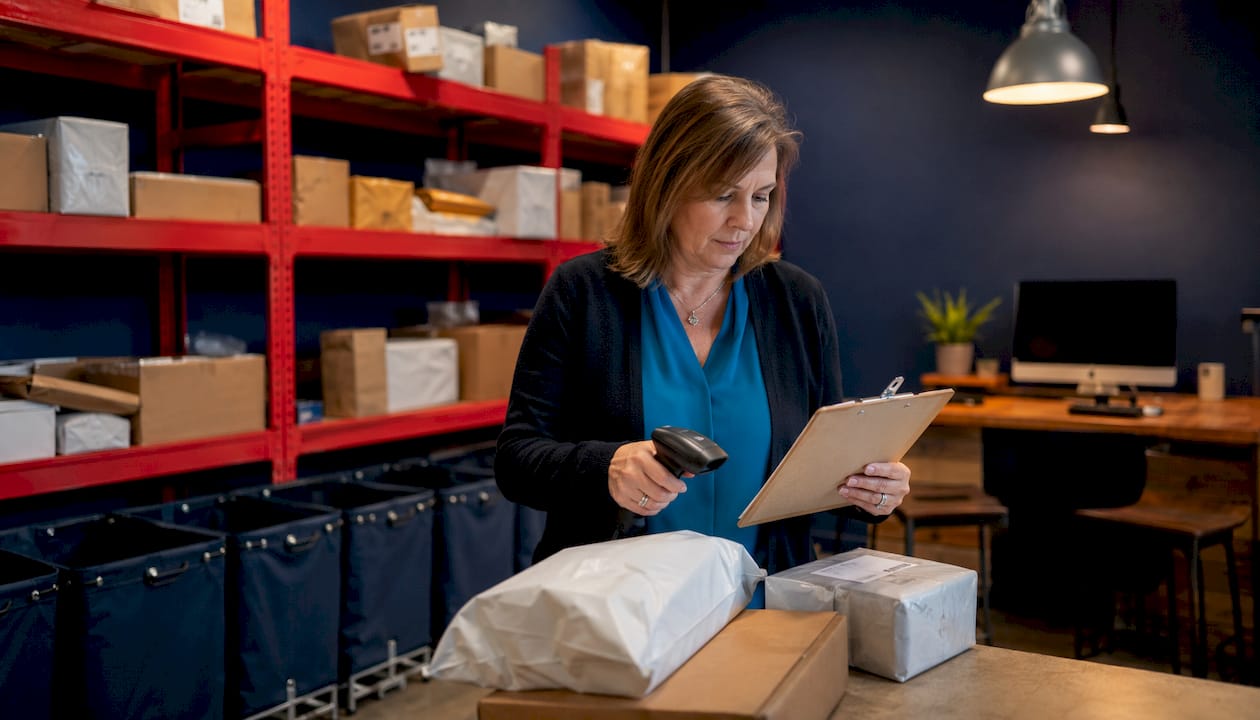
High-volume package handling is the process of receiving, sorting, storing, and distributing large quantities of packages in residential communities with minimal staff burden and maximum resident convenience. The industry term for this discipline is parcel logistics management, and property managers who treat it as an operational priority see measurable gains in resident satisfaction and staff productivity. The average multifamily community receives 150 packages per week, surging to 270 packages weekly during peak holiday seasons. That 81% volume spike is not an anomaly. It is a recurring operational stress test that exposes every weakness in your current setup. Getting ahead of it requires the right infrastructure, workflows, and management discipline before the surge arrives.
What does high-volume package handling actually require?
Effective parcel logistics management starts with infrastructure sized for peak demand, not average weekly volume. Successful properties plan for 20–25 packages daily per 100 units under normal conditions, with peak periods tripling that figure. Sizing your storage room for the average week means you will run out of space every holiday season without fail.
Beyond space, three technology categories are non-negotiable: access control, camera surveillance, and automated resident notification. Access control limits who enters the package room and creates an audit trail. Surveillance deters theft and resolves disputes quickly. Automated notifications reduce the volume of “where is my package?” calls to your front desk.
The choice between open shelving and locker systems carries real cost and operational tradeoffs:
- Open package rooms cost $1,500–$3,000 installed and handle oversized items well, but require staff to organize and label packages daily.
- Package locker systems cost $6,900–$20,000+ installed and offer self-service pickup, but struggle with oversized packages and require residents to retrieve items within a set window.
- Hybrid systems combine lockers for standard parcels with an open room for overflow and oversized items, providing the best operational flexibility.
Carrier compliance is the third pillar of effective setup. 70% of property managers cite carrier non-compliance as their top frustration. Drivers who leave packages in hallways or bypass the designated drop zone create immediate security and liability problems. Establishing written carrier protocols before your system goes live is not optional.
| Feature category | Open package room | Locker system | Hybrid setup |
|---|---|---|---|
| Upfront cost | Low ($1,500–$3,000) | High ($6,900–$20,000+) | Moderate to high |
| Oversized package handling | Excellent | Poor | Excellent |
| Self-service pickup | No | Yes | Partial |
| Staff time required | Daily organization | Minimal | Low |
| Scalability | Limited | Moderate | High |
How to design a package room or locker system for high volume
Layout planning is where most properties make their most costly mistakes. The most common error is designing for today’s volume rather than projecting two to three years of resident growth. Planning storage for two to three days of peak capacity prevents overflow and operational disruption during the busiest weeks of the year.

Space and layout fundamentals
Allocate floor space based on peak daily volume, not average volume. A 300-unit property expecting 75 packages per day at peak needs enough shelving and floor space to hold two to three days of that volume without stacking packages on top of each other. Wide aisles matter. Residents and staff need to move through the room without shifting boxes to reach packages in the back.
For locker systems, AI-powered smart package rooms increase spatial efficiency by allowing packages of different sizes to be placed close together, tripling storage capacity compared to fixed-compartment lockers. That efficiency gain is significant for properties where floor space is limited.
Technology integration checklist
- Install a package management software platform that logs each delivery with a timestamp and unit number.
- Connect the software to your automated notification system (email, SMS, or app push notification).
- Integrate access control so residents receive a unique entry code or QR code tied to their specific package.
- Mount cameras at the entry point and throughout the room, with footage retained for at least 30 days.
- Plan for a dedicated overflow zone for refrigerated items, freight deliveries, and packages too large for standard shelving.
Pro Tip: Label every shelf zone by unit number range before your first delivery arrives. A resident searching for their package in an unlabeled room will call the front desk every time, erasing the time savings your system was designed to create.
What operational workflows streamline package intake and resident pickup?
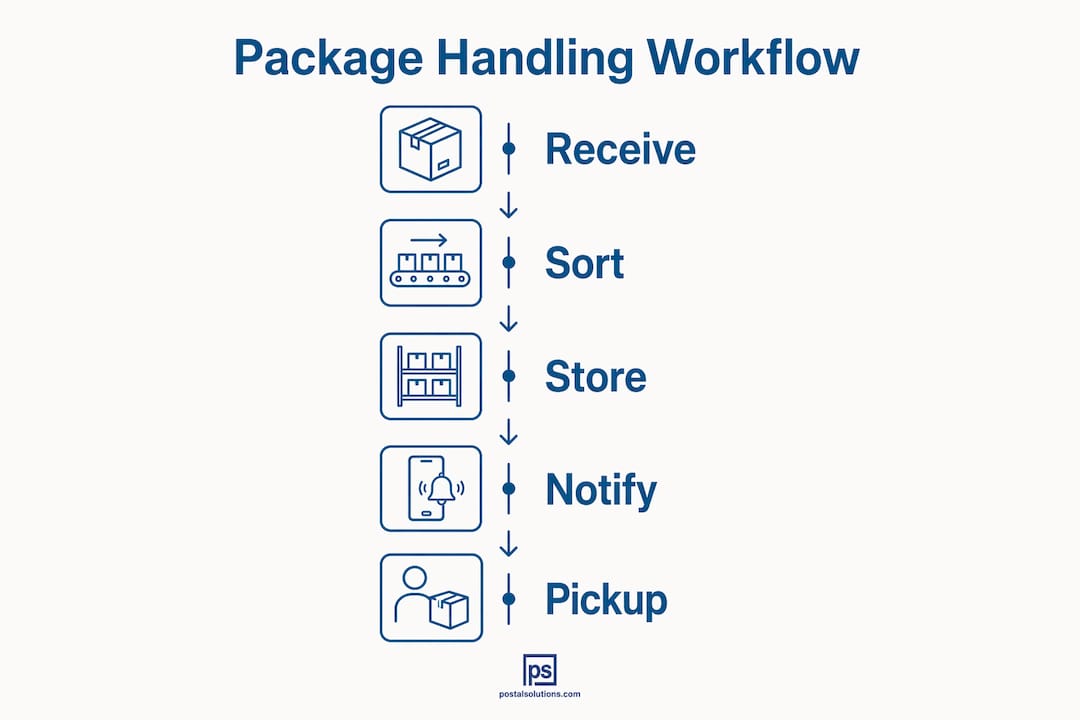
A repeatable daily workflow is what separates a functional package room from a chaotic one. 68% of property staff spend 1–4 hours per week managing packages, and 52% store packages in offices rather than dedicated rooms. Both figures point to the same root problem: no standardized process.
The intake-to-pickup workflow has five steps:
- Carrier drop-off. Carriers scan packages at the designated entry point. Your access control system logs the delivery time. Staff or a managed package service confirms the drop matches the carrier’s manifest.
- Logging and labeling. Each package gets logged in your package management software with the resident’s unit number. If the carrier label is unclear, the unit number is written directly on the box before it goes on the shelf.
- Sorting and placement. Packages go to the shelf zone corresponding to the resident’s unit number range. Oversized items go to the designated overflow area. Nothing gets stacked in front of another resident’s packages.
- Resident notification. The software sends an automated alert to the resident via their preferred channel. The alert includes pickup instructions and, for locker systems, a unique access code.
- Pickup and audit. Residents retrieve their packages using their access credentials. Weekly audits identify unclaimed packages and trigger follow-up notifications to residents.
Automation at steps 1, 3, and 4 is what drives the biggest time savings. Properties that automate intake, sorting, and inquiry management save an average of 30 hours per week for a 300-unit property. That is nearly a full-time employee’s weekly hours recovered through process discipline and technology.
Pro Tip: Run a weekly audit every Monday morning. Packages sitting unclaimed for more than five days create clutter, block access to other residents’ items, and signal a notification failure worth diagnosing.
Metrics worth tracking include average pickup time (how long from notification to retrieval), unclaimed package rate, and carrier compliance incidents per week. These three numbers tell you whether your system is working or quietly failing.
How to manage peak delivery seasons and common challenges
Peak season is a capacity and communication problem above everything else. Volume increases by 81% during holiday periods, and properties that have not planned for that surge will see locker overflow, resident complaints, and staff burnout within days of the surge beginning.
Capacity planning before peak season
- Audit your current storage capacity in october, before the holiday surge begins.
- Calculate your expected peak daily volume using the 20–25 packages per 100 units baseline, then multiply by three.
- Identify a temporary overflow space (a secured utility room or leasing office corner) that can absorb excess volume for two to three days.
- Confirm your carrier communication protocols are current and that all active drivers have received your drop-off instructions.
Common problems and direct solutions
Locker overflow. When all locker compartments are full, carriers leave packages in hallways or refuse delivery. The fix is a designated overflow shelf in an adjacent secured room, communicated to carriers in writing before peak season.
Carrier non-compliance. Standardizing carrier communication through pictorial standard operating procedures and driver onboarding reduces delivery disruptions significantly. A one-page visual guide posted at the delivery entrance costs almost nothing and resolves a majority of compliance issues.
Resident delays. Residents who do not pick up packages within 24–48 hours block space for incoming deliveries. Automated follow-up notifications at the 24-hour and 48-hour marks, combined with a clear unclaimed package policy in the lease, reduce this problem substantially.
Resident satisfaction depends heavily on reliable package delivery, and balancing convenience with cost protection becomes more critical as volume grows. A resident who misses a package or finds the room disorganized will remember that experience at renewal time.
Manual package handling does not scale. As volume grows, manual processes create staff burnout and resident friction faster than any other single operational failure. Automation and infrastructure upgrades are not a luxury at scale. They are the baseline requirement for a functional community.
Key takeaways
Effective parcel logistics management in multifamily communities requires infrastructure sized for peak volume, automated workflows, and consistent carrier compliance protocols to protect staff time and resident satisfaction.
| Point | Details |
|---|---|
| Size for peak, not average | Plan storage capacity for three times your normal daily volume to prevent holiday overflow. |
| Automate intake and notifications | Automation saves up to 30 hours per week for a 300-unit property by eliminating manual logging and inquiry calls. |
| Hybrid systems offer the most flexibility | Combining lockers with an open overflow room handles both standard and oversized packages without sacrificing self-service. |
| Carrier compliance is non-negotiable | 70% of property managers cite carrier non-compliance as their top frustration; pictorial SOPs reduce incidents significantly. |
| Weekly audits prevent clutter buildup | Auditing unclaimed packages every week keeps the room functional and identifies notification failures early. |
What nine years of package room work has taught me
The property managers who struggle most with package volume are almost always the ones who designed their system for the day they opened, not for the day three years later when their community is fully leased and e-commerce has doubled. I have seen beautifully designed package rooms become unusable within 18 months because no one planned for growth.
The second lesson is harder to accept: carrier compliance is largely your responsibility, not the carrier’s. Drivers follow the path of least resistance. If your drop-off zone is unclear, unlabeled, or inconvenient, packages will end up in the lobby. A laminated visual guide at the delivery entrance, updated every time a new carrier starts servicing your property, is one of the highest-return investments a property team can make.
The third lesson is about cost framing. Properties that resist investing in managed package room services often do not account for the full cost of the status quo. When 85% of properties offer secure package rooms but staff still spend hours per week managing them manually, the property is paying twice: once in payroll and once in lost productivity on higher-value tasks. A managed service or a well-configured automated system pays for itself faster than most property teams expect.
The future of parcel logistics management in multifamily is hybrid: automated lockers for the majority of deliveries, open rooms for overflow and freight, and managed daily organization to keep both systems current. Properties that build that model now will not be scrambling to retrofit it in two years.
— Postal Solutions
How Postal Solutions supports your package management operations
Postal Solutions manages package room outsourcing for apartment communities across the country, including conventional multifamily, student housing, and senior housing. The service includes daily visits to organize the package room, mark unit numbers on packages, and complete weekly audits using your existing package management software. For communities that want a full infrastructure solution, Postal Solutions sells and installs Luxer One package room and locker systems nationwide, with over 1,200 installations across more than 40% of U.S. states. Whether you need managed daily package room visits, a new Luxer One locker system, or a combination of both, Postal Solutions manages the operation so your staff can focus on resident service.
FAQ
What is the average package volume for a multifamily community?
The average multifamily community receives 150 packages per week under normal conditions. That volume increases by 81% to approximately 270 packages per week during peak holiday seasons.
How much space does a package room need for high-volume deliveries?
Size your package room for peak daily volume, not average volume. Properties should plan for 20–25 packages per 100 units daily under normal conditions, with peak periods requiring three times that capacity.
What is the difference between a package room and a locker system?
A package room uses open shelving and requires daily staff organization, handling oversized items well at a lower upfront cost. A locker system offers self-service pickup and requires minimal staff time but costs significantly more and handles oversized packages poorly.
How do I reduce carrier non-compliance at my property?
Post a pictorial standard operating procedure at the delivery entrance and provide written drop-off instructions to every active carrier servicing your property. Standardized visual guides reduce compliance incidents without requiring ongoing staff intervention.
Can a managed package service replace in-house staff for package handling?
A managed package service handles daily organization, unit number labeling, and weekly audits without adding to your payroll. It removes the package management burden from leasing and maintenance staff, recovering hours that can be redirected to resident-facing priorities.
Recommended
- Apartment Package Management Services | Multifamily Package Room Operations | Postal Solutions
- How to Manage High Volume Package Deliveries in Multifamily Housing | Postal Solutions
- Apartment Mail & Package Resources — Guides, Comparisons, Use Cases | Postal Solutions
- How to Accept Resident Packages Safely in Apartments | Postal Solutions