Get Audit Ready Logs: Refrigerated Locker Sanitation for Property Ops
Get Audit Ready Logs: Refrigerated Locker Sanitation for Property Ops Wipe down refrigerated locker interiors and disinfect regularly, check condensers and door seals periodically, and clean coils at least annually, or more often if the uni
Published
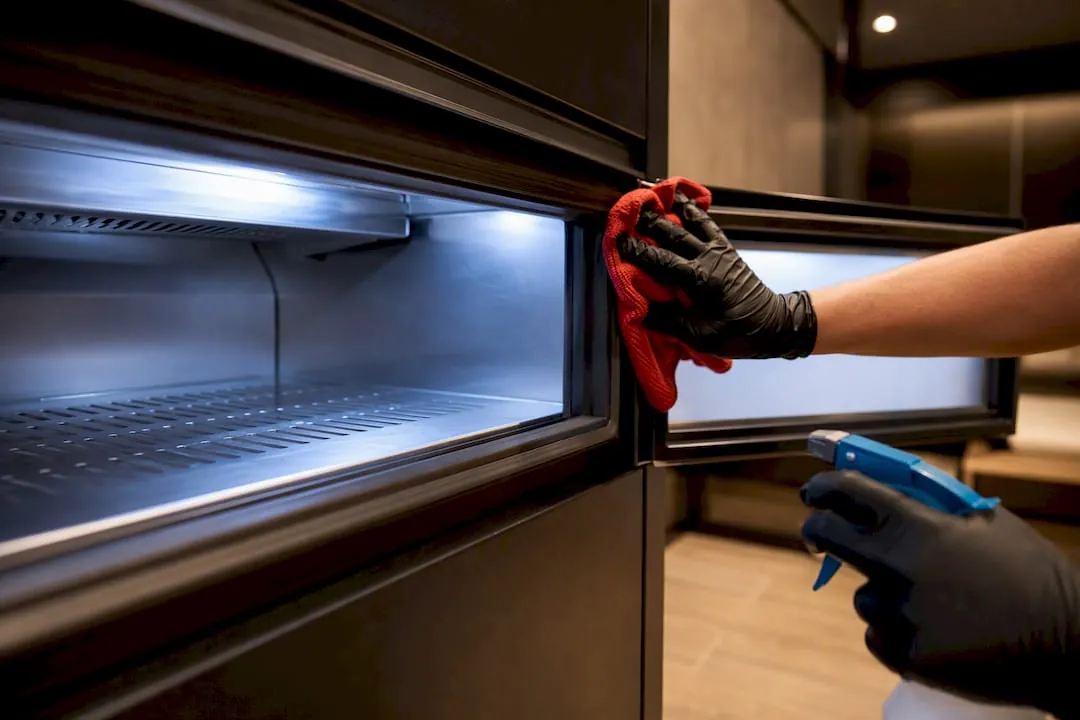
Wipe down refrigerated locker interiors and disinfect regularly, check condensers and door seals periodically, and clean coils at least annually, or more often if the unit is outdoors. Unplug the unit or follow manufacturer lockout steps before any deep cleaning, and call an authorized technician for anything involving the compressor or electrical panel. Busy properties that can’t keep this cadence consistent often shift the work to a managed service rather than letting it slide.
TL;DR:
- Staff should escalate immediately if temperature drift persists or strong odors continue after cleaning, as these indicate mechanical issues rather than hygiene problems.
- Monthly inspections must include checking for cracks, gaps, or sagging at gaskets and hinges to prevent spoilage and ensure proper seal integrity.
- Regular condenser coil cleaning and visual control panel checks are essential maintenance tasks that property staff can perform in-house to prevent costly repairs.
- Outdoor units require more frequent cleaning and seal checks during winter, summer, or in high humidity conditions to maintain functionality and prevent pests.
- Managed services that offer scheduled inspections and record-keeping can ensure consistent sanitation without overburdening staff, especially for busy or high-exposure property environments.
Table of Contents
- A Daily, Weekly, and Monthly Sanitation Checklist
- How to Clean Refrigerated Lockers Step by Step
- What Technical Maintenance Can Staff Handle In-House?
- Adjusting for Weather and Site Exposure
- Keeping Staff Safe and Residents Informed
- Handling Spoiled or Contaminated Packages
- Health Codes and Compliance Standards to Know
- Pest Control Around Refrigerated Lockers
- When Managed Sanitation Makes More Sense Than DIY
- Get Refrigerated Lockers Installed and Managed the Right Way
- Manuals and Guidance Worth Keeping on File
- Sources
- FAQ
A Daily, Weekly, and Monthly Sanitation Checklist
Refrigerated locker sanitation breaks down into three rhythms: quick daily checks, deeper weekly disinfecting, and monthly mechanical inspections. Staff already walking the package room can fold most of this into an existing round.
Every visit:
- Check the temperature readout for drift outside the normal range
- Do a quick odor check with the door open
- Clear out cardboard, packing material, or spilled liquid
- Confirm every door latches fully and the gasket seats flush
Weekly tasks:
- Disinfect handles, keypads, and other high-touch surfaces
- Log the temperature reading in the maintenance sheet
- Empty and rinse drainage trays if the unit has them
Monthly tasks:
- Inspect gaskets and hinges for cracking, gaps, or sagging
- Vacuum accessible condenser vents to clear dust and lint
- Run a full door-seal test by closing on a sheet of paper and checking for slip
Escalate promptly if you observe sustained temperature drift, persistent odors after cleaning, or alarm codes on the control panel, as these indicate mechanical issues rather than cleaning gaps. Those signs point to a mechanical issue, not a cleaning gap, and waiting usually turns a small fix into a service call.
How to Clean Refrigerated Lockers Step by Step
Good cooler cleanliness practices depend more on sequence than on how hard you scrub. Skip a step and you either leave residue behind or damage a seal that took months to wear in properly.
Supplies to keep on hand:
- Mild, non-abrasive detergent
- An approved disinfectant, food-contact safe where the locker holds perishable deliveries
- Microfiber towels for a streak-free, lint-free finish
- A soft brush for corners, tracks, and hardware
- Gloves and basic PPE
- A small handheld vacuum for loose debris
Start by clearing the locker completely and removing any loose debris, crumbs, or packaging residue before a drop of liquid touches the interior. Never spray cleaner or water directly onto keypads, control panels, or any exposed electronics. Overspray is one of the most common ways a locker’s electronics fail early, and it’s entirely avoidable.
- Wipe every interior surface with mild detergent on a damp cloth, working top to bottom.
- Apply the disinfectant and let it sit for the manufacturer’s or product’s recommended dwell time. Rushing this step defeats the purpose of disinfecting in the first place.
- Wipe the surface dry with a microfiber towel and inspect the gasket for tears, gaps, or buildup.
- Test the door for a full, even close, then check the temperature readout to confirm the unit recovered properly after being open.
Avoid cleaners containing chlorite or harsh solvents. Manufacturer guidance for units like the COOL CENTER CoolCellar 100 6D Lockers explicitly warns against these chemicals because they degrade seals and interior finishes faster than mild detergent ever will. That same guidance is blunt about water and electrical components: never pour or spray liquid anywhere near the compressor or electrical panel.
Record the pre- and post-cleaning temperature every time, along with any note about odor, staining, or physical damage. That log becomes your evidence trail if a resident ever disputes a spoiled delivery.
Pro Tip: Keep a laminated cleaning card taped inside the package room door listing the exact detergent, disinfectant, and dwell time your property uses. New staff follow it correctly on day one instead of guessing.
What Technical Maintenance Can Staff Handle In-House?
Some maintenance for refrigerated unit cleaning belongs to property staff. Other tasks belong to a licensed technician, and mixing up the two either voids a warranty or creates a real safety hazard.
In-house tasks:
- Vacuum or soft-brush the condenser coils on a regular schedule, at minimum annually and more often in dusty or high-traffic areas
- Inspect gaskets and hinges monthly for wear, and tighten loose hinge hardware as needed
- Wipe down and visually inspect the control panel without ever applying water directly to it
The condenser coil is the single most failure-prone component in a refrigerated locker, and a clogged coil forces the compressor to run harder and longer just to hold temperature. That extra strain is what turns a minor coil cleaning into a significant compressor repair.
Call a technician for:
- Unusual compressor noise, cycling, or a temperature that won’t stabilize after a normal reset
- Any repair touching refrigerant lines, wiring, or the compressor itself
- Firmware issues or diagnostic codes the control panel can’t clear on its own
Keep a service log with dates, technician names, serial numbers, and a summary of what was done at every visit. That record matters both for warranty claims and for spotting a pattern of the same fault showing up every few months, which usually means a deeper problem staff cleaning alone won’t fix.
Adjusting for Weather and Site Exposure
Environmental exposure changes how often lockers need attention, and skipping the adjustment is where a lot of outdoor and semi-exposed units run into trouble.
- Winter: Clear snow and ice from around doors and vents, check seals for gaps that let cold air in and freeze hardware, and skip harsh de-icing chemicals on locker surfaces. Cold-weather prep guidance recommends monitoring system dashboards closely during freezing stretches so a small seal gap doesn’t turn into a jammed door.
- Summer and heat: Keep air panels and vents clear of debris so the condenser can actually move air, since blocked airflow is one of the fastest ways to overwork a compressor in hot weather.
- High humidity or coastal sites: Increase condenser and coil checks beyond the standard monthly pace to catch corrosion early.
- High-traffic or fully outdoor sites: Bump cleaning frequency up from weekly toward every few days if resident volume and exposure warrant it.
Keeping Staff Safe and Residents Informed
Refrigerated locker sanitation only works when the people doing it stay safe and residents know what to expect. Unplug the unit or follow the manufacturer’s lockout steps before any maintenance beyond routine wiping, wear gloves, and never let liquid near electrical components.
- Post a notice near the package room with pickup windows for perishable deliveries
- Give clear labeling guidance for medication or food packages so residents can flag priority items
- Provide a simple way for residents to report a temperature concern or odor
- Keep a trash and recycling bin near the package room so residents remove packaging on the spot instead of leaving it in the locker
Growing perishable delivery volume is exactly why multifamily package management guidance points to notifications and capacity planning as core parts of refrigerated storage, not an afterthought. Log every audit with the time, staff name, temperature reading, and any corrective action taken.
Handling Spoiled or Contaminated Packages
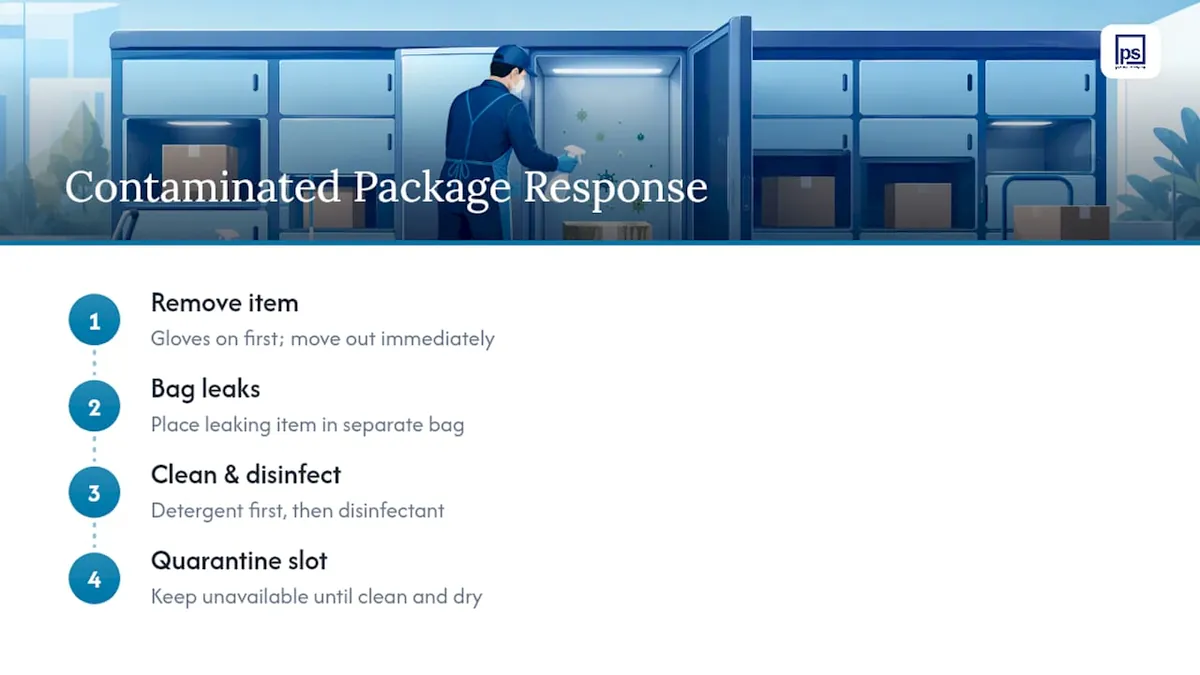
Spoiled or leaking packages need a clear removal protocol, not an improvised one. When staff find a compromised item, gloves go on first, before anything else touches the package.
Move the item out of the locker immediately rather than leaving it to contaminate neighboring packages or the shelf surface. Bag it separately if there’s any leakage, then wipe down the shelf and surrounding surfaces with detergent followed by disinfectant before another package goes in that spot. Treat that slot as unavailable until it’s fully cleaned and dry.
Document what happened: which locker, what the package was, the apparent cause (temperature failure, damaged packaging, expired delivery window), and what staff did about it. That documentation matters twice over. It protects the property if a resident disputes the loss, and it flags a pattern if the same locker keeps producing spoiled items, which usually points to a seal or temperature problem rather than bad luck.
Notify the resident promptly once a spoiled item is found and removed, and follow the property’s standard policy for compensation or claims. Residents who hear about a problem from staff before they discover it themselves are far less likely to escalate a complaint. Dispose of contaminated packaging in a separate bag from general recycling, especially for food items, to avoid attracting pests to the standard waste stream near the package room.
Building this response into the same routine as weekly disinfecting keeps it from becoming a special, panicked event every time it happens. It’s a checklist item, not a crisis.
Health Codes and Compliance Standards to Know
Refrigerated locker sanitation for apartment and student housing package rooms sits outside formal food-service health code jurisdiction. There’s no equivalent of a restaurant inspection for a package room locker, which means the compliance bar is set by manufacturer guidance, general liability standards, and your own documented practices rather than a health department checklist.
That doesn’t mean the standard is lower. It means the burden of proof shifts to your own records. Manufacturer manuals, like the guidance for CoolCellar-style units, function as the closest thing to a compliance standard available, covering cleaner types, condenser maintenance, and safe handling of electrical components. Following that guidance and keeping dated logs is what protects a property if a resident ever claims a package spoiled due to negligence.
General consumer protection and habitability standards still apply broadly to any shared amenity a property provides, including a package room. A documented sanitation and maintenance schedule, kept consistently and signed off by staff, is the practical evidence a property needs if a dispute over a spoiled delivery or an injury claim ever goes further than a phone call. Treat the audit log the same way you’d treat any other maintenance record for shared equipment: dated, specific, and kept on file for as long as your property retains other maintenance records.
Pest Control Around Refrigerated Lockers
Refrigerated lockers attract pests for a different reason than a warm package room does: condensation, drainage trays, and food residue rather than ambient heat. Standing water in a drainage tray that goes unemptied for weeks is one of the more overlooked pest triggers on a property, and it’s also one of the easiest to prevent.
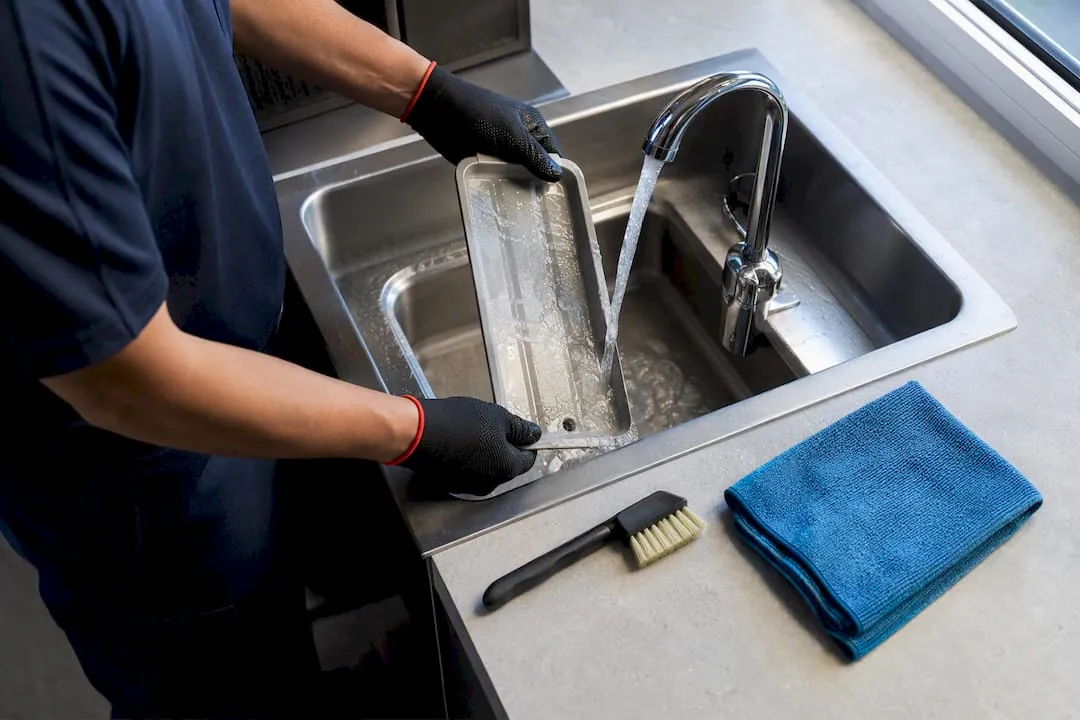
Empty and rinse drainage trays weekly as part of the standard sanitation routine rather than waiting for a visible problem. Check the seal around the door and any conduit or vent opening for gaps wide enough for insects to enter, since a compromised gasket is both a temperature problem and a pest entry point at the same time.
Keep the surrounding floor and wall area free of food debris and packaging scraps, since pests are drawn to a package room’s general clutter as much as to the locker itself. If a property already contracts pest control for the building, ask the vendor to specifically inspect the package room and refrigerated locker area during regular visits rather than assuming standard building coverage catches it.
Watch for early signs during routine checks: small debris trails, unusual odors beyond typical spoilage, or gnaw marks on gaskets or wiring insulation. Catching these during a weekly disinfecting pass is far cheaper than dealing with an infestation that’s had weeks to establish itself inside equipment that’s expensive to replace.
When Managed Sanitation Makes More Sense Than DIY
Busy properties often lose sanitation consistency to staffing gaps, not neglect. A property manager juggling leasing, maintenance requests, and turnover doesn’t always have room for a weekly disinfecting round that gets logged properly every single time.
Scheduled audits and daily package room organization cut resident complaints and staff hours spent searching for missing packages, because someone is consistently checking, cleaning, and documenting rather than reacting after a problem surfaces. Some companies have sold and installed Luxer One refrigerated locker systems across many U.S. states and pair that hardware with managed visits that keep sanitation and audits on schedule, so properties get consistency without adding it to an already full staff plate.
Get Refrigerated Lockers Installed and Managed the Right Way
Certain providers sell and install Luxer One refrigerated locker systems and back that hardware with managed visits, weekly audits, and consistent documentation, following the routine this article just walked through. That combination means a property gets the sanitation cadence and record-keeping outlined above without pulling leasing or maintenance staff off their own workload to cover it. Consistent, documented sanitation also gives a property a real answer when a resident asks about a spoiled delivery, instead of a shrug and a guess. If package room chaos or refrigerated locker upkeep has been eating staff hours, explore refrigerated package locker options built for exactly this kind of property, and reach out through Postal Solutions to talk through installation and managed-visit scheduling for your community.
Manuals and Guidance Worth Keeping on File
Keep the manufacturer’s cold-weather prep guidance and user manual on hand for quick reference during seasonal transitions and routine service. Multifamily-specific package management guidance is also worth bookmarking for capacity planning as delivery volume keeps climbing across student housing and conventional apartment communities alike.
Sources
- Package Management (NAA/NAAHQ guidance)
- How to Prepare Your Smart Lockers for the Cold Weather
- COOL CENTER CoolCellar 100 6D Lockers User Manual
FAQ
How Often Should Refrigerated Lockers Be Sanitized?
Wipe down interiors and disinfect weekly, with a quick visual and odor check at every staff visit to the package room.
What Cleaning Products Are Safe for Refrigerated Lockers?
Use a mild, non-abrasive detergent followed by an approved disinfectant with proper dwell time, and avoid cleaners containing chlorite or harsh solvents that damage seals and finishes.
When Should a Technician Handle Locker Maintenance Instead of Staff?
Call an authorized technician for anything involving the compressor, refrigerant lines, wiring, or persistent temperature drift that doesn’t resolve after a basic reset.
Do Outdoor Refrigerated Lockers Need a Different Sanitation Schedule?
Yes. Outdoor or high-traffic units need more frequent condenser checks and seal inspections, especially in freezing or high-humidity conditions.
Can a Managed Service Handle Refrigerated Locker Sanitation for a Property?
Yes. Some companies offer managed visits and weekly audits alongside Luxer One refrigerated locker installation, giving properties consistent sanitation and documentation without adding it to staff workload.