How Package Concierge Operates in Apartments: 2026 Guide
Discover how package concierge operates in apartments to streamline parcel management. Enhance resident satisfaction and efficiency today!
Published
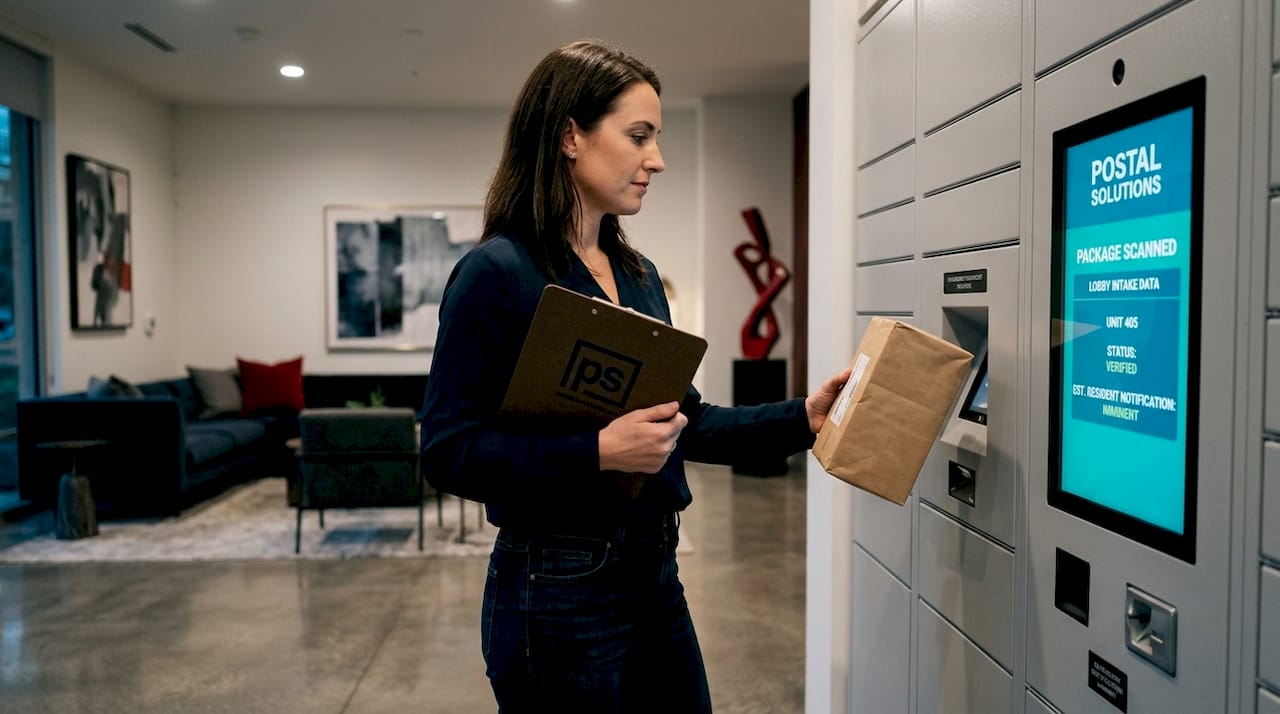
Package Concierge is defined as an automated package management system that uses smart lockers, AI-powered scanning, and real-time resident notifications to handle parcel intake, storage, and pickup inside apartment communities. Understanding how package concierge operates in apartments is no longer optional for property managers. With 33% of the global population shopping online, parcel volume has outpaced what traditional front-desk handling can absorb. This guide breaks down the full operational model, compares system types, and gives you a practical framework for selecting and deploying the right solution for your property.
How does the Package Concierge system improve package intake and tracking workflow?
Package Concierge systems transform the intake process by replacing manual logging with AI-driven scanning that cuts per-package processing time from 80 seconds to 4 seconds per package. That difference is not trivial. One property saved 1,344 labor hours across 7,000 units in just 70 days after deploying the Venn platform. When concierge staff are freed from manual data entry, they redirect that time to resident-facing service, which directly improves satisfaction scores.
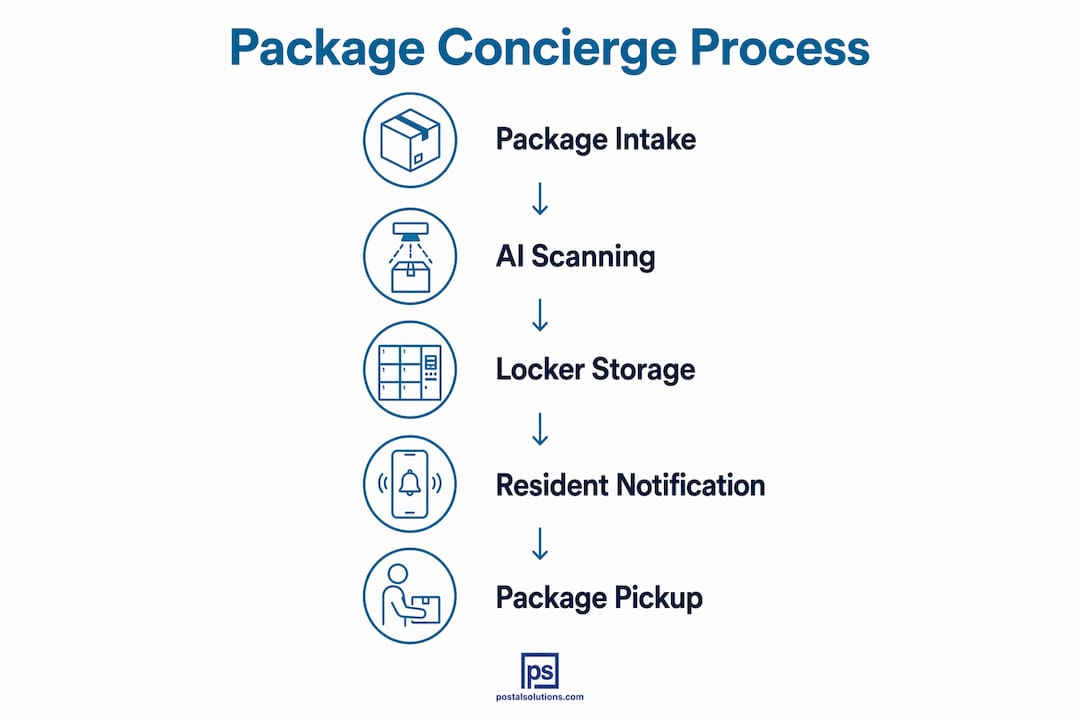
The workflow follows a clear sequence:
- Package arrives. A carrier delivers to the package room or locker bank. The concierge or automated kiosk receives the parcel.
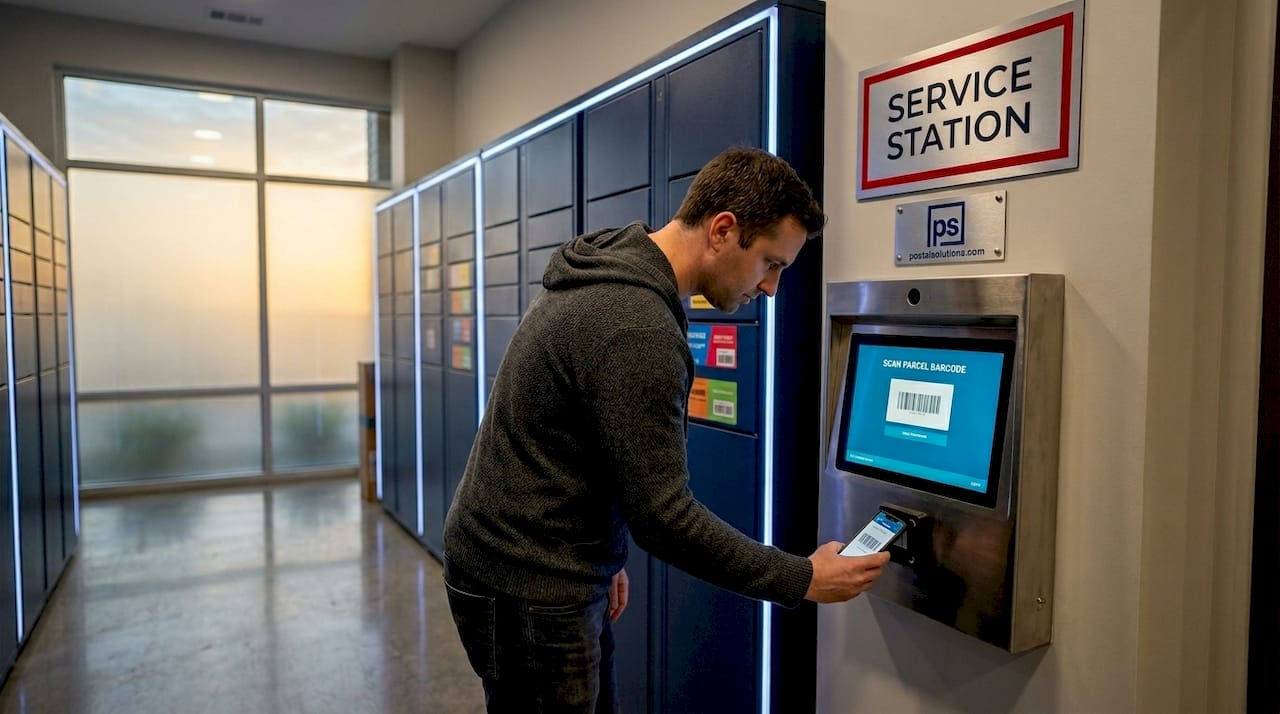
- Scanning and logging. Staff or an AI-powered tool like Venn or Traizr scans the courier barcode. The system cross-references resident data to match the package to the correct unit automatically.
- Resident notification. The system sends an instant email alert containing pickup instructions, a QR code, or a PIN. Residents retrieve packages by scanning a barcode or entering their delivery PIN at the locker or kiosk.
- Audit trail creation. Platforms like Traizr log each collection with a signature, photo, and timestamp, creating a dispute-proof record for property staff.
- Pickup confirmation. Once the resident retrieves the package, the system closes the transaction and updates the log in real time.
This sequence eliminates the two biggest pain points in apartment package management: lost packages and staff time consumed by manual tracking. Lobby congestion drops because packages move through the system faster, and residents stop visiting the front desk to ask where their parcels are.
Pro Tip: Configure your notification system to send a second reminder after 48 hours if a package remains uncollected. This reduces locker or room congestion during peak delivery periods without requiring any staff intervention.
What are the different Package Concierge models and how do they suit various apartment types?
No single model fits every property. The right choice depends on unit count, physical footprint, package volume, and resident demographics. The three primary models are smart lockers, AI-powered package rooms, and hybrid staffed package centers.
| Model | Best fit | Key advantage | Key limitation |
|---|---|---|---|
| Smart lockers (e.g., Luxer One, Package Concierge) | Mid-size suburban properties, 100–300 units | 24/7 self-service access, no staff required at pickup | Fixed compartment sizes; difficult to scale during peak volume |
| AI-powered package rooms | High-volume urban communities over 300 units | Handles oversized parcels; processes high daily volume | Requires dedicated space and trained staff or managed service |
| Hybrid staffed package center | Large mixed-use or luxury properties | Combines controlled access tech with human oversight | Higher operational cost; dependent on staffing consistency |
Smart lockers from providers like Luxer One and Package Concierge represent the most widely deployed solution, with entry-level installations ranging from $6,000 to $20,000. That price point works well for suburban communities where package volume is predictable and unit counts stay under 300. The fixed compartment structure becomes a liability at properties with high Amazon and grocery delivery volume, where oversized boxes routinely exceed standard locker dimensions.
AI-powered package rooms solve the volume problem but require more infrastructure. These systems suit urban Class A properties where residents order frequently and expect fast, frictionless pickup. The tradeoff is space: a functional package room needs square footage that many urban buildings simply cannot spare without repurposing existing amenity areas.
Many operators now run multi-vendor strategies within a single portfolio, pairing locker banks for standard parcels with a managed package room for oversized deliveries. This approach avoids the single-point failure of relying on one system during peak periods like the holiday season. Carrier compliance matters here too. Distributing QR or PIN codes to frequent carriers like UPS, FedEx, and Amazon DSP drivers reduces delivery errors and keeps audit trails clean.
How does technology integration transform concierge operations and resident experience?
The technology stack behind modern apartment package management does more than speed up scanning. It connects package operations to the broader property management ecosystem, creating data flows that protect staff, satisfy residents, and give operators measurable KPIs.
Key components of a well-integrated system include:
- AI scanning platforms like Venn, which enabled Veris Residential to achieve 40% faster resident pickup and save 7.5 hours of staff time per property each week.
- Barcode-based logging tools like Traizr, which give concierge staff a mobile app to scan courier barcodes, generate instant email notifications with QR codes, and maintain a timestamped photo record of every transaction.
- Property management software integration, which syncs resident unit data so packages are matched automatically without manual address lookup.
- Self-service locker access, which allows residents to retrieve parcels at any hour without involving staff, reducing after-hours front desk calls.
- Audit trail reporting, which gives property managers documented evidence in the event of a package dispute, protecting both staff and the property from liability.
“The audit trail is the most undervalued feature of any package management platform. When a resident claims a package was never delivered, a timestamped photo and signature log ends the conversation in seconds.”
The resident experience benefit is equally significant. When pickup is self-directed and notification is instant, residents stop treating package retrieval as a stressful errand. Properties that deploy integrated systems report fewer complaints about lost parcels and faster resolution of the disputes that do occur. For leasing professionals, that translates directly into renewal conversations where package management is a selling point rather than a complaint.
What are the practical steps for property managers implementing Package Concierge?
Deployment success depends on preparation before the first package is scanned. Property managers who skip the assessment phase often select systems that are either undersized for their volume or overcomplicated for their resident base.
Start by auditing your current package volume. Count daily deliveries across a standard week and a peak week. If your property receives more than 50 packages per day, a locker-only solution will create backlogs. If your volume is under 20 packages per day, a full AI-powered package room is likely more infrastructure than you need. Match the solution to the data, not to what a competitor recently installed.
Staff training is the second critical variable. Concierge teams need hands-on practice with scanning workflows before go-live. A staff member who hesitates during intake slows the entire system and creates the same bottleneck the technology was designed to remove. Most platforms, including Traizr and Venn, offer guided onboarding, but property managers should schedule dedicated training sessions rather than relying on staff to self-learn during live operations.
Resident onboarding requires active communication for the first two to four weeks. Transitioning residents to automated locker pickup is a cultural shift, and some residents, particularly in senior housing communities, will need repeated guidance before they feel confident using QR codes or PINs. Post clear instructions at the locker bank, send a welcome email explaining the new process, and designate a staff contact for questions during the transition period.
Pro Tip: Track three KPIs from day one: average pickup time after notification, number of packages held beyond 72 hours, and staff hours spent on package-related tasks per week. These three metrics tell you whether your system is performing or just occupying space.
Finally, communicate directly with your most frequent carriers. UPS, FedEx, USPS, and Amazon DSP drivers need to understand where to deposit packages and how to use access credentials. A five-minute carrier briefing at the start of operations prevents weeks of misdeliveries and compliance gaps.
Key takeaways
Effective apartment package management requires matching the right technology model to your property’s volume, layout, and resident demographics before committing to any system.
| Point | Details |
|---|---|
| AI scanning cuts labor dramatically | Processing time drops from 80 seconds to 4 seconds per package, saving hundreds of staff hours monthly. |
| Model selection drives outcomes | Smart lockers suit mid-size suburban properties; AI package rooms serve high-volume urban communities over 300 units. |
| Technology integration protects staff | Timestamped photo logs and audit trails resolve package disputes without staff involvement. |
| Resident onboarding takes 2 to 4 weeks | Active communication and in-person guidance during the transition period determines long-term adoption success. |
| Carrier compliance is non-negotiable | Distributing access credentials and briefing frequent carriers upfront prevents misdeliveries and audit gaps. |
What we’ve learned after nearly a decade of package management deployments
After working with multifamily communities across more than 40 U.S. states, Postal Solutions has seen one pattern repeat itself: properties that struggle with package management are almost never struggling because they chose the wrong locker brand. They struggle because they skipped the assessment phase and deployed a solution sized for someone else’s property.
The technology, whether it is Luxer One, Venn, or Traizr, works. What fails is the assumption that technology alone solves an operational problem. A Luxer One locker bank installed at a 500-unit urban property with 150 daily deliveries will be overwhelmed within a month. The same system at a 180-unit suburban community with 30 daily deliveries runs without friction for years.
The other pattern worth naming is the resident adoption gap in senior housing. Younger residents adapt to QR code pickup within days. Senior residents often need two to three weeks of guided support before they feel confident. Properties that treat onboarding as a one-time email blast see complaint rates spike in the first month. Properties that assign a dedicated contact for resident questions during the transition period see adoption rates normalize within two weeks.
The future of package concierge operations points toward deeper property management software integration and predictive analytics that flag overflow risk before it happens. That capability exists today in platforms like Venn. The operators who will benefit most are the ones who treat package management as a data-driven operation rather than a facilities afterthought.
— Postal Solutions
How Postal Solutions supports apartment package management
Postal Solutions manages package room operations for conventional multifamily, student housing, and senior housing communities nationwide. As the largest Luxer One sales agency in the country, with over 1,200 installations across more than 40 U.S. states, Postal Solutions sells and installs smart locker systems tailored to your property’s volume and layout. For communities that need ongoing support, Postal Solutions offers daily package room management outsourcing, including six-day-per-week managed visits, weekly audits, and unit-number labeling to keep every package organized and current. If your property is paying staff to manage packages and still fielding resident complaints, that is a cost problem Postal Solutions is built to solve. Visit postalsolutions.com to explore the full range of management and installation services.
FAQ
What is Package Concierge and how does it work in apartments?
Package Concierge is an automated system that uses smart lockers, AI scanning, and email or PIN notifications to manage parcel intake and resident pickup inside apartment communities. Carriers deposit packages into the system, residents receive an instant notification with a QR code or PIN, and they retrieve their parcel without staff assistance.
How do package lockers work for residents?
Residents receive an email notification when a package is logged, then retrieve it by scanning a barcode or entering a PIN at the locker kiosk. The locker opens the correct compartment automatically, and the transaction is logged with a timestamp.
What size property benefits most from a smart locker system?
Smart locker systems from providers like Luxer One and Package Concierge are best suited for mid-size suburban properties with 100 to 300 units and predictable daily package volume. High-volume urban communities over 300 units typically need an AI-powered package room to handle oversized parcels and peak-day surges.
How long does it take residents to adapt to automated package pickup?
Most residents become self-sufficient within two to four weeks of the system going live, provided the property offers active guidance during the transition. Senior housing communities typically require more hands-on support during this period than conventional or student housing populations.
What KPIs should property managers track after deploying a package concierge system?
Track average pickup time after notification, the number of packages held beyond 72 hours, and weekly staff hours spent on package-related tasks. These three metrics reveal whether the system is reducing friction or simply relocating it.
Recommended
- Apartment Package Management Services | Multifamily Package Room Operations | Postal Solutions
- Package Lockers for Apartments | Multifamily Smart Lockers | Postal Solutions
- Blog & Insights | Postal Solutions
- Package Room Management | Daily Services for Apartments & Student Housing | Postal Solutions