Faster Resident Package Pickup: Multifamily Operator Playbook
Faster Resident Package Pickup: Multifamily Operator Playbook The fastest way to achieve faster resident package pickup is to pair a documented carrier intake protocol with automated resident notifications and 24/7 self-service retrieval. T
Published
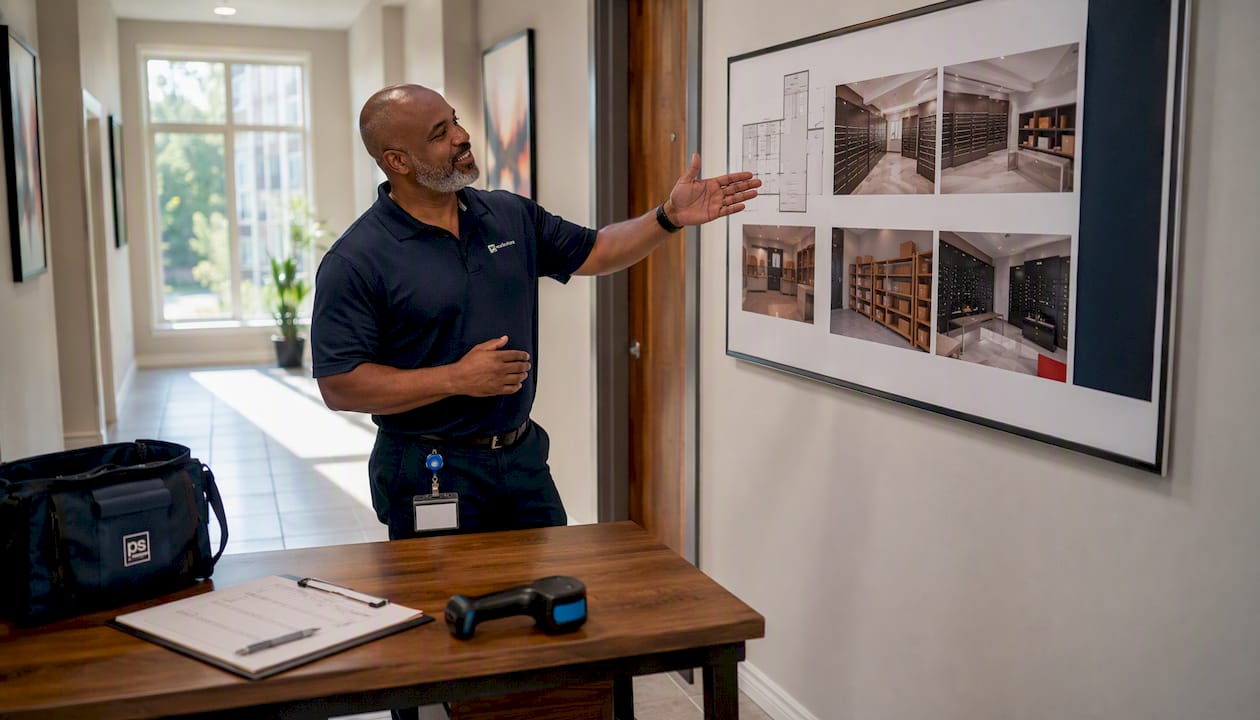
The fastest way to achieve faster resident package pickup is to pair a documented carrier intake protocol with automated resident notifications and 24/7 self-service retrieval. That combination alone, without any new hardware, can cut average dwell time significantly. Add a smart locker or managed package room and you recover staff hours that currently disappear into package-related tasks every week.
TL;DR
- Implement a carrier intake SOP today: designated drop zone, mandatory scan, photo capture on every package.
- Enable or extend 24/7 resident access to the package room or lockers to eliminate pickup windows as a bottleneck.
- Target average package dwell time under 48 hours as your primary operational KPI.
- At a 200-unit property without a package system, staff can spend 8–12 hours per week on package handling; smart systems can cut that to under one hour per week in documented cases.
- Match your solution to your building profile before purchasing hardware. Process compliance matters more than brand.
- Consider a managed service if consistent daily execution is beyond your current staffing capacity.
Table of Contents
- What quick wins speed up resident package pickup today?
- Which package-handling system type is fastest for your property?
- What does an efficient intake-to-pickup workflow look like?
- Which technology features actually shorten pickup time?
- How do you manage package surges without losing control?
- What does each package solution cost, and how long does it take?
- Which KPIs tell you that pickup speed has actually improved?
- Why does outsourcing package-room management often outperform in-house approaches?
- Key Takeaways
- What most properties get wrong about package management
- How Postal Solutions can help you get there faster
- Useful sources
- FAQ
What quick wins speed up resident package pickup today?
Most properties can cut pickup friction within hours, before any hardware purchase or software change. The fixes below require only staff alignment and a few printed materials.
Signage and staging zones. Post clear, large-format signs at every carrier entry point showing exactly where packages go. A single, unambiguous staging zone eliminates the “where did it land?” problem that forces residents to search the entire room.
Standardized unit labeling at intake. Require staff or the package manager to write or highlight the unit number on every box at the moment it arrives. Residents who can scan a room by unit number retrieve packages in seconds rather than minutes.
Photo notifications. Send an automated message with a photo of the package the moment it is logged. Residents confirm it is theirs before they walk down, which reduces unnecessary trips and front-desk interruptions. As one regional vice president noted in Multifamily & Affordable Housing Business, residents now expect real-time notifications and photos that match what Amazon and Walmart already deliver.
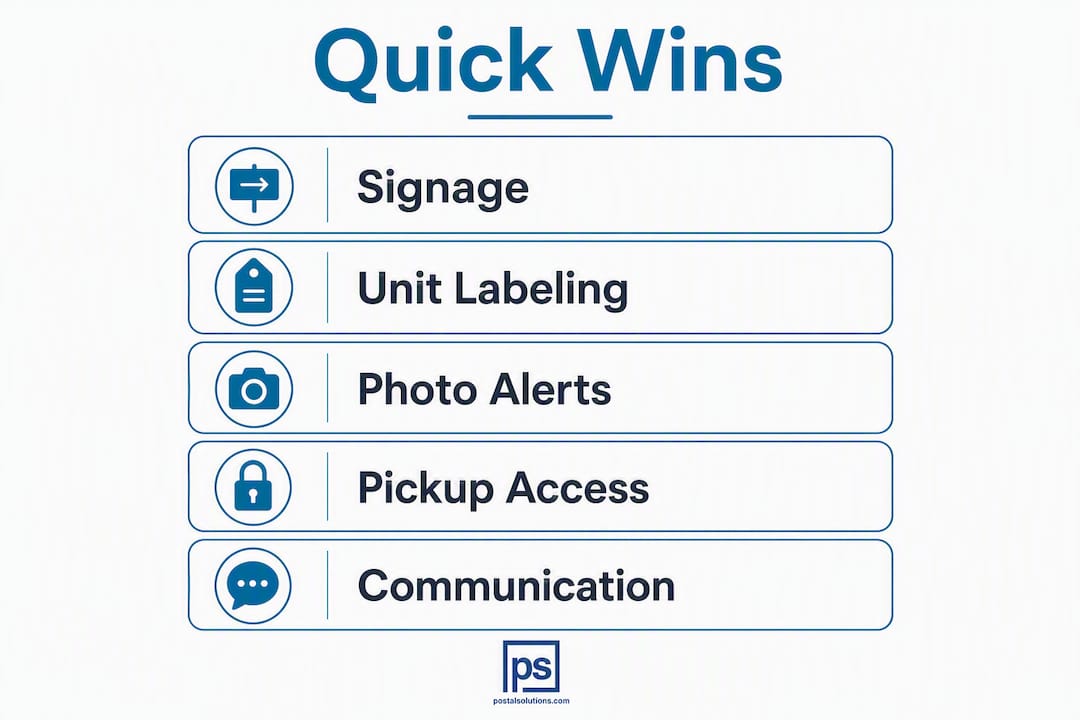
Pickup window vs. true 24/7 access. If your package room is locked to staffed hours, you are creating a bottleneck by design. Extending access to 24/7 via a PIN or key fob is often a software setting change, not a construction project. Do that first.
Templated resident communication. Write one SMS and one email template that includes the unit number, a photo link, and step-by-step retrieval instructions. Residents who know exactly where to go and how to access the room pick up packages faster and call the office less.
Pro Tip: Pick one carrier route, such as UPS or FedEx, and enforce your intake SOP exclusively for that carrier for one week. Log dwell times before and after. A single-carrier pilot produces measurable data quickly and builds the internal case for scaling the process to all carriers.
Which package-handling system type is fastest for your property?
No single system type is universally fastest. The right match depends on unit count, daily volume, available footprint, and resident expectations. Choosing the wrong model for your building profile can slow pickup rather than speed it.
| System Type | Best Property Profile | Pickup Speed Advantage | Key Tradeoff |
|---|---|---|---|
| Front-desk handoff | Boutique, under 100 units, low daily volume | Personal, immediate when staffed | Bottleneck outside staffed hours; staff burden scales with volume |
| Fixed smart lockers | Mid-size, 100–300 units, predictable volume | 24/7 self-service, fast retrieval | Fixed capacity; overflow forces manual handling during surges |
| AI-powered smart package room | High-volume urban, 300+ units | 2–3x the storage capacity of fixed lockers in the same footprint; handles oversized items | Higher upfront cost; driver compliance at intake is critical |
| Off-site or direct-to-door | Any size; resident fee acceptance required | Removes on-site burden entirely | Resident adoption and fee tolerance vary; carrier coordination required |
The decision trigger is straightforward. Properties with over 300 units and high urban delivery volume should evaluate an AI-powered smart room, which scales capacity inside a constrained footprint and handles the oversized parcels that overflow fixed lockers. Mid-size communities with predictable daily volume are well served by smart lockers, which offer 24/7 self-service without the footprint or cost of a full room build-out. Boutique properties under 100 units can operate a front-desk or hybrid model effectively, provided staffed hours align with resident pickup patterns.
One caution applies across all hardware types: expanding fixed-capacity hardware without a matching process creates overflow that can double management labor instead of reducing it. The hardware decision and the process decision must happen together.
What does an efficient intake-to-pickup workflow look like?
A replicable workflow removes guesswork at every handoff point. The following steps apply whether you are running a staffed package room, a locker bank, or a hybrid setup.
-
Carrier intake. Designate a single entry point for all carriers. Post a pictorial SOP at that entry showing exactly where packages go, how to scan them into the system, and what to do with oversized items. Require every driver to scan or log each package before leaving the room.
-
Scan and log. Every package gets scanned into your package management system at intake, not at the end of the shift. Delayed logging breaks the notification chain and creates dwell time before the resident even knows the package arrived.
-
Photo capture. Photograph the package label at intake. This single step resolves the majority of “I can’t find my package” calls because staff can pull the photo and confirm placement instantly.
-
Unit number labeling. Write or highlight the unit number on the box in large, legible text. Stage the package in the zone that corresponds to that unit range or locker bank.
-
Automated resident notification. The system sends an SMS or email with the photo, unit number, and retrieval instructions the moment the package is logged. Include a QR code or PIN for locker access where applicable. Systems that pair photo logging with QR or PIN access produce fast resident retrieval and a clear audit trail.
-
Resident pickup. The resident uses their PIN, QR code, or fob to access the room or locker at any hour. No staff involvement required for standard retrievals.
-
Exception handling. Staff verify identity for oversized items that cannot fit in a locker. Document the handoff with a signature or photo. Log the pickup in the system immediately.
-
Return and escalation. Any package not retrieved within 48 hours triggers a second automated notification. Packages unclaimed after your defined hold period (typically 10–14 days) follow a documented escalation SLA: resident contact attempt, then return to carrier or secure storage.
-
Shift handoff checklist. At each shift change, the outgoing staff member confirms all packages logged, photos captured, and any exceptions documented. A five-item checklist takes two minutes and prevents the next shift from inheriting unresolved intake gaps.
Carrier non-compliance at intake is the single biggest point of failure in this chain. When drivers bypass intake protocols, downstream tracking and automated notifications break entirely, and the hardware investment delivers none of its promised speed benefit.
Which technology features actually shorten pickup time?
The feature list that matters for quick package retrieval is shorter than most vendors suggest. Prioritize these in order when evaluating or configuring any system.
Reliable intake scanning. If the scan fails or is skipped, nothing downstream works. Choose hardware and software with a high scan success rate and a clear fallback for unreadable barcodes.
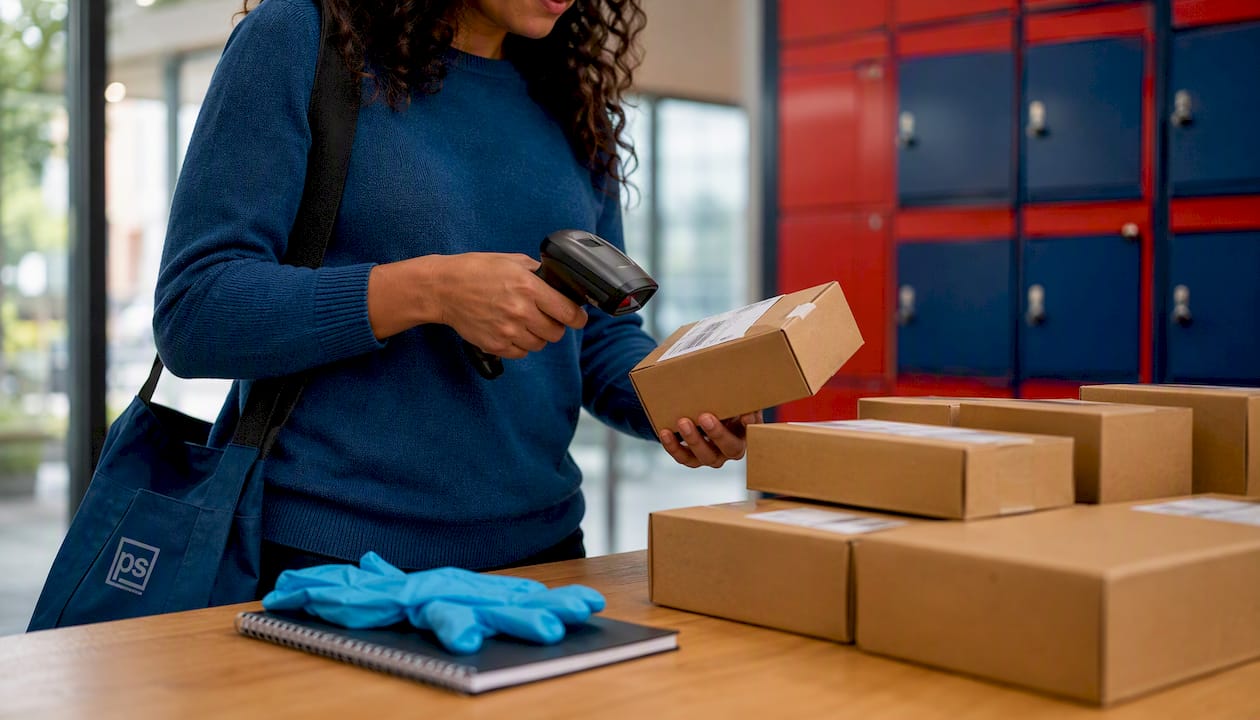
Automated notifications with photos. Residents who receive a photo notification pick up packages faster and generate fewer “where is my package?” calls. This is the single highest-ROI software feature available, and it requires no hardware change on most existing systems.
Frictionless resident access. PIN entry, QR code scan, or mobile app unlock. Any method that works without staff involvement and functions at 2 AM qualifies. Anything that requires a staff member to open a door does not.
Audit logging. Every intake, pickup, and exception should be time-stamped and searchable. Weekly audits using this log surface carrier non-compliance before it becomes systemic, and they provide the data you need to track dwell time as a KPI.
Operators that run pilots and enforce weekly audits report fewer rollout issues and faster time to stable operations. Audit logs are not a compliance formality — they are the feedback loop that tells you whether your intake SOP is actually being followed by every carrier on every route. Without them, you are managing by assumption.
Luxer One is a leading locker and package room platform in this space. Postal Solutions is the largest Luxer One sales agency in the United States, with over 1,200 Luxer One installations across more than 40% of U.S. states. Luxer One systems integrate with most major property management platforms, support PIN and QR access, and include audit logging and automated resident notifications out of the box.
For integration, connect your package system to your property management software so resident contact fields stay current automatically. Set notification preferences at the resident level during onboarding. Schedule weekly software audits as a recurring calendar item, not an ad hoc task.
How do you manage package surges without losing control?
Holiday seasons, Amazon Prime events, and move-in weeks can triple daily package volume in 24 hours. Properties that plan for surges in advance absorb them without extended dwell times or staff overload; properties that do not plan typically end up with packages staged in hallways, offices, and closets, which multiplies the labor required to resolve the backlog.
- Set a surge threshold. Define the daily package volume that triggers your contingency plan. For most mid-size communities, that number is 1.5–2x your average daily intake. When you hit it, the contingency activates automatically.
- Reserve overflow staging areas in advance. Identify and label a secondary staging zone before surge season, not during it. Tape off the area, post signage, and brief staff on chain-of-custody requirements for packages stored outside the primary room.
- Temporarily reconfigure shelving. If your package room uses adjustable shelving, reconfigure it for maximum unit count before peak periods. Remove oversized-item staging from the primary room and route those deliveries to the overflow zone.
- Send priority notifications for oversized items. Residents with large deliveries should receive an immediate notification with a 24-hour pickup request. Oversized items consume disproportionate space and are the fastest path to a full room.
- Brief carriers before the surge. Distribute a pictorial SOP to regular-route drivers the week before a known surge. Pictorial SOPs and QR or PIN codes issued to frequent drivers materially improve driver adherence and reduce intake exceptions precisely when volume is highest.
- Document chain of custody for temporary storage. Any package stored outside the primary room must be logged with its location, the staff member who staged it, and the time. This prevents the “lost package” complaints that spike after surges.
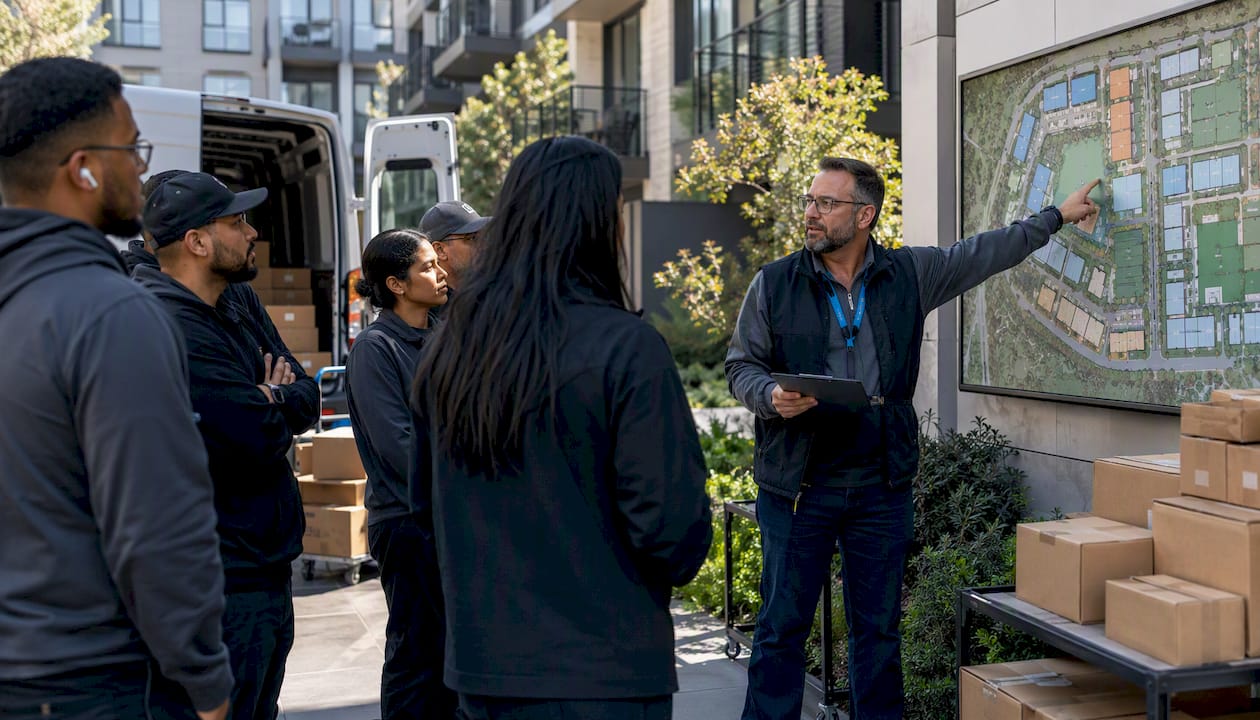
Pro Tip: The week before a known surge, hold a 15-minute carrier briefing at your property’s delivery entrance. Show drivers the pictorial SOP, confirm their QR or PIN access, and walk them through the overflow staging zone. Carriers who have physically seen the layout comply at a higher rate than those who received only a printed notice.
For high-volume properties managing surge operations at scale, a managed service that provides daily on-site organization is often the difference between a surge that resolves in 48 hours and one that lingers for a week.
What does each package solution cost, and how long does it take?
Decision-makers need realistic numbers before committing. The table below reflects published ranges and general industry guidance. Actual costs vary by property size, site conditions, and vendor.
| Solution Type | Typical Implementation Time | Estimated Cost Range | Key ROI Driver |
|---|---|---|---|
| Process fixes (SOP, signage, labeling) | Same day to 1 week | Minimal; staff time only | Immediate dwell-time reduction; no capital required |
| Fixed smart lockers (200-unit property) | 1–2 weeks | $12,000–$36,000 | Labor recovery; payback typically 12–18 months |
| AI-powered smart package room | 2–8 weeks depending on site prep | Higher than lockers; varies by footprint and configuration | 2–3x capacity in same footprint; reduced overflow labor |
| Managed package-room service | 1–2 weeks to onboard | Recurring monthly fee; replaces internal labor cost | Consistent SOP execution; staff hours recovered weekly |
To build a rapid business case, capture your current weekly package-handling hours and multiply by your average hourly labor cost. A 200-unit property spending 8–12 hours per week on packages at $20/hour spends $8,320–$12,480 per year on that task alone, before accounting for lost productivity on leasing and maintenance work. Smart systems can cut that handling time to under one hour per week in documented cases, which changes the payback math significantly. Add resident retention value and reduced complaint volume to complete the picture.
The locker benefits and ROI calculation is straightforward once you have your baseline labor hours. The harder question is whether a fixed-capacity system is sized correctly for your peak volume, not your average volume.
Which KPIs tell you that pickup speed has actually improved?
Tracking the right metrics confirms whether your changes are working or whether you are still managing by feel.
Primary KPIs
- Package dwell time. Target an average under 48 hours. This is the fastest single indicator that resident pickup friction has been resolved. Pull this from your package system’s audit log weekly.
- Average in-room retrieval time. With a well-organized room and frictionless access, residents should locate and retrieve a package in under one minute. Systems with photo notifications and unit-number labeling routinely achieve this.
- Staff hours per 100 packages. Establish a baseline in your first 30 days, then track it monthly. Improvement here directly reflects process and hardware gains.
- Lost or misplaced packages per month. Even one lost package per month is a signal that intake logging or staging discipline has broken down.
Secondary KPIs
- Resident satisfaction scores specific to package handling (pull from your annual or quarterly survey).
- Carrier intake exceptions per week (packages logged late, placed incorrectly, or not scanned).
- Overflow incidents per month (packages staged outside the designated room or lockers).
Measurement approach. Use automated logs from your package system as the primary data source. Supplement with a weekly five-minute manual audit: walk the room, count packages older than 48 hours, and note any staging anomalies. Report a simple three-metric dashboard at your monthly operations review: dwell time, staff hours per 100 packages, and lost packages. Set a 30-day baseline before making any changes, then run a 30–90 day pilot to validate improvement against that baseline.
Why does outsourcing package-room management often outperform in-house approaches?
The operational case for a managed service is not about distrust of on-site staff. It is about consistency. Carrier intake compliance, daily organization, and weekly audits require someone whose primary job is the package room, not a leasing agent or maintenance tech who handles packages between other responsibilities.
The most common failure mode in multifamily package management is not bad hardware. It is inconsistent process execution. A managed service solves this by making daily package-room organization and carrier compliance the explicit, documented responsibility of a dedicated manager, not a secondary task for staff already stretched across leasing, maintenance, and resident relations.
When daily execution is inconsistent, dwell times climb, residents call the office, and staff spend time resolving problems that a consistent intake SOP would have prevented. Properties that standardized intake and deployed automated notifications saw retrieval times drop from minutes to seconds at large-scale deployments. The technology enabled that result, but consistent process execution made it repeatable.
Postal Solutions manages daily package-room organization for multifamily communities across conventional apartments, student housing, and senior housing. The managed service includes six-day-per-week visits, daily organization of the package room with unit numbers highlighted or handwritten on every box, and weekly audits using the property’s existing package-room software or a Luxer One system. Properties that have added this service report recovering 15 or more staff hours per week that previously went to package-related tasks.
When to choose managed service over in-house. If your portfolio has multiple properties, if on-site staffing is lean, or if you have already invested in hardware but dwell times remain above 48 hours, a managed service addresses the process gap that hardware alone cannot fix. Postal Solutions offers a free site assessment to help operators identify where the breakdown is occurring before recommending a solution.
Key Takeaways
Pairing a documented carrier intake protocol with automated notifications and 24/7 resident access is the single most effective combination for reducing package dwell time and recovering staff hours in multifamily communities.
| Point | Details |
|---|---|
| Implement a carrier intake SOP first | Designate a drop zone, require scanning at intake, and capture a photo — this fixes the most common failure point before any hardware purchase. |
| Target 48-hour dwell time | Average package dwell time under 48 hours is the primary KPI that confirms pickup friction has been resolved. |
| Match solution to building profile | Front-desk handoff fits boutique properties; fixed lockers suit mid-size communities; AI smart rooms serve high-volume urban sites with 300+ units. |
| Track staff hours per 100 packages | Establish a 30-day baseline, then measure monthly to confirm that process or hardware changes are delivering real labor recovery. |
| Postal Solutions manages daily package-room operations | With six-day-per-week managed visits, weekly audits, and over 1,200 Luxer One installations nationwide, Postal Solutions provides both the hardware and the managed process to sustain faster pickup long-term. |
What most properties get wrong about package management
The properties that struggle most with package pickup are rarely the ones that skipped the hardware investment. They are the ones that bought the hardware and skipped the process.
A Luxer One locker bank or a smart package room is a powerful tool. But if carriers are dropping packages outside the designated zone, if unit numbers are not marked on boxes, and if notifications are firing 12 hours after intake because logging happens at the end of a shift, the hardware is not solving the problem. It is just containing it in a more expensive room.
The second most common mistake is treating the package room as a set-and-forget installation. Package volume grows with e-commerce. Carrier routes change. New residents have different pickup habits than the ones who moved out. A system that worked well at launch drifts without regular audits and carrier engagement. Weekly audits are not optional maintenance. They are the mechanism that keeps the system calibrated to current conditions.
The third pitfall is sizing hardware for average volume rather than peak volume. A locker bank that handles a normal Tuesday perfectly will overflow on the Monday after Thanksgiving. That overflow lands on staff, who then spend hours managing a problem the hardware was supposed to eliminate. Surge planning is part of the hardware decision, not an afterthought.
The properties that get this right share one trait: they treat package management as an operational discipline with defined SOPs, assigned accountability, and measurable KPIs, not as a logistics side task that resolves itself.
How Postal Solutions can help you get there faster
Postal Solutions is a practical alternative to managing package operations entirely in-house, particularly for operators who have already invested in hardware but are still seeing high dwell times, resident complaints, or staff hours consumed by package tasks.
The offering covers three areas. First, Postal Solutions sells and installs Luxer One locker systems, smart package rooms, and combo configurations nationwide, with over 1,200 installations across more than 40% of U.S. states. Second, Postal Solutions manages daily package-room organization for apartment communities, with six-day-per-week visits, unit-number labeling on every package, and weekly software audits. Third, for properties that want a fully integrated solution, Postal Solutions combines hardware installation with ongoing managed operations so the system stays organized and current from day one.
The process starts with a free site assessment. Postal Solutions evaluates your current package volume, room layout, carrier compliance, and staffing model, then delivers a specific recommendation with implementation timelines. Most managed service onboarding takes one to two weeks. Hardware installations typically run one to two weeks for lockers and two to eight weeks for smart room configurations depending on site prep.
To request your free site assessment or get a proposal for managed package-room services, contact Postal Solutions directly at postalsolutions.com.
Useful sources
- A Framework for Solving Multifamily’s Package Management Problem — Covers carrier non-compliance as the primary failure mode, the role of process over hardware, and the value of pilots and weekly audits in stabilizing operations.
- Thinking Outside the Box to Solve Package Delivery Issues — Resident expectation data and operator perspectives on notification standards and the gap between what residents expect and what most properties deliver.
- Postal Solutions — Apartment Package Management Services — Service overview for operators evaluating managed daily package-room operations, Luxer One hardware, and free site assessments.
FAQ
What is the fastest way to reduce package dwell time?
Implement a carrier intake SOP with mandatory scanning and photo capture at the moment of delivery, then enable automated resident notifications immediately after logging. Properties that combine intake automation with automated notifications see retrieval times drop from minutes to seconds.
How does a managed package-room service work?
A managed service sends a dedicated package manager to the property on a regular schedule, typically six days per week, to organize the package room, label packages with unit numbers, and complete weekly software audits. Postal Solutions provides this service for multifamily and student housing communities nationwide.
Is there a service that picks up packages for residents?
Managed package-room services like those offered by Postal Solutions organize packages for residents to retrieve, but do not deliver to individual units. Off-site or direct-to-door models handled by third-party carriers are the option for properties that want packages brought to residents’ doors.
How long does it take for a package to be picked up by a carrier?
Carrier pickup windows for outbound packages vary by carrier and route, typically ranging from same-day to next-business-day for scheduled pickups. For inbound resident deliveries, the goal is resident retrieval within 48 hours of intake, which is the industry benchmark for a well-functioning package room.
What KPIs should property managers track for package operations?
The three most useful metrics are average package dwell time (target under 48 hours), staff hours spent per 100 packages, and lost or misplaced packages per month. Pull dwell time and handling data from your package system’s audit log weekly and report them at monthly operations reviews.