Lost Package Solutions for Apartments: A Complete Guide
Explore effective lost package solution apartments to secure deliveries. Discover strategies to prevent package theft and recover lost items.
Published
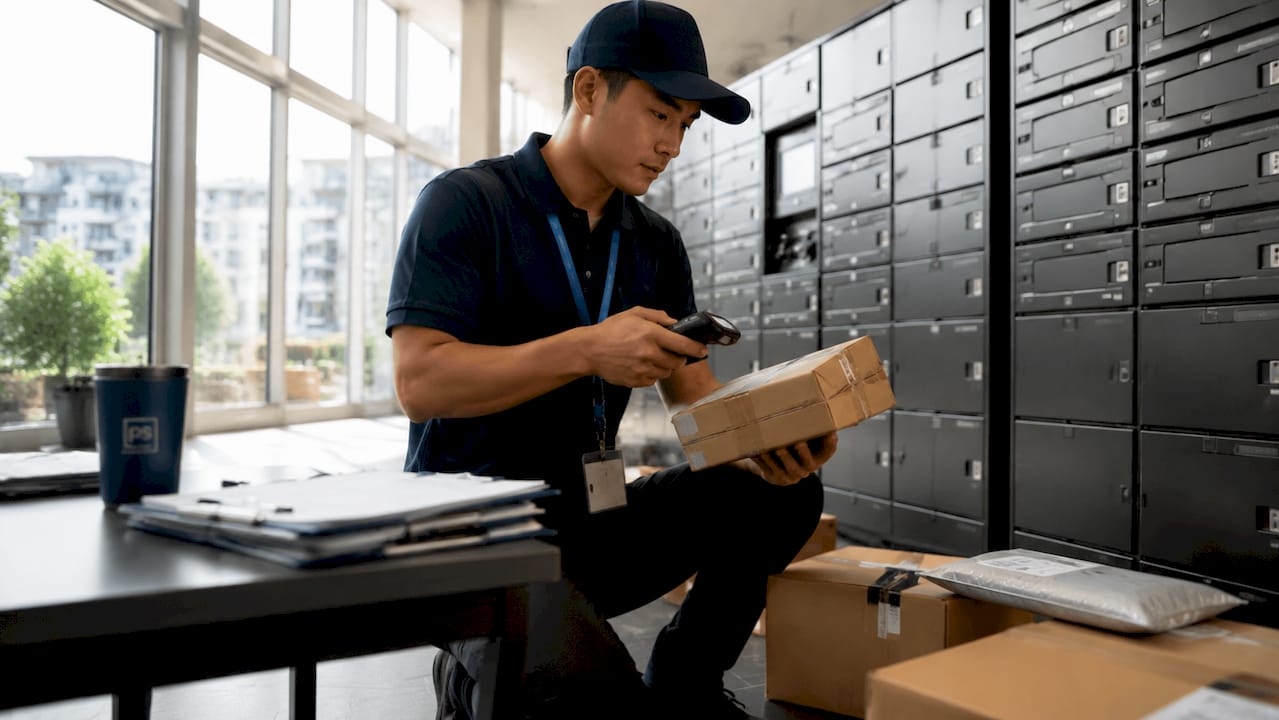
A lost package solution for apartments is a building-level system of secure infrastructure, carrier protocols, and resident communication designed to prevent, locate, and recover missing deliveries in multifamily housing. Package theft costs Americans $15 billion annually, with roughly 250,000 packages stolen every day. Apartment residents face triple the theft risk compared to single-family homeowners. That gap exists because most apartment communities still rely on ad hoc workarounds rather than coordinated, property-wide package management systems. The right approach combines physical security, electronic tracking, and clear carrier accountability.
What tools and infrastructure does a lost package solution for apartments require?
Effective apartment package management starts with the right physical and digital infrastructure. Without it, even the most attentive property staff cannot prevent misdelivery or theft at scale.
85% of apartment communities now offer secure package rooms. That number reflects a clear industry consensus: unsecured lobbies and door deliveries create unnecessary vulnerability. Controlled access, surveillance cameras, and dedicated package rooms are the baseline, not a premium upgrade.
Electronic check-in systems are the next layer. 45% of properties use electronic package check-in, which creates a timestamped audit trail for every delivery. When a resident reports a missing package, that log becomes the first place staff should look. Without it, disputes between residents, carriers, and management have no factual anchor.

The operational cost of unmanaged packages is real. 68% of property staff spend 1–4 hours weekly managing packages. That time comes directly out of leasing, maintenance, and resident service hours. A property paying staff to sort packages is paying twice: once in wages and once in lost productivity on higher-value tasks.
Prerequisites for a functional package management system:
- A dedicated package room with controlled access and camera coverage
- An electronic check-in system that logs carrier, time, and unit number
- Clear carrier compliance protocols posted at building entry points
- A resident notification system tied to package arrival events
- A weekly audit process to catch unclaimed or mislabeled packages
Pro Tip: Before investing in new hardware, audit your current package room for labeling accuracy. Mislabeled boxes are the single most common cause of “lost” packages that are actually sitting in the right room.
| Infrastructure element | Primary benefit |
|---|---|
| Controlled-access package room | Reduces theft and unauthorized entry |
| Electronic check-in system | Creates audit trail for dispute resolution |
| Resident notification alerts | Reduces unclaimed packages and room congestion |
| Surveillance cameras | Deters theft and supports incident investigation |
| Weekly package audits | Catches mislabeled or unclaimed deliveries early |
How do you track, report, and locate a missing package in a multifamily building?
When a resident reports a missing package, a clear workflow prevents the situation from escalating into a formal dispute or negative review. Property managers and residents should follow the same sequence every time.
Step 1: Check the package room thoroughly. Mislabeled packages are common. A box addressed to Unit 204 may be sitting in the room labeled for Unit 402. Check every shelf, not just the obvious spots.
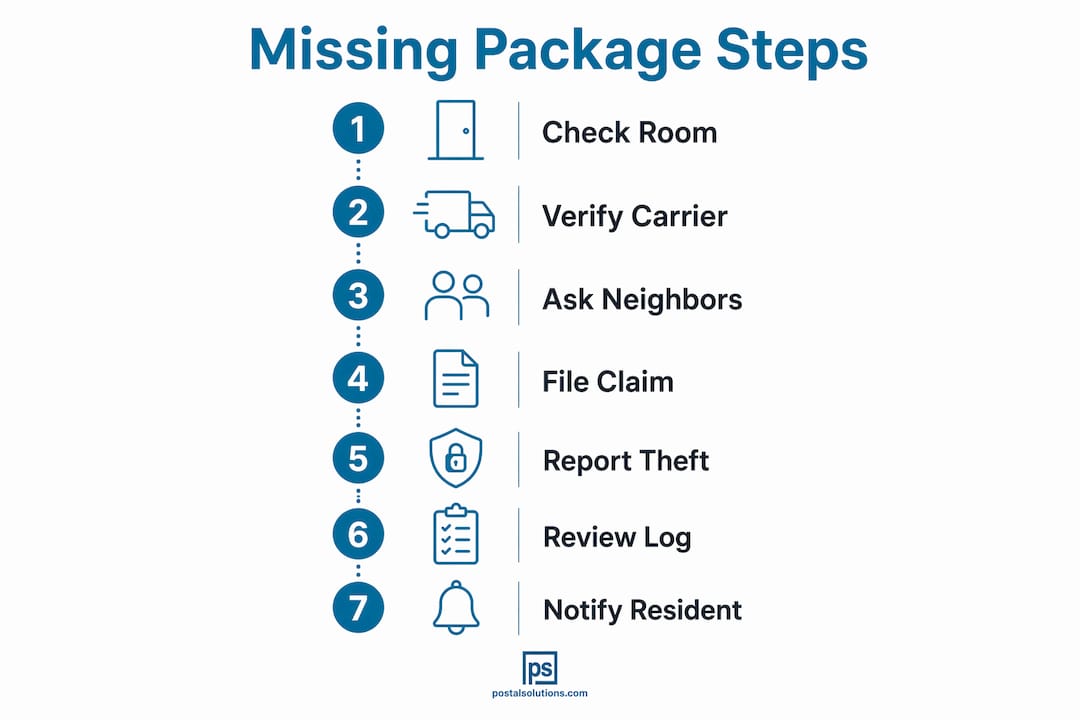
Step 2: Verify the delivery with the carrier. Every major carrier, including UPS, FedEx, and USPS, provides delivery confirmation with a GPS-stamped photo. Pull that confirmation before assuming the package is gone. The photo often shows exactly where the driver left it.
Step 3: Check with neighbors and building staff. Drivers sometimes leave packages with a neighbor or at a secondary entrance. A quick check with adjacent units and the front desk resolves a significant share of “missing” reports without any formal action.
Step 4: File a claim with the carrier. If the delivery confirmation shows the package was delivered but it cannot be located, file a missing package report directly with the carrier. UPS, FedEx, and USPS each have online claim portals. Retailers like Amazon have their own resolution processes and often reship or refund within 24–48 hours.
Step 5: Report to local police if theft is suspected. A police report creates an official record. It also supports any insurance claim the resident or property may file. Some carriers require a police report number before processing a theft claim.
Step 6: Review the property’s package log. If the building uses an electronic check-in system, pull the log for the delivery date. Cross-reference the carrier’s confirmation timestamp with the property’s own record. Discrepancies between the two often reveal exactly where the chain of custody broke down.
Step 7: Communicate the outcome to the resident. Close the loop. Residents who receive a clear update, even when the package cannot be recovered, report significantly higher satisfaction than those left without any response.
Pro Tip: Create a one-page “missing package” form for residents to submit at the leasing office. Standardizing the report captures the carrier name, tracking number, and delivery date upfront, which cuts resolution time in half.
What operational strategies reduce lost packages and prevent future theft?
Proactive operations prevent far more lost packages than reactive recovery ever will. The most effective strategies address the root causes: carrier non-compliance, unsecured delivery points, and poor package room organization.
Carrier non-compliance is the top package management failure, with 70% of property managers citing it as their primary frustration. That means the hardware in your package room matters less than whether drivers actually use it. Enforcing driver behavior requires written protocols, posted signage, and direct communication with local carrier dispatch offices.
AI-powered delivery access systems address this gap by verifying drivers through natural language conversation at the building entry point, enforcing delivery policies automatically, and logging every access event. These systems remove the human variable from the compliance equation. A driver who bypasses a human staff member cannot bypass an automated gate that requires verified credentials.
Operational strategies that reduce package loss:
- Post written delivery instructions at every building entry point, specifying which carriers use which access method
- Implement time-based delivery windows that restrict access to designated hours
- Require all carriers to use the designated package room rather than leaving deliveries at unit doors
- Conduct weekly package room audits to identify unclaimed or mislabeled boxes before they become disputes
- Contact local carrier dispatch offices directly when a specific driver repeatedly bypasses protocols
Dedicated package rooms and locker systems outperform door delivery on every security metric. Package rooms with controlled access and surveillance reduce theft risk measurably compared to unsecured lobbies. Locker systems add a second layer by requiring the resident to authenticate before retrieving their package, which eliminates the possibility of a neighbor or visitor walking off with someone else’s delivery.
For high-volume delivery management, properties benefit from daily package room organization visits. When a trained package manager visits the property each day to label boxes by unit number and complete a weekly audit, the room stays current and residents find their packages without staff assistance.
How do apartments balance resident experience, cost, and security?
Resident expectations for package handling have risen sharply. Package volume has grown 67% since 2019, and nearly 25% of residents have experienced package issues that influenced their renewal decision or prompted a negative online review. Package management is no longer a back-office function. It is a retention factor.
76% of residents prefer 24/7 secure, self-service pickup options like lockers or package rooms. Only 9% favor paid concierge-style delivery services with monthly fees. That gap tells property managers exactly where to invest: in infrastructure that is always available, not in premium services that most residents will not pay for.
What residents want from a package management system:
- 24/7 access to their packages without staff assistance
- Immediate notification when a package arrives
- A secure room or locker that prevents theft
- No additional monthly fees tied to package retrieval
- The option to send outbound packages from the community
69% of residents say outbound package options from their community are important. This signals that residents now view their apartment as a full logistics hub, not just a delivery destination. Properties that add outbound shipping stations or carrier pickup points gain a meaningful amenity at relatively low cost.
Capital investment in a Luxer One locker system or a dedicated package room carries upfront cost, but the recurring savings in staff time and the reduction in resident turnover tied to package frustration make the math favorable. Properties that manage package rooms without a structured system pay for that gap in staff overtime and lost lease renewals.
Pro Tip: Survey your residents annually on package management satisfaction. A single question, “How satisfied are you with how the building handles your packages?” gives you a direct KPI tied to a retention-relevant amenity.
Key Takeaways
Effective apartment package management requires building-level infrastructure, carrier compliance enforcement, and a clear resident communication process working together.
| Point | Details |
|---|---|
| Secure infrastructure is the baseline | Controlled-access package rooms and electronic check-in systems prevent most theft and misdelivery. |
| Carrier compliance drives outcomes | 70% of property managers cite carrier non-compliance as their top frustration; enforce driver protocols directly. |
| Follow a structured recovery workflow | Check the package room, verify with the carrier, and file a claim before escalating to police or insurance. |
| Residents prioritize self-service access | 76% prefer 24/7 secure pickup with no extra fees; invest in lockers or organized package rooms accordingly. |
| Weekly audits prevent disputes | Regular package room audits catch mislabeled or unclaimed boxes before residents report them as lost. |
What nine years of managing apartment packages has taught us
The most common mistake properties make is treating package management as a facilities problem rather than a resident experience problem. When a package goes missing, the resident does not care about your carrier compliance policy. They care about getting their item back or receiving a fair resolution quickly. The properties that handle this well are the ones that have a clear process before the problem happens, not after.
Carrier compliance is genuinely the hardest part. You can install the best locker system available and still have drivers leaving boxes in the lobby because it is faster for them. The solution is not more hardware. It is direct, persistent communication with local dispatch offices and written delivery agreements that carriers acknowledge. That work is unglamorous, but it closes more gaps than any technology purchase.
The shift toward viewing apartments as logistics hubs is real and accelerating. Residents who shop frequently online now factor package handling into their leasing decision the same way they factor parking or in-unit laundry. Properties that recognize this early and invest in organized package room operations gain a retention advantage that shows up in renewal rates before it shows up in any amenity survey.
Technology helps, but organized daily operations are what actually keep package rooms functional. A locker system that nobody audits fills up. A package room that nobody organizes becomes a source of resident complaints. The combination of the right hardware and consistent daily management is what separates properties that solve this problem from those that keep reacting to it.
— Postal Solutions
How Postal Solutions supports apartment package management
Postal Solutions manages package room outsourcing for conventional multifamily, student housing, and senior housing communities across the country. Daily package room management visits include labeling boxes by unit number, completing weekly audits, and keeping the room organized so residents find their packages without staff assistance. For properties that need hardware, Postal Solutions is the largest Luxer One sales agency in the United States, with over 1,200 Luxer One installations across more than 40 states. Whether a property needs a Luxer One locker system, a managed package room, or both, Postal Solutions manages the full solution so your staff can focus on leasing and resident service.
FAQ
What is the first step when a package is reported missing?
Check the package room thoroughly for mislabeled boxes, then pull the carrier’s delivery confirmation photo before filing any claim. Most “missing” packages are located at this stage.
How do apartment communities reduce package theft?
Controlled-access package rooms with surveillance cameras and electronic check-in systems reduce theft risk significantly compared to door delivery or unsecured lobbies.
Why do packages go missing in apartment buildings?
The leading causes are carrier non-compliance, mislabeled boxes, and unsecured delivery points. 70% of property managers identify carrier behavior as the primary failure point in their package management process.
Do residents have to pay extra for secure package pickup?
76% of residents prefer free, self-service access to secure package rooms or lockers. Properties that charge monthly fees for package retrieval see significantly lower resident acceptance.
How often should a package room be audited?
Weekly audits are the industry standard. A weekly review catches unclaimed or mislabeled packages before they age into formal disputes or resident complaints.
Recommended
- How to Accept Resident Packages Safely in Apartments | Postal Solutions
- Apartment Mail & Package Resources — Guides, Comparisons, Use Cases | Postal Solutions
- Apartment Package Management Services | Multifamily Package Room Operations | Postal Solutions
- Urban Apartment Package Challenges: A 2026 Manager’s Guide | Postal Solutions