Verify Insurance Before Keys: 4 Phase Onboarding for Property Teams
Verify Insurance Before Keys: 4 Phase Onboarding for Property Teams A resident onboarding package is a standardized, phase-based bundle that gets a new resident from lease to living, verified, provisioned, and satisfied, while closing compl
Published

A resident onboarding package is a standardized, phase-based bundle that gets a new resident from lease to living, verified, provisioned, and satisfied, while closing compliance gaps. Its core job is simple: cut friction, confirm insurance and access requirements before keys change hands, and deliver real value in the first 30 days. A phased checklist and implementation guidance follow below.
TL;DR:
- A four-phase onboarding process ensures residents verify insurance, utilities, and access requirements before move-in, reducing friction and compliance gaps.
- Building a digital, linked folder with key documents and a simple summary enhances resident understanding and decreases support requests during the first month.
- Integrating insurance verification, package-room orientation, and checklists into digital workflows with photo and timestamp capture improves auditability and accountability.
- Standardizing onboarding across a portfolio minimizes disputes, accelerates lease-up, and boosts renewal rates through consistent execution and continuous improvement.
Table of Contents
- What Is the Resident Onboarding Process (Pre-Move-In to Day 30)?
- What Should a Resident Onboarding Package Include?
- How Do You Build the Insurance Gate Into Your Process?
- Real-World Proof: Reducing Move-In Friction With Managed Package Rooms
- What KPIs Prove Your Onboarding Package Is Working?
- Why Standardizing Onboarding Is an Investment, Not an Expense
- Sources
- FAQ
What Is the Resident Onboarding Process (Pre-Move-In to Day 30)?
The strongest resident onboarding packages run on a four-phase cadence: pre-move-in, move-in day, first week, and day 30. High-performing operators use this exact structure to standardize outcomes and close compliance gaps at the front door, according to The New Resident Onboarding Checklist for Property Managers. Here’s how each phase breaks down.
Pre-move-in:
- Send a digital welcome packet with lease terms, move-in date, and contact info.
- Queue renters insurance requirements so residents can upload proof before arrival.
- Share utility and internet setup options, ideally with a move concierge link.
- Confirm a scheduled move-in window to avoid lobby bottlenecks.
Move-in day:
- Verify insurance coverage before releasing keys. No exceptions.
- Complete a timestamped, photo-documented unit walkthrough within 24 hours. This single habit eliminates most move-out disputes later, according to the maintenance and turnover analysis at MGR Real Estate.
- Activate any Resident Benefits Package items the lease includes.
- Walk the resident through package-room or locker access so week one starts without confusion.
First week:
- Confirm utility and service activations actually went through.
- Resolve urgent maintenance tickets fast. Delays here shape early satisfaction more than almost anything else.
- Check for package-flow issues. New residents often miss delivery notifications or misread locker instructions.
Day 30:
- Send a short satisfaction survey.
- Close any lingering onboarding tasks in the resident file.
- Log the onboarding completion metric for that unit.
This cadence isn’t just tidy paperwork. Coordinating utilities and services before residents arrive reduces the back-and-forth that drags down move-in satisfaction, and it gives your team a repeatable structure instead of improvising every lease-up.
What Should a Resident Onboarding Package Include?
A resident onboarding package works best as two layers: a one-page summary and a linked digital folder with everything else. Cramming all of it into a single PDF is how residents stop reading by page two.
Essential documents:
- Lease summary with key dates and renewal terms
- Move-in checklist mirroring the phases above
- Emergency contact list (maintenance, leasing office, after-hours line)
Operational items:
- Building access instructions (fobs, codes, gate hours)
- Wi-Fi setup or provider options
- Parking assignment and rules
- Trash, recycling, and bulk pickup schedule
Resident Benefits Package components, where the lease bundles them:
- Renters insurance (often the compliance anchor for the whole package)
- Air-filter delivery service
- Credit-building rent reporting
- Move concierge for utility and address-change coordination
- Utility setup assistance
Lease-attached services like utilities and internet matter to 71% of renters, yet only about 22% of property managers currently offer a bundled Resident Benefits Package during onboarding, per HousingWire’s reporting on move-in friction. That gap is an opportunity most operators are leaving on the table.
Best practice: pair the printed or PDF summary with a signed acknowledgment, and keep the deeper reference material (full lease, policy documents, warranty info) in a linked folder residents can search later, following the approach outlined in Coliving’s onboarding best-practices guide.
How Do You Build the Insurance Gate Into Your Process?
Technology should make the four-phase cadence easier to run, not harder to audit. Three patterns show up consistently in well-run operations:
- A resident portal tied to your property management software (PMS), so onboarding tasks and lease data live in one place.
- E-signature tools for lease addenda, acknowledgments, and insurance confirmations.
- Digital checklists with photo and time-stamp capture built in, so the Day-1 walkthrough produces a permanent, dated record instead of a phone photo that gets lost.
Process design matters as much as the tools. Assign a clear owner for each phase, whether that’s a leasing agent, assistant manager, or maintenance lead, and build in hard gates rather than soft reminders. The insurance gate is the one that protects owners most directly: verify that the policy meets lease limits, names the property as an additional interested party, and carries valid dates, all before keys leave the office, per Second Nature’s new tenant checklist.
Package-room and locker orientation deserves its own five minutes on move-in day. Residents who understand how their package room or locker system works generate far fewer “where’s my package” calls during week one, which keeps your leasing staff focused on move-ins instead of parcel triage.
Pro Tip: Build vendor-delivered services (insurance activation, air-filter delivery, package-room management) into the same digital checklist as your internal tasks. When everything lives in one workflow, nothing falls through the cracks just because a different team handles it.
Real-World Proof: Reducing Move-In Friction With Managed Package Rooms
Move-in week is exactly when package rooms get chaotic. New residents are ordering everything from furniture to kitchen basics, and a disorganized room turns every pickup into a hunt. The model is built around daily package-room organizing, highlighting or hand-marking unit numbers on incoming boxes, and running weekly audits against the software a property already owns.
That structure pays off directly in onboarding:
- Daily organization means new residents find their packages fast, without digging through unsorted piles.
- Weekly audits catch missing or misdelivered parcels before they turn into complaint calls.
- Monitored electronic locker installations give residents 24-hour self-service access, which cuts down on staff interruptions entirely.
While 70% of property managers say they deliver resident handbooks, only 53% of residents report actually receiving them. A cluttered package room creates the same disconnect: managers assume residents know the system, but nobody walked them through it. Document package-room access steps in the onboarding file, and the handoff to daily operations stays clean instead of generating a wave of support tickets in week one.
What KPIs Prove Your Onboarding Package Is Working?
Five numbers tell you whether your resident onboarding package is actually performing, not just existing on paper.
| KPI | What it measures | Target cadence |
|---|---|---|
| Onboarding completion rate | Share of new residents finishing every checklist item | Tracked continuously |
| Day-1 walkthrough completion | Photo-documented walkthroughs finished within 24 hours | Checked daily |
| maintenance resolution | Urgent tickets closed within the first week | Reviewed weekly |
| Day-30 resident satisfaction (Rsat) | Survey score after 30 days | Collected at day 30 |
| Renters-insurance verification rate | Policies confirmed before key release | Audited at move-in |
Pair those KPIs with a few fast, low-effort audits: a weekly package-room check against your locker or shelving system, random sampling of Day-1 walkthrough files to confirm photos and timestamps exist, and periodic spot checks on signed acknowledgments. If a small sample turns up gaps, whether that’s missing insurance uploads or walkthrough photos that never got saved, treat it as a signal to retrain staff or revise the packet, not a one-off fluke.
Why Standardizing Onboarding Is an Investment, Not an Expense
Standardizing a four-phase onboarding cadence compounds across a portfolio in ways a single property never sees. Fewer disputes, faster lease-up, and better renewal numbers all trace back to the same root cause: consistency.
The mistakes we see most often are avoidable. Skipping the insurance gate to “speed up” key release. Delaying walkthrough photos until they’re an afterthought. Treating package-room orientation as optional instead of a five-minute investment that saves dozens of support calls.
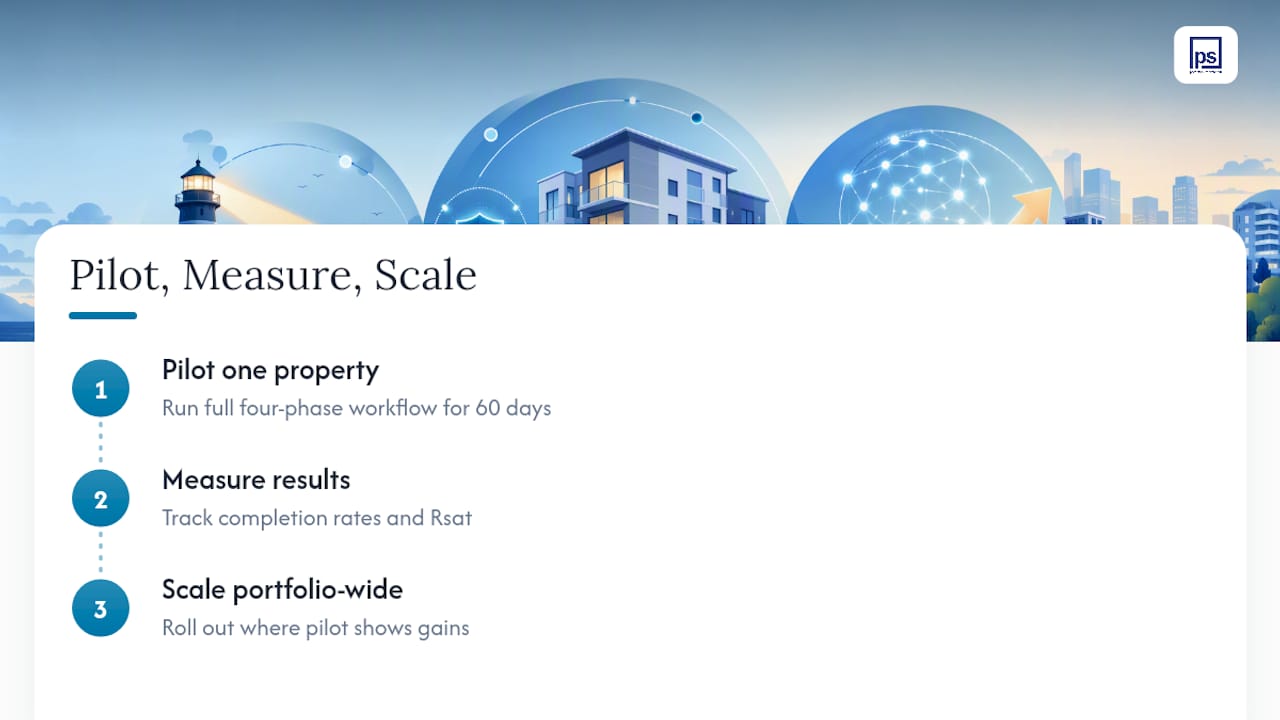
If you’re rebuilding your process, don’t roll it out portfolio-wide on day one. Pilot the full four-phase workflow, insurance gate included, on one property for 60 days. Measure completion rates and Rsat before scaling.
— Postal Solutions
Sources
For deeper data and ready-to-use structure, four sources stand out. The State of Resident Onboarding report quantifies the handbook delivery gap. HousingWire’s move-in friction analysis explains why the first 30 days shapes renewal. Moved’s onboarding checklist offers a ready SOP framework. Coliving’s best-practices guide rounds out first-week community-building tactics. For operational tools built specifically for package-room handoffs, Postal Solutions’ apartment package management resources cover implementation details these sources don’t.
- The hidden cost of move-in friction: Why the first 30 days can make or break resident loyalty
- The New Resident Onboarding Checklist for Property Managers
- Onboarding New Residents: Best Practices for a Smooth Experience
FAQ
What Is an Onboarding Package?
An onboarding package is the standardized bundle of documents, access information, and activated services that guides a new resident from lease signing through their first 30 days. It typically spans four phases: pre-move-in, move-in day, first week, and day-30 follow-up.
What Is a Resident Benefits Package?
A Resident Benefits Package bundles lease-attached services, commonly renters insurance, air-filter delivery, credit-building rent reporting, utility setup help, and move concierge support, into the lease itself. It’s activated during onboarding rather than offered as a separate add-on later.
Is a Resident Benefit Package Worth It?
Yes, for most operators. Lease-attached services like utilities and internet matter to 71% of renters, yet only about 22% of property managers currently bundle them, which means offering one is a real differentiator in a competitive leasing market.
What Should Be Included in an Onboarding Package for New Residents?
At minimum: a lease summary, move-in checklist, emergency contacts, access and Wi-Fi instructions, parking and trash schedules, and any activated Resident Benefits Package items like insurance or utility setup. Pair the summary with a signed acknowledgment so completion is documented, not assumed.
How Long Should the Onboarding Process Take?
Most well-run onboarding processes span 30 days, structured across pre-move-in prep, move-in day verification, a first-week check-in, and a day-30 satisfaction survey. Compressing it further tends to skip the insurance and walkthrough steps that prevent disputes later.