Why Package Lockers Need a Service Strategy to Work
Discover why package lockers need service strategy for success. Enhance efficiency, reduce costs, and improve customer satisfaction today!
Published
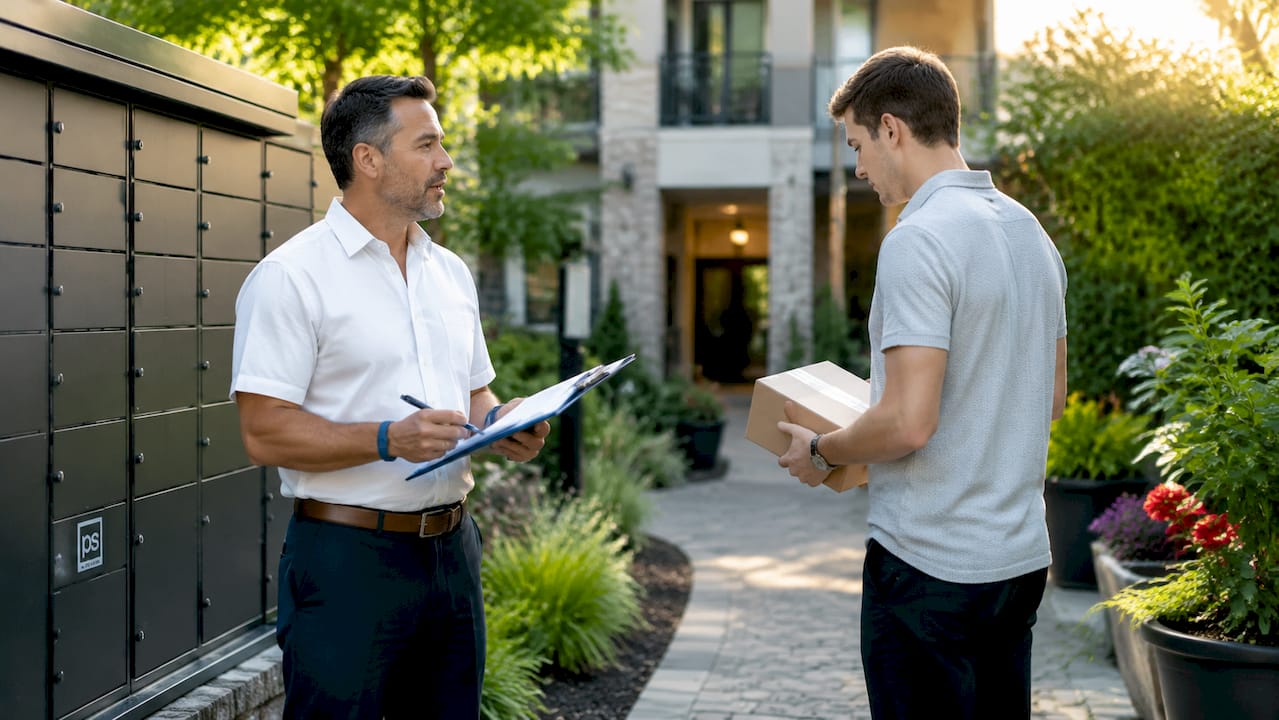
A package locker service strategy is the operational framework that governs how locker systems are managed, maintained, and measured after installation. Hardware alone does not deliver results. Smart locker hardware ranges from $6,000 to $20,000 upfront, but without a service strategy, operational costs and staff time double due to unresolved package inquiries and resident friction. That gap between hardware investment and actual performance is exactly why package lockers need service strategy thinking from day one. Luxer One systems, for example, are built with strong technology, but technology without process is just equipment sitting in a hallway.
What operational challenges arise without a service strategy for package lockers?
Package lockers without a service strategy create predictable, recurring problems. Staff absorb the burden. Residents grow frustrated. The locker system that was supposed to reduce workload ends up generating more of it.
The most common issues property managers report include:
- Unresolved package inquiries. Residents cannot find their packages, so they call or visit the leasing office. Staff spend time troubleshooting instead of managing the property.
- Overflow and disorganization. Oversized or irregular packages do not fit standard locker compartments. Without a protocol, they pile up in hallways or package rooms with no clear ownership.
- Outdated locker assignments. When lockers are not audited regularly, expired reservations and unclaimed packages block available compartments.
- Duplicate software costs. Failing to plan service strategy leads to duplicate software platforms, outdated processes, and wasted budget.
- Resident dissatisfaction. Delivery friction directly affects lease renewal decisions in competitive multifamily markets.
The core problem is that most properties treat locker installation as the finish line. It is actually the starting line.
Pro Tip: Conduct a weekly audit of your locker system during the first 90 days after installation. Patterns in overflow, unclaimed packages, and resident complaints will tell you exactly where your service gaps are.
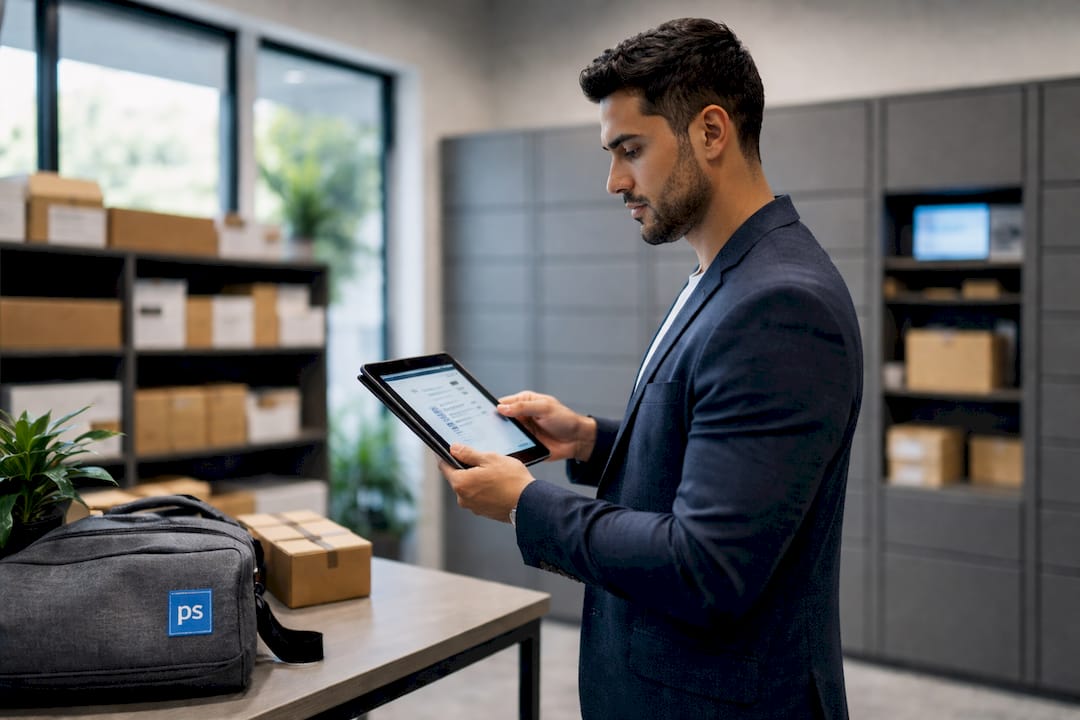
Long-tail deliveries compound these issues significantly. Ignoring oversized or non-conforming packages without standard operating procedures creates chaos that negates the benefits of the locker system entirely. A Luxer One locker bank handles standard parcels well. But without a protocol for the oversized Amazon delivery or the furniture box, the package room becomes disorganized within weeks.
How does a service strategy shift locker management from reactive to proactive?
A service strategy shifts locker management from reactive incident fixing to proactive value delivery aligned with business goals like resident retention and staff efficiency. That shift is not automatic. It requires deliberate design.
Proactive locker management operates on four principles:
- Define the service model before deployment. Decide who manages daily operations, who handles overflow, and who completes weekly audits before the first package arrives.
- Align locker operations with business objectives. Resident satisfaction scores, staff time savings, and package retrieval rates are measurable outcomes. Treat them as KPIs, not afterthoughts.
- Schedule professional managed visits. Effective service strategies include scheduled professional management visits six days a week, enhancing operational consistency and resident service.
- Use data to forecast and adjust. Analytics and forecasting improve capacity planning and utilization, optimizing locker networks to avoid costly inefficiencies.
“Service strategy is a business-critical layer, transforming lockers from hardware to strategic assets that align with resident retention and efficiency goals.” — ITIL Service Strategy framework
The difference between a reactive and proactive model shows up in staff time. A reactive property manager responds to package complaints after they happen. A proactive one has already cleared expired locker reservations, labeled overflow items by unit number, and completed a utilization audit before residents start their day.
What components make up an effective service strategy for lockers?
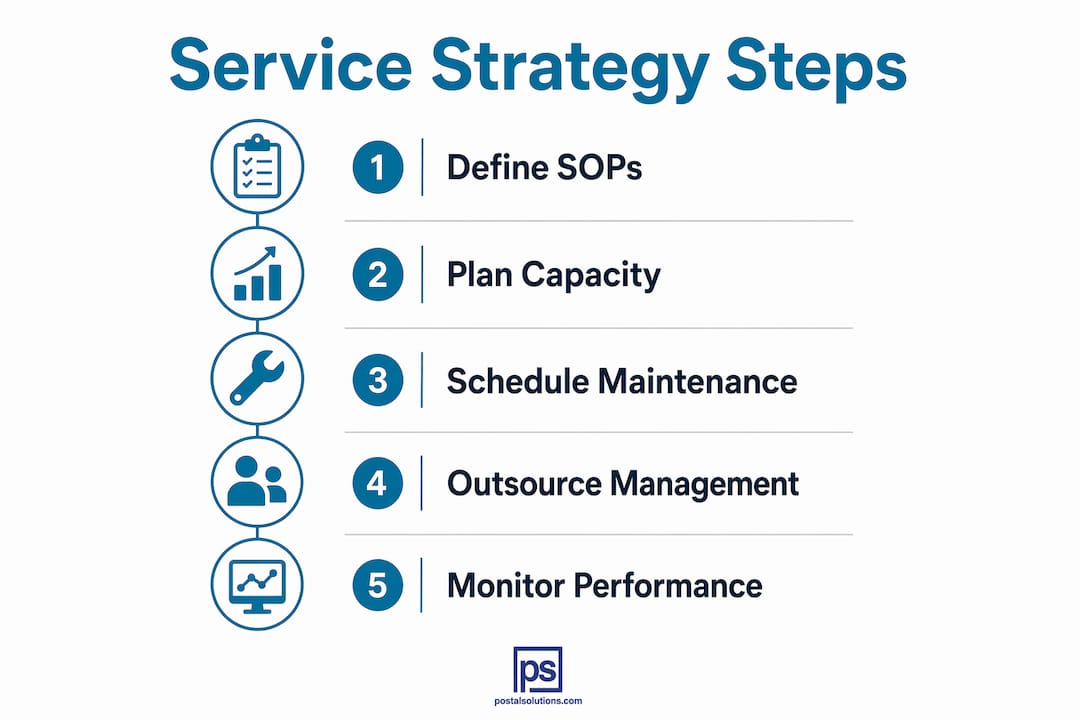
An effective service strategy for package lockers has four core components: standard operating procedures, capacity planning, maintenance schedules, and outsourced management.
Standard operating procedures
SOPs define what happens every day, not just when something goes wrong. Consistent SOPs ensure uniform resident experiences that build trust and reduce frustration. For package lockers, that means a written protocol for daily locker checks, overflow handling, unit number labeling, and escalation steps when a package goes unclaimed beyond a set window.
Capacity planning and data use
“One-size-fits-all” locker deployments often fail because they ignore property-specific factors. Successful strategies start with data on resident habits and peak delivery volumes. A 300-unit student housing property in a college town sees delivery spikes at move-in, mid-semester, and holidays. A senior housing community has different patterns entirely. Your service strategy must reflect your property’s actual data, not industry averages.
Maintenance schedules and technology updates
Locker hardware requires scheduled maintenance to stay functional. Touchscreens, locking mechanisms, and notification systems all degrade without upkeep. A service strategy includes a maintenance calendar, not just a warranty card.
Outsourced professional management
Treating lockers as operational infrastructure integrated into service-based models enables scalability without linear increases in staff labor. Outsourcing locker management to a professional service provider removes the burden from on-site staff while maintaining operational consistency.
| Management approach | Staff burden | Consistency | Scalability |
|---|---|---|---|
| No service strategy | High | Low | Poor |
| In-house SOPs only | Moderate | Moderate | Limited |
| Outsourced managed service | Low | High | Strong |
Pro Tip: When evaluating outsourced locker management, ask the provider how they handle overflow packages and what their weekly audit process looks like. Those two details reveal whether they have a real service model or just a staffing arrangement.
What are the measurable benefits of a service strategy for package lockers?
The benefits of a service strategy for lockers are concrete and measurable across three areas: staff productivity, resident experience, and cost efficiency.
Parcel lockers reduce labor costs and improve package pickup workflows when combined with managed services. That combination is the key phrase. Lockers alone reduce some labor. Lockers plus a service strategy reduce it significantly more.
Staff productivity gains:
- Leasing office staff spend less time fielding package inquiries when lockers are audited daily and overflow is labeled clearly.
- Weekly audits catch expired reservations before they block available compartments, reducing the need for staff intervention.
- Properties with outsourced locker management report fewer package-related maintenance requests to on-site teams.
Resident experience improvements:
- Residents retrieve packages faster when locker assignments are current and overflow items are clearly marked by unit number.
- Fewer failed pickup attempts mean fewer complaints and fewer calls to the leasing office.
- Consistent service builds resident confidence in the property’s operational reliability, which supports lease renewals.
Cost efficiency:
A modular, pay-as-you-go service approach reduces financial risk and accelerates time-to-value compared to capital-intensive infrastructure alone. Properties that invest only in hardware and skip the service layer often pay twice: once in the original hardware cost and again in staff payroll spent managing the fallout from an unmanaged system.
Key takeaways
A package locker system without a service strategy is an expensive piece of hardware that creates more problems than it solves.
| Point | Details |
|---|---|
| Hardware is not enough | Locker systems require daily management, SOPs, and audits to deliver operational value. |
| Reactive management costs more | Properties without service protocols pay twice: in hardware and in staff time spent fixing problems. |
| SOPs drive consistency | Written procedures for daily operations and overflow handling reduce resident friction and staff burden. |
| Data shapes better strategy | Resident delivery habits and peak volume data must inform locker capacity planning and service design. |
| Outsourcing scales without adding staff | Managed locker services maintain operational consistency without increasing on-site labor. |
What Postal Solutions has learned after 1,200 Luxer One installations
The most common mistake property managers make is treating the locker installation date as the end of the project. After more than 1,200 Luxer One sales across over 40% of U.S. states, Postal Solutions has seen this pattern repeat at every property class: conventional multifamily, student housing, senior housing, and university P3 developments.
The properties that get the most value from their Luxer One systems are the ones that treat the locker as a managed asset, not a set-and-forget appliance. They have someone on-site or contracted to organize the package room daily, label overflow items by unit number, and complete weekly audits. That discipline is what separates a locker system that works from one that generates complaints.
The uncomfortable truth is that a $15,000 locker installation without a service model will underperform a $6,000 installation with daily managed visits. The technology matters. The process matters more. Property managers who understand that distinction stop asking “which locker system should I buy?” and start asking “how will this system be managed after it goes live?” That is the right question.
Postal Solutions also manages package room outsourcing for properties that want professional daily organization without adding headcount. The combination of Luxer One hardware and managed service visits is the model that consistently produces the outcomes property managers are looking for.
— Postal Solutions
How Postal Solutions supports your locker service strategy
Postal Solutions manages package locker operations for multifamily properties across the United States. As the largest Luxer One sales agency with over 1,200 installations nationwide, Postal Solutions sells and installs Luxer One locker systems for conventional apartments, student housing, senior communities, and university campuses. Beyond hardware, Postal Solutions offers daily package room management outsourcing, with professional visits up to six days per week to organize packages, label overflow items by unit number, and complete weekly audits. This managed service model reduces staff burden, cuts resident complaints, and keeps your locker system current. Explore apartment package management services to find the right combination of hardware and managed service for your property.
FAQ
Why do package lockers need a service strategy?
Package lockers need a service strategy because hardware alone cannot manage overflow, expired reservations, or resident inquiries. Without daily operations protocols, locker systems create staff burden instead of reducing it.
What is included in a package locker service strategy?
A locker service strategy includes standard operating procedures for daily management, overflow handling protocols, weekly audits, capacity planning based on delivery data, and scheduled maintenance.
How often should package lockers be audited?
Effective service strategies include professional management visits up to six days per week, with weekly formal audits to clear expired reservations and document utilization trends.
Can outsourcing locker management reduce staff workload?
Yes. Outsourced managed locker services handle daily organization, overflow labeling, and audits, which removes those tasks from leasing office staff and reduces package-related inquiries.
What happens when there is no service strategy for package lockers?
Without a service strategy, properties face duplicate software costs, disorganized overflow areas, resident complaints, and staff time lost to package inquiries. The locker system effectively pays for itself twice in wasted labor.