Apartment Mail Sorting: A Property Manager's Guide
Discover effective apartment mail sorting strategies to improve delivery efficiency, reduce costs, and enhance resident satisfaction in multifamily...
Published
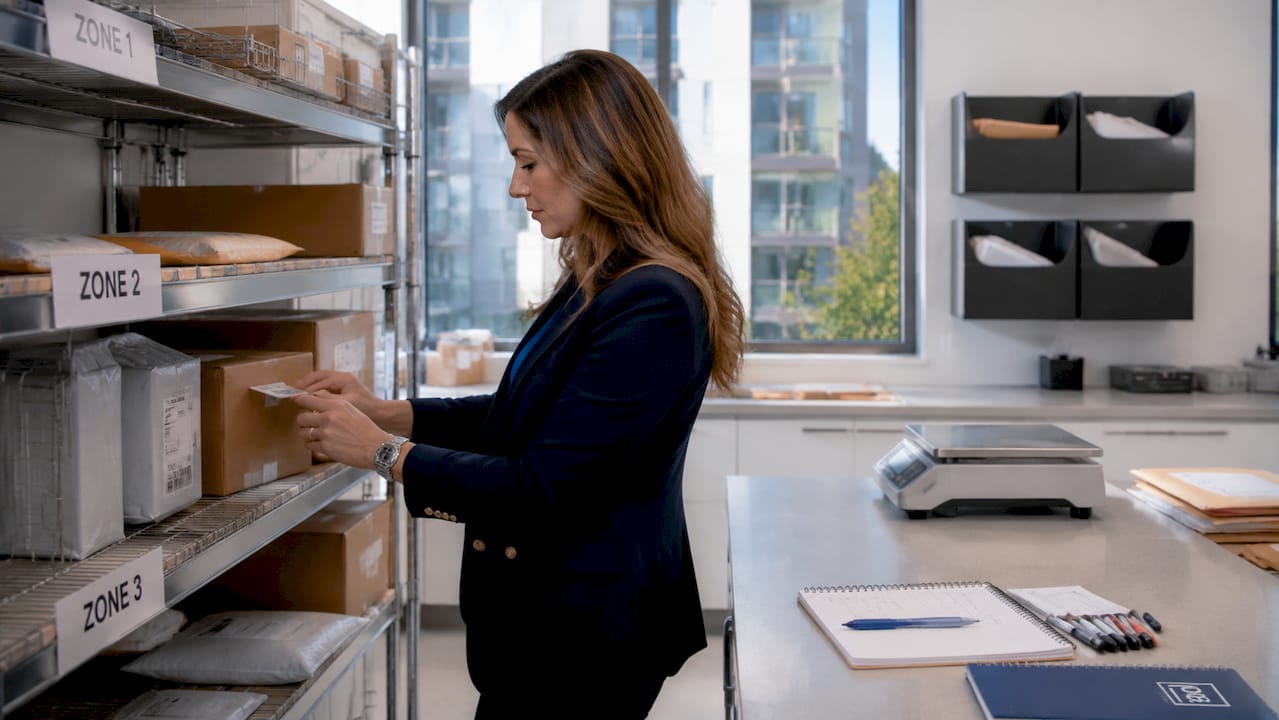
Apartment mail sorting is defined as the process of organizing and distributing incoming mail and packages in multifamily residential buildings to ensure accurate, timely delivery to each resident. The industry term for this practice is parcel management, and both terms apply throughout this guide. Property managers in conventional multifamily, student housing, and senior living communities face a shared challenge: delivery volumes have grown far beyond what traditional mailbox systems can handle, and the gap between carrier drop-off and resident pickup creates real operational cost. A well-designed sorting workflow reduces staff time spent on package questions, cuts misdelivery rates, and directly supports resident retention.
What is apartment mail sorting and why does it matter?
Apartment mail sorting is the structured intake, labeling, organization, and handover of all mail and packages received at a multifamily property. The process covers everything from a standard USPS letter to a palletized freight delivery. Couriers arrive with diverse logistics needs, including small parcels and large freight, making manual sorting inefficient at scale. That inefficiency translates directly into staff hours, resident complaints, and lost packages.
Federal law adds a compliance layer that property managers cannot ignore. Federal law prohibits apartment communities from withholding, opening, discarding, or interfering with mail delivery to its intended recipient. Violations can constitute a felony offense. This means your sorting process must be accurate and documented, not just convenient.

The business case for getting this right is straightforward. Residents who cannot find their packages call the leasing office. Those calls pull staff away from higher-value work. A property paying one staff member to answer package questions is paying twice: once in payroll and once in lost productivity.
Prerequisites and tools for efficient mail sorting
Before building a workflow, you need the right physical setup and technology. Skipping this step produces a process that works on day one and collapses under peak-season volume.
Physical space and layout
The package room layout determines how fast packages move from intake to pickup. Vertical shelving is the most space-efficient option available. Shelving systems with three or four rows allow efficient stacking side by side along shelf length, increasing storage capacity by 2–3 times compared to locker-only systems. Organize shelving zones by building section, floor, or unit number range so staff and residents can locate packages without searching the entire room.
Signage matters more than most property managers expect. Clear zone labels, pickup instructions posted at eye level, and a visible policy on unclaimed packages reduce the number of questions staff field every day.
Technology and tracking
Digital package management is no longer optional for properties above a certain volume. Digital package management apps enable quick logging via barcode scanning and instantly notify residents with pickup details and unique QR codes. Full audit trails with signatures, photos, and timestamps protect staff and improve accountability. That audit trail is your defense when a resident claims a package was never received.
The table below compares the two primary setup approaches property managers choose between.
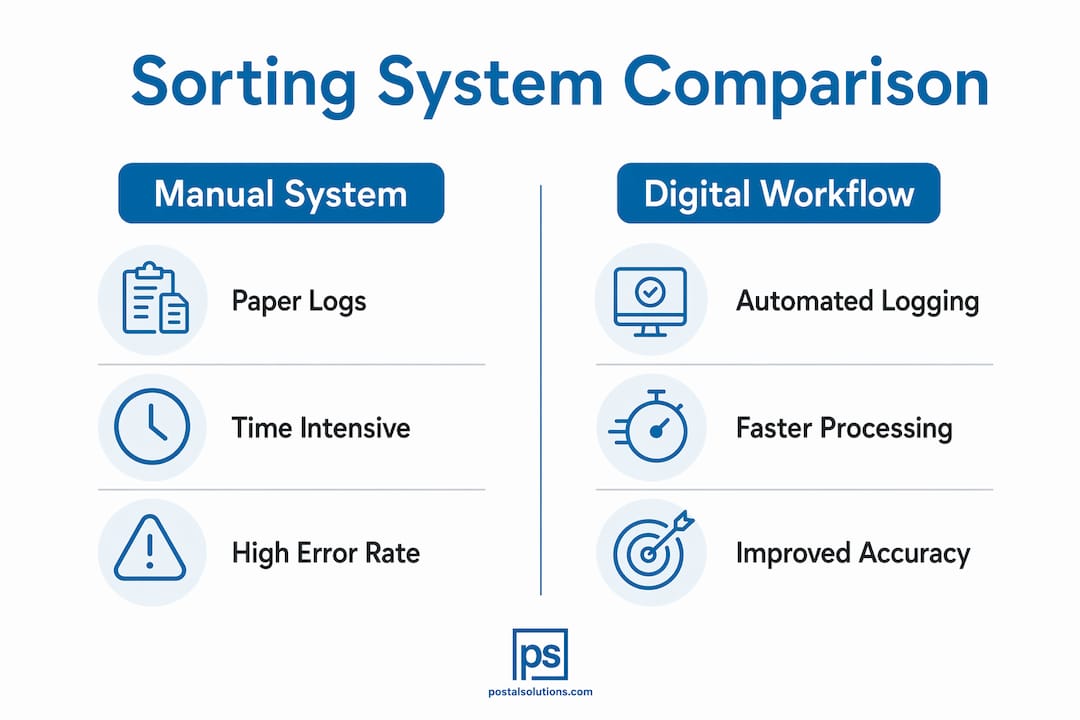
| Feature | Manual sorting system | Digital tracking system |
|---|---|---|
| Package logging | Paper log or spreadsheet | Barcode scan or app entry |
| Resident notification | Phone call or posted list | Automated text, email, or app alert |
| Audit trail | None or limited | Signature, photo, timestamp |
| Staff time per package | High | Low |
| Scalability | Low | High |
| Error rate | High during peak periods | Low with consistent scanning |
Staffing and training
Staff accuracy depends on clear written procedures, not verbal training alone. Every person who touches the package room needs to know the labeling standard, the zone map, and the escalation path for unlabeled or damaged items. Properties that manage package room operations with a dedicated daily visit see fewer errors than those relying on rotating leasing staff.
How to implement a step-by-step sorting workflow
A repeatable workflow is the foundation of reliable resident mail handling. The following process applies to properties of any size, from a 50-unit building to a 500-unit high-rise.
-
Receive and log all deliveries. Scan each package barcode or manually enter the tracking number into your management system at the moment of receipt. Never place a package on a shelf before it is logged.
-
Identify the resident unit. Cross-reference the address label against your resident roster. If the unit number is missing from the label, write it directly on the box before shelving. This single step prevents the majority of misdeliveries.
-
Assign a zone and shelve the package. Place the package in the correct zone based on unit number range or building section. Oversized items go to a designated overflow area, not on top of other packages.
-
Send an automated resident notification. Automated alerts with clear pickup instructions and package-location images reduce confusion and follow-up questions. Send the notification within 30 minutes of logging.
-
Manage resident pickup with an audit trail. Require residents to confirm pickup via signature, QR code scan, or app check-in. Record the date and time. This closes the loop on every package and gives you documentation if a dispute arises.
-
Conduct weekly audits. Review all packages that have not been picked up within your policy window. Flag long-term holds and contact residents directly. Remove packages that exceed your hold period per your posted policy.
Pro Tip: Mark the date received on every package with a permanent marker or printed label. Staff can spot aging packages at a glance without opening the management system, which speeds up weekly audits significantly.
The numbered sequence above works because it creates a chain of custody. Each step produces a record. When something goes wrong, you can trace exactly where the breakdown occurred.
How to troubleshoot common sorting challenges
Even a well-designed system runs into problems. The issues below are the most common ones property managers report, along with direct solutions.
-
Unlabeled or illegible packages. Unlabeled mail causes sorting confusion and delays. Establish a holding zone for unidentified packages and a same-day protocol for contacting the carrier or post office. Never guess at a unit number.
-
Peak-period overflow. November and december delivery volumes can triple normal intake. Add temporary shelving before peak season, not during it. Assign a dedicated sorting window each morning so packages do not pile up unlogged.
-
Misdeliveries. A misdelivery almost always traces back to a labeling error at intake. Require staff to verify the unit number against the resident roster before shelving, every time, without exception.
-
Residents not picking up packages. Clear pickup policies and resident communication reduce package delay and retrieval errors. Post your hold policy in the package room, include it in the lease, and send a second reminder notification after 72 hours.
-
Carrier coordination gaps. Some carriers drop packages without notifying staff. Install a camera at the package room entrance and require carriers to log deliveries. A posted sign with your intake procedure sets expectations before problems start.
Pro Tip: Create a one-page carrier instruction sheet and post it at your package room entrance. Include your preferred drop-off zone, labeling requirements, and a contact number for delivery questions. Most misdeliveries from carriers happen because no one told them the rules.
High-rise properties face the steepest version of these challenges. Shifting from manual to digital sorting is the only reliable way to scale mailroom operations in buildings with hundreds of units. Manual logs cannot keep pace with the volume or the speed residents expect.
Benefits and ROI of modernizing your sorting system
Upgrading from a manual process to a digital, organized workflow produces measurable returns. The gains show up in three areas: staff time, resident satisfaction, and space efficiency.
Modern parcel management systems track packages by building, floor, carrier, and time of day, helping property managers plan staffing and prove service levels to ownership. That data also identifies patterns, such as which carriers cause the most misdeliveries or which days require additional coverage.
| Category | Traditional manual system | Organized digital workflow |
|---|---|---|
| Staff time per package | 5–10 minutes | 1–2 minutes |
| Resident notification | Delayed or inconsistent | Immediate and automated |
| Package disputes | Frequent, hard to resolve | Rare, resolved with audit trail |
| Space efficiency | Low, ad hoc shelving | High, zoned vertical storage |
| Resident satisfaction | Variable | Consistently higher |
| Scalability | Breaks under peak volume | Handles volume increases |
The resident satisfaction improvement is not just a quality-of-life metric. Residents who experience repeated package problems cite it as a reason for not renewing. Fixing the package room is a retention tool, not just an operational one.
Key takeaways
Effective apartment mail sorting requires a documented intake process, zoned physical storage, digital tracking, and consistent resident communication to reduce errors and protect staff time.
| Point | Details |
|---|---|
| Log every package at intake | Scan or manually enter tracking numbers before shelving to create a complete chain of custody. |
| Zone your storage space | Organize shelving by unit number range to cut search time for staff and residents. |
| Automate resident notifications | Send pickup alerts within 30 minutes of logging to reduce follow-up calls to the leasing office. |
| Conduct weekly audits | Review unclaimed packages weekly to keep the room current and enforce your hold policy. |
| Use digital tracking for scale | Manual systems break under peak volume; digital tools maintain accuracy regardless of delivery count. |
What we have learned managing package rooms across the country
After nearly a decade of managing package room operations across conventional multifamily, student housing, and senior living communities, the pattern is consistent. Properties that treat the package room as a secondary concern pay for it in staff burnout and resident turnover. Properties that treat it as a core operational system see the returns quickly.
The single biggest mistake I see is relying on leasing staff to absorb package management as a side task. Leasing staff are trained to lease apartments. When they spend an hour each morning sorting packages, that is an hour not spent on tours, follow-ups, or renewals. The property pays the leasing rate for sorting labor, which is the wrong tool for the job.
The second mistake is waiting for the system to break before fixing it. Peak season in november and december is not the time to install shelving or train staff on a new app. The properties that handle peak volume well are the ones that built the system in july.
For smaller properties, the solution does not have to be expensive. A clear zone map, a labeling protocol, and a free or low-cost notification tool can transform a chaotic package area into a functional one. For larger properties, the math on a managed daily visit or a Luxer One locker system pays out faster than most operators expect, because the alternative is paying leasing staff to do a job they were not hired to do.
The future of apartment mail management is daily accountability. Someone responsible for the package room every day, with a documented audit trail, is the standard that residents now expect. Properties that meet that standard retain residents. Properties that do not are explaining lost packages to angry renters.
— Postal Solutions
How Postal Solutions supports your package room operations
Postal Solutions manages package room outsourcing for multifamily communities across the country, including conventional apartments, student housing, and senior living properties. The daily management service sends a package manager to your property to organize the package room, write unit numbers on boxes, and complete weekly audits using your existing software or a Luxer One system. Postal Solutions is also the largest Luxer One sales agency in the United States, with over 1,200 installations across more than 40% of U.S. states. For properties that want a full-service solution, Postal Solutions can sell and install a Luxer One locker system and provide six-day-per-week managed visits to keep the room organized and current. Visit Postal Solutions to learn which service fits your property.
FAQ
What is apartment mail sorting?
Apartment mail sorting is the process of receiving, logging, labeling, and organizing mail and packages in a multifamily building so each item reaches the correct resident. The industry term for this practice is parcel management.
Is it illegal for apartment staff to open or withhold resident mail?
Federal law prohibits opening, discarding, or preventing delivery of mail to its intended recipient. Violations can constitute a felony offense regardless of intent.
How do I handle unlabeled packages in the package room?
Place unlabeled packages in a designated holding zone and contact the carrier or post office the same day. Never assign a unit number by guessing, as misdelivery creates liability and resident disputes.
What is the most effective way to notify residents about packages?
Automated notifications sent within 30 minutes of logging, with pickup location details and a unique QR code or tracking reference, produce the fastest pickup rates and the fewest follow-up calls to staff.
When should a property consider a managed package room service?
Properties where leasing staff spend more than 30 minutes per day on package tasks are strong candidates for a managed daily visit or an automated locker system, since the labor cost of manual sorting typically exceeds the cost of a managed solution.